 Written by
The Beatles were well on their way to becoming history’s greatest pop group when they took their final crack at “I’m Looking Through You.” As of two weeks before, they were also medal-holding Members of the Most Excellent Order of the British Empire, an unprecedented distinction for popular musicians at the time, and an honor for which they’d agreed to take a quick break from what was supposed to be their very first uninterrupted stretch of work on a single collection of music. No tours, no movies to shoot, no distractions from making an album that could stand on its own as an artwork, like a classical suite or one of the French films they loved, and not just as a set of catchy songs. They were about to change music forever. But they still owed their label a record by Christmastime. It was November 10.
Thanks to a painstaking track-by-track recording history included with a new 5xLP or 4xCD Special Edition of 1965’s Rubber Soul, I can tell you precisely how they proceeded to lay down this final contribution to their first masterpiece. Paul McCartney strummed acoustic guitar and Ringo Starr played drums, then the same duo overdubbed bass and tambourine. It had already been a long day. They went home to sleep. Then, in the frenzied 13-hour home stretch of tracking Rubber Soul, they added electric guitar, layered vocals, Hammond organ, and—in one of the album’s many quietly brilliant flourishes of production and arrangement, touches so light you may hardly notice them, yet powerful enough to nudge the songs just a little to the side of anything attempted on record before—the percussive sound of Ringo tapping with his fingers on a matchbox. My mind reels at the astonishing quickness of the post-production process: They finished tracking on November 11, finished mixing by the 15th, and had it in stores December 3.
No score yet, be the first to add.
Rubber Soul is the pivot point for the Beatles. Help!, their previous album, ends with “Dizzy Miss Lizzy.” Revolver, the next one, ends with tape loops, backwards guitar, and chanted meditations on ego death. Together with Bob Dylan’s contemporaneous forays into electric music, Rubber Soul also represents a significant pivot for pop in general. Before 1965, pop meant teen idols, folk meant earnest renditions of traditional songs, and rock’n’roll meant sweaty dance records. After, you could be a pop artist, a folk rocker, a composer and a poet and a heartthrob all at once. You could perform songs you wrote yourself.
Consider our modern conception of pop: a space where singer-auteurs balance the pursuit of aesthetic ideals with that of the largest possible audience; where the aspirations and anxieties of a generation can be expressed in all their complexity via the same three-minute form as the most craven and textureless banalities imaginable. Where art masquerades as product and vice versa, and the tastes of teen girls sometimes turn out to have era-defining implications. If one album can be named as the genesis of all of that, Rubber Soul is surely it. The title could not be more apposite for all that the album prophesied. On one hand, an acknowledgment of the appropriation of Black American music that still fuels the whole enterprise. On the other, a suggestion of ineffable spirit rendered in the material of crass commerce. (And sure, on the third hand, a pun about shoes, because if the last 60 years of pop have shown us anything, it’s that our heroes are usually dopes.)
Brian Wilson summed up Rubber Soul’s impact thusly: “The first time in my life I remember hearing a rock album on which every song was really good.” He heard it as a kind of folk record, somber and substantial, with “lots of acoustic guitars and not a lot of drums.” The band had been influenced by Dylan to try out lyrics other than the lovey-dovey fare they’d penned previously, and by the Byrds—themselves acolytes of both Dylan and the Beatles—to further foreground their vocal harmonies and the chime of their guitars. Though the songs were still mostly about personal matters, the band found ways to invest them with double meanings that reflected the dawning psychedelic zeitgeist: “Think for Yourself” was a bitter missive to an ex that doubled as an individualist rallying cry; “Nowhere Man,” which John Lennon wrote about his own existential aimlessness, was easy to hear as a commentary on the numbness of the squares to the excitement of a world coming alive around them.
The Beatles were also still after the passionate directness of the R&B that had been among their earliest inspirations. “Drive My Car,” their choice of opener, announced itself with a guitar lick and rhythm-section boogie that could have been recorded at Stax. “The Word” was an attempt to write something like Little Richard’s “Long Tall Sally,” albeit with lyrics updated for the flower generation. In mixing sessions, they were primarily concerned with boosting the bass, making things hotter and punchier.
“I’m Looking Through You,” in its earliest version, alternated between a campfire-singalong feeling in the verses and an electric-blues instrumental raveup where a chorus might go. The contrast between these drastically different sections, as documented on one of the box set’s two LPs worth of outtakes, is thrilling. But this first take lacks the holism of the recording the world would come to know, which through some mysterious alchemy turns the song’s folk, pop, and rock’n’roll elements from juxtaposed fragments into facets of the same jewel. Half the fun of the box set is in the futile searching it encourages: What take of which song represents the precise moment when it all came together and the course of popular music shifted accordingly? Was it the new tempo they found for “I’m Looking Through You”? The B section that McCartney wrote sometime between takes three and four? Could it have been the matchbox?
Brian Wilson’s assessment of Rubber Soul as a folk record makes more sense when you know he was reacting to the American version. Capitol, the Beatles’ U.S. label, removed several of the liveliest cuts, including “Drive My Car” and “If I Needed Someone,” the George Harrison tune whose droning modal verses most clearly pointed toward the psychedelia of Revolver and beyond, and replaced them with a couple of mellow tracks from the UK version of Help!. It might as well have been a different album. The box set includes both the UK and U.S. releases as well as a new mix by Sam Okell and Giles Martin (son of Beatles producer George), the two LPs of outtakes, and a delightful coffee-table book. It has the feeling of the luxury item suggested by its $229 price. Still, paging through photos of young John mugging next to Queen Elizabeth and Paul pretending to play a piano laid up on its side, while listening to “In My Life,” a song it’s hard to imagine not existing until these goofballs wrote it—it all made me more emotional than I’d like to admit. They were just kids.
At its best, the box set manages to put one’s received ideas about this most canonical of albums into flux, calling attention to discrepancies and revealing paths not taken. An instrumental take of “Day Tripper”—a song not included on either original version of Rubber Soul but recorded at the same time and released as a single on the same day—whose instrumental break, led by George’s volume-pedal swells and Ringo’s ecstatic cymbal work, sounds to modern ears like skyward-reaching post-rock. A snippet of interview, excerpted in Kevin Howlett’s expansive and conversational liner notes, in which John seems to forget that Rubber Soul came after Help! and not before, complicating our sense of the album as the band’s unequivocal leap forward. A whole unheard song called “Little Girl” is presented here as a shaky Lennon acoustic demo—rejected from Rubber Soul, one imagines, because the album already had “Girl” and “Run for your life if you can, little girl…,” or because its teenage sentimentality didn’t jibe with the new sophisticated vibe the band was cultivating. (Though it does have a sticky melody and some interesting chord choices.) Taken together, it brings Rubber Soul down from the pantheon and back into human scale: not the inevitable first masterpiece of a band predestined for greatness, but just a really, really good record, made by a group of young men who were working their asses off, under tremendous pressure from industry and audience, and committed to seeing their own vision through.
The set’s greatest pleasures are in the album’s two original versions—a reminder that Rubber Soul has always been in flux, shaped by whims of inspiration and commerce alike, not a single totemic thing. Really, there are more than two. The UK and U.S. each got a stereo and a mono mix, which any major nerd will tell you contain differences that are just as important as the tracklist tweaks. In stereo, each of the arrangements’ small flourishes is presented as a singular and precious object unto itself. The fuzzed-out McCartney bass line on “Think for Yourself” is huge and unruly without ever getting in the way of the three-part vocal harmonies. On “You Won’t See Me,” Ringo’s idiosyncratic drum pattern, all ticking hi-hat and cascading toms, seems to operate in a space of its own, at the action’s kinetic center but separated from the rest by a layer of perfect stillness. Fan wisdom favors the mono version, which is perhaps closer to what the band envisioned as they urged various studio engineers to push their meters into the red. The songs retain their baroque intricacy, but are delivered with jukebox-blasting force rather than careful control. Those “You Won’t See Me” hi-hats, so crisp and mannered in stereo, now share the same cramped frequencies as the sibilance from McCartney’s voice, giving the sense of everyone squeezed into one loud and lively room. Guitars scrape and tangle, vocal layers bleed together as one. Even “Nowhere Man” rips out of the speakers.
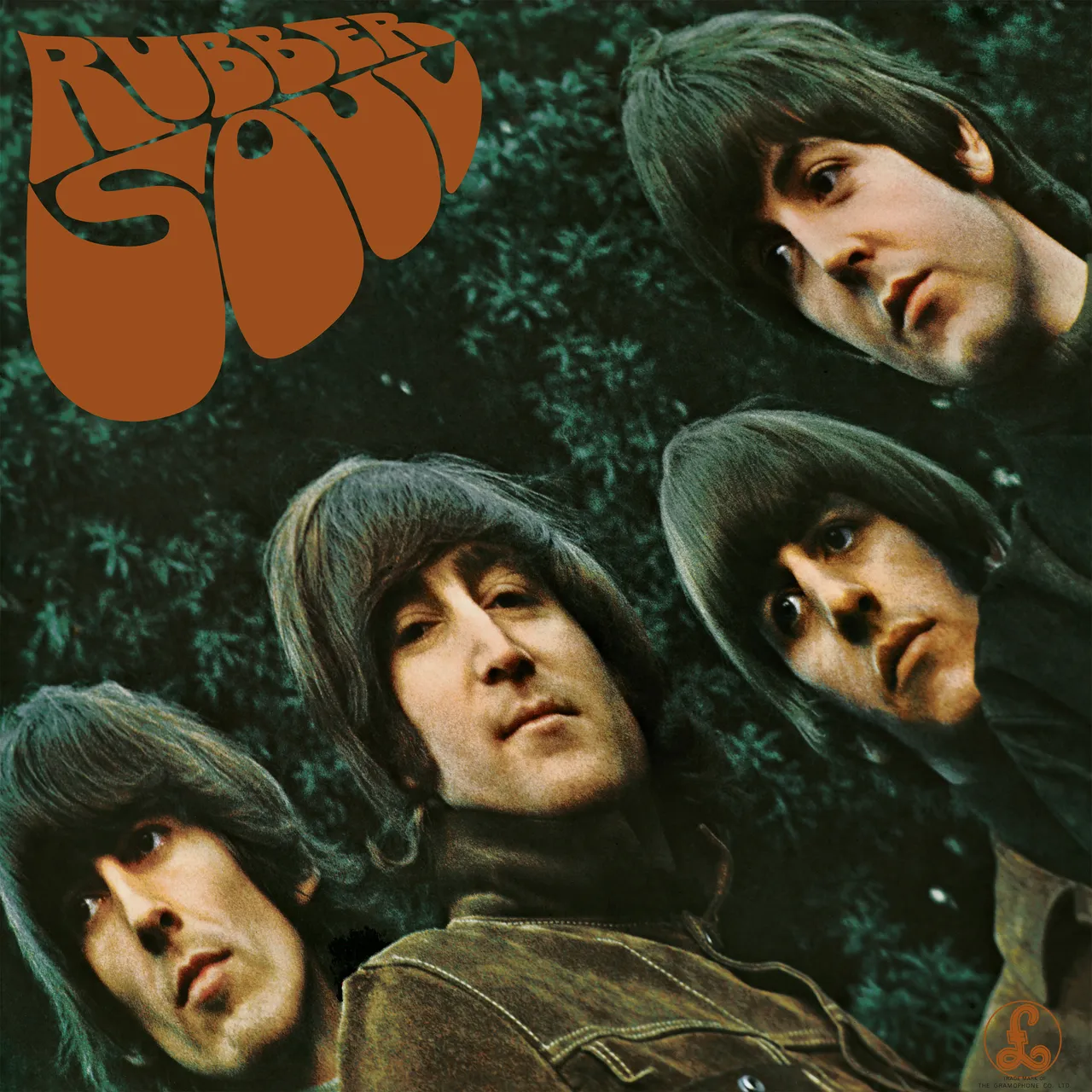
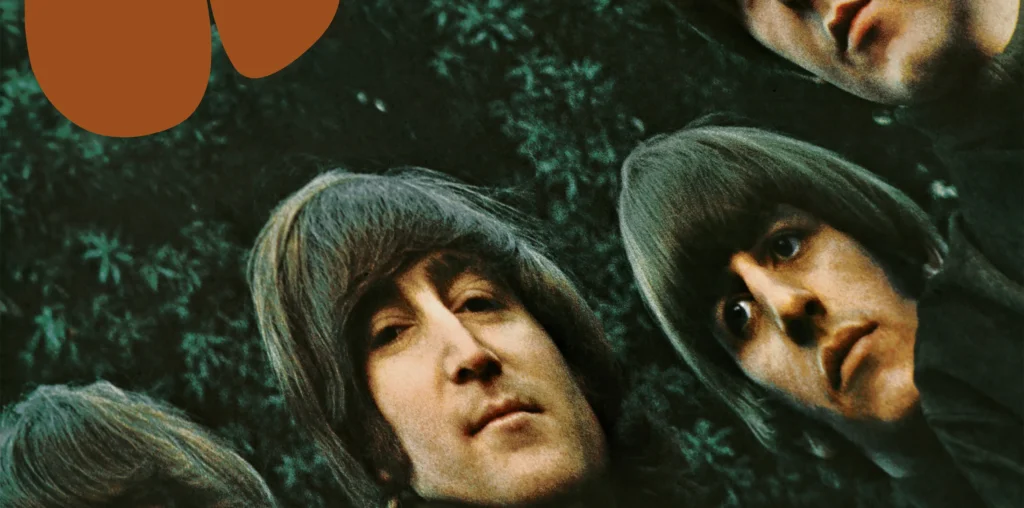
Somewhere in the fourth side of the outtakes collection—perhaps during the hallucinatory eight-minute stretch of backing-vox rehearsal, tape-machine whirr, and daffy studio banter labeled “Beatles Talk”—you might arrive at the suspicion that there is an ideal version of Rubber Soul out there, unrealized in the ether, a perfect dialectical resolution of all its contradictions: pop and art, stereo and mono, folk and R&B, spaciousness and immediacy, Britain and America, John and Paul. Sixty years on, and with all of Rubber Soul’s available formats—to which we can add George Martin’s 1987 stereo remix for the first CD release, its 2009 remaster, and the CD remaster of the original mono mix for the Beatles in Mono box set—is it possible that the limits of market demand, recording technology, and so on have still kept us from hearing Rubber Soul’s real greatness? Could there be a version that’s even more timeless than all the versions we’ve heard before? Maybe the rusty brown lettering on the cover is gold and shiny instead. Maybe it’s in Dolby Atmos.
This is the final promise of the Rubber Soul Special Edition box. “Through the use of machine learning technology,” the liner essay notes sheepishly about the new remix, “…instruments once recorded together have been separated and placed across the stereo spectrum.” The record sounds amazing, naturally: It’s still Rubber Soul. As a matter of fact, I’d wager that hardly any listeners will recognize that they’re hearing a new version of the album at all. Nor would many want Rubber Soul to sound radically different from the album they already know. There are old heads who’ll swear that the lilting one-two of “I’ve Just Seen a Face” and “Norwegian Wood” that opens the American LP can’t be beat. I grew up on the CD mixes of the Beatles’ albums, like many of my millennial peers, and still prefer to hear them in stereo rather than the mono that the message board guys insist is the purest expression of the band’s artistic intent. As the box set demonstrates quite clearly, there is no one real Rubber Soul. We all have our own.