 Written by
In a pair of definitive pieces for The Wire in 1994 and 1995, Simon Reynolds laid out the doctrine of what he was calling “post-rock.” “Post-rock,” Reynolds wrote, “means using rock instrumentation for non-rock purposes, using guitars as facilitators of timbre and textures rather than riffs and power chords.”
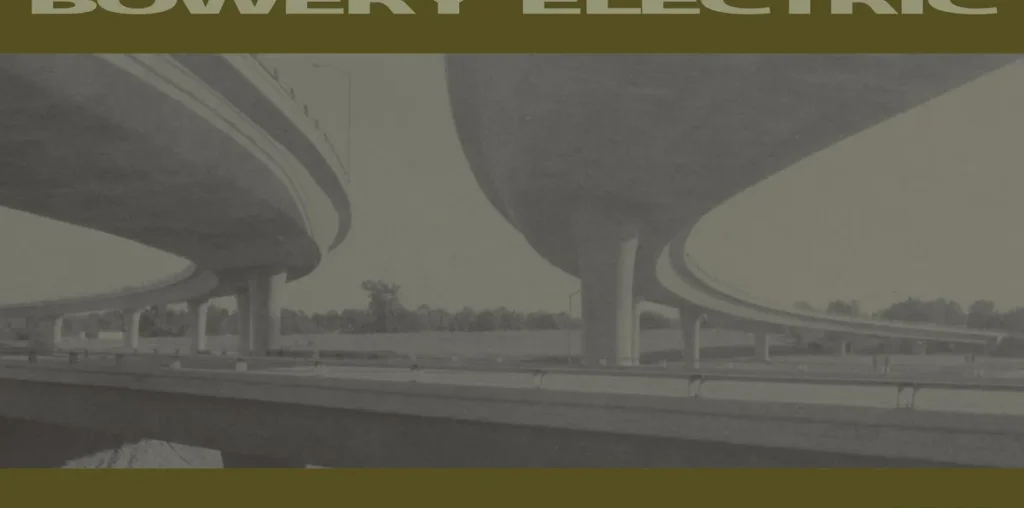
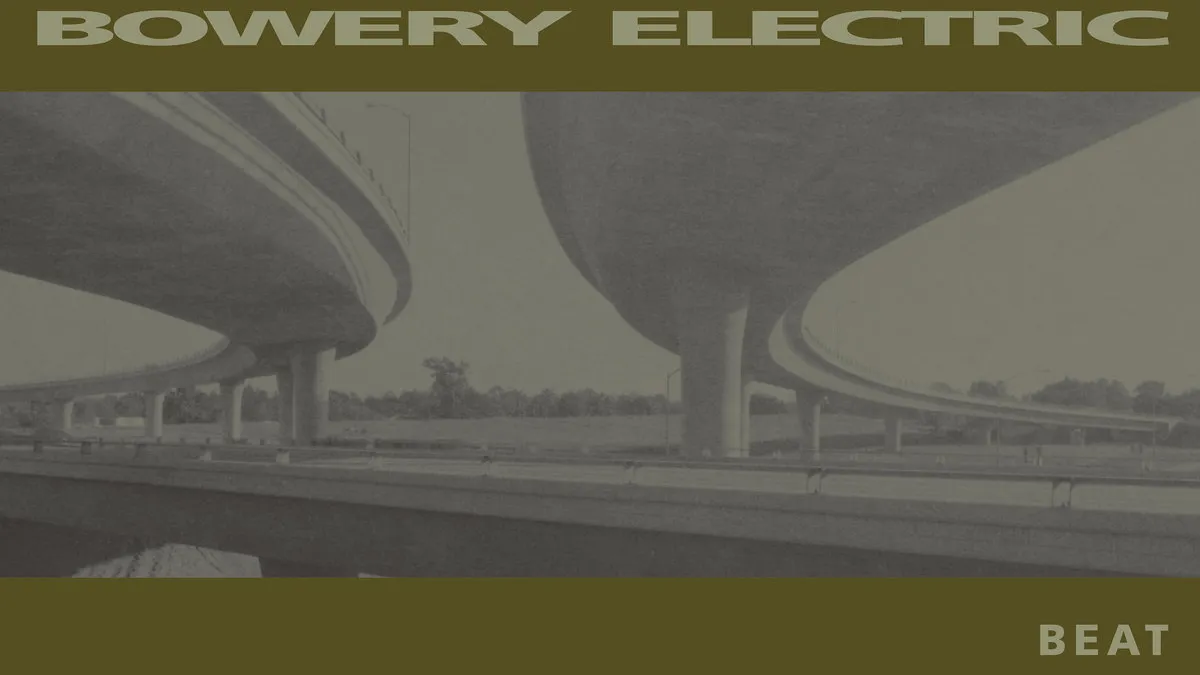
While his 1994 piece focused on the emergent scene in the UK, Reynolds claimed the next year that bands “who have reached or are verging on a distinctively American post-rock” were “in revolt against grunge’s earthy passion [and] have turned to science fiction and outer space in order to free up their imaginations.” It’s an apt description of the floaty music made by Tortoise and Stars of the Lid, both of whom Reynolds named as leaders of this first wave of American post-rock. But it’s hard to make the same argument for Bowery Electric, a gauzy dream-pop duo from New York City who, when Reynolds included them in this new canon, were hard at work on the follow-up to their 1995 debut. It would come out a year later with a title that captured the grounded, rhythmic idea at its heart: Beat.
No score yet, be the first to add.
What might it mean to be properly post-rock? The sound of the music was one thing—even when Stereolab were at their loungiest or Stars of the Lid were including the key in which a song was composed in its title, there was something like the faintest air of rock music in their experiments. “Rock” in this sense was largely implied through the scenes from which the bands emerged and how they were framed by critics. This created a firm cultural boundary: It would have been impossible, at least at the time, to imagine that Stars of the Lid’s “Apreludes (in C Sharp Major)” would be programmed alongside Mahler or Stravinsky, or that Stereolab might tour supper clubs with Cal Tjader and Les Baxter. Even if they had, there would have been a heavy dose of transgressive irony surrounding the whole thing; they weren’t really the same thing as the music they were aping, and knowing as much made them safe to enjoy in the eyes of discerning fans and critics. These bands all belonged to the world of rock music, even if it wasn’t clear where in that world they fit in.
But the idea of what might come after “rock” conceptually was far more interesting. Freedom from rock’s aesthetics also meant freedom from the forms that gave it shape, which in turn allowed bands to fundamentally change what they made their music for. If a rock show had historically been a kind of physical exorcism, a way of getting yer ya-ya’s out, what might it mean to turn that show into something like a rave, not simply by adding a breakbeat to the music, but by playing with duration and repetition, teasing peaks and knowing when to accelerate. Suddenly a rock song might be built of modular units that could be rearranged, whether in composition or on the fly.
There had always been artists pushing the possibilities of standard rock instrumentation, but they tended to be abrasive and discordant—Glenn Branca composing atonal symphonies out of scribbling noise, Arto Lindsay going cubist—in a way that retained the full-throttle direct attack that was central to rock’n’roll. The new breed of post-rock bands, on the other hand, were cribbing ideas from the worlds of dance music and hip-hop. They were learning how to make ambient music in a live setting. They were using “Louie Louie” organs to write effete yé-yé songs about socialism. They didn’t play riffs; they used their guitars to smash notes into paste and smeared them across a song’s canvas.
As Reynolds notes, this freedom cut against rock’s foundational idea of immediacy, the direct communication of feeling between artist and audience. In the 1990s, this was an obvious challenge to the still-resonant claims of punk, which dictated that one’s authenticity—and thus artistic credibility—was bound up with the idea of how deeply a band felt it, or by the intensity of the energy transfer between artist and audience. Freed from such conservatism, post-rock bands were able to pursue whatever they were genuinely curious about. It may have been difficult to describe exactly what kind of music they were playing, but it was abundantly clear what they were not.
Appropriately enough for two musicians working at the cutting edge of this underground, Bowery Electric’s Martha Schwendener and Lawrence Chandler met while working at pre-fab master Andy Warhol’s Interview magazine. Together with drummer Michael Johngren, they developed a self-consciously experimental style that sounded something like the vibrating calm of Slowdive, but more spacious, a vast stretch of sound. After kranky released Bowery Electric, Johngren left the band. Rather than replace him, Schwendener and Chandler picked up drum machines and samplers and began learning how to manipulate what they were respectively playing on bass and guitar. The new technology allowed them to create deeper, more granular drones while also giving their most abstract ideas a reliable frame in the form of predictable, quantized rhythms. Individually, the songs on Beat were largely recognizable in the broader indie rock world—post-rock and shoegaze live alongside torchy trip-hop and pure ambient. Cumulatively, though, they sounded like little else, an emotionally and tonally cohesive suite of songs that were uniquely planted on solid ground.
At all points, Beat feels like the work of two musicians who have found a way of doing exactly what they want to do—even if they’re not sure where that desire will take them. You can feel it in the album’s chilly tone, which unifies the static trip-hop of the opening title track and the 16-minute drone of the closing “Postscript” into a single, many-sided statement that feels reflective of the languor and ennui of life in a cramped city rather than the desire to escape into the heavens. Beat does share a spaciness with its contemporaries, but it feels more like the zoned-out dissociations of a long subway commute than an awestruck consideration of the Milky Way. You can imagine stepping in gutter slush in the dead of winter while listening to it.
Chandler primarily uses his guitars to produce radar sweeps of drone, which allows Schwendener’s bass to take full responsibility for Beat’s melodies. Her tone is trebly and just a touch buoyant; it’s like she’s playing hardcore at a daydream pace. She tends to write in short phrases—memorable fragments that you can imagine comprising a Terry Riley composition. Riley was a direct inspiration on the record, and while the Bay Area composer did work with drones, his influence is more poignant here, in the way Schwendener breaks the melody down into pieces and moves them around. While the drones groan over hiccuping live drums in “Empty Words,” she repeats a simple six-note phrase over and over. Her voice is buried just deep enough in the mix to remain audible, its semi-obscurity proving her point: “Words are only noise.”
The repetition of the bassline, the eventual crest of the drone, language as nothing more than an aesthetic phenomenon—you may not be compelled to shake ass to this record, but the influences that Bowery Electric claimed from dance music inform it at a molecular level. It wasn’t uncommon for a guitar band to experiment with electronic music’s signifiers, but alongside Seefeel, Bowery Electric were one of the few bands who seemed to understand the underlying logic of electronic music. For them, it wasn’t simply a matter of employing a programmed beat as scaffolding for their shredding. Listen to the way “Without Stopping” presents its idea and simply lets you sit with it for five minutes. The song doesn’t develop so much as sustain, and it requires something different from you as a listener than even the most outré rock song—namely, the ability to become curious about how something can seem to be still while also being full of motion. Anyone who’s been dancing until very late at night knows the pleasure of this feeling, but it’s not intuitive when the music in question has obviously been made by a rock band.
While they shared some ideas (and certainly an audience) with My Bloody Valentine, this approach fundamentally changed how it felt to listen to Bowery Electric. Loveless operates in hundreds of layers, and much of its pleasure comes from the way it feels as the band moves the listener through them. Beat might envelop you the same way that music does, and it may beckon you down similar tunnels of indistinct light. But even when Chandler takes over the vocals in “Black Light” and sounds something like a cross between Kevin Shields and Dinosaur Jr.’s J Mascis, the overwhelming sensation is one of Zen-like stillness, not the depersonalization of shoegaze.
What this means, in practical terms, is that the songs on Beat elevate mood above structure. Schwendener and Chandler tend to sit with a sound until it stops being interesting, rather than cropping it to fit the standard dimensions of a pop song. A carbonated mist seeps through “Fear of Flying,” enveloping the song’s oil-derrick thump without cloaking it. The duo leaves us there for nearly six minutes, sending drone clouds of various textures while Schwendener’s voice drifts through the distant fog. The longer the song goes on, the more the relentless pulse of the drums starts to seem indifferent and mechanical, an actual machine with no awareness of human life, while the drones grow longer and feel more and more like deep sighs.
Adjust to their method, and the minor shifts in texture or rhythm start to feel epochal. “Inside Out” rotates slowly around Schwendener’s bass, the song’s sampled drums shrouded by shimmers of electricity, giving it an air of sexy menace. The song stays coiled, neither tightening its grip nor exploding into noise. Instead, overtones accumulate and churn and a loose banner of guitar is draped across the song. Where a chorus should hit, nearly everything drops out, leaving behind those drums to face off against the steady, impersonal rumble of a sub-bass. The sudden sense of isolation and the threat represented by the bass will send a chill up your spine. In the gorgeous “Empty Words,” Schwendener’s voice is all grain, the rest of it subsumed into the drone. By having the courage to avoid ecstatic thrills and powerful peaks, Bowery Electric forces you to abide with the sound and absorb it without being able to do anything with it.
Finding power in duration and repetition is a move they learned not only from dance music but from the experimental classical music of the mid-20th century, particularly the work of La Monte Young and Marian Zazeela, whose high-hz Dream House was installed in Tribeca only a couple of years before Beat was released. Chandler would go on to study with Young and drone master Pauline Oliveros after Bowery Electric’s dissolution, and one of the album’s crowning achievements, the lengthy drone of “Postscript,” was dedicated to Young and Terry Riley. Using sine wave generators and pink lighting so saturated it essentially blots out all other color and shadow, Young and Zazeela created a space that’s somehow both static and full of life. The early ambient music of Brian Eno suggested light dappling the surface of a pool, but Dream House, which Young and Zazeela first staged in 1966, is closer to perfect stasis: There is no movement here. In its buzz and glow, you discover small shifts—tiny dips in the sound wave, blurred boundaries between objects—that may or may not actually exist but suggest a world of activity lurking within stillness.
Abstract though it may be, Beat is at base a kind of pop record, and it’s fascinating to hear Schwendener and Chandler apply Young and Zazeela’s ideas to music meant for a wider audience. “Looped” is little more than what sounds like a heavy bell being played with a bow, its resonance and overtones radiating to the edge of the soundstage and reverberating back, creating a persistent silvery hum that surrounds the tolling. Things don’t build so much as they accumulate like cold grains of sand. “Postscript” begins in a trance so airtight, Schwendener’s bass seems to knock around the edges of it, trying to find a way in. As the piece unfolds, muffled jewel tones emerge and pan back and forth, crossing over one another as they ping around the glowing space. Their edges eventually begin to overlap, and the more they do so, the more they begin to sound something like an abbreviated harp glissando. A soft orange synth descends and takes its time slotting into place until it ultimately joins with the primary drone, coaxing the song—and the album—to an end with a minute or so of understated harmony.
One of the biggest influences on this kind of music was Public Enemy. Kevin Martin, who was active in the scene as a member of GOD and Techno Animal and now records as The Bug, told Reynolds that he was inspired by how the Bomb Squad’s Hank Shocklee built his songs not as unfurling scrolls but as skyscrapers of sound—his “production situates a song’s dynamic in the vertical, not the horizontal,” as Reynolds summarized it. “Postscript” may be the most obvious example, but much of Beat is assembled this way. While the buildings Public Enemy erected tended to stomp around like Howl’s Moving Castle, Beat gleams with the elegant curves of the proposed Sarcostyle Tower—a nearly human specter of up-arching twists and eventual resolution.
In this way, the contemporary record it most resembles is DJ Shadow’s Endtroducing… Both records expose the arcane inner workings of a form so popular its norms could be taken for granted. Shadow’s deconstructed hip-hop removed the human element and turned the music’s infrastructure into its primary feature, his busy and upbeat percussion never overtaking the album’s overall feeling of foreboding.
Beat operates in much the same way and to the same effect. It’s hard to call the finished product a landmark, because this is an album that sometimes seems as if it doesn’t want to be seen at all, much less identified as a wayfinder. But by combining shoegaze and post-rock and trip-hop and ambient, and doing so in a way that feels like a unified whole, they made a space for themselves that wasn’t quite like anything else happening in this extremely fertile moment in alternative and indie rock history.
Though the post-rock of Bowery Electric’s era had little to do with what the term would come to signify, you can hear faint echoes of them in the bands now more closely associated with the term. Mogwai, who would make their debut the year after Beat was released and with whom Bowery Electric would share a bill, would crouch in similarly unassuming and tense postures and use them to spring out and scare the bejeezus out of people. The unsettled pessimism of Godspeed You! Black Emperor’s F♯ A♯ ∞ and Slow Riot for New Zero Kanada seem to draw from the same emotional bank as many of the drones Chandler sends like a scud across the album’s sky. In the heavy fold of Beat’s translucent drapery, you can feel the fibers of an idea Sigur Rós would spin less than a decade later into ( ).
Beat shows how so many of the sounds that were prevalent in the mid-’90s contained a unique, end-of-the century sadness. The human, the recognizable, is abstracted, and while it cuts deep, it’s rarely cause for excitement. The 10 tracks here all feel like they take place in still, solitary moments: a city at 4:30 a.m., a lonely bedroom, an office at night, a vacant warehouse. In other words, it’s music made for places where people should be but aren’t. At a time when the nascent internet promised to bring people closer together than ever, it captures something of the pessimism many were already feeling about human connection. It has the brain of dance music, but it won’t move your body. It has the sexy texture of trip-hop, but it leaves you with no erotic charge. Its squalls are as big as those of shoegaze, but you could never get lost in them. Listening to Beat, you are exposed. Which is to say, you can only be sure of what you are not.