 Written by
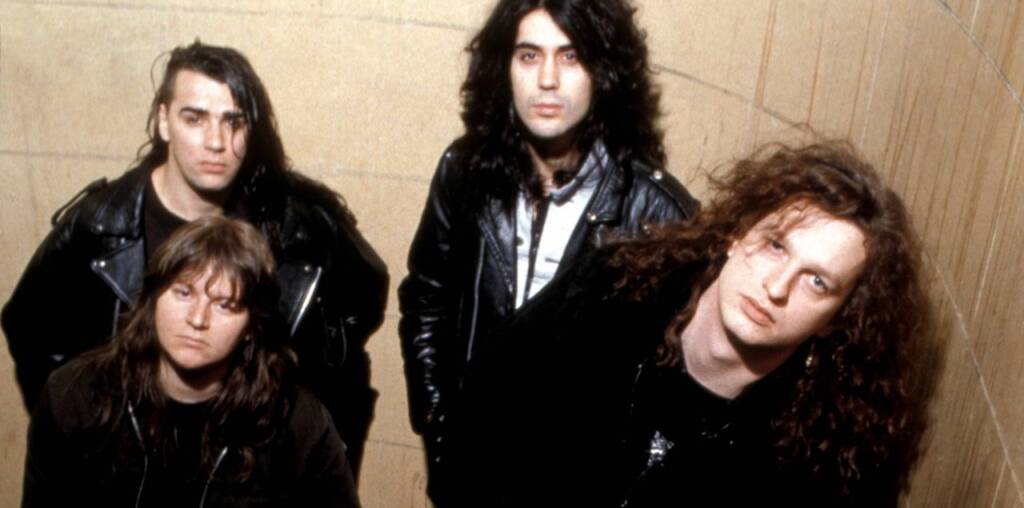
 In the 1980s, the world was going through rapid change, both politically and environmentally. Ronald Reagan flexed his presidential might by devising the ‘Star Wars’ program, a missile system to protect the USA in the event of a nuclear attack. The damaging effects of acid rain and the erosion of the ozone layer were both in the news, while the devastation caused by the Chernobyl nuclear disaster led people to think that the world could end much sooner than the most cynical of thinkers could ever imagine. Over in Montreal, Voivod were preparing to inject a hefty dose of prog into their thrash and these global events weighed heavily on the band’s minds, as drummer Michel ‘Away’ Langevin reveals in this interview conducted on the album’s 30th anniversary in 2017…
Killing Technology is notable for the band really laying your influences on the table. What led to that?
“We tried to incorporate prog elements on War and Pain and Rrröööaaarrr, but it was mainly influenced by Motörhead, Venom and a bit of punk. But by the time we did Killing Technology, we really went for it; not only prog rock but what we called alternative music back then – bands like Killing Joke, Bauhaus and industrial music. We also started to integrate soundtrack music from sci-fi movies we were watching. It became a strange hybrid.”
Did everything fall into place easily considering the time constraints?
“Yes, but we actually didn’t overthink it that much. At the time, we were doing one album a year and touring. We were in Europe with Possessed, and when we got to Berlin, we stopped to make a new album. That meant we had to write Killing Technology before we went on tour to promote Rrröööaaarrr. But in Berlin, we had access to a lot more studio equipment than we were used to, so it accelerated the process.”
What was Berlin like before the wall came down in 1989?
“When we got to Berlin, we realised that it was a neutral zone where the artists were moving to, to escape the draft. There were artists and cafes everywhere. It reminded me of Montreal a lot. We tried to go across the wall many times, but they said we looked too funny so were unable to. There was a very happy atmosphere with a sort of oppressive vibe, in a way, and I can hear it on both Killing Technology and Dimension Hatröss.”


What was it like watching Piggy [the late Denis D’amour] play guitar during these sessions?
“Piggy had a fascination with Jimmy Page and Jimi Hendrix, but his heroes also included Alex Lifeson and Robert Fripp. He told me he learned how to play strange chords by playing Emerson Lake and Palmer on guitar. I asked him, ‘where did you learn those chords?’ and he told me that played Keith Emerson’s organ parts on guitar and discovered tons of new chords that way.”
Even the album was released in 1987, its themes still resonate today.
“Yes, Killing Technology was written during eventful times and the title track is about technology going awry; these were times which showed us the future was more uncertain than ever. Nowadays, we are talking about the same subjects, instead now it’s the Fukushima [Daiichi] nuclear disaster instead of Chernobyl, it’s global warming instead of acid rain and the ozone layer. We’re still talking about the destruction of the earth one way or another, unfortunately.”
The title track alone could apply to the world today. What influenced that strand of thinking?
“I must say that when Snake [vocalist Denis Bélanger] and I sat down to write, we were influenced by science magazines who were trying to predict what the future would be like in 25 to 30 years down the road, so I’m not surprised that those lyrics are still relevant today. The times have not changed that much, but you can see the news unfold in real time now. It’s much scarier.”