 Written by
Aldous Harding’s music is warm and inviting, but it’s never quite clear who’s mailed you the invitation. The New Zealand singer-songwriter wanders around inside her psychedelic folk arrangements, singing in private riddles and changing the tone of her voice from one song (or even one verse) to the next, seemingly oblivious or indifferent to your presence. Despite the many distinct people she embodies, she never struggles to contain her multitudes. She’s like a veteran character actor: You forget, very quickly, to recognize her.
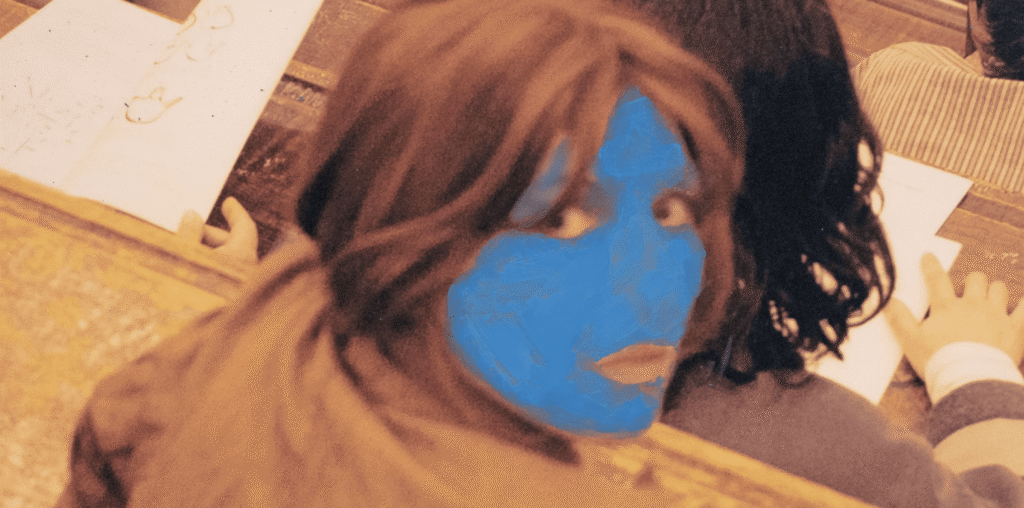
On her career-best album, Train on the Island, Harding steps closer than ever to the camera lens without coming into focus. The lyrics to the sparkling first song, “I Ate the Most,” mimic a harrowing confession: “Sometimes I eat till I vomit/There’s heavy and there’s heavier/I’m nine and I love my mommy/Silver hair and Ritalin/If I’m safe and love is a spectrum.” Harding sings in the hooded, lower end of her range, and the music is filled with nighttime sounds—chittering percussion, organ. The atmosphere is charged, intimate. But somehow, despite having her voice pressed against your ear, you never suspect that this “I” Harding sings about could be, well, Harding. Or perhaps you grasp that Harding understands better than most that the first-person “I” is a temporary garb, liable to assume unrecognizable shapes right in front of the mirror.
No score yet, be the first to add.
Harding’s work blends instinct with intent—she will surprise herself with an odd lyrical gesture, an unaccountable vocal choice, and then deliberately choose to keep it. “He’s got a new bag/He’s not a new boy,” she sings, repeatedly, on “If Lady Does It.” Is this a riddle assayed by a fairy-tale creature? A suggestion of transformation, possibly gender-related? You are the only interpreter, and the melting signifiers of Harding’s lyrics grin at you without offering assistance. “You laugh at me for keeping feathers/But you don’t see me helping down the naked owl,” she accuses someone on “San Francisco,” and it is true, I suppose: We don’t see her helping down the naked owl. The words settle, glowing, into our subconscious, where we keep the inexplicable things.
Harding has been quietly mapping the coordinates towards Train on the Island over the course of her first four albums, each a little deeper and stranger than the last. These 10 songs represent her ideal playground, a space bright and broad enough for her dreamlike visions and mutable voice to take whatever shapes her imagination allows. On the first single, “One Stop,” she sings a sturdy, bright topline that could have furnished someone less perverse—a late-’90s singer-songwriter, maybe—with a radio hit. But the song is bent in covert ways from the inside, and moves in strange, counterintuitive directions. Over the stair-step piano of the song’s first half, Harding offers images like recounted dreams to a bewildered partner the next morning: “I met the real John Cale/I packed the stage while he ate rice.” Halfway through, the song changes key and Harding begins singing the lines “Why wouldn’t I wanna meet you?/Why wouldn’t I wanna hold you?/Why?” Her voice is slurred, needful, abject. It feels so raw it’s nearly indecent, but it has the distance of a stranger’s panic attack, living inside you in the same unsettled way as overheard sobbing does—all of the desperation reaches you, none of the context.
She shows no interest in lingering on any of these extreme states, which might give us time to adjust to them. Her songs shift keys and alternate sections with the fleet logic of orchestral suites or film-score cues—“What Am I Gonna Do?” even rides out on a dream-sequence style harp glissando—while never breaching the six-minute mark. On “San Francisco,” the “Why wouldn’t I wanna meet you” lyric resurfaces, like a motif, but with the skin-prickling elaboration “I’ve never been a believer/I never cry when I’m told,” before disappearing once more. Listening to her sometimes reminds me of listening to Van Dyke Parks’ solo records, where moments of deep beauty and apparent great feeling conceal booby-traps.
Unlike Parks’ baroque arrangements, Harding’s leave lots of negative space for our imaginations. The individual parts of each song are simple: The title track is just two piano chords, a three-note bassline, two notes on guitar, and a simple drumbeat. But when these elements lock together, they generate oceans of implication: patience, wariness, resignation. She has a telepathy with the band that recalls Cat Power’s ensemble on Moon Pix. Her voice hugs the downbeat so closely that I sometimes get the faulty perception that the snare is triggering her entrances like a sample pack.
Train on the Island continues Harding’s fruitful collaboration with John Parish, the English producer and songwriter. His longtime partnership with PJ Harvey might have prepared him for an artist willing to don as many masks as Harding, who sometimes seems to be trying to fit in all of Harvey’s career personae into a single record. He records Harding like a director framing and lighting their pet-favorite actor. Whoever she wants to be, whether a Jessica Pratt-like forest spirit on “Riding That Symbol” or a jazz singer mimicking a trumpet on “If Lady Does It,” Parish knows the seance-like arrangement of microphones that will allow the transformation to occur.
Finding the “real” Harding on record, then, is a fool’s errand. And yet there are moments where I entertain the brief delusion I’ve spotted her: “I’ve met my sleeping self/The things she says keeps me around,” she sings on “What Am I Gonna Do?”, which feels tantalizingly close to a statement of purpose. When she sings “dishonest art in me” on the drowsy “Venus in the Zinnia,” it feels like a spiritual diagnosis, possibly even a terminal one.
What does “honesty” look like for an artist like Harding, as unguarded as she is unknowable? I keep rewatching the clip to “One Stop,” seeking answers. In it she appears to be dancing inside some large, rusted-bucket-like enclosure. Her hair is shining wet, her eyes troubled and far away. She moves with a performance artist’s survival instinct; she sits huddled, arms over her knees, rocking. The longer you watch, the more each gesture begins to feel like the only possible one, even inevitable. Harding tunnels further and further away from us, towards some internal spot marked by the worry-crease in her forehead. She glows brighter with each passing second.