
 Written by
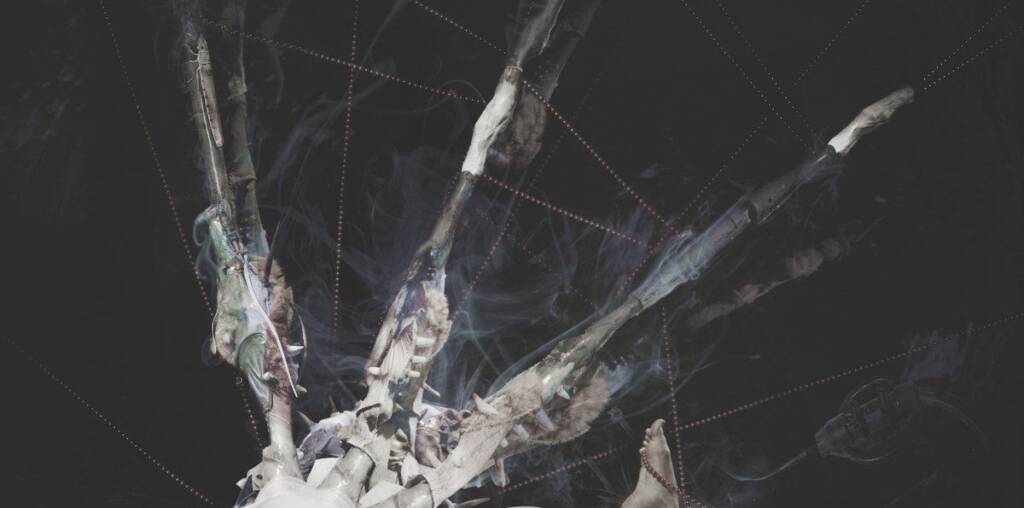
Luis Garbán Valdeón is no stranger to parties: for years, he has commanded the international warehouse circuit, playing industrial, techno-forward sets under the moniker Cardopusher. Now, as Safety Trance, he offers his experimental take on mutated reggaeton through Venezuelan influences like raptor house, alongside dembow, ’90s Memphis rap, and witch house. The mix of genres and collaborators on his new album, sacrificio, feels distinct to someone who’s been integral to the neo-perreo movement for years. It’s the most readily accessible music of his career, as well as a glitchy, uncanny record that aims to crack through reggaeton’s status quo to reclaim space for counterculture and community.
Though operating at the center of the Venezuelan underground, Garbán embodies the disconnect between the scene’s international acclaim and domestic invisibility. Venezuelan media tends to ignore local electronic music or treat it as a curiosity, reflecting a socially conservative mainstream culture. This collective movement, queer and from the barrio at its core, is a set of names appreciated in niche circles. But beneath the weight of la crisis, Garbán and peers such as DJ Babatr and Arca are flourishing globally. In 2024, he gave his first performance in Venezuela in almost 14 years, sharing the stage with a constellation of Venezuelan artists at Arca’s Boiler Room session in Caracas. The show was a homecoming not only for its lineup, but also for many attendees coming from abroad for the first time in years, celebrating a rare chance for the local, mostly queer, community to express itself freely.
No score yet, be the first to add.
On sacrificio, Garbán leads the way through an underworld fantasy and nightmare, using the night as a canvas for disruption, chaos, and softness. Opener “the beat drops” arrives in the center of the rave, building toward a chaotic zenith with heavy bass and pitched vocals by longtime friend Arca (they previously collaborated on his 2022 breakout single “El Alma Que Te Trajo” and several tracks from her Kick collection). The wild switches that follow feel like jumping between the bathroom and the dancefloor. “most of me (is elsewhere),” a standout collaboration with Sega Bodega and Eartheater, reveals a tender side of his sound, reminiscent of Arca’s most ethereal early work and the emotional charge of Björk’s “Hyperballad.” Up next is “no me quiero dormir,” a late-night heavy-hitter where Argentinian neo-perreo empress Six Sex pays homage to after parties and “puti-shorts.”
Garbán continues to explore the daze of the club with the trance-inspired “except in spring,” featuring Lolahol, aka Madonna’s daughter Lourdes Leon. Released as the album’s first single, it makes for a strangely ominous introduction to a record that’s truthfully way more exciting. “curiapo,” the most disruptive moment, is more representative. Named after an indigenous town in the isolated and sparsely populated Venezuelan state of Delta Amacuro, it’s an out-of-a-horror-film interlude that feels like the kinkier sister of Garbán’s 2022 track “X Cantidad,” with knife-edged keys and unintelligible conversation crowding the background.
Like the party in Caracas, Garbán’s work on sacrificio represents a message of resistance that many queer Venezuelans, displaced from their country and culture, will hold in high regard. Two songs from the middle of the record illustrate his generational knowledge of reggaeton viejo and rave culture: “duro,” which joins forces with South African Argentinian DJ KINARA and Madrid experimentalist nusar3000 for a track that screams 2000s hardcore rumba à la Tego Calderón and Ivy Queen, and “puxa saco,” with Spanish Brazilian diva Lua de Santana, an excellent, trashy bad-bitch anthem that sounds like nothing else right now.
Garbán’s reggaeton-inspired production shines in conversation with older influences, and sacrificio is at its best when he’s least restrained. The album’s second half could have benefited from some of the dynamic collaborations found earlier in the record; its two final songs, “demuéstrame” and “se me ocurrio,” are most Cardopusher-esque, and feel slightly out of place. But it hardly slows him down: “Ahora prepárate y demuéstrame todo lo que tienes” (“Now get ready and show me everything you’ve got”), repeats a threatening sample of a Venezuelan radio host’s voice in “demuéstrame.” Both eerie and invigorating, sacrificio draws a connection between reggaeton’s genesis and a rave-forward vision of its future from an artist who’s championed Latin counterculture for more than a decade. Evoking raw passion and absolution with a flair for world-building drama, Garbán casts Safety Trance as a dark lord of the underground scene coming to save us all.