 Written by
The greatest trick the Twisted Teens ever pulled was making you think they were a garage rock band. Sure, on its scabrous surface, the New Orleans group boasts the genre’s essential qualities: no-budget production; deliciously distorted riffs that suggest pawn-shop guitars with rusted strings; and a lead singer who howls like he’s nursing a killer sore throat and has run out of lozenges. But the world was hardly lacking for good-time garage rockers before Twisted Teens came along, so how does a group that was virtually unknown a year ago now find itself signed to Sub Pop’s roster, playing big rooms with the Breeders, and getting covered by Jeff Tweedy?
You can’t discount the band’s cross-generational appeal. Millennials might see the Twisted Teens as spiritual heirs to endearingly insolent post-Y2K garage heroes like Black Lips, the King Khan & BBQ Show, and the Deadly Snakes. Record-collecting Gen X cranks might be reminded of rickety ’90s fixtures like Cheater Slicks and Country Teasers. And even Boomers can close their eyes and pretend they’re listening to a bootleg of a pre-fame Springsteen. It helps that Twisted Teens frontman Caspian Hollywell is one of the most charismatic characters to emerge from the underground in ages, a natural-born storyteller—be it in song or interviews—whose vagabond backstory could easily sustain several seasons of a Netflix biopic series.
No score yet, be the first to add.
But a band doesn’t earn its New York Times profile on good taste and great anecdotes alone. Twisted Teens’ most compelling quality might be the fact that their obvious reverence for rock’n’roll history still leaves plenty of room for mystery, and the intrigue deepens on The Holy Cross Tigers, the group’s third full-length of 2026. Where most garage rock is designed to punch you in the gut, Twisted Teens’ songs seep into your bloodstream, tugging at the heartstrings while occasionally inducing hallucinations. Despite the beery bonhomie and singalong-friendly simplicity of their tunes, the Twisted Teens are grappling with an increasingly complex tangle of contradictions and tensions.
There’s the odd-couple relationship between Hollywell’s sandpapery rasp and RJ Santos’ honey-dipped console steel guitar. There’s the temporally disorienting effect of their old-school ramblin’-band energy and Southern-baked soulfulness barreling into drum-machine backbeats. And then there are those fleeting, fascinating moments when Twisted Teens cease to be a rock’n’roll band at all: The guitars cut off, the drums sputter out, and we’re briefly plunged into a netherworld of strange synth loops and random samples until the next song comes charging in to snap us out of a daydream daze.
Like Bob Pollard, another classic-rock surrealist, the 43-year-old Hollywell is making the most of a surprise middle-aged career breakthrough by keeping the tape rolling in his home studio at all hours. The relentlessly prolific group has become the sort of act whose promotional interviews for a given record ultimately become teasers for the next album in the pipeline. But they never give the impression of data-dumping for the sake of it; each new color-coded release feels like a carefully considered chapter in an ever-expanding tome.
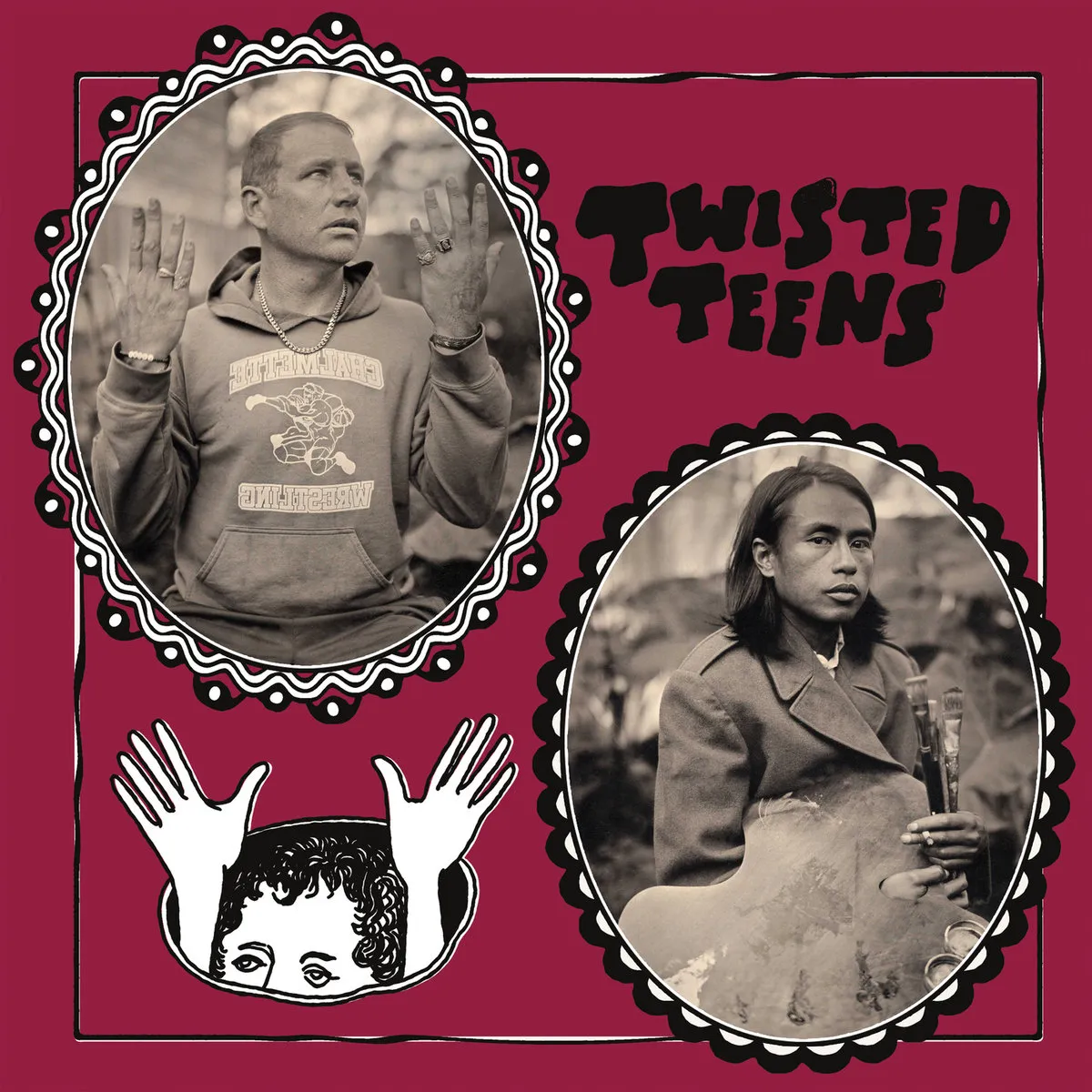
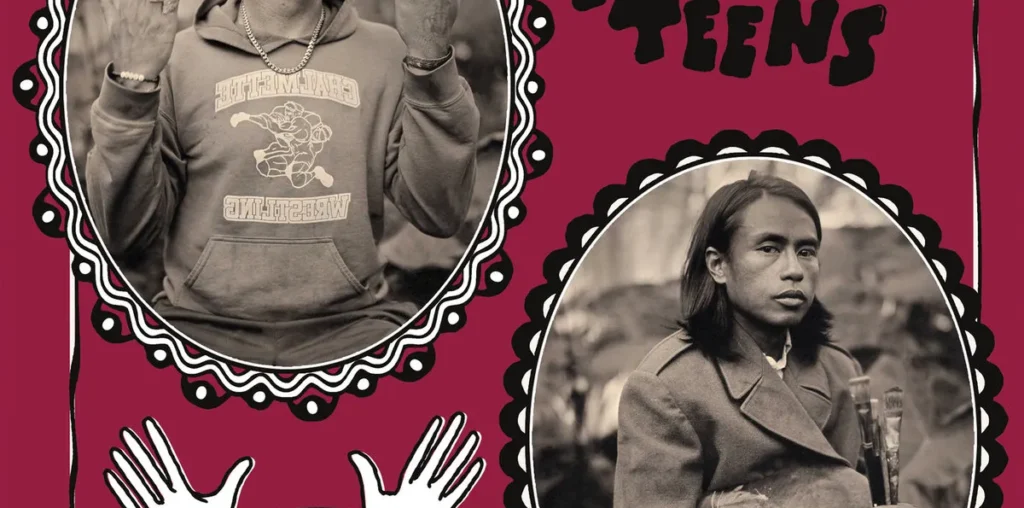
The Teens’ previous two albums divvied up a large batch of accumulated tracks according to their general vibe: February’s Blame the Clown packaged its irrepressible rave-ups in vivacious green cover art, while July’s Florida Water Blues favored cerulean hues befitting the more crestfallen mood. The cover art for The Holy Cross Tigers is awash in burgundy, a more ambiguous shade that’s indicative of the oppositional emotions stewing within. It’s billed as Hollywell’s breakup opus, but he’s too gregarious a host to bum out new arrivals to the Twisted Teens’ party—The Holy Cross Tigers finds the band still running hot even as Hollywell’s heart has grown cold.
“You know I’m not drinking for pleasure,” he ominously informs his server over the chipper country-rock groove and sweet George Harrison-esque guitar slides of “I Spend My Time Crying,” and he spends much of the record perched at that barstool interzone between merriment and melancholy. Depending on your stage in life, the rollicking “When We First Met” could be the sort of lovably nostalgic ode that you and your sweetheart dance to on your 10th wedding anniversary, or the whiskey-soaked heartbreaker you drown yourself in after the divorce. Here, Santos’ steel-guitar ornamentation is more than just a soothing melodic counterpoint—it’s almost like he’s trying to singlehandedly slow down the song’s runaway-train momentum, to give Hollywell a bit of extra time to linger on those warm first-date memories before they fade away for good.
While not exactly a concept album, The Holy Cross Tigers is, as one frantic rocker puts it, “Armed With a Vision.” Fittingly, for someone who’s no stranger to living off the grid, Hollywell frequently looks to nature for guidance, taking comfort in the resiliency of the flora around him and the knowledge that “when a tree is split in two,” it’s ultimately “leaving room for something new.” On the sad-eyed power-pop salvo “Stalks,” he warns us that he’s “about to taste the dark side of the moon/And wallow in bloody business,” but he cedes to the meditative properties of the surrounding yarrow in full bloom. Toward the end of the record, he’s practically dishing out botany lessons as motivational advice: “Seeds do not flourish in the sunshine/Overturn and cover it up with dark,” he assures us atop the carnivalesque stomper “Every Flower,” before driving that darkest-before-the-dawn sentiment home with the communal campfire singalong “Darker the Night Is the Brighter I See.”
In between those two complementary tracks, we’re treated to a brief electro experiment that houses a spoken-word lecture from veteran bluegrass artist Alice Gerrard about Kundalini philosophy—a glimpse of both the avant-garde instincts and spiritual yearning tucked behind Twisted Teens’ old-time rock’n’roll veneer. With each new Twisted Teens record, it feels like those weird glitches in their musical matrix are becoming more feature than bug, and more regularly seeping into the songs proper: In its home stretch, the adrenalized twang-punk of “Blue Rose” is subjected to a murky dub remix in real time, a sudden mutation that enters its next evolutionary stage on the instrumental sister track “Blue Flower,” where Twisted Teens are momentarily reborn as beatmakers for goth breakdancers.
In moments like these, Twisted Teens records sound less like the work of a live, in-the-raw rock band than a mixtape collage of one, with subliminal intrusions that sound like they didn’t fully wipe an old tape before hitting record on the new songs. Speaking to the How Long Gone podcast recently, Hollywell summed up Twisted Teens’ formative philosophy: “The real hard thing is not to compose the rock opera. The real hard thing is to compose ‘Love Me Do’ again.” With The Holy Cross Tigers, he once again rises to the challenge of writing a bunch of infectious, easygoing tunes about surviving the hard times, but he also leaves you with the sense this band is secretly itching to make its “Revolution 9.”