 Written by
The Yeah Yeah Yeahs’ mythology was built on abandon. Across Lower East Side dives in the early 2000s, Brian Chase, Nick Zinner, and Karen O put on otherworldly rock shows that verged on performance art—a blaze of vodka-spitting, mic-fellating, IDGAF unruliness and explosive, clamorous tracks. But the indie trio has always operated at two registers: riot, yes, but also ache. That latter quality is there on the back half of Fever to Tell, their 2003 debut, and on later ballads like “Warrior” and “Skeletons.” “Maps,” a career-defining song, isn’t a screamer but a torch song about anxious love. You could argue that this heart-on-sleeve vulnerability is what made their early shows so electric. The point was never instigation but pure, unbridled feeling.
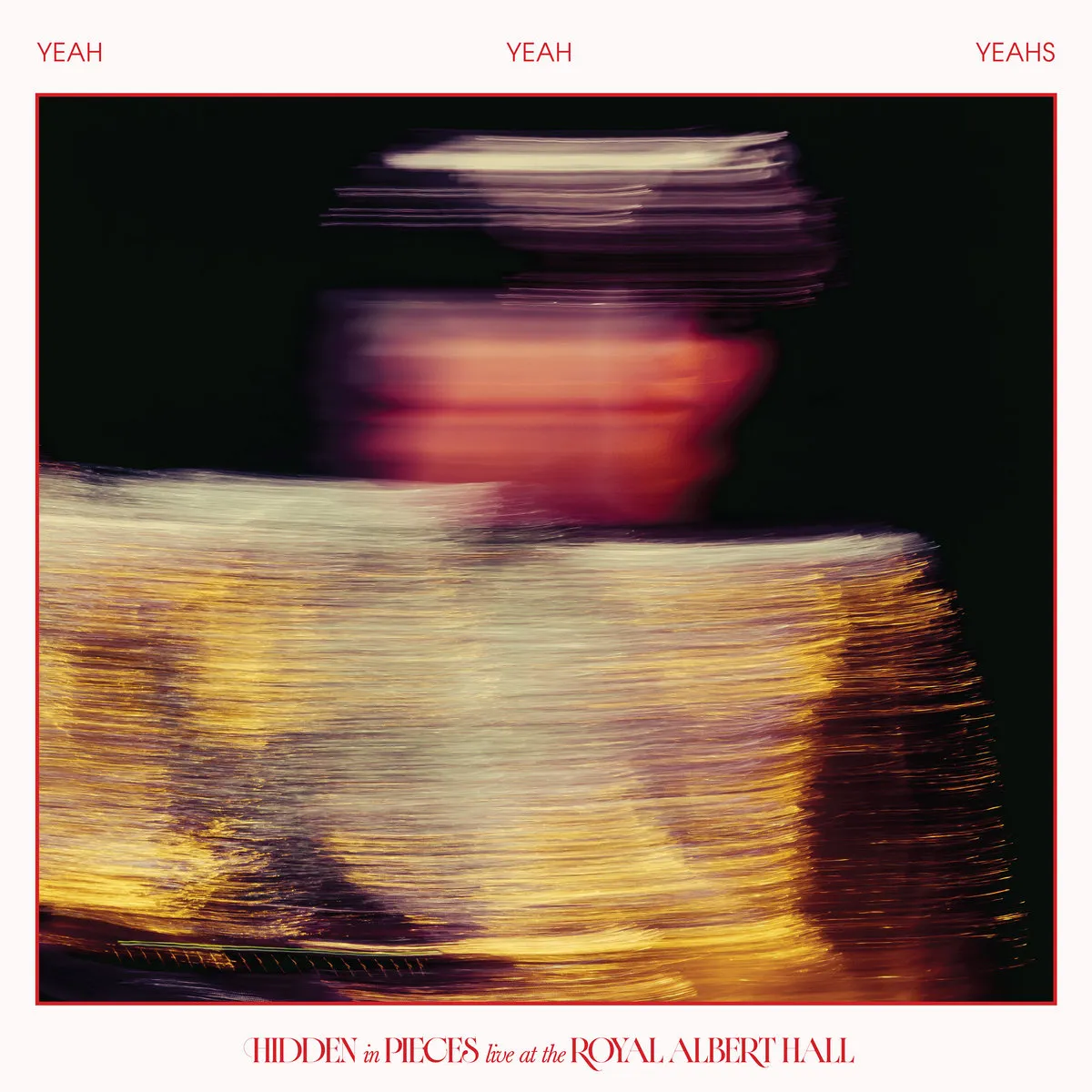
Hidden in Pieces, the band’s first proper live album, leans into that ache, recasting their early friction and ferocity into tender, clear-eyed reflections. Recorded during their 25th-anniversary tour over two nights at London’s Royal Albert Hall (the digital deluxe edition adds highlights from other stops), it adapts selections from across their catalog in more intimate arrangements, often incorporating a string quartet and the hall’s famous organ. It’s a credit to the songwriting that this gentler treatment works so well; peel back the feedback, synths, and drum machines and you’re left with sturdy, versatile songs.
No score yet, be the first to add.
The evening begins with a goodbye. David Lynch died a month before the group began rehearsing; in tribute, Karen O, a devoted fan and collaborator, opens with a light, loving rendition of “In Heaven,” the eerie ditty from his 1977 film Eraserhead. As the band slides into “Blacktop,” with its floaty, tiered arpeggios, it sets the show’s emotional tone: grief folded into celebration, the uncanny beside the sweet.
The ballads are the main event, and they take on new dimensions in this formal setting. “Skeletons” trades its electronic haze for pitter-pattering snares and pipe organ, and “Hyperballad,” a Björk cover that Karen O and Zinner used to play in the East Village when they were “just kids,” transforms clubby heartbreak into a lullaby. When the crowd takes over the chorus of “Maps,” belting the lyrics like it’s 2004, you can hear Karen O murmur “holy shit” just off mic—a fair reaction to that much collective emotion. Through it all, her voice is a revelation: It shakes, drops into spoken word, and reaches for notes that don’t always land. But the imperfections only make her more commanding. When she sings, you believe her.
Sometimes the new treatments don’t soften the songs so much as reimagine them. “Isis” turns stormier and more formless, a wave of frenetic strings that suddenly breaks, and “Cheated Hearts” toggles between call-and-response “ooh-oohs” and squalls of noisy percussion.
Songs from Cool It Down, the band’s most recent and thematically serious record, cut the deepest. “Spitting Off the Edge of the World” carries more weight as a strummy folk song than with the towering synths of its album version. And when Karen O introduces “Mars,” a spoken-word meditation on motherhood, by addressing her son Django in the audience (“Remember that time we watched the sunset just the two of us? This song is about that,” she says), the cavernous hall narrows to just the two of them.
Some bite is lost in translation, of course. “Warrior,” which once smoldered with tension, turns bluesy and cool, no longer coiled to snap. And “Zero,” a song made to detonate a dance floor, feels buoyant unplugged, but never incendiary. What’s missing is danger, or at least volatility, but those mostly belong to the young. In their place, the band offers warmth and muscle: raw, exposed vocals, and swelling crescendos built with sweat. That this much power survives without the synths and drum machines is a thrill; they may have stopped crawling and thrashing around stages, but they’ve still got teeth.
The digital deluxe version of the record also includes performances from San Diego, New York, Chicago, and Mexico City, and Sonic Ranch. It ends there, at the Texas studio where the band built these arrangements with composer Jherek Bischoff, and closes with “Blacktop,” coming full-circle. Looser and more spacious than the Cool It Down original, and crisper than what you hear at Royal Albert Hall, the Sonic Ranch version unfolds in walls of cascading arpeggios that rise and fall without quite resolving. “Maps” may be the album’s heart, but “Blacktop” is both its sonic centerpiece and its wellspring, proving that 25 years in, the band is still working out what its songs can do.