 Written by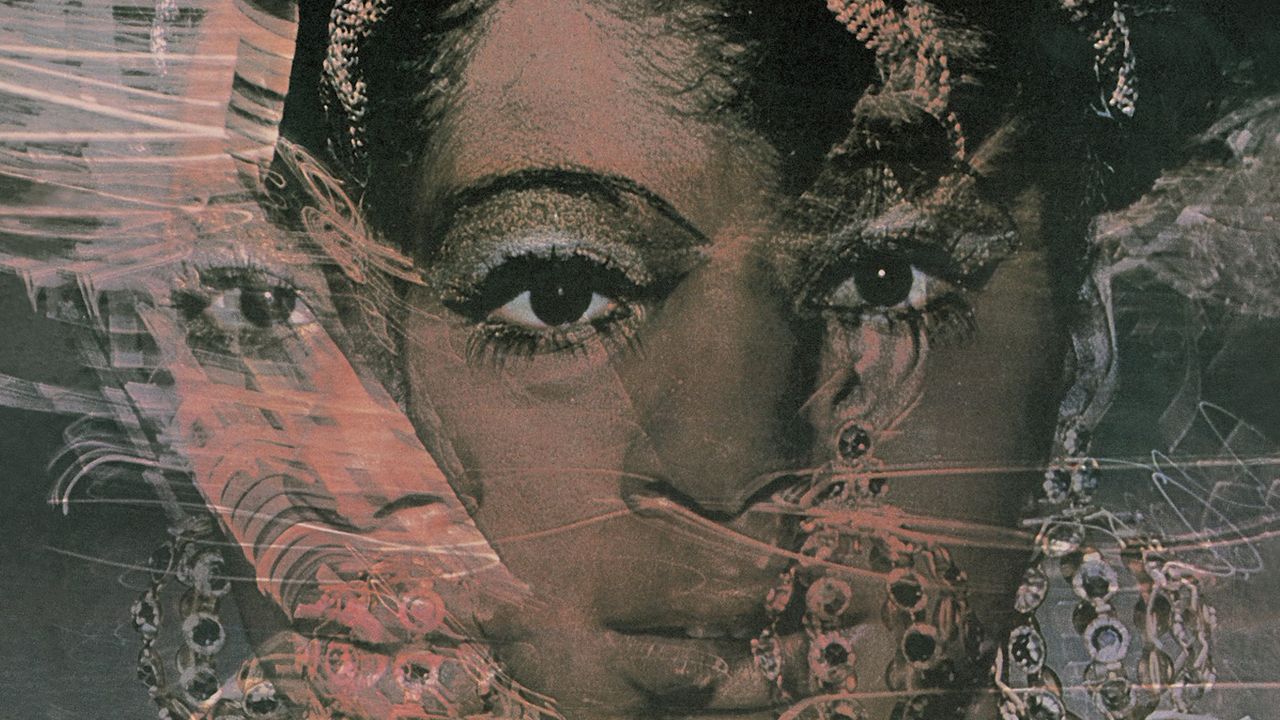
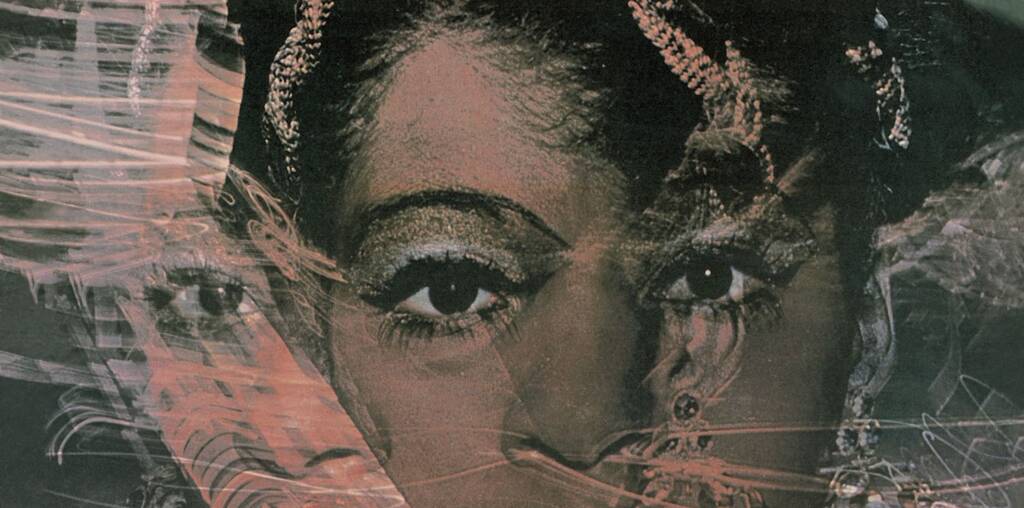
It was October of 1968 and Miles Davis was in love. Not with Frances Taylor, his wife of nine years and cover star of his 1965 album, E.S.P. As she put it matter-of-factly, “a week after [that photo] was taken I was running for my life” to escape the violence she suffered at his hands. They were divorced by early 1968. And not with Cicely Tyson, the movie star who graced the cover of his 1967 album, Sorcerer. Perhaps with Betty Mabry, since he had married the 25-year-old the month before and she would serve as muse for the cover of Filles de Kilimanjaro, though even that marriage wouldn’t last a year. But Miles was smitten with one of Mabry’s friends: Jimi Hendrix.
Jimi Hendrix had the attention of a new generation after he unleashed Electric Ladyland that same month, a double album that encompassed multiple genres without being beholden to any one. Miles, now in his 40s, had that tactile sense of irrelevance that only middle age can bestow, the modern world roaring in his ears as it geared up to leave him behind. Hendrix’s producer Alan Douglas recalled: “Miles wanted to work with Jimi very badly. Jimi was probably the only musician that Miles could not fully understand. He couldn’t figure out where Jimi was coming from…Jimi had the contemporary edge and Miles was always reaching out for that.” And despite two years of hanging together and chopping it up about music, a studio date between the two fell apart at the last minute.
No score yet, be the first to add.
The influence of Hendrix on Miles’ music would grow over the ensuing years, fully manifesting as an electric behemoth that defined his output in the 1970s. But these seeds were planted back in 1968, when Miles was still riding on the critical wave of success engendered by his “Second Great Quintet.” In the cloistered world of 1960s jazz, Miles was still the scion of cool, wearing crisp Brooks Brothers suits onstage and taking hard bop to its outermost limits, helming a band so bad that Amiri Baraka deemed them “the all-time classical hydrogen bomb and switchblade band.”
Beginning with E.S.P. in 1965, that quintet—drummer Tony Williams, bassist Ron Carter, keyboardist Herbie Hancock, and tenor saxophonist Wayne Shorter—pushed the forms of jazz to its breaking point and is rightfully considered one of the greatest working bands of that decade. “The music we did together changed every fucking night,” Miles marvelled in his autobiography. “Even we didn’t know where it was all going to. But we did know it was going somewhere else and that it was probably going to be hip.”
But by 1968, Miles knew in his heart it was no longer hip. As did his young wife, now Betty Davis, who set about giving him a makeover. A multi-hyphenate scenester with feelers seemingly everywhere, Betty did fashion design, penned songs for the Chambers Brothers, modelled in Ebony, Jet, and Glamour, rocked an afro as a contestant on the Dating Game, was co-owner of a teen hangout in the Village, and dreamed of becoming a singer herself. She blasted the hip music of the day—turning Miles onto Hendrix, Sly and the Family Stone—and put her beau in wraparound shades, leather vests, and denim bellbottoms.
Such proximity to youth also led Miles to slowly incorporate electronic instrumentation into the quintet, a move away from purely acoustic jazz that introduced hairline fractures within the group that would eventually lead to its split. At the start, some of that newly amplified instrumentation was merely a matter of survival, as drummer Tony Williams could overwhelm any bandstand at any moment on his kit. He had joined Miles’ band at 17 and became one of the last great drummers in jazz, inverting the role of the rhythm section in a group. Rather than reach for Buddy Rich’s level of bombast, Williams could astound with a flick of his wrist. And with each new Miles album, Williams’ sense of assurance grew. At times, the rhythm section took the lead, and the horns were made to follow in his wake.
For a January session in 1968, a young George Benson guested on electric guitar. On the next date, Ron Carter was tasked with playing electric bass and Herbie Hancock was directed to a Fender Rhodes in the studio; neither player was too happy about the new instrumentation. These recordings would comprise Miles in the Sky, a transitional work often rated the weakest effort of the Second Quintet; its Beatles-referencing title comes off as an older guy playing young.
Biographer John Szwed noted that “judging by his earliest amplified works, [Miles] seemed to be seeking what might be called the electronic sublime.” Miles booked three more days the very next month, for sessions that would become Miles’ first groundbreaking album release of 1969, Filles de Kilimanjaro. A bass guitar and Fender Rhodes organ were present in the studio again, as was Miles’ longtime friend and collaborator, Gil Evans. Both men were avowed Hendrix enthusiasts, Evans an even earlier adapter than Miles. On the side, he had begun to sketch out orchestral arrangements that would feature Hendrix as the main soloist. Perhaps still hesitant about which way to go with these new “no longer jazz” sounds, Miles leaned on Evans for his ear and sensibilities.
The eight-minute “Little Stuff” was cut that first day, and in that brief span of time, Hancock was already audibly more comfortable at the Rhodes, his left-hand chording nimble, his runs boasting a feathery touch on the keys. And whatever figure he elicited from those keys, Williams is right there with him, skittering and punctuating each gesture with a complimentary one, his way around the tricky 11/4 time signature of the tune hinting both at rock’s steady backbeat and jazz’s complexities. While that tune and the others to follow all hover around the key of F, writer Marcus Singletary found in this brief tune “a mosaic of controlled chaos…[the] musicians mostly follow each other instinctively into such undefined territory.” And rather than return to the song’s theme, it fades out quickly, a reverie interrupted.
A more ambitious tune was cut the next day, “Right Away,” with Davis again aided by Evans (though he wouldn’t receive a writing credit for it). The piece alternates between a slinky theme suggestive of interstitial soundtrack music and an uptempo middle section, Williams’ cymbal work urging things along, while also suggesting a growing restlessness within the group. (Within the year, he would helm his own trio, favoring a harder, louder, more adrenaline-charged approach to fusing jazz and rock together, cutting a two-disc aural blast, Emergency!)
According to saxophonist Steve Potts, he was at Miles’ home one night and watched him compose the melodic theme of “Filles de Kilimanjaro” on an African thumb piano. The title wasn’t in tribute to his new girlfriend, but rather a Kenyan coffee cooperative run by Miles’ longtime friend Buddy Gist, with Miles, Lena Horne, and psychedelic-touting heiress Peggy Mellon Hitchcock serving as initial investors. A mesmerizing twelve-minute composition, it’s unhurried without feeling inert, propelled by a relatively simple bass guitar figure from Carter. Having picked up work recording jingles, commercials, and the like, Carter was well familiar with the electric bass. But he didn’t fully dig it, telling Terry Gross that he missed how an acoustic bass lets you change tone by touch: “The upright player who is really conscious of the sound choices he has at his command with his hands will miss those choices playing electric bass.” Having two young sons at home was further incentive to stay off the road, so Carter became the first quintet member to bow out.
Hancock fell ill on his honeymoon down in Brazil and missed a September studio date, so Davis fired him outright, replacing him and Carter with two young up-and-comers, Chick Corea and Dave Holland. They factor into the two pieces that bookend Filles. Opener “Brown Hornet” finds newcomer Corea filling in more space than Hancock, while Williams’ drums torrent all around, threatening to wash the whole group away.
And then there’s the 16 minutes of the closing number, named for Miles’ newest wife. Evans rejiggered three of Hendrix’s chords from “The Wind Cries Mary” in arranging “Miss Mabry,” providing an upward lilt at the end of each 18-bar chorus. This new rhythm section expertly dawdles like it’s Sunday morning; even Williams sounds relaxed. It’s three whole minutes of minimal movement between the three before Miles finally wanders in (Shorter doesn’t enter until past the halfway mark). Moving as if he’s still in his bedroom slippers, Miles takes what might be his longest, slowest solo on an album, a languid, six-minute wander through a liminal space the band opens for him, full of pauses, beautiful half-phrases, sighs.
It’s not quite a ballad, yet not quite solid. Miles’ predilection for subtraction—dropping notes, bars, melodies, even players out—gets taken to its natural endpoint here, to where the music itself became sublimated, something gaseous in the air. For the next decade or so, Miles’ subsequent music became more like what writer Michael Veal called “smudged pastels, charcoal, and watercolors…full of phantom gestures and erasure.” A sketch of a woman instead of a real woman.
At the 11th hour, Miles decided that all the song titles needed to be in French: “Miss” would now be “Mademoiselle Mabry,” “Tout de Suite,” “Petits Machins,” etc. And he gave himself a new title on the cover: “Directions in Music by Miles Davis.” When released in early 1969, critics in both jazz and rock camps loved Filles de Kilimanjaro. One review deemed Filles “a profound and mystical experience…a place where you may enter, but cannot leave without being changed.”
Down Beat awarded it Jazz Record of the Year while Rolling Stone raved that words could not “begin to convey the beauty and the intensity [of the music]…it’s got to be heard to be believed. There’s never been another quite like it before.” Jazz critics could still claim it was jazz, while rock writers began to hear new forms moving in it, and for a brief moment, both were satisfied.
In Filles, there’s summation, destruction, decay, creation, and new possibilities all within. It brings together Davis and Evans for one last collaboration, and also offers one final glimpse of the Second Great Quintet before they scattered. And yet, as mystical as the music can be, none of it was ever played live in any capacity. That music was never heard again once they left Columbia Studios that final night. What at the time felt like a towering achievement by Miles Davis would soon be overshadowed by far greater peaks. In less than a year, Kilimanjaro would be reduced to foothills in the wake of the two albums that followed, 1969’s In a Silent Way and 1970’s Bitches Brew.
But soon after, Miles realized that a real flesh-and-blood acoustic jazz group was no longer needed. Filles is a farewell, the last studio album by Miles to feature real performances in real time, by a group doomed to disband, though with players who could now expand like a gas wherever they went. While Shorter stayed on through the brief lifetime of Miles’ “lost quintet,” each man would go on to become a legend and a star of their own accord. Even the concept of a band playing together in the studio became an outdated concept. Filles de Kilimanjaro offered the first real glimpse of electric Miles, but was also the last time a “take” was even a concept worth capturing. The music would ever-flow in the studio from now on, the tape rolling, moments made by an edit and reconfigured into something new.
Less than one month after A Silent Way was released, barely six months since Filles, Miles told an interviewer: “I don’t know what to say about those albums now. They seem like they’re fifteen years old to me. It’s a nice way to play, but there’s something else happening now…The records, those are like plastic thoughts.” Similarly, by the summer of 1969, he and Betty were through. She was done with his mental and physical abuse; Miles accused her of cheating on him with none other than Jimi Hendrix.