
 Written by
While Usher was off basking in the afterglow of Confessions, maturing into a divorcé in the mid-2000s, the R&B world was already priming itself for a new-school successor. A few contenders emerged: B2K frontman Omarion, then releasing his second album; Trey Songz, a 21 year old with a rich, gritty tenor; and talented supporting acts like Mario and Bobby Valentino. The clear frontrunner was Chris Brown, a 16-year-old multi-threat from Virginia who sang, rapped, and danced like his limbs were made of gas-station inflatables. As a friend pointed out at the time, Ne-Yo was at a comparative disadvantage: At 26, he was older, less adorable, and didn’t dance. Where his younger contemporaries led with sex appeal and bravado, Ne-Yo played the role of the guy perpetually stunned that the baddest woman in his orbit experienced heartbreak.
After several label rejections and a failed solo deal with Columbia (the label regifted “That Girl,” a single from Ne-Yo’s then-shelved album, to Marques Houston), Ne-Yo sought another way into the industry. He doubled down on songwriting and ended up crafting the most effective cover letter in the biz: Mario’s swooning 2004 hit “Let Me Love You,” where he pitched himself as a safe space for a woman in distress, over strings that wept alongside him. The song topped the Billboard Hot 100 chart for nine consecutive weeks, became an instant hallmark of the mid-2000s, and cemented Ne-Yo’s brand of heartfelt autofiction. (He said he wrote it as a lament for a friend in an abusive relationship.) By 2005, Ne-Yo had enough credits and growing prestige to earn an ear at Def Jam, where he performed and played demos for the label’s then-head of A&R, Tina Davis, during an impromptu visit. She introduced him to Antonio “L.A.” Reid, who offered Ne-Yo a recording contract on the spot, betting that his songwriting acumen would be a key selling point for his solo debut.
No score yet, be the first to add.
The odds weren’t exactly in Ne-Yo’s favor. Trey Songz dropped his debut, I Gotta Make It, in July 2005. Chris Brown’s self-titled debut arrived four months later in November. Heartthrob R&B was suddenly abundant, and Ne-Yo could only compete so much. With In My Own Words, released in February 2006, he played to his strengths and set a blueprint for songwriting as a ticket to stardom, as long as you had the voice, vision, and star power to back it up. That same month, Vibe affirmed Brown as the next big star with a cover christening him “The Future of R&B.” His coronation signaled where the genre was headed—away from the pleading old-guard types and toward a more fluid, hardcore hip-hop hybrid.
At the same time, women controlled the temperature of mainstream R&B such that, in early 2006, The New York Times declared “the toughest R&B songs on the radio were usually sung by women,” while perhaps too hastily noting that their male counterparts were “expected to be more docile.” (That escalated quickly.) In the preceding years, upstarts like Ciara, Keyshia Cole, and Fantasia (and later Cassie) delivered a steady stream of danceable earworms and anthems that resonated with millennial women, while established stars like Mary J. Blige and Mariah Carey showed what it looked like to free oneself from dream-selling men.
In a generation of heartbreakers, Ne-Yo became a living embodiment of the movie What Women Want. His music put melody and relatability ahead of acrobatics, and his overtures still had swagger. In My Own Words appealed to women not necessarily because his music made listeners fantasize about his celebrity, but because they might have hoped to discover a man like him in their own lives. Even when he sings about calling out the wrong woman’s name in bed and wondering whether she misses him on the album’s sexiest, messiest song, “It Just Ain’t Right,” he assures, “You don’t have to answer this if it’s too personal/But do your thoughts of me ever become sexual?” It’s simple, even unnecessary, courtesy—a Ne-Yo staple. And it stood in stark contrast to the material on Songz’s debut, where he sang, from the bottom of his heart, “I’m getting tired of the things you do to make me wanna cheat on you.”
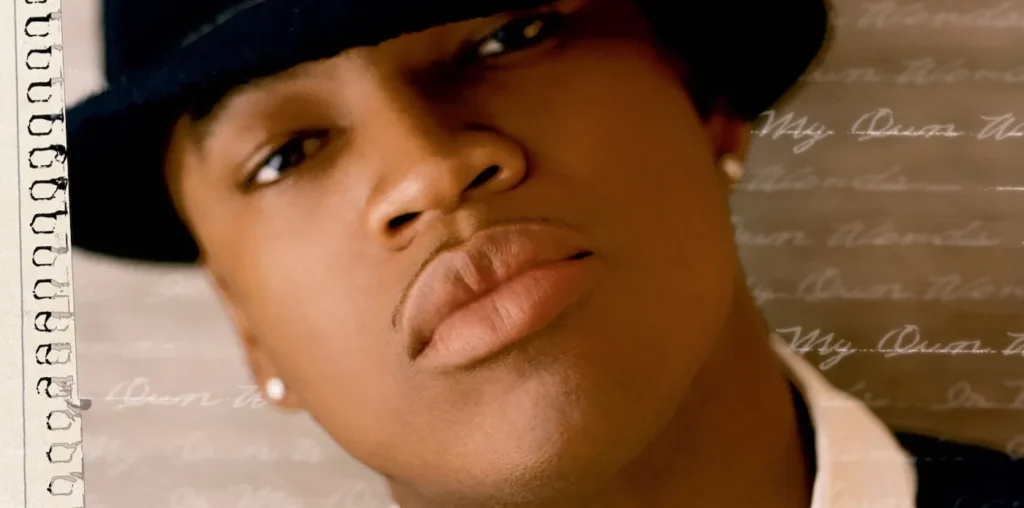
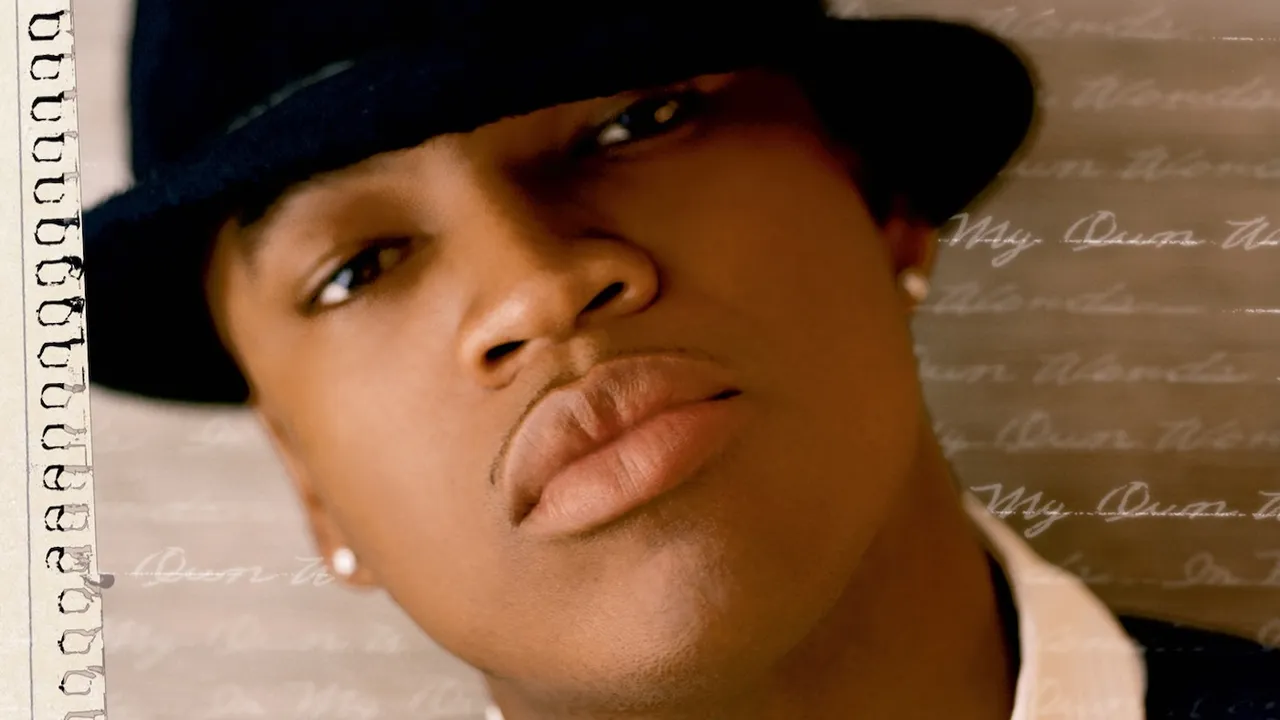
Ne-Yo was the first to admit he could never fully understand a woman’s mindset. It wasn’t that he set out to write love songs for them. He simply listened to the women around him and explained that he’d committed to “writing from the standpoint of a person who is not afraid of emotion.” Growing up in Las Vegas with his mother, sister, grandmother, and five aunts, he’d watched them date and break up. So when his mother bought him a red spiral notebook when he was young, he journaled about crushes and learned a fundamental songwriting lesson: His music sounded better when he wrote about real-life scenarios, whether his own or someone else’s.
Once he became a professional songwriter, he took similar cues from collaborators like Teedra Moses. A then-unknown Ne-Yo produced and arranged vocals on all but one track on her 2004 debut, Complex Simplicity, where she wears a crystalline heart on her sleeve; Ne-Yo recalled her encouraging him to write about the things that inspired him in real life. His sister’s breakup provided the blunt lyrical material for Rihanna’s “Take a Bow.” His aunt’s breakup inspired the dismissive “to the left, to the left” sentiments on Beyoncé’s “Irreplaceable,” which Ne-Yo originally wrote as a country song for himself. He was savvy enough to recognize that, tonally, lyrics like “I could have another you in a minute” would sound more empowering coming from a woman. The record, brilliant in its simplicity and pathos, worked on multiple levels as a subversive kind of role reversal that became Ne-Yo’s M.O.
In interviews, Ne-Yo boasted that 60 percent of In My Own Words was based on true stories. The album’s marketing amplified this point, perhaps piggybacking on the idea that real-life salaciousness could drive sales. The lead single, “Stay,” chosen as a teaser, reflects the era’s dominant sound: a sweet hook over upbeat drums designed to stick to club doors. According to Ne-Yo, Def Jam’s then-president, Jay-Z, wanted to make the original track more hip-hop, so they added opening record scratches and an uninspired Peedi Crakk verse. The song showcased Ne-Yo’s flair for sliding over a pitch-perfect melody. (I still can’t resist dancing to it.) But his strength as an artist is in the minutiae. Ne-Yo wrote the album’s second single, “So Sick,” while he was deep in grief over an ex who’d dumped him for cheating. “I remember sitting in my room, staring at the ceiling and listening to the tape of her and me on the answering machine, over and over again, just torturing myself,” he told MTV News in 2006.
In the spirit of other meta ballads like Toni Braxton’s “Another Sad Love Song” and Olivia Rodrigo’s “Driver’s License,” “So Sick” captures the paradox of the breakup anthem’s ability to deploy melody as an emotional regulator. Its pristine, almost peaceful harps make the song sound somehow pleasantly sickening. “So Sick” became Ne-Yo’s first No. 1 smash as a solo artist and a major boon to its producers, Stargate, the Norwegian duo who had previously found success producing for mid-tier British acts like S Club 7 and Shola Ama before breaking ground in the U.S. Stargate made deceptively unassuming tracks centering chords and harps, and Ne-Yo was good at turning relationship scenes—the thrill of a partner saying your name, sex in front of a mirror—into hooky pop R&B. As a songwriter, he appreciated that the duo’s lean production gave his lyrics room to breathe. Their best collaborations (“Take a Bow,” “Irreplaceable”) maximize that ratio.
Stargate co-produced four of this album’s 13 tracks, alongside bouncier, soulful cuts by Curtis “Sauce” Wilson and Shea Taylor. Collectively, they create a mood that moves between classy date-night music and lovesick anthems, set against breezy tracks that suit Ne-Yo’s brand of chivalry. It’s the reason his debut still sounds less trendy (and more mature) than his contemporaries’. Few men in R&B could communicate such specific relationship patterns and grievances so melodically. “When You’re Mad” is the rare Ne-Yo song that’s a little concerning: He finds a partner’s temper tantrums adorable. (In fairness, it’s a song about makeup sex.) “Mirror” is a slyer, slinkier alternative but oversells its concept (making love in front of a mirror) and always came across as more performative than erotic to me.
Ne-Yo started out wanting to sound like the “thick, heavy-voiced” singers his mother listened to, like the O’Jays. She advised him to pay attention to how Stevie Wonder and Michael Jackson harnessed the lightness in their voice. Ne-Yo followed suit and honed his tenor like a lithe instrument. His vocals have a hammy showbiz lilt, like another of his musical influences, Sammy Davis Jr., that’s just suave enough to keep him from sounding like he’s singing the Love Boat theme. One of the album’s most satisfying moments is the falsetto high note he hits during the instrumental break on “It Just Ain’t Right,” where he dazzles and coasts over a lush sample of R&B band Switch’s drummy 1979 gem “I Call Your Name.”
In My Own Words is a product of the enchantment and pure yearning Ne-Yo saw as fundamental to R&B. On the Stargate-produced “Sexy Love,” a woman’s touch gives him goosebumps, while on “Let Me Get This Right,” he’s giddy at the thought of matrimony. His closest competitor, Chris Brown, sang about navigating teenage love. In a review for The Atlanta Journal-Constitution, Sonia Murray ascertained that Ne-Yo’s music went beyond mere excitement about women; his songs instead “bristle with the borderline delirium of having figured out exactly what about them affects him.” That attention to details fuels the affirmations on tracks like the buzzing uptempo number “Sign Me Up,” a quintessential pickup anthem, and “I Ain’t Gotta Tell You,” where he skips platitudes and, as always, finds beauty in an earnest compliment. It’s hard to imagine tolerating any artist but Ne-Yo singing to me, “You could have anybody you want, that’s right, including this fella.”
Ne-Yo endeared himself to a legion of women bruised by the very men who’d eventually steer R&B into an era of lawlessness. In the 20 years since, the now-polyamorous divorcé and father of seven has described the genre with the wistfulness of an OG. With each album, he seemed eager to hearken back to a time before, as he stated, it became “lame to actually feel something… lame to profess love.” R&B has instead forged an even deeper bond with hip-hop. At every opportunity, Chris Brown seemed to be waiting in the wings, backflipping in Ne-Yo’s face, proving his dream of a certain era was long gone. But of the mid-2000s big three—Ne-Yo, Brown, and Trey Songz—Ne-Yo’s debut is the most neatly constructed and pleasing (albeit less influential) because he leaned into the economy of a good pop song. Though his catalog never matched the emotional complexity of, say, Here, My Dear or Confessions, he’s made reliably delightful, refined music with touches of romance and charm.
Additional research by Deirdre McCabe Nolan and Syreeta Gates.