 Written by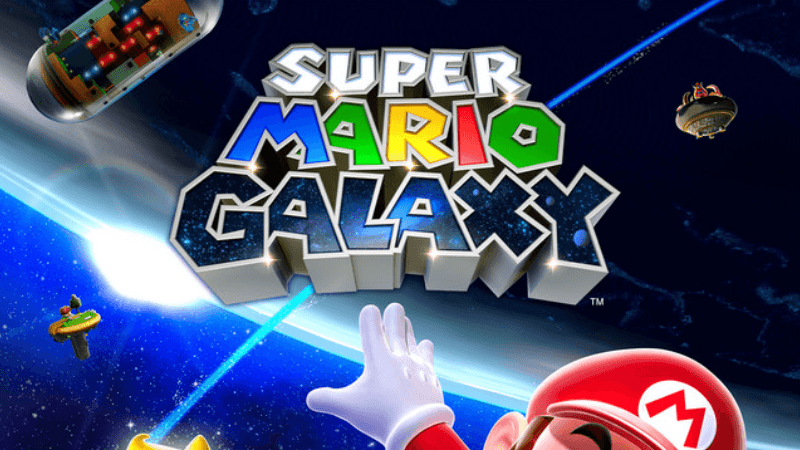
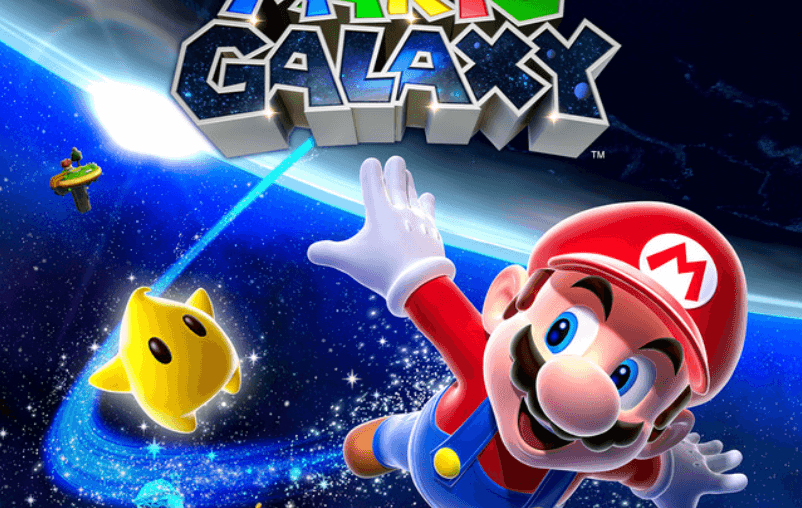
Mahito Yokota walked into his dream role as music director of the Super Mario series knowing exactly what Nintendo’s so-called Essence of Mario sounded like, or at least he thought so. It had been unchanged for two decades; Koji Kondo, the legendary composer Yokota was succeeding, had defined Mario with happy-go-lucky, pop-influenced scores heavy on synthesized Latin and Caribbean instruments—kitschy, fun, eternally memorable. When Yokota turned in his drafts for 2007’s Super Mario Galaxy, his first score as director, to Kondo, now acting as sound supervisor, he received a damning response. “This is no good,” Kondo told his successor. “If somewhere in your mind you have an image that Mario is cute, please get rid of it.”
Yokota took three months to mull over what he’d gotten wrong about the Essence of Mario. To find the answer, he had to turn from the past and toward the spaceward future. To this day, Galaxy and its sequel are the series’ most conceptually ambitious entries. The stakes of the narrative had never been higher; the universe-spanning setting had never felt bigger; and the gameplay was resoundingly interactive, granting a new sense of intimacy with its worlds by seamlessly integrating the Wii’s motion controls. The Mario series was maturing alongside the greater video-game landscape, but its childlike essence remained—not through docile cuteness, but through a more grandiose fusion of wonder, whimsy, and wistfulness.
No score yet, be the first to add.
In reorienting the character’s essence to match Galaxy’s majesty, Yokota employed a 50-plus-player symphony orchestra shared between the two games, fittingly dubbed the Super Mario Galaxy Orchestra—an expensive, time-consuming anachronism in the mid-2000s, but one that, as Kondo later said, was the only direction that could convey the “magnificence of the universe,” Mario’s newfound environment. Intertwined with a cast of spacey ambient synth works, Yokota and Kondo’s visionary orchestral arrangements culminated in two of the most timeless video-game soundtracks ever made. The twin scores established both a newfound lexicon of splendor for the Super Mario series and set a cinematic benchmark for video-game scores going forward.
When you hear the Essence of Mario in Galaxy’s score, you feel the series’ sense of magic through gameplay: the energetic whimsy of putting Mario in gravity-defying motion, trotting through beaming synthetic environments that become more complex with each press of a button. Yokota and Kondo no longer rely on the straightforward immediacy of pop motifs on sound chips, but exploit the measured complexity that drives ambitious orchestral works like Howard Shore’s Lord of the Rings. Kondo’s “Egg Planet” and Yokota’s “Gusty Garden Galaxy” both take their time building up to their emotionally powerful apexes, the transition from soft woodwinds to iconic, brass-led finales mirroring their respective levels’ build from explorative wonder to blissful completion. Galaxy 2’s “Sky Station Galaxy” is even more dynamic—sprawling across all sections of the symphony, the arrangement throws more twists and turns at you than perhaps any other first-level theme in video-game history.
The biggest beneficiary of Galaxy’s heightened ambition may have been its narrative, which mainline Mario games had long struggled to enhance via their music. It takes less than 10 minutes in the first Galaxy to set up the series’ central leitmotifs, which convey the games’ character, story, and scope through sound alone. Upon booting the game up, a swift run of horns plays the main theme, a magnificent game-spanning refrain which appears during the mightiest moments, from title screen to credits. When the gameplay starts, the jaunty woodwinds that score the intro level’s joyous “Star Festival” are almost immediately brought to a devastating halt by the now-iconic choral chants that shout Bowser’s new villainous leitmotif, “Catastrophe,” which reappears throughout the various fights with him in both games. Bowser, to this day, has never schemed on a more gargantuan scale; for a brief moment, the scores behind his newfound universe-conquering motives made him feel closer to Sephiroth than King Dedede.
The final battle with Bowser contains a seamless blend of digital synths and orchestral recordings, one of many examples in the soundtrack where the two very different styles harmoniously intertwine. The glittering synth plucks that introduce the ambient “Space Fantasy” end up paired with soft woodwinds, creating the sort of astral majesty series creator Shigeru Miyamoto envisioned when Yokota first discussed the orchestral direction with him. These intersecting styles work just as well together for intense cuts like “Buoy Base Galaxy, ”whose sprawling synth lead bounces around the horn section in a pounding march, emboldening the player to carry on through the industrial base in the depths of deep space.
As extravagant as these boundless adventures can be, their scores can be equally sparse. Some of the games’ best moments are when the perpetually swift energy comes to a dramatic halt—suddenly, you realize you’re a mere speck in the vast unknown. Sometimes these moments are brief, occurring after the space dust of an exciting level has cleared, like the soft and subtle whistles of “A Chance to Grab a Star,” which plays just before you exit each level. Other times, this spaced-out ambience spans entire galaxies. The pianos that make up Galaxy’s “Space Junk Road” gorgeously crescendo as Mario floats through broken fragments of the universe, and the ooohs that flutter during Galaxy 2’s “Sweet Mystery Galaxy” are as chilling as the idea of floating endlessly through the candy-coated world. Mario was no stranger to great ambient music, but as the Galaxy games raised the stakes beyond the stratosphere, these subdued moments took on a new level of in-game importance, and are just as soothing outside of it.
Galaxy 2’s score, like the game it comes from, is a mirror image of its predecessor. But it substitutes its lack of new ideas for a greater emphasis on rearrangements of familiar motifs, both from the original Galaxy and previous entries in the Mario series. It’s incredible hearing old tracks—notably Super Mario World’s “Athletic Theme” and Super Mario 64’s “Bob-omb Battlefield”—with their new orchestral coat of paint. These versions only reveal how captivating the scores are at their core, no matter if they’re being played through a 64 KB sound chip or from a symphony hall. If you’ve ever wondered why video-game symphonies tour nationwide today, offering glorious orchestral renditions of classic soundtracks, here’s your answer. The Galaxy games helped to establish a newfound sense of importance for game soundtracks even beyond their medium—wide-screen ambition was not just for Hollywood scores.
As the series’ most cinematic installments, it seemed obvious that Nintendo and animation studio Illumination would eventually adapt the Galaxy games to film. But the games still stand alone, channeling a filmic spirit that we, the players, can control on our own. When we shoot out of the game’s launch stars and hear that live harp jump into each level theme, or when we reach each galaxy’s highest point right as the scores reach their apex, we’re reminded that we’re not witnessing the Essence of Mario, we’re making it happen ourselves. Though Nintendo has only gone deeper into live instrumentation for its subsequent soundtracks, it has rarely felt as resounding as it did in what remains the plumber’s most spectacular adventure. The grandeur of fantasy at our fingertips, Mario’s essence blown up to galactic proportions, has yet to be rivaled.