 Written by
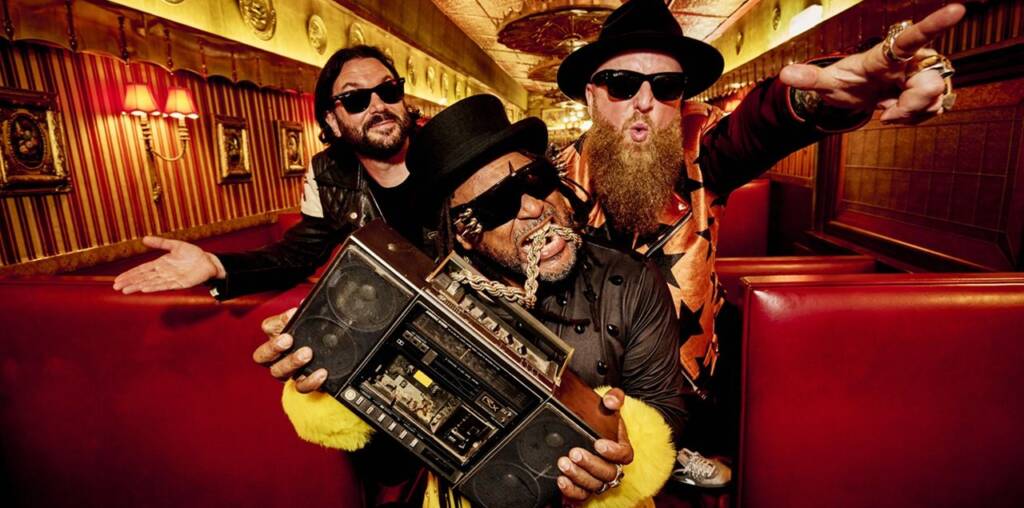
 Benji Webbe is one of British metal’s national treasures. For almost 30 years, he’s been the rabble-rousing, ultra-charismatic frontman of Skindred, the ragga-metal four-piece who came rolling out of Newport, South Wales in the late 90s. But Benji was already a veteran of the music industry by the time Skindred were on the scene.
Born in Cardiff in 1967, he lost both his parents at an early age and was raised by his older brother. Before long, he became obsessed with music, with reggae, dub, punk and rock’n’roll dominating his listening. His first big break came with Dub War in the early 90s, sparking a decades-long career in rock – albeit one that has had its share of challenges along the way.
“I’m very grateful,” he beams, as he looks back over his journey. “Whether we play a club in Aberystwyth with six people or we play Brixton Academy with 5,000, I’m having a good time, all the time.”
Article continues below

Your father emigrated from the West Indies. How did he end up in Newport?
“My father was from an island called Saint Kitts. He spent some time in Manchester and then came to Cardiff and met my mother – she was from Aberdare [in South-East Wales]. She was a mixed-race woman. My mum and father loved each other and I grew up in a beautiful household; two brothers and two sisters, and I was the youngest so I was a spoiled little brat! But then my mother got sick.”
What was she sick with?
“She always had a heart situation going on from she was younger, but it just got worse and worse. One afternoon, she went to hospital and never came home. I must have been about eight years of age then, and that’s when we moved from Cardiff to Newport. It was real tough for my father. And God bless him, after four years, he dropped dead himself!”
Your older brother brought you up from that point. Is it true you grew into a bit of a tearaway teen?
“It was feralness! You got to remember, this is the late 70s, early 80s, you’ve got the punk rock thing going on, you’ve got mods, you had weed-smoking Rastas, all this shit. We were a bunch of Black kids whose parents had passed away, and we was feral as cats, bro, running around the streets. We never had to be home at nine o’clock, so we could do what the fuck we wanted.”
So what did you do?
“We were just hanging around, doing people’s heads in, freaking people out, having a good time as kids do. Not too much vandalism. Newport was just full of characters, and I gravitated to the musical characters.”
How did music first come into your life?
“My mother was really into West Side Story, so I started watching musicals. But at the same time, we had this amazing record collection from the West Indies, and we also had David Bowie, T-Rex and Slade playing on the radio. I remember being in the school choir – aged about six or seven years old – because I could do this amazing vibrato with my voice, and the teacher held me back and she said to me, ‘You’ve got a gift, you have, and you really need to take care of it. That gift will take you anywhere you want to go!’ But I was a little boy, and I went home and totally forgot about it.”
When did music start to have a bigger impact on you, then?
“My brother was in a band. We’d get a microphone out on a Friday and Saturday, play records and just sing over them, making noises, having a good time. I remember that my brother’s voice always really captivated me, and when he left the house, he was off with his friends making music. One day he said to me, ‘Do you want to come to a concert with us?’ I was like, ‘Yeah, I’ve never been before, I would love to come!’ So we got in the van.”
So you travelled with your brother’s band to a show? What was that like for you?
“It was a magical moment. We were driving from Newport to Cardigan [in the West of Wales], and when it’s the first time you’re getting in a van driving, it’s quite far to go. I never really travelled as a kid growing up! We pulled up to this festival, people everywhere, mud, music, you know. The doors to the van open, and these guys help my brother and his mates all get their gear out. I just could not believe that my brother was being treated like royalty. They gave me a laminate!”
What was the show like?
“It was one of the most amazing days. My brother and his friends went onstage and they played the show, the lights were flashing, the smoke machine was going, I’m having a great time. You are talking a little fucking tin pot festival, but to me it was the biggest thing in the world. Then I could see the promoter paying my brother money! I stopped the movie, looked at the camera, and went, ‘Fuck me. He’s come here with his mates. They’re giving him booze. He’s smoking weed, having a great time, and then they’re gonna give him money? I gotta do this!’”
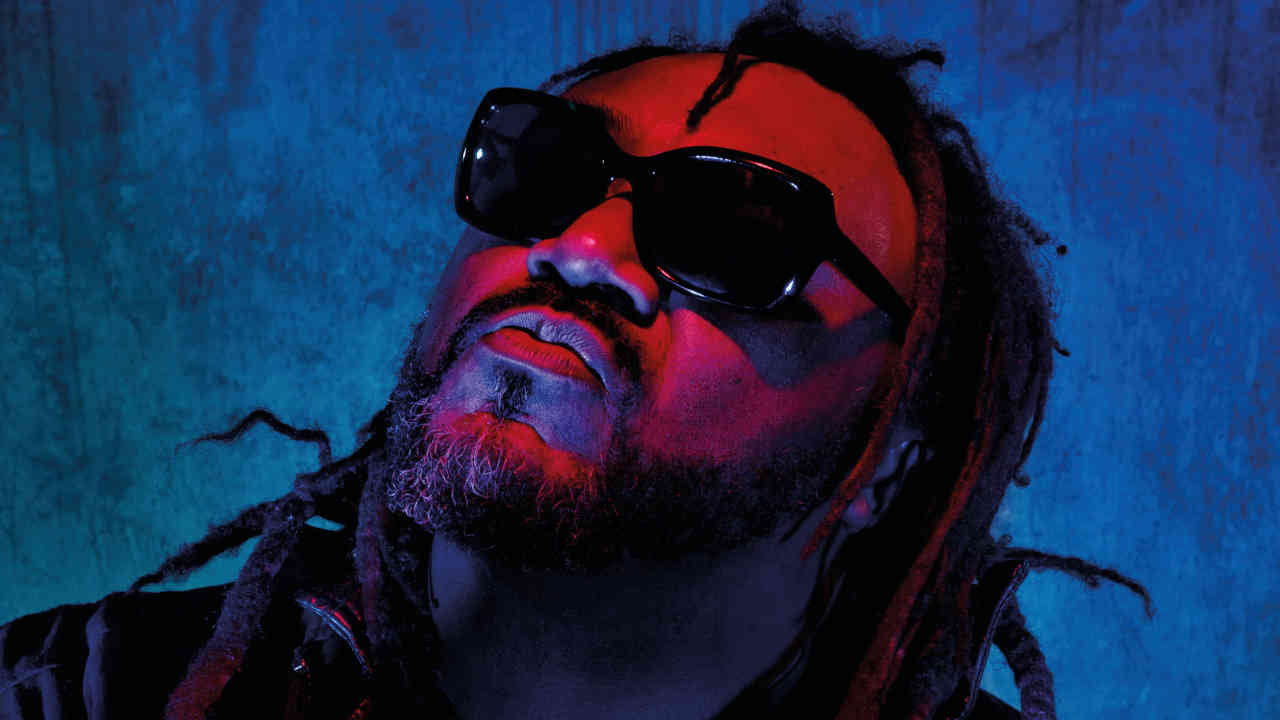
“A friend of mine came out of prison and said, ‘I’ve written four or five really cool rock songs. Do you fancy finding some musicians to do them?’ I wanted to be Lenny fucking Kravitz!”
Benji Webbe
What was the first band you tried to put together?
“I was really drawn to the sound systems, which is basically 18-inch speakers and a microphone. Obviously, I grew up around a lot of Jamaican and West Indian people, so all that was in us. I was part of a sound system called Conqueror Hi Power from Cardiff, that was quite well known. After that fell apart, a friend of mine came to me and said that he had a band, and that he’d love for me to go and sing for him. So we were in a band called Bismillah, and we did a BBC TV show called Ebony in 1984. That was my first taste of being in a band.”
Were you always a natural showman?
“With Bismillah, I used to play a lot of shows when Jamaican artists would come to Wales. We were fortunate enough to get on the support slots, and honestly, I’m not just bigging myself up, but I killed it every time. Everyone who knew me said, ‘Fuck, I’ve known you since you was a kid; whatever you’re doing, you keep doing it because you’re special, bro.’”
You eventually formed Dub War in 1993. How did that come about?
“There was a friend of mine who went to prison, and when he came out, he said, ‘Listen, I know you can sing all different types of music Benj, but I’ve written four or five really cool rock songs. Do you fancy finding some musicians to do them?’ And I was like, ‘Yeah, let’s do that!’ I wanted to be Lenny fucking Kravitz! So we found a couple of guys who played guitar and we did a demo, but nothing ever came of it. There was a band in Newport called the Blood Brothers who had recently lost their singer, and I was approached by them after they heard the demos that I did. They were blown away!”
What kind of music were they making?
“Punk rock! There was Ginge [future Dub War member Martin Ford] on the drums, and I went there three or four times, and I was screaming and doing weird poetry while they did punk stuff on top of it. It was really good fun. Then one afternoon we were jamming and Ginge said, ‘Benj, you know the dancehall stuff you used to do? We’re gonna do some real fast, flashy punk stuff, could you do the dancehall stuff on top of that?’ I was like, ‘Fuck that. I’m not doing that! I want to be in a rock band!’”
What changed your mind?
“He said, ‘Just fucking humour me, man. We’re gonna try it.’ They started making some noise with the guitars and I started doing this dancehall stuff over it, and after we did about a minute of it Ginge looked at me, all the guys in the band put their instruments down, and he said, ‘You know what? We’re really onto something.’ A friend of ours had a t-shirt that said ‘Dub War’ on it, and I said, ‘Let’s call ourselves that.’”
“We wrote a couple of songs for Ozzy – I don’t even think Sharon heard them in the end.”
Benji Webbe
Dub War had a lot of momentum in the 90s. Was there a moment where it felt like things were blowing up?
“We were playing 1,500-cap rooms all over the UK, and it all sold out. And when a band like Manic Street Preachers ask you to go on tour, it’s a pretty big deal. That’s when I felt like we were actually happening, because a lot of people were talking about us. But we were on tour in Manchester, and someone from NME was there. We were all talking shit, and a Dub War roadie was saying how shit the Manic Street Preachers were. A week into the Manics tour, NME dropped this fucking interview, and they said Dub War was saying this and that, and the Manics chucked us off the tour. That was when things changed; the doors shut on us. It was never the same after that.”
After Dub War folded in the late 90s, you moved to LA for a bit. What was that like?
“I spent time in Los Angeles, working on different projects with [then-Ozzy Osbourne bassist and future Metallica member] Robert Trujillo. We wrote a couple of songs for Ozzy – I don’t even think Sharon heard them in the end, but we did work on that stuff! It was funny because I’d signed back on the dole [in the UK]. So what I’d have to do is sign on the dole, go to America for two weeks, and then come back and sign on again!”
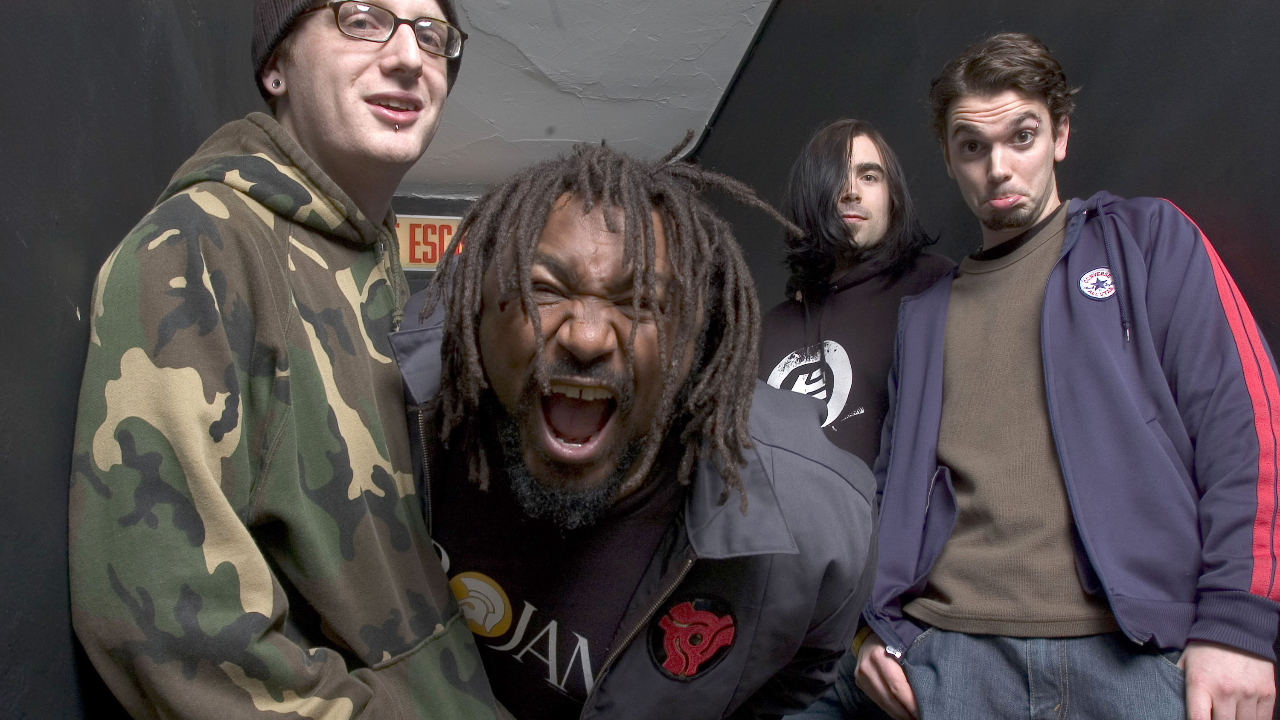
You came back to the UK and formed Skindred. What were the early days of the band like?
“Me and Dan [Pugsley, bass] met in late ’98. We ended up writing all these songs, which later on became [2002 debut album] Babylon. And we got ourselves a little rehearsal space in Newport, and out of the blue, Ginge just turned up. He said, ‘Dude, this is fucking amazing. Can I play?’ Then we got Jeff [Rose, ex-Dub War], the guitar man. We travelled the world, got another record deal, got management, it was going great. We went over to America to record the album, came back and then we got dropped! It was pretty fucking heartbreaking.”
Did you consider just jacking it all in at that point?
“I knew other labels were interested, but by then Jeff and Ginge were like, ‘Nah, fuck that. I’m not doing it no more.’ So we went over to America, re-recorded about five songs, and wrote some more songs with Arya [Goggin, drums] and Mike [Demus, guitar].”
At what point did Skindred feel like a project that had legs?
“When we were going back and forth to America. The album was reaching radio, Top 5 in the fucking Billboard [Reggae chart]. And we did Conan O’Brien, for fuck sake! We were playing festivals with Hellyeah, hanging out with Dimebag…”
What was Dime like to actually hang out with?
“Hanging out with Dimebag was great! This is back in the day when people wasn’t so PC… I was on the radio, and I kept saying ‘n****r’ when I was talking to somebody, and the presenter kept saying, ‘You can’t say that!’ And Dimebag, he’s a bit of a Southern boy, so he’s listening and he’s pissing himself. When I come off the radio, he came up and said, ‘You’re hilarious, man, let’s get a beer!’ And that was really cool, I think. We bro’d down for about three days on this festival, and that was really amazing, to have Dimebag in your corner.”
Who’s your favourite band Skindred have toured with?
“We’ve been very fortunate. Papa Roach, Disturbed, Gogol Bordello, they all treated us really well. Three years ago, we supported Kiss on their last [UK] shows, and that was fucking amazing. I’ve never been a massive Kiss fan, but let me tell you, they were fucking brilliant. That taught me, as a frontman, the pinnacle of craftmanship onstage.”
When did the extravagant stage outfits start? You’ve rocked diamanté suits, top hats, flashing shades…
“I just got a couple of quid, bro! I’ll be honest: I’ve always loved Liberace. The fur, the outrageous costumes. I thought, ‘People don’t do that in rock music.’ I wanted to do something which was a bit more showman. It was an evolution; for me, getting dressed to go onstage, the pomp, it’s fucking brilliant. I love that part of it.”
Where did the Newport Helicopter come from? “There was a programme called Yo! MTV Raps, and there was a guy on there, Petey Pablo. He had a song, Raise Up, and in the song he said, ‘North Carolina, come on and raise up, take your shirt off… spin it like a helicopter.’ I watched this years before [we tried it], never thought of it again. But we’re at one of the major festivals, I’m talking to the crowd, and I said, ‘You know what? Everybody take off their shirts!’ I thought to myself, ‘That fucking helicopter thing… let me try that shit. I’m gonna call it the Newport helicopter.’”
How many grandkids do you have now? You’re basically collecting them at this point.
“I’ve got 19 grandchildren! Just so you know, I’m not a coochie-woochie grandfather.”
What’s that mean?
“I mean, I love my grandkids, they love me, if they want me, they can come and see me, but I’m not gonna go looking for them on their birthday. I’m not coochie-woochie, all proud of my grandkids, looking at pictures of them and all that shit. Don’t get me wrong: I’ll take them to town, buy them jeans or sneakers or whatever they need. But I’m not that guy. I don’t relate to it. Losing my parents so early, I had to toughen up.”
What kind of legacy do you want to leave behind?
“That people had a good time when they came to the show. That I left people with some sort of encouragement, hope and uplifting. I don’t know about money and all that, but the energy, the love and the good vibes I’ve given the people over the years? That’s something worth remembering.”
Skindred’s new album You Got This is out now via Earache. The band play Blackbird Festival on June 27 and headline Radar Festival on August 1, before touring the UK from October 24.