 Written by
Share this article
Join the conversation
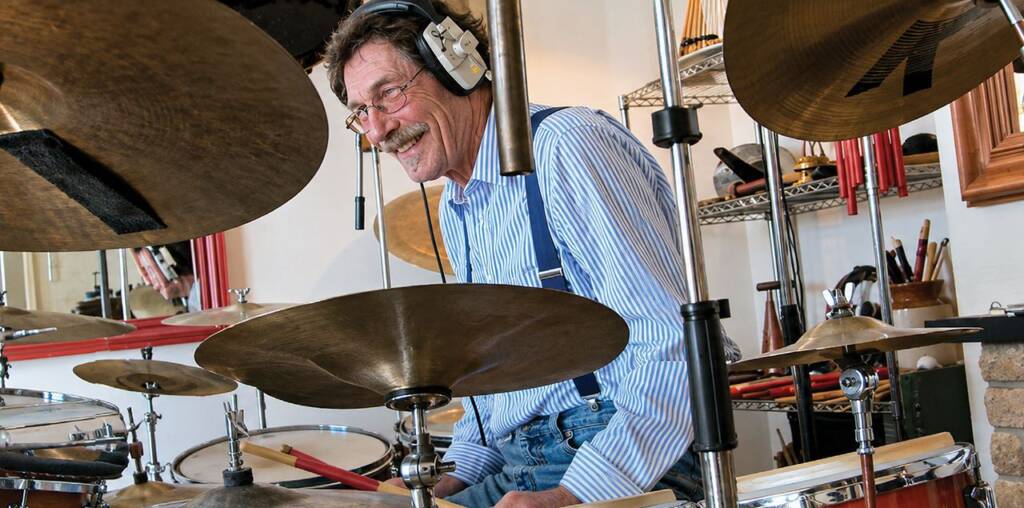
As King Crimson’s co-founding drummer, and one-third of Giles, Giles & Fripp, Michael Giles enjoyed a varied career, starting in the beat scene before accidentally helping to create the early progressive rock sound. Although he often shied away from the spotlight, his work as a session musician – and, later, with the 21st Century Schizoid Band – kept him busy over the decades. In September 2026, shortly before his death aged 84 in November, Giles looked back on his career with Prog.
One of the most technically accomplished and imaginative drummers of his generation, Michael Giles’ musical journey began with his bass-playing younger brother Peter in the Bournemouth beat scene of the early 60s, in groups including Dave Anthony & The Rebels and Trendsetters Limited. The siblings co-wrote and recorded the single Kick The Donkey as The Brain, released by Parlophone in spring 1967.
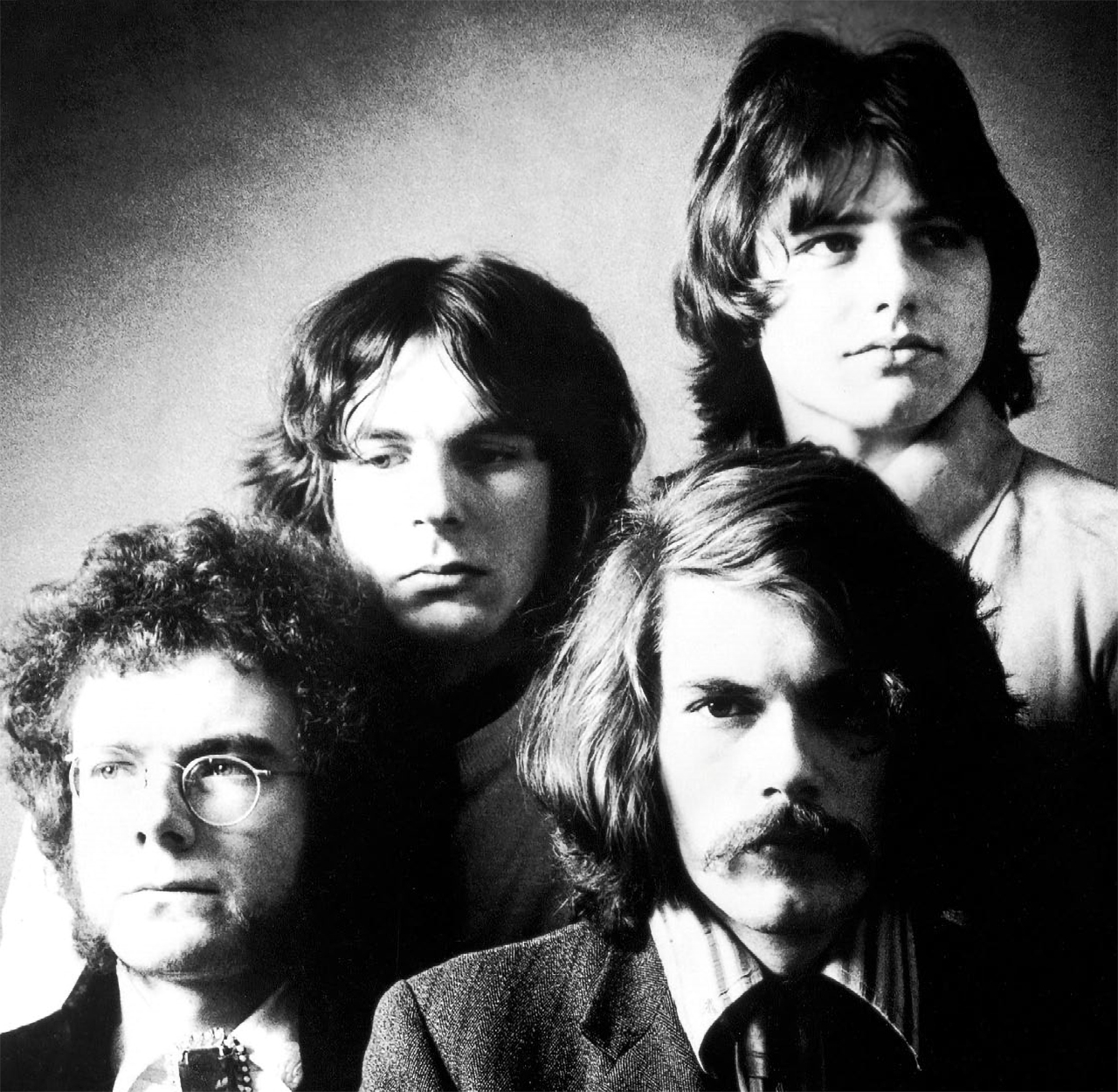
A guitarist on the Bournemouth scene, Robert Fripp, answered their advert for a singing organist, and so Giles, Giles & Fripp was formed. In 1968 they recorded The Cheerful Insanity Of Giles, Giles & Fripp for Deram – a mix of psychedelic, pop and classical influences with an absurdist, satirical bent for which Giles wrote nearly half the songs.
Latest Videos From Louder
That year the trio were augmented by multi-instrumentalist Ian McDonald – and, briefly, by ex-Fairport Convention singer Judy Dyble – and the quartet morphed into King Crimson. Their rise was meteoric and their 1969 debut, In The Court Of The Crimson King, was epochal. Giles said in 2013: “King Crimson was probably the first of progressive rock music. I don’t care, actually, if we were the first, second or third. But I think it did make a pretty major statement coming from nowhere.”
However, he was particularly averse to touring, and by the end of the year both he and McDonald had quit. With King Crimson in disarray, Giles returned briefly to play on In The Wake Of Poseidon in 1970 and appeared on Top Of The Pops miming to the single Cat Food. That year, he and McDonald recorded McDonald And Giles – which is highly regarded but sold poorly at the time – before McDonald moved to New York.

Thereafter, he concentrated on session work. In 1983 he recorded Ghost Dance with David Cunningham and former King Crimson percussionist Jamie Muir, which was released in 1996. In 2002 he formed 21st Century Schizoid Band with brother Peter, former Crimson winds player Mel Collins and future guitarist and vocalist Jakko Jakszyk, playing mainly vintage Crimson material. Giles appeared on their two “official bootleg” albums released in 2002 and 2003, but quit shortly afterwards.
His followers have needed patience. His solo album Progress was completed in 1978 but wasn’t released until 2002. From 2009 he played in the free-improvising Michael Giles MAD Band, which included guest appearances from pianist Keith Tippett and Caravan’s Geoffrey Richardson on viola, but they disbanded in 2011.
Out of the spotlight, Giles recorded solo and collaborative music; and this year, Shadows/Solo, a compilation containing 37 years of recordings, was released. A box set of more archive recordings is planned for 2027.
What made you take up drumming?
I started playing after making my own drumsticks on a lathe at school and then used them to beat on Oxo tins at home. My influences were quite varied – I was inspired by jazz musicians, particularly Elvin Jones, whose fearless sense of movement and willingness to take risks had a profound effect on me. I was also very interested in Tony Oxley, who approached rhythm in a much freer and more exploratory way.
What attracted me to both of them was their ability to treat rhythm as something fluid and conversational rather than rigidly structured. Curiosity was probably my greatest influence of all. I was always listening, experimenting, and trying to discover sounds and possibilities beyond what I already knew.
The transition from Giles, Giles & Fripp to King Crimson feels like a dramatic and rapid artistic shift from humorous eccentricity to very serious music and lyrics. How did it feel at the time?
What distinguished King Crimson was the openness to ideas from a variety of sources and a willingness to take musical risks
From the inside it didn’t feel quite as dramatic as it may appear in retrospect. Giles, Giles & Fripp certainly had a more whimsical and eccentric side, but there was always a strong desire to explore and develop musically. Many of the elements that later found their way into King Crimson were already beginning to emerge.
We were interested in creating something distinctive. Peter Sinfield’s lyrics played an important part in that – they brought a more vivid and imaginative dimension to the music and helped shape the atmosphere that became associated with King Crimson.
What distinguished King Crimson was the openness to ideas from a variety of sources and a willingness to take musical risks. There was a strong emphasis on listening and responding to one another. Individual contributions were important, but the aim was always to serve the music rather than any one person.
Rehearsals could be intense, with ideas being developed, discarded, and reshaped until they felt right. What made the experience particularly exciting was the sense that there were very few boundaries. If something worked musically, we were prepared to follow it wherever it led.
After Giles, Giles & Fripp, did you envisage a career as a singer and songwriter as well as a drummer?
Seeing that Ian [McDonald] was such a strong writer with Peter Sinfield’s words, I thought, “I’m not going to compete with this.” I never considered myself to be a singer or songwriter – I’m primarily a drummer and percussionist who sometimes sings a song or two and sometimes writes a song or three. It’s not easy to combine meaningful words with the right notes in a memorable melody, an unusual chord sequence and colourful instruments, all to be heard at the same time in one composition.
Drumming wasn’t simply about keeping time; it was about contributing to the character and direction of the music, and being part of the conversation
In The Court Of The Crimson King is one of progressive rock’s first major statements, but it’s rarely highlighted that an entire quarter of its running time is free improvisation.
We were continually experimenting at Wessex Studios whenever we got the chance. That wind organ that starts the record, for example, had been hired by somebody else and the hire company hadn’t picked it up, so we used it. We’d already done quite a bit of improvisation on our live club dates, so we thought, “Why not record something that’s not improvisation in a jazz way, but is free of structure?”
With Moonchild we started off with the little ditty and then we just took off into outer space, into nothingness, to see what happened. If it had been rubbish we wouldn’t have left it on there.
Your drumming style is highly individual. Can you describe your approach?
More than anything, I was drawn to the idea that drumming could be expressive. It wasn’t simply about keeping time; it was about contributing to the character and direction of the music, and being part of the conversation between the players. I like turning things round and hearing different ways of playing the same thing, which is fun for me – and as long as it fits with what the other people think, is interesting. There’s got to be something in it for you; you have to please yourself, inspire yourself, be fascinated by what you’re doing.
What are your favourite tracks from In The Wake Of Poseidon?
Cat Food, with its dogleg bar of 3/8, or a seamless bar of 11/8 if you prefer. It was humorous and fun to play – so much so that I couldn’t resist hitting a hapless metal waste paper bin in my drum breaks. When the album was finished I heard, for the first time, Keith Tippett’s wonderful free Dada-ish piano playing. It’s amazing how one overdubbed acoustic piano performance can be so perfect for a song about junk food. Well played, Keith!
My other favourite track from the sessions is Groon, the B-side of Cat Food. It was spontaneously composed, jumping off Robert’s short guitar phrases like a kangaroo on steroids.
Regarding McDonald And Giles, there were practical issues with Ian moving the US and the album not selling well. But had you hoped it might be a longer-term collaboration?
Being a good listener with a super sense of humour is essential for the bass player and drummer
It’s fair to say that Ian and I both felt there was a great deal more that could have been explored. We worked very well together and shared a similar musical outlook, particularly in our interest in composition, arrangement, and in creating music that drew on a wide range of influences.
The album provided an opportunity to develop ideas that might not have found a natural home elsewhere – and I certainly enjoyed the freedom that came with that. Whether it was intended to become a long-term undertaking is harder to say. At the time, circumstances were changing quite rapidly and practical considerations inevitably played a part. I remain very proud of what we achieved. And while it would have been interesting to see where a second album might have led, I have no regrets about the way things unfolded.
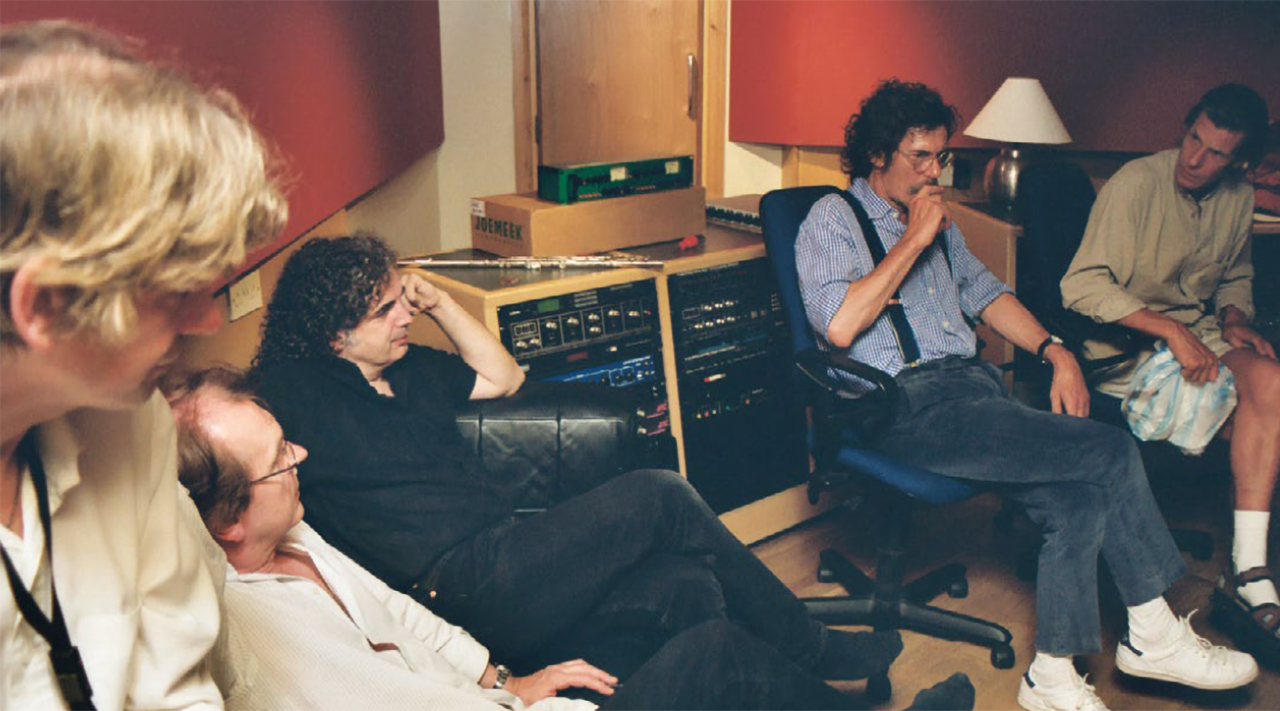
What was your relationship like with Peter as a sibling rhythm section?
When Peter and I were in our teens and early 20s we listened to a lot of American jazz musicians and learned how bass and drums work well together. A good example of this relationship can be heard on the title track of my album, Progress. I wrote a powerful driving bass part in 6/4 for Peter, who not only played it brilliantly, but also double-tracked it a few minutes later – amazing! Being a good listener with a super sense of humour is essential for the bass player and drummer.
You decided to work as session player. To what extent was that freedom from the touring treadmill liberating – or was playing music as a job rather soul-destroying?
Session work offered a very different kind of satisfaction. After years of being involved in bands and long-term projects, there was something quite liberating about walking into a studio, focusing entirely on the music in front of you, and then moving on to something completely different the next day.
I always enjoyed working with people who had a strong musical identity and were prepared to take chances
I always enjoyed the variety. One week you might be playing on a pop recording, the next one something more experimental or orchestral. It demanded versatility and the ability to respond quickly, which I found both challenging and rewarding. Of course, any form of professional music-making can become routine if approached purely as a job. I never found it soul-destroying – quite the opposite. It broadened my experience and allowed me to develop as a musician in ways that might not have been possible otherwise.
You played with all sorts of musicians, from Grimms to Anthony Phillips to Kevin Ayers. Were there any sessions or bands that really stood out?
I always enjoyed working with people who had a strong musical identity and were prepared to take chances. Kevin Ayers certainly falls into that category. There was an individuality about his music that made it rewarding to be involved with. The same could be said of many musicians associated with the Canterbury scene, where there was often a healthy balance between technical ability, humour and a genuine spirit of exploration.
How did Ghost Dance, with Jamie Muir and David Cunningham, come about?
I heard about Jamie’s work with Derek Bailey and other spontaneous musicians in London in the 1960s, as well as his short time with King Crimson after I’d left. He then became a Buddhist monk and spent most of the 1970s in India. I met him when David Cunningham of Flying Lizards invited him and I to collaborate in the soundtrack music for the cult film Ghost Dance. The music was based on drums, percussion and abstract guitar sound effects, and played completely spontaneously.
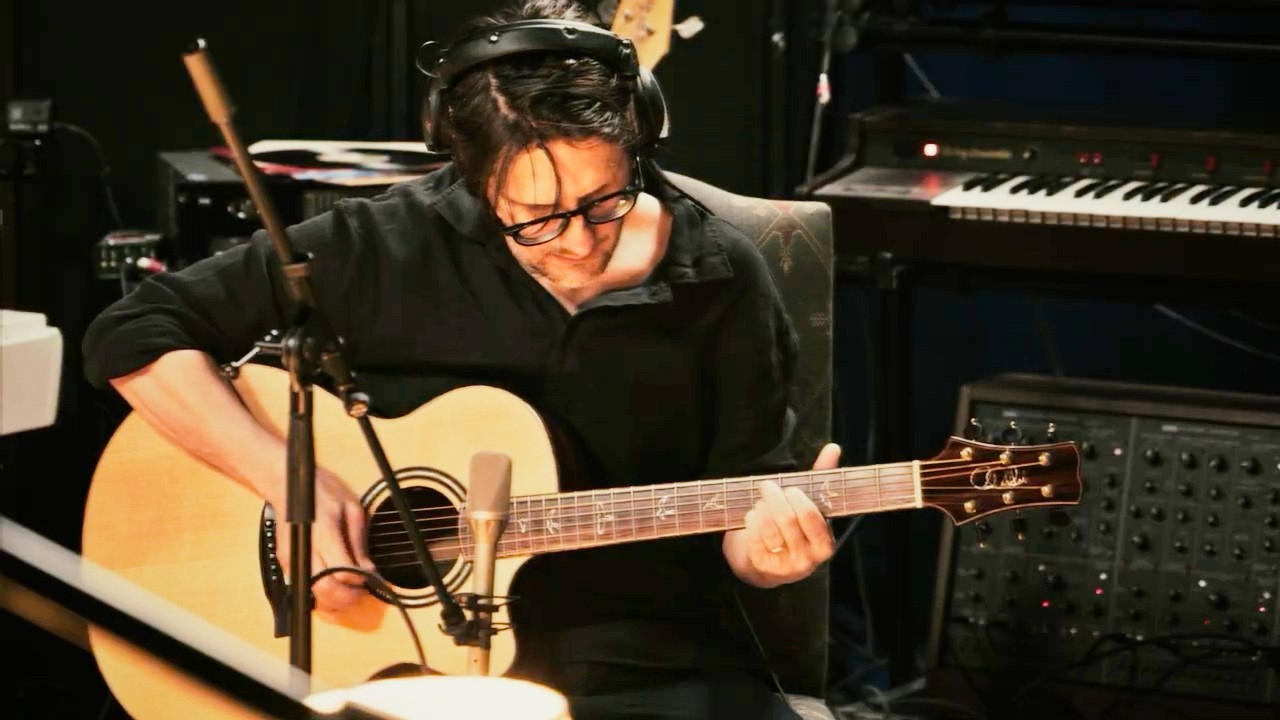
How did you rate Jamie as a percussionist?
His approach was free, emotionally expressive and naturally responsive: action and reaction was free-flowing between us, as well as exploring unusual sounds, textures, olours and rhythms. Those sessions were so enjoyable that when the film was finished, I invited Jamie to my Dorset studio to continue our collaboration.
What set him apart wasn’t simply his technique, but his imagination and originality. His interests extended far beyond music into art, psychology and Buddhism, and all of those influences found their way into his work. He constantly challenged assumptions about what percussion could contribute to a piece of music, and that was what made him such a distinctive and influential musician.
Why did it take over 20 years to release Progress?
Whether it’s a drum, a paint tin, a lavatory brush or some other object, the important thing is to remain open to possibilities
It was a very personal project. Most of the material was written and recorded in 1978 at my home studio in Dorset; and because I was composing, recording and producing it myself, there was a great deal of freedom to develop ideas at my own pace. I wasn’t setting out to make any particular kind of album. The music grew quite naturally from my interests at the time, drawing on elements of jazz, composition and rhythm, while allowing space for some wonderful contributions from other musicians.
For one reason or another, the recordings remained on the shelf for many years before Voiceprint eventually released them. As a result the album passed under the radar. Nevertheless, I think it captures a particular period of my musical development, and I’m pleased that it eventually found its way into the world.
What prompted you to launch 21st Century Schizoid Band?
It was an experiment. I never had any desire simply to recreate the old material. What interested me was seeing what might be possible many years after those pieces had first been recorded and performed. I wanted to explore where the music could go and what might happen if we approached it with the benefit of experience and a fresh perspective. Those compositions were never intended to be fixed in time, and I felt there was still room to develop and reinterpret them.
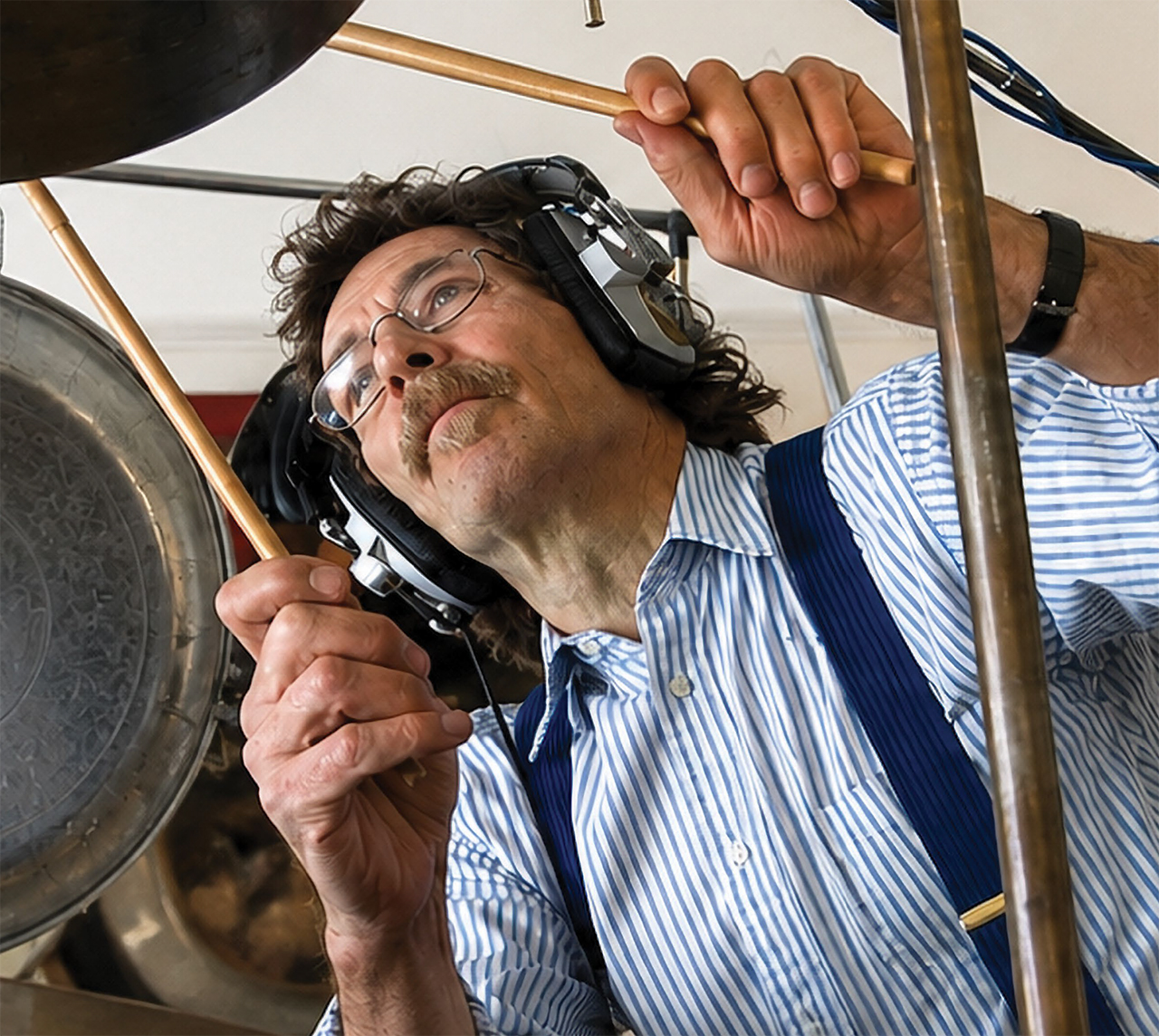
For a while it was great fun and there was a genuine sense of possibility. But it never moved in the direction I’d hoped. I was interested in playing the old King Crimson music as a platform from which to introduce new group compositions created in the same spirit. As time went on, it became clear that others saw the project rather differently, and eventually it ceased to hold the same appeal for me.
The recent Shadows/Solo double album shows you as both an improviser and a composer. Do you actually have a favoured form of expression?
I’ve always been interested in both composition and spontaneity – I’ve never really seen them as opposing disciplines. Composition provides a framework and a sense of direction, while spontaneity allows music to breathe and develop in the moment. The most interesting music often contains elements of both.
My hope is that listeners will hear the box set not simply as an archive, but as a document of curiosity, exploration and discovery over many years
What attracts me to spontaneous music-making is the possibility of discovery. When musicians listen closely to one another and respond instinctively, something can emerge that none of them could have predicted beforehand. That sense of exploration has always been important to me. Different musical situations call for different approaches. Sometimes an idea benefits from careful composition and development, while at other times it’s best allowed to unfold naturally. What has always mattered most to me is remaining open to whatever the music requires.
You’ve said that you see music as essentially a form of play. Is there a feeling of childlike exploration happening here, or is that going too far?
I don’t think that’s going too far at all. From an early age I was fascinated by sound itself and by the endless variety of ways in which it could be produced and shaped. Whether it’s a drum, a paint tin, a lavatory brush or some other object that happens to produce an interesting sound, the important thing is to remain open to possibilities. Some of the most rewarding discoveries happen when you’re not consciously searching for them. Perhaps there’s something childlike in that approach – although I’d describe it more as maintaining a sense of curiosity. The moment you think you know everything there is to know, the process becomes much less interesting.
Do you have any information about your upcoming box set?
It’s not intended to be a polished retrospective in the conventional sense. Rather, it offers a glimpse into the creative process. It contains a wide range of material, including sketches, experiments, rehearsals, sound checks, unfinished ideas and complete pieces. What interests me isn’t simply the finished result, but the journey that leads to it. Some of the most revealing moments occur long before a piece reaches its final form. For that reason I’ve been keen to include material that might normally remain unheard.

Some recordings are professionally made, others are decidedly rough around the edges. My hope is that listeners will hear it not simply as an archive, but as a document of curiosity, exploration and discovery over many years. In many ways it presents Michael Giles unfiltered and unguarded. I wanted to be brave enough to allow listeners into the process itself, to almost be sitting on a stool behind the drum kit with me as ideas emerge, develop, change direction – and sometimes disappear.
You’re such a talented player that many of us wish you’d released more music.
First of all, I’m very grateful that people feel that way. It’s always touching to know that music you’ve made has meant something to others. Having said that, I’ve never measured my life in terms of the quantity of music I’ve produced. There’s never enough time to do everything one would like to do, and my interests have always extended beyond music. I have enjoyed bringing up a family, philosophy, writing, reading, tennis and restoring houses. Music has obviously been a huge part of my life, but it’s only ever been one part.
I’ve always preferred to follow my instincts rather than pursue a particular career path or maintain a constant public profile. Looking back, there are certainly projects that may have developed further, but I don’t spend time dwelling on what might have been.
I feel fortunate to have been involved in a number of musical adventures that continue to resonate with people. At the same time, I’m still making music and remain as curious as ever.
The double album Giles & Muir In Dorset/Giles & Pert In Dorset – drawn from previously unreleased sessions with Jamie Muir and Morris Pert in 1982/83 – is out now via Burning Shed.