 Written by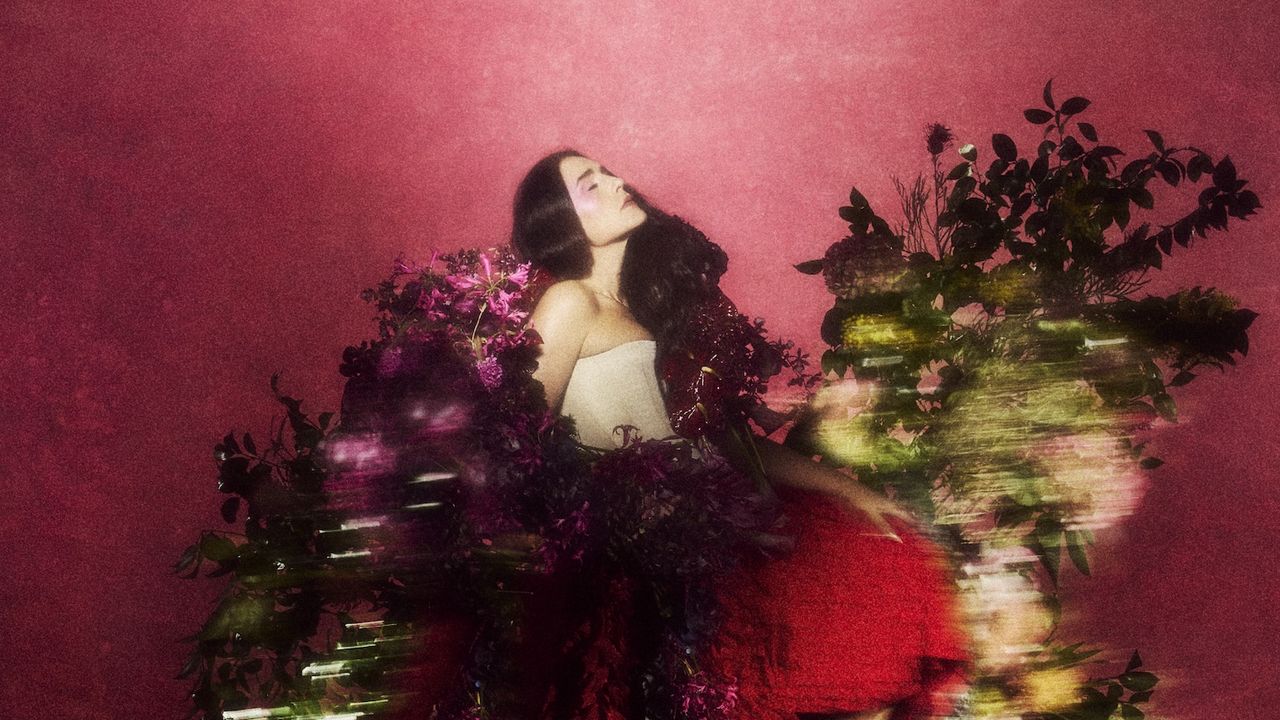
When Charli XCX—whose tossed-off quotes have lately had as much impact on the zeitgeist as most world leaders’—openly mused that “the dancefloor is dead” last week, many leaped to argue the exact opposite. You can safely ignore most pop stars when they make sweeping, declarative statements about the state of culture at large. We are not yet living through Gen Z’s “Disco Sucks” moment. But Charli’s quote has lingered in my head ever since listening to Jessie Ware’s dead-on-arrival sixth record, Superbloom. I hate to admit that this time, she might actually have a point.
Ware broke out in 2012 with a debut that established her as a torchbearer for sophisti-pop and the Big British Ballad. She sensed the winds change with the brutal response to her 2018 Coachella performance, an event so technically marred and painfully out-of-step with her crowd that it prompted her mother to counsel: “Darling. Quit.” Ware’s subsequent record, What’s Your Pleasure?, administered a much-needed shock to her sound, quickening the pace and lighting a much-needed spark that recast pet themes of love and devotion with newer, sweatier nightclub urgency.
No score yet, be the first to add.
One quality about Ware’s pivot to the dancefloor never quite added up: She came across more like the poised host than a partygoer. The singer’s first three records were tasteful and unbelievably mature, combining a West End knack for drama with R&B vocal pyrotechnics. Never lacking in commitment, Ware threw herself into the nightlife in a whirlwind of pearls, caftans, and hairpieces, soundtracking other people’s abandon while remaining exquisitely composed herself. Like an episode of Bridgerton overseen by the Countess Luann, Ware as mistress of ceremonies could be queenly and overstated, but she was never messy or ridiculous enough to see the fantasy through.
With its third installment, her loose disco trilogy has finally run its course. Superbloom is another helping of polyester in an age of microplastics, weighed down by chintz and notably shorter on dazzle and wit. Ware’s fantasia of instant connection and rapturously good sex is backed by music that is punishingly exact, conjuring a Studio 54 that’s as VIP as an airport lounge. The record marks the point where the singer’s disco purism tips over into outright literalism. That it was released on this year’s second Coachella weekend seems painfully fitting.
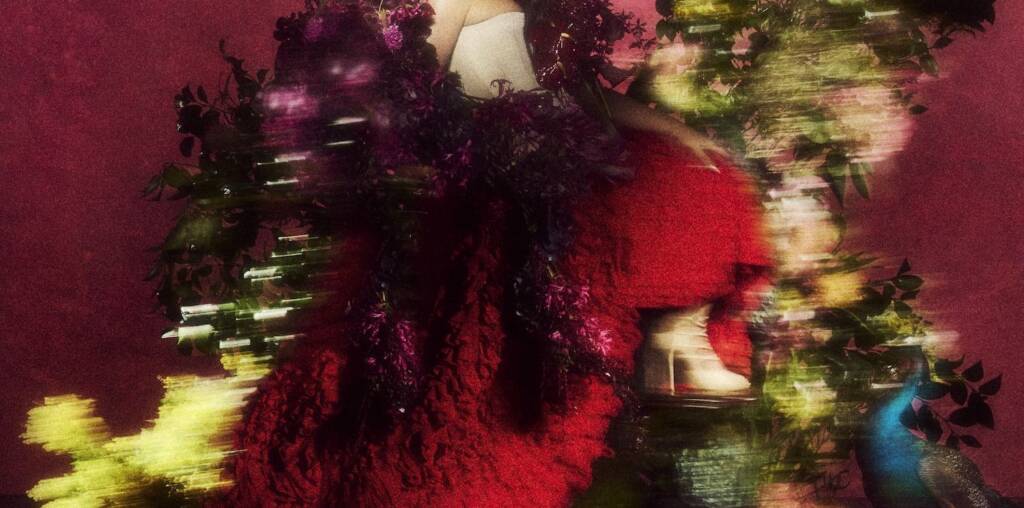
Inspired in part by Gillian Anderson’s compendium of women’s erotic fantasies, Want, as well as Nancy Friday’s My Secret Garden, Superbloom is, in theory, a manifestation of Ware’s deepest desires. But despite PG-rated lyrics and wallpaper-flowery production, the record seems almost pathologically hesitant to say what those might be. The songwriting is so chaste and disembodied that an Old Hollywood censor would have no problem greenlighting it. Arms and the sensation of being held by them is the record’s prevailing erotic act, appearing on the title track, “Automatic,” “Love You For,” and “No Consequences.” Ditto “touch,” evoked in such non-descript ways that you’d be forgiven for thinking it was part of a Covid protocol. Apart from the raunchy bathhouse escapade of “Sauna,” Ware does not express a thought that could be construed as unseemly, kinky, or perverse, which is to say in any way relatable to a wider audience.
Like an expensive meal that’s short on food but generous with the garnish, the instrumentals are lovely but mostly just… there. Superbloom bears all of the production touches of daytime disco at its most florid and baroque: fluttering flutes, burnished bass, and soaring strings are present and accounted for, without any riff or reworking that might risk sounding contemporary. Songs like “Automatic” and “Mon Amour,” meant to feel airy and perfumed, wind up coughing on their own musk. Ware’s adherence to such rigid disco blueprints also has the knock-on effect of making her voice sound less remarkable than it actually is. The roaring indignation of “Don’t You Know Who I Am?” would make for a showstopping B-side on a Gloria Gaynor record, if it didn’t sound like Ware was playing in other divas’ closets.
On What’s Your Pleasure? and That! Feels! Good!, flourishes like metallic synths and skittering drums kept Ware’s retro productions on the right side of pastiche. Accordingly, the best songs on Superbloom are the least literal. “Ride” flips Ennio Morricone’s score from The Good, the Bad, and the Ugly into brilliantly cheesy Italo disco, which Ware leverages to belt over the beat like a Valkyrie at the edge of the sexpocalypse. It’s in fabulous bad taste. “Sauna” vamps over a throbbing Moroder beat to stake her claim to “Bathhouse” Bette Midler’s corner of the steam room (Jacuzzi Jessie?). The insistent kick drum of “Mr Valentine” brings some exciting forward motion but the call-and-response vocals sink it: They’re more “APT.” than ESG.
For me, the funniest part of Ware’s recent press tour has been the various diplomatic ways she’s expressed that yes, she adores her queer fans, and no, this record isn’t only intended for gay people. Every pop star is in some way angling for a queer constituency, but the gulf between Ware’s demureness and clumsy, intentional camp has made her latter-day flamboyance seem like straight-up pandering. Nothing here is quite as egregious as the flag-waving sass of “Beautiful People” or “Free Yourself!”, but Superbloom never quite works as an artist feeling out her sensuality, either. The particularity of her pen is sorely missing, and when she does wield it, it’s at aching odds with the rest of the record. “16 Summers” in particular is an out-of-place 11 o’clock number about being present for her children growing up. The subtlety is lovely but belongs to a different, more introspective album; it would absolutely evacuate the dancefloor if the record were played all the way through.
Complex femininity and over-the-top flamboyance are not mutually exclusive. As we speak, Robyn’s single about post-IVF horniness is lighting up clubs around the world. Ware is capable of equally nuanced performances, and one of her most convincing claims to the discotheque is the arc she’s charted on songs like “Mirage (Don’t Stop),” “These Lips,” and “Overtime” of a type-A personality letting the beat transport her somewhere entirely unexpected. Superbloom is the night’s tired last stop. This dancefloor is officially dead—best to mulch it and start anew.