 Written by
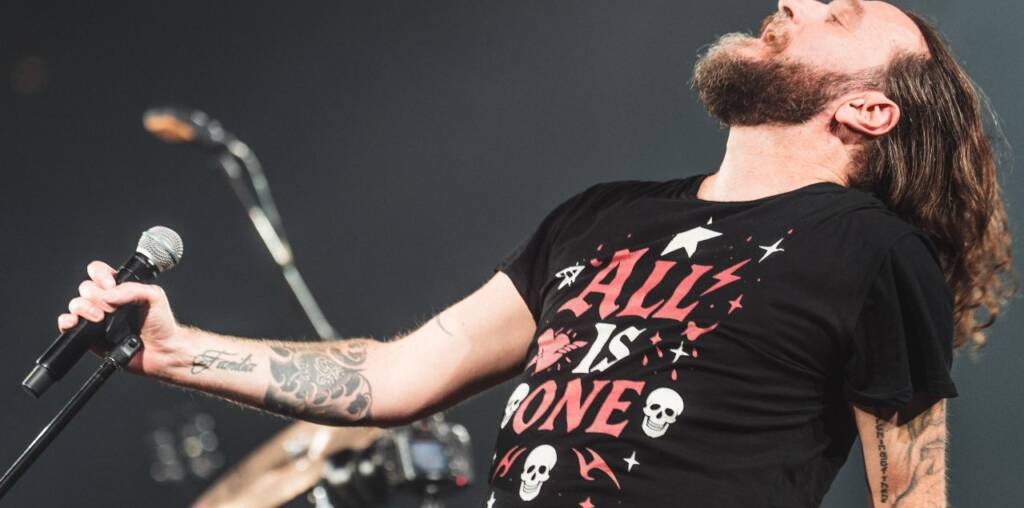
As he was growing up in the port city of Jaffa in western Israel, Kobi Farhi’s family gave him mixed messages on how he should view the world. His uncle Kitz had PTSD after serving in the Six-Day War between Israel and the surrounding Arab countries, and he once told Farhi that Arabs “want to kill you and throw you into the sea”. Meanwhile, his father was a veteran of the Yom Kippur War who showed compassion to the men he’d been conditioned to hate, giving blankets to detained Egyptian soldiers. And his grandmother Lily was close friends with an Arab woman named Yousra, to the point that Farhi went to Yousra’s daughter’s wedding when he was five years old.
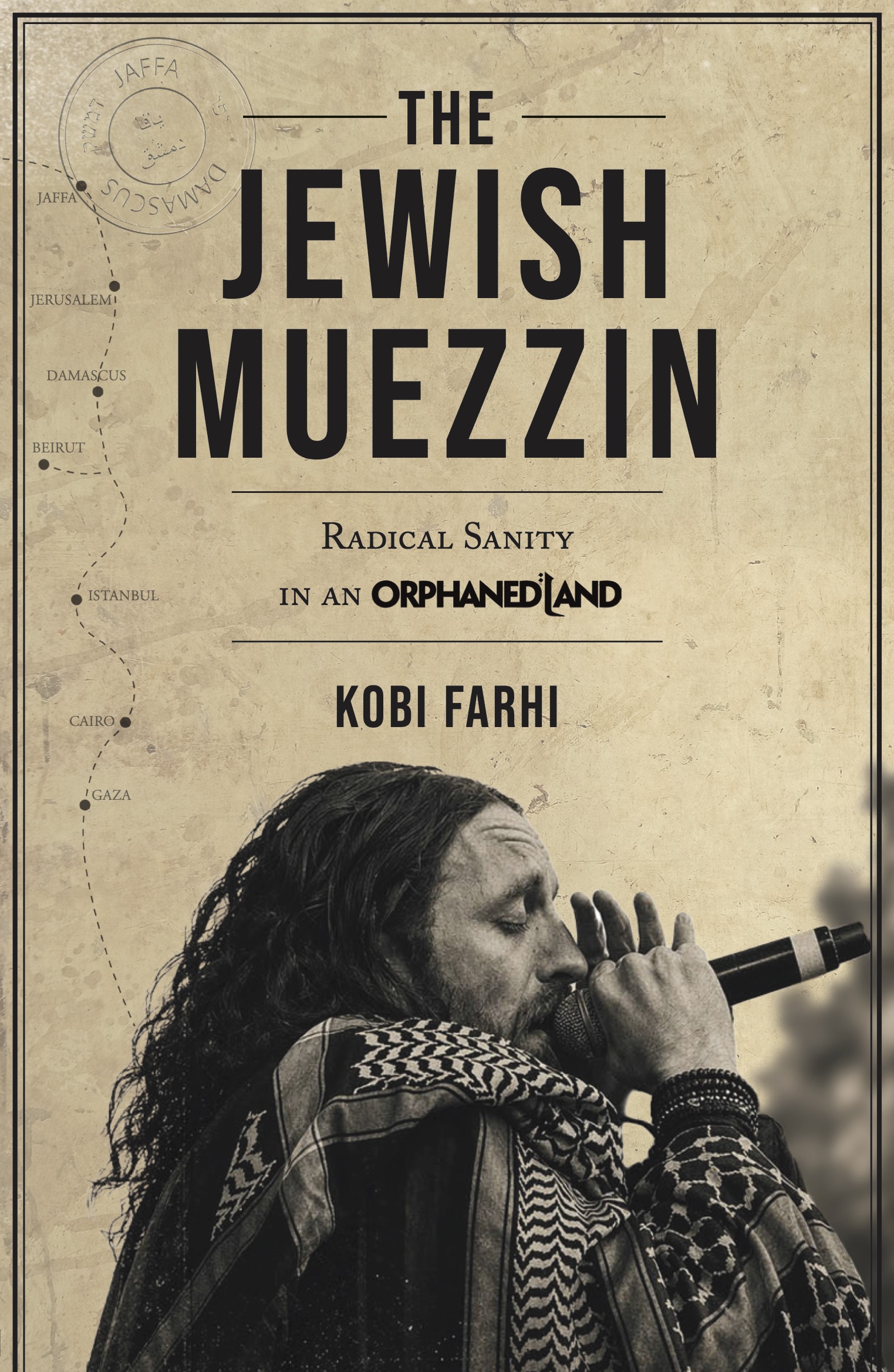
At the start of his new memoir, The Jewish Muezzin: Radical Sanity In An Orphaned Land, it seems that Farhi has adopted his uncle’s outlook. He recalls, in May 1992, aged 16, finding out that an 18-year-old Palestinian had murdered 15-year-old Israeli girl Helena Rapp: one in a long series of Palestinian terror attacks which intensified after the Six-Day War gave Israel control over the West Bank and Gaza Strip.
In response to the killing, Farhi spray-painted “death to Arabs” on a shopping centre wall and searched for a person who looked Arabic, so he could attack them. He chased after one man on the street, but ultimately didn’t hurt anyone. Today he remembers the episode as something he’s “ashamed of”. Since then – through his progressive folk metal band Orphaned Land, which he co-founded in 1991 – he’s adhered to his dad and grandma’s examples, writing song after song advocating for peace in the Middle East.
Latest Videos From Louder
“At the beginning of the book, when I was a teenager, I’m showing how easy it is to fall for indoctrination and brainwashing,” the talkative yet soft-spoken singer, now 51, says on a video call with Metal Hammer. “You’re made biased by the media and everything, because the newspapers are always red; you’re always seeing the bad news.
“I went to extremism. But, as time went by and I asked myself questions, I started to adopt my grandma and Yousra’s friendship as proof that coexistence is possible. If I take my 35-year career with Orphaned Land, I would say that, for the first two years, I was an extremist; the last 33, I have gone with my grandma and Yousra’s narrative.”
Orphaned Land’s commitment to unity has defined such tracks as 2013’s Brother, which lamented how skin-deep differences between the Abrahamic religions have been used to fuel generations of violence. And it hasn’t been just words. For decades, Farhi put a Palestinian keffiyeh, a traditional scarf, on his microphone stand.
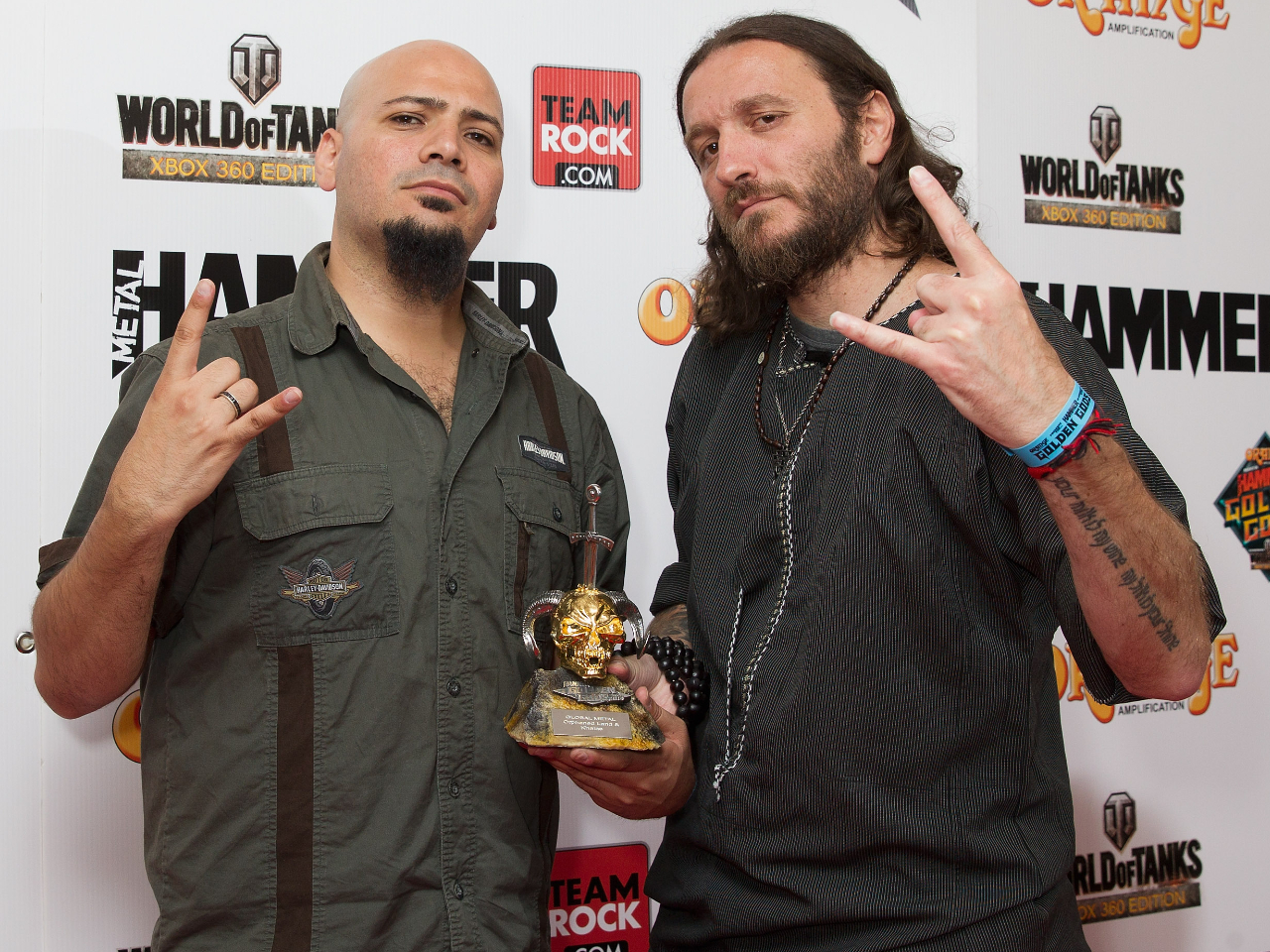
The band have performed with multiple Palestinian artists; when they won the Global Metal Award at the 2014 Hammer Golden Gods, Farhi shared it with Abed Hathout of Palestinian tourmates Khalas. The Jewish Muezzin’s title reflects Farhi’s belief that music has the power to overcome cultural and religious divides, a muezzin being the person at a mosque who sings the Muslim call to prayer.
“The magic over the course of my life has always been music,” he says. “The sound of the muezzin calling to people from the mosque was there five times a day when I was a kid, and I loved the music. It was music that drew me for the first time to the Muslim culture.”
Before Farhi could fully dedicate himself to writing songs and using them to confront hate, he – like every other Jewish citizen of Israel once they turn 18 – was summoned to serve in the IDF. He loathed it (he had to cut his long hair short before reporting for duty), but for a year he was a model soldier. He worked as a mechanic, never seeing active combat. “I never wanted to be a fighter,” he explains.
When he requested to take the leave he’d earned so that Orphaned Land could make their 1994 debut album Sahara, he was denied. He went anyway, recording and doing a photoshoot where he wore a Palestinian keffiyeh, then refused to apologise upon his return. He was court-martialled and sentenced to 28 days in military prison. During the final two weeks, he had to guard Palestinian captives; he later recreated a melody that they sang and used it for the Sahara song Aldiar Al Mukadisa (‘Holy Land’).
“I always looked at them with a certain curiosity,” he says of his feelings while being in close proximity to Palestinians for the first time. “I wanted to understand what drove them to commit acts of violence against Jews and Israelis, who in many cases were not always soldiers. No hatred, no feeling of revenge; a lot of questions. Maybe that’s why, when I heard the melody, I didn’t resist. I said to myself, ‘They love music. They find comfort in music’, and I was enchanted by it.”
After Orphaned Land made two further albums, 1996’s El Norra Alila and 2004’s Mabool, they scored their breakthrough with 2010’s The Never Ending Way Of Orwarrior, co-produced by Steven Wilson. That May, the band supported their idols Metallica at the US giants’ show in Tel Aviv. Lead guitarist Kirk Hammett was such a fan that he asked Farhi if he could buy one of their CDs. The singer darted to the merch stand and rushed back with a copy of …Orwarrior.
When I heard Palestinian prisoners singing, I didn’t resist. I was enchanted by it
Kobi Farhi
Did Hammett ever pay up? “No,” Farhi replies matter-of-factly, “but he rewarded us by writing a review in Metal Hammer [where he said, ‘I really like what they are doing’]. One of your childhood heroes writing a review of your album, being acknowledged in that way… I can show it to my kids one day.”
However, as Orphaned Land’s fanbase grew, so too did pockets of resistance to their inclusive messaging. In band pictures promoting …Orwarrior, Farhi was dressed as Jesus, while figures around him in traditional Jewish garb assumed Muslim prayer positions, and vice versa. It was a call for togetherness which got misconstrued as blasphemy. “The three Abrahamic religions all come from the same source,” Farhi reasons, “and I always thought that the solution to the problems should be going back to the source of things.”
In other cases, people were punished for being fans. Farhi writes about the time an Egyptian man was sentenced to six months in prison because authorities found an Orphaned Land CD in his home. He also remembers Mysour, the young Muslim metalhead who inspired the Prog Award-winning music video for 2017 single Like Orpheus. Farhi hasn’t seen her since a picture of her with Nergal from Behemoth circulated online; he believes that someone must have banned her from going to shows.
However, it’s the last three years that have posed the greatest threat to Farhi’s goal of coexistence. On October 7, 2023, Palestinian terrorist organisation Hamas attacked Israel, killing around 1,200 people and taking 251 hostages (148 have been returned alive). It was the deadliest attack on Jewish people since the Holocaust. Israel’s military response was swift and horrific: more than 74,000 Palestinians have been killed in the West Bank and Gaza. A UN commission of inquiry has accused Israel of committing genocide by deliberately targeting Palestinian children; Israel vehemently denies having genocidal intent.
The last 70 pages of The Jewish Muezzin are largely dedicated to Farhi’s nuanced thoughts on the conflict and the fierce global discourse surrounding it. He recalls, at 6:29am on October 7, hearing sirens wail and hurrying his children out of bed, into a nearby bomb shelter (he’s talking to Hammer from Greece, where the family have spent much of their time since the attacks).
He writes that, as a former extremist, he understands Hamas – “he is a man oppressed, controlled and stripped of purpose or independence” – but does not sympathise. He’s a staunch opponent of Prime Minister Benjamin Netanyahu and the slaughter of Palestinian civilians, and also outspoken against the rising tide of reactionary, antisemitic hate crimes around the world.
“[Netanyahu has] divided Israeli society to the extent that leftists are [considered] traitors,” Farhi says. “I think he built a hate machine towards leftists, myself included. I don’t love Israel less than right-wing people, I don’t love the Jews less. People in the government have said that we should wipe out Gaza. It’s very disturbing that these people represent me, because you see what’s happening around the world, even in the UK. Jews are being attacked in the UK and feel unsafe. You can see how people are going very fast to a collective blame. Itamar Ben-Gvir [Israeli minister of national security] says something, and the Jews of the UK are to blame.”
Alternative music has been far from immune to the divisions stemming from the conflict. In November 2024, Kneecap rapper Liam Óg Ó hAnnaidh allegedly waved the flag of Lebanese political party and military group Hezbollah onstage (he was cleared of the charge of committing a terror offence earlier this year). Bob Vylan controversially chanted “death, death to the IDF” while performing at Glastonbury 2025 (an investigation by Avon and Somerset Police concluded that no action against the punk-rap duo would be taken). All the while, Disturbed frontman David Draiman has faced ongoing backlash for writing “Fuck Hamas!” on an IDF projectile during a June 2024 visit to Israel.
Farhi is critical of what he considers to be sloganeering from artists with no personal connection to Israel or Palestine. “In order to resolve the conflict, we need to be open and dive into the complexity of things,” he explains.
In order to resolve the conflict, we need to dive into the complexity of things
Kobi Farhi
He’s disappointed in Draiman (a fellow Jew of Israeli ancestry), as well. He reveals in The Jewish Muezzin that the two first fell out over the artwork for Orphaned Land’s 2013 album All Is One, which Draiman alleged was an “imitation” of Disturbed’s 2002 cover for Believe (both pieces feature religious symbols merged together to promote coexistence); Farhi counters that “the combination of symbols, messages or ideas from all religions has been done so many times over the centuries”.
After Draiman wrote on the IDF artillery shell, Farhi says that the American singer “lost his voice”: “You can be in favour of Israel – that’s fair enough. You’re Israeli, but you could bring people together. You could address things [from] the right perspective. Every time he speaks now, that photo will come up again. He lost the ability to talk to everyone.”
Farhi writes that he feels like he’s caught in the middle of a bridge he himself built. Even some of those closest to him have fallen into steadfast nationalism after October 7. Amidst all the intense rhetoric, Israelis’ trauma following Hamas’ attacks, the widespread violence against Jews and the dreadful stories continuing to emerge from Palestine, does he still believe in Orphaned Land’s defining mission? Is peace truly possible?
“There’s a chance for peace in two ways,” Farhi replies, undeterred. “I think one is leadership: if a brave leader rises up, I think the people will follow. Everywhere has psychopaths, but I think the common people want to live in peace; I don’t think people wake up in the morning and want to kill someone.
“The second one, to maintain peace, we need to change the education system. They never taught us at school about human behaviour. You know what they taught us? Trigonometry. What about talking and listening to each other? Today, people don’t listen to the other side because it will be [seen] as weakness.”
Currently, the future of Orphaned Land is unclear. The band haven’t released an album since 2018’s Unsung Prophets And Dead Messiahs, nor have they performed internationally since 2024: a date on their European tour that year was threatened with a boycott but went ahead without incident. Even though Farhi considers Orphaned Land his “life’s project”, its future depends on the response to The Jewish Muezzin – and whether or not people will listen to what he has to say.
“We’re probably the only band in the metal scene that was born into this conflict, wrote six albums about it, went on tour and shared awards,” Farhi states. “I don’t think there is a similar activism to this, and I don’t want to throw it away. I just don’t understand where to go from here. I’m leaning back, releasing the book and wondering where this will take everything.”
The Jewish Muezzin: Radical Sanity In An Orphaned Land is out now via Lemon Soul.