 Written by
Along with birdsong and untrimmed weeds, ambient music thrived in the COVID-19 pandemic. Practically as soon as drugstore shelves were laid bare of the first shipments of N-95 masks, electronic musicians around the globe—many of whom, with clubs indefinitely shuttered, suddenly found themselves out of work—turned their attention to music made with anything but the dancefloor in mind. Many of those recordings were meant to be soft and soothing, part of a hopeful wellspring of societal self-care; measured against Brian Eno’s definition of the form—“as ignorable as it is interesting”—they tended to fall toward the former side of the formulation.
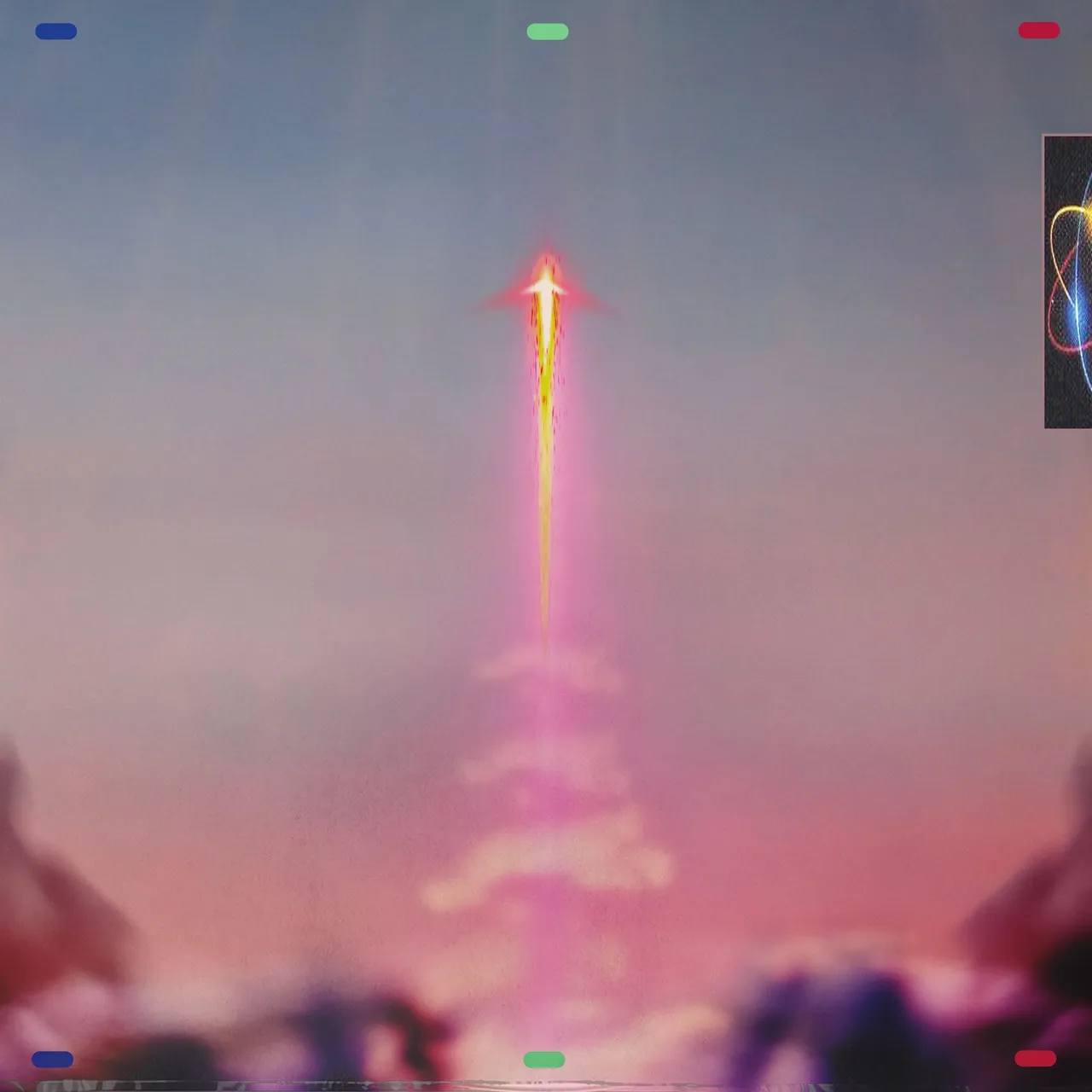
Within months, the “quarantine album” was already a cliché, and yet they still occasionally surface, uncomfortable reminders that even the worst of the pandemic isn’t really all that far in the rearview. Now, more than six and a half years after the first ominous reports of a novel coronavirus, Oriol Riverola’s Music for Empty Stadiums arrives. From its title to its tools—endlessly cycling synth arpeggios stripped of drums, adapted from dance music but designed for solitary listening—the album might look like just another contribution to a crowded field. But Music for Empty Stadiums bears little in common with all those records about finding solace in solitude, creating soothing balms for troubled souls, etc. Quite to the contrary, it is a bracing portrait of an artist in extreme distress.
No score yet, be the first to add.
This is not the album that anyone might have expected from Riverola, better known as the Barcelona DJ and producer John Talabot. His lone LP under his primary alias, 2012’s ƒIN, was an exemplary contribution to that decade’s indie-dance canon, striking an exquisite balance between loose-limbed house derivatives and contemplative singer-songwriter fare. In the nearly 15 years since, he has focused primarily on DJing and his label, Hivern Discs, surfacing occasionally in side projects like Koraal, an atmospheric tribute to the Canary Islands, or Talaboman, his Balearic duo with Axel Boman. Virtually all those projects, as well as his club 12″s, share a sense of sensuous magnetism and moody depth. Virtually all of them, too, were made with dancers and DJs in mind. But in spring 2020, Riverola found the very idea of making beat-based music laughable, maybe obscene. To hear him tell it, he suffered a profound crisis of identity. He had dedicated the better part of his adult life to bringing people together on the dancefloor. What if those rituals were gone for good?
Music for Empty Stadiums isn’t really an answer to that question—or if it is, it’s not a very optimistic one. The title is a nod to a mental image Riverola couldn’t shake: all the stadiums, clubs, auditoriums, and concert halls that had been swiftly depopulated, perhaps forever. They seemed absurd—Ozymandias-like monuments to human folly. And so, just as a vaporwave musician might plunder easy-listening music or ’80s soft rock to tell the story of a dead shopping mall, Riverola began toying with dance-music tropes that no longer seemed to serve any purpose—serotonin-boosting synth leads, energy-stoking stabs, and vertiginous builds to nowhere, all of them teetering in midair.
The sound of the album bears some similarity to Lorenzo Senni’s atomized trance music, or Barker’s early attempts at deboned techno, though it’s warmer and more fluid than the former, and more skeletal than the latter. Some tracks feel a bit like Raymond Scott if he’d coincided with the era of rave music and gotten hooked on the wrong pills. Just a few key sounds tend to dominate the album: glassy chimes, serrated supersaw patches, and glitchy detailing generated by speeding staccato attacks into a gravelly buzz. To compose the music, Riverola relied heavily on sequencers and randomization, layering monophonic sounds to create the illusion of harmony. Most tracks play out as games of tug-of-war between clean-toned arpeggios and harsher, more aggressive stabs, and they typically build to dense thickets of hyperspeed data spray, so fast and so kinetic that it’s impossible to tease out their mechanics. Chords pulse and arpeggios zip, but rarely does the music achieve anything like a resolution; these pieces feel more like architectural experiments than songs, scale models meant to demonstrate complex interactions of intersecting vectors and opposing forces.
Music for Empty Stadiums’ 17 tracks essentially comprise a theme-and-variations set. There are highlights, like “Barroque,” with its trilling suggestion of raindrops and ball bearings and chirping frogs, and “Fractal Love Odyssey,” which conjures a stately chord progression out of what might be an ensemble of pipe organs and icicles. But there is little to outwardly distinguish many of these pieces from one another, and long before the album’s 94 minutes are finished, you might find its insistent staccato barrage fatiguing, if not downright claustrophobic. In a sense that excess conveys the true spirit of the project: that fundamental desperation, that suggestion of climbing the walls, feeling trapped like a rat in a maze.
Part of a batch of some 70 tracks that Riverola created between April and June 2020, the music on the album is presented in the order it was recorded: The first track is the first one he made, and the final one is among his last contributions to the series. Armchair psychologists might strain their ears for signs of encroaching stir-craziness, but I don’t hear much development at all—at least, until the final track, “Serotonin Bliss Blues,” a comparatively ambient piece in which all the preceding agitation is smoothed into a sedate, almost oceanic shape. It sounds like a kind of acceptance, and at the end of this long, turbulent, occasionally beautiful and occasionally maddening album, it comes as a relief.