 Written by
Nobody likes a moaner, or so goes the conventional wisdom. But by 1990, more than a decade into his career and fresh off of his band’s biggest-ever tour, moan was all Robert Smith could seem to do. The Cure’s popularity had become unmanageable; that 1989 tour had taken them to Springsteen levels of fame, and they found themselves playing dark, cavernous songs in dark, cavernous venues like Giants Stadium. They sold out Dodger Stadium with openers Pixies and Love and Rockets—“a bill whose cumulative angst could make the ball park an even gloomier place than it is during a Dodger game,” the Los Angeles Times quipped. And while it’s true that the album they were touring was, conservatively speaking, one of the most depressing hit records of all time, Smith knew his band was more dynamic than they appeared; they had, after all, recently scored a hit with the perky “Just Like Heaven,” and the post-disco posse cut “Hot Hot Hot!!!” suggested they had many more evolutions in store.
But the flicker of their reputation’s candlelight could only illuminate a small facet of who the Cure were and what they had accomplished, something Smith tried to point out to every journalist he encountered. “The Smiths were always wallowing,” he complained to The Independent. “We only wallow infrequently.” By the end of the ’80s, he was exhausted, burnt out, a husk of himself. He frequently said that he would never tour again, that he would be putting out a solo record, that he would do whatever it took to leave fame behind. He might have flirted with the idea of dissolving the band and re-joining the Banshees, as he’d done earlier in the decade. When someone wrote to the Cure’s newsletter in 1990 and asked what he’d rename his group if he had the chance, he answered, “The Curse.”
No score yet, be the first to add.
So there was plenty for Smith to be upset about. And with all due respect to Morrissey, Robert Smith was perhaps his era’s greatest moaner. In defiance of conventional wisdom, people loved him for it. Sadness, gloom, despair—the more popular the Cure became, the more their darkest fascinations became synonymous with their music, no matter how much Smith gabbed about his love for his wife or how many gushy love songs he wrote for her.
It’s hard to blame anyone for fixating on Smith’s moroseness. Even at his most tender, Robert Smith often sounded like a ghost who’s just realized he’s a ghost. Like Miss Havisham in Great Expectations, he seemed to wander alone through a palace of spent decadence, picking up old photographs only for them to turn to dust in his hands. Even the Cure’s love songs—like, for instance, “Lovesong”—feel like they’re set on the last good day on Earth. Rolling Stone’s Michael Azerrad called him “rock’s premier prophet of gloom.” Melody Maker called the Cure “the sandmen we deserve, pitiful generation that we are”; they meant it as a compliment. Some in the British music press cheekily called the singer “Cap’n Bob,” attempting to deflate the dreariness of his image by poking holes in it.
Disintegration had brought the Cure to this spiritual nadir. In part I mean, yes, their 1989 smash Disintegration, the one with “Lovesong” and the bummed-out yin to its yang, “Pictures of You.” Calling that album dark is like calling the bottom of the ocean dark—it’s not incorrect, but to focus on the darkness is to obscure an extraordinarily diverse and unusual environment that is teeming with life. The album was seen as something like a return to the Cure’s perceived home base, a regal and elevated form of the bleak goth-pop they’d perfected on 1982’s Pornography. It sold over three million copies and turned them into the 1980s’ most unlikely superstars.
But Smith’s control over his image was disintegrating, too. The album’s popularity, following the exquisite melancholy of Seventeen Seconds, Faith, and Pornography, calcified the idea of him as a forlorn Romantic poet doomed to wander a beautiful realm that was also hostile to human flourishing.
Still, he was right to insist that the Cure were not wallowers. What defined their music was not gloominess but sensuality. Disintegration opener “Plainsong” towers like a column of stardust, terrible and awe-inspiring at once; at their best, they were dedicated to exploring the majestic territory of their own sublime sadness. Early in their career, while they were still learning how to engineer these monuments to despair, they offered up compelling blueprints. Like Marco Polo entrancing Kublai Khan with his invisible cities, they sketched songs like “A Forest” as a shadowy castle in the sky and guided your gaze upward. Their spindly outlines provided the framework; your mind filled in the rest.
Their ability to do this so well made Smith the unwilling leader for an army of acolytes with teased-up hair and smudged lipstick. He was so desperate to undo his own celebrity, he invented a fear of flying so that he would have to sail to America before embarking upon the 1989 U.S. tour; the idea was that the logistics would be such a pain in the ass, promoters would cancel the tour. It didn’t work. So he and the rest of the Cure journeyed across the Atlantic on the QE2, making the most of the ship’s many bars and casinos.
When the time came to follow up Disintegration, Smith was primed for a dramatic shift in the band’s musical identity. After returning home, he began teasing the idea of releasing an album of remixes. This wasn’t wholly unprecedented for a rock band—the B-52’s and the Human League had already put out similar collections. Across the UK, what was starting to be called the alternative scene was becoming more comfortable with the dancefloor. Up in Manchester, bands like Happy Mondays and the Stone Roses were gobbling up ecstasy and skulking around the Haçienda, New Order’s playground and ground zero for a new form of loosely structured and dancey rock music called baggy. DJ Andrew Weatherall pumped Primal Scream’s forgettable Rolling Stones knockoff “I’m Losing More Than I’ll Ever Have” full of breakbeats and imported sunshine; renamed “Loaded,” it became one of the defining sounds of England in the early ’90s. Smith was ambivalent about the goings-on in Madchester. Depending on who he was talking to, he either expressed admiration or apathy. But he understood that dance music could be a vehicle for a different kind of musical exploration. “I don’t think the two are mutually exclusive, dance and introspection,” he told NME.
It’s telling that Smith felt the need to defend dance music along intellectual lines—as if it was only worth taking seriously if the body made space for the mind. Remixes were viewed skeptically by rock critics at the time. That’s not surprising, considering the homophobia that had greeted disco and been casually applied to its descendants. But the remix also threatened rock music’s orthodoxy at an ideological level. People struggled to grasp the idea that a remix wasn’t necessarily meant as an improvement on the original (as if the remixer somehow thought they better understood the essence of, say, “Blue Monday” than New Order themselves did), but simply another way of looking at the song—or, to be more precise, a way of manipulating a song that could change its meaning entirely. In doing so, the remix potentially undercuts the theoretically definitive nature of the original version; why should one be considered better, more meaningful, or more definitive simply because it was recorded first? Remixing is creation via disintegration.
To some, this threatened the principle of authenticity at a molecular level; songs, the conventional rockcrit wisdom went, were spontaneous expressions of genius, not infinitely reconfigurable collections of sounds. A great rock riff was a lightning bolt from on high; a remix was something suspiciously lab-grown. Even when they feigned respect, many critics couldn’t help but show their bias against the form. Barry McIlheney of Q condescendingly called Talk Talk’s remix album History Revisited an “interesting example of how anyone with a good tune under their belts can be made instantly danceable with the application of the correct knobs at the appropriate moments,” as if rock bands weren’t also twisting dials in order to maximize listeners’ pleasure.
In Smith’s case, it wasn’t just the critics who needed convincing; the idea of a Cure remix record was distressing to his fans, who now worried that their favorite band was making music for the reformed hooligans who’d taken ecstasy and flooded into clubs from the football terraces; there is no feeling quite like the realization that someone who beat your ass finds solace in the same places as you. Even more troubling was the idea that Smith might be altering holy texts, something he was aware of. “A small nucleus of fans… just feel that certain old songs we’ve done shouldn’t be tampered with,” he told a reporter. “But we’re not that precious about what we’ve done. The things aren’t sacrosanct—they’re songs. I think it’s quite interesting to take some of the older material and make it sound more contemporary.”
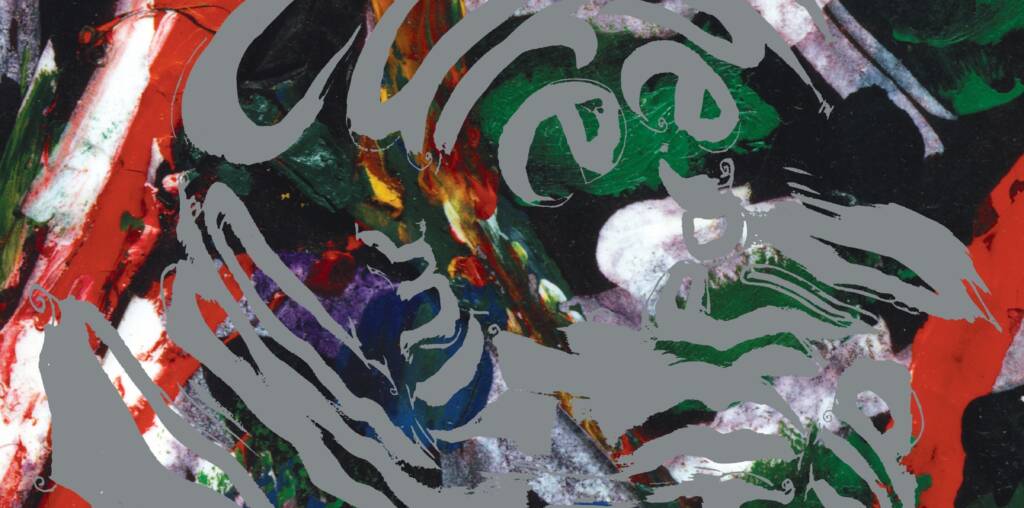
The idea for what would become Mixed Up came to Smith, he said, when he learned that hardcore followers were paying ungodly amounts of money for rare pressings of the band’s early 12″ singles. The new album would collect previously released edits alongside a few newly commissioned remixes, re-recorded versions of “The Walk” and “A Forest,” and even one brand-new song, “Never Enough,” which is notable mostly because it seemed to give U2 the idea for Zooropa. But once announced, the project was dogged by doubting critics and fans. “People keep trying to make me feel like I should be embarrassed about it, but I really don’t feel like that,” Smith said in the fall of 1990. Before Mixed Up could be understood as being any good, it had to be deemed credible. Biographer Jeff Apter called the decision to release it “probably the most misunderstood and maligned idea of [Robert Smith’s] life.”
In retrospect, it’s hard to see what was so confusing. Goth music, as John Robb writes in his history of the genre, Art of Darkness, had “married the sensuality of the dance floor”—via influences like funk, disco, and early electronic pop—“to an embrace of sex and death.” Like many genres with a reputation for the antisocial, it was as much for the club as it was for the stage or the headphones. “Nightclubbing was the beating heart of goth,” Robb writes. “It defied its graveyard ethos of being a darkly subversive strand of pop culture by dancing.” Particularly in its earliest stages, the music was spacious, less focused on pop economy than on a kind of languorous moodiness evocative of Oscar Wilde sinking into a fur-covered sofa. This was true not only of the Cure, but of goth generally: Bauhaus’ “Bela Lugosi’s Dead,” a song so definitive of the genre even SNL knew about it, is the spookiest dub record this side of Scientist Rids the World of the Evil Curse of the Vampires.
The Cure’s music already had plenty in common with the dance music of the time. After the tight post-punk of their debut, 1979’s Three Imaginary Boys, they learned to prioritize space and feeling without sacrificing forward motion. The dark room that is the original version of “A Forest,” which appeared on 1980’s Seventeen Seconds, is lit by little more than the red throb of Simon Gallup’s bass and a few flashes of guitar; listening to it can feel like going for a midnight jog through a deep wood. The re-recorded version on Mixed Up is lighter and more active, with reverb and delay shooting sounds around and adding depth to the music. Notes cascade over one another in flurries, the mesh of overlapping dots suggesting the pointillism of a leafy canopy. Freed from the requirements of pop radio, the song is loose and unhurried, giving you time to luxuriate in its many details—the percussion by committee, the tiny pricks of electronic light that scatter upward like fireflies.
The principle of expansion is at work across Mixed Up. The band patiently reassembles “Fascination Street” as if they’re carving a road deep into some massive and complex ecosystem. The Disintegration original was already airy, but Smith and producer Mark Saunders fill out the remix in a way that makes the song feel grander without sacrificing its spookiness. The extended mix of “Lovesong” recenters itself around Gallup’s bass, which, largely absent of decoration, reveals the influence of reggae master Robbie Shakespeare and veers closer to Kingston dub than Kensington goth; in this light, the 311 cover makes considerably more sense.
Even more than “A Forest,” “The Walk” benefits from the seven years Smith had spent developing as a masterful pop songwriter since its release. The original is a super-efficient banger whose disco bassline and synth set the template for everything from the Killers’ first record to Nine Inch Nails’ “The Hand That Feeds.” As every DJ knows, working with a known text means you can playfully toy with the audience, and the re-recording does exactly that. The jittery synth line that shoots a nonlethal jolt through the original is absent for most of the song, held in pocket by the band while they work out the groove. By withholding it, they automatically create tension based on the expectation the listener brings to the song, and that tension in turn makes the song more compelling—so long as you’re willing to give in to its journey.
To do that, though, Cure fans had to be willing to play by a different set of rules. Not only did you have to accept that the new version of “The Walk” wasn’t a rebuke of the old one, nor of your appreciation of it; you also had to accept that the songs they’d had seared into their souls were as malleable as warm plastic. If we view the song as something like an art object (or shrink-wrapped product), concision becomes a virtue—you want to be able to walk around the thing, examine it, feel as though you can take it all in. But if you prioritize the experience of being engulfed in sound, those expectations slip away and are replaced by things like mood, texture, and unpredictability. This is also perhaps the fundamental difference between music made for home listening and music made for the club. Both have clear purposes, but one you consume primarily with your ears and your eyes; the other you consume with your whole body.
If the original songs were about the discovery of a fascinating new territory, the extended mixes here are largely excuses to wander through them. With a bassline that felt of a piece with the immortal funk of “Good Times” and the white-boy hip-hop of the Clash’s “The Magnificent Seven,” “Hot Hot Hot!!!” was already an outlier in the Cure’s catalog. François Kevorkian and Ron Saint Germain’s remix shifts it into a space somewhere between early ’80s French boogie and the aquafunk of Bootsy Collins; you can imagine Grandmaster Flash slotting it into the Wheels of Steel. Smith rolls around and vamps like Elvis, his smoldering sexuality smeared across the surface. In the reworked “Lovesong,” he pulls the curtains closed and drapes a cloth over the lamp. While its beat is technically easier to dance to, its sultry extension feels moodier and more intimate than the version on Disintegration. Yearning already flowed through “Lovesong”; this version bathes in its own tears.
While its structure largely matches the Disintegration original, the extended “Lullaby” offers a fuller realization of the song’s idea. Where the original lurks in shadows, this one’s a prowler in the yard, emboldened and warped, with Smith’s vocals doubled, back-masked, pitched down, and largely made into mush. Even with the lyrics obscured—or, considering how this very serious song reaches its dramatic peak with the very silly line, “The spiderman is having me for dinner tonight,” perhaps because the lyrics are obscured—the remix feels more sinister, edging on mean. It’s a gorgeous arrangement. In the song’s dark atmosphere, you can hear goth’s past via Joy Division; in its downward-snaking countermelody and bicycle bell, pop music’s then-present; and in Smith’s guitar tone, which is so creamy it sounds like it’s been carved from milky soap, you can hear a bit of what the xx would do in the future. Upgrade that bike bell to a cowbell and the song starts to sound like a haunted disco track.
Paul Oakenfold’s remix of “Close to Me” is even better. Oakenfold was not yet the superstar DJ he would become, but he’d already made a name for himself as one of acid house’s leading selectors and would be nominated for a Brit Award for Best Producer for his work on the Happy Mondays’ masterpiece Pills ’n’ Thrills and Bellyaches, which came out two weeks before Mixed Up. (His “Close to Me” remix was recorded just before work began on the Mondays’ record.) While Smith’s song about wanting to go back to sleep could not have been more different from Shaun Ryders’ songs about never wanting to go to sleep again, much of what makes Pills ’n’ Thrills special also permeates “Close to Me”: It feels breezy and safely contained; you get the sense that it was recorded in a room with great air conditioning.
The song originally appeared on 1985’s The Head on the Door and, with its blatty horns and shuffling handclaps, sounded a bit like it had been made on a cruise ship. Oakenfold’s mix de-emphasizes the impish beat and cuts the handclaps altogether. Instead, he allows the song to hover over Lol Tolhurst’s simple, humming synth. The keyboard’s tone is both pedestrian—it sounds a little bit like a strip-mall church organ—and, heard in isolation on the remix, as soothing and resonant as the purr of some holy cat. Its closest tonal relative might be the vocals of João Gilberto, whose profound softness suggested tired wisdom, perennial heartache, and a tenderness that wouldn’t yield in the face of either. The sampled drums come from Kool & the Gang’s “N.T.,” the bedrock of innumerable late-’80s and early-’90s rap hits, including Nas’ “N.Y. State of Mind” and N.W.A.’s “Gangsta Gangsta,” but neither it nor the reintroduction of the horns halfway through can rouse “Close to Me” from its essential sleepiness. It is a strange miracle.
Mixed Up received uneven reviews, most of which raised the question of whether or not the Cure were attempting to jump on dance music’s bandwagon. Critics uniformly viewed the record through the lens of rock music’s principles: NME’s Kevin Cummins wondered aloud whether “they’re taking us all for suckers” and his colleague Steve Lamacq called it “a novelty record, simply marking time,” while Newsday complained that “song structure is virtually disregarded, or at least deemed secondary to the new-found sound.” Though we perhaps shouldn’t put too much stock in the opinion of someone who accused the Cure of trying to “join in the trendy dance style of house music,” Entertainment Weekly’s Ira Robbins rejected the project outright on the basis of the original songs simply being too good, comparing it to “frost[ing] a perfectly good chocolate cake with pickle relish.” “[S]ome of these gauzy rock tunes really don’t need the rhythmic charge they get from added drum tracks,” he explained, profoundly missing “A Forest” for the additional percussive trees.
The presuppositions of these writers are telling. Why should the alchemy of transforming a song into something else—while somehow preserving its essence, making it two things at once—be less valuable than the sturdiness of its structure? It’s true that the Cure’s songs hardly “needed” to be reworked. And of course, they all still exist—none has been erased from the catalog in favor of the remix, though perhaps one or two probably should have been. Even the jaunty TC & Benny edit of “The Lovecats” that Smith commissioned for Mixed Up and hated so much he insisted it would never see the light of day “unless we die in a crash or something” was included when the album was reissued and expanded in 2018.
“In the clubs, we were free of the music press, and it was amazing,” a young goth says in Art of Darkness. “For me and my friends, this new club world was not just personally throwing off the shackles of classic rock but also punk rock, which had been rammed down your throat by an older generation.” The Cure had long since transcended goth by the time Mixed Up came out—not even in a city as morbid as Los Angeles could you sell out a baseball stadium without appealing to at least a few thousand normies. The only rules that could be applied to them weren’t subcultural, but metacultural, those deemed universal by the writers who controlled the press at a time when the press controlled a band’s narrative. By scribbling over the band’s certified classics, Mixed Up defied all of them.