 Written by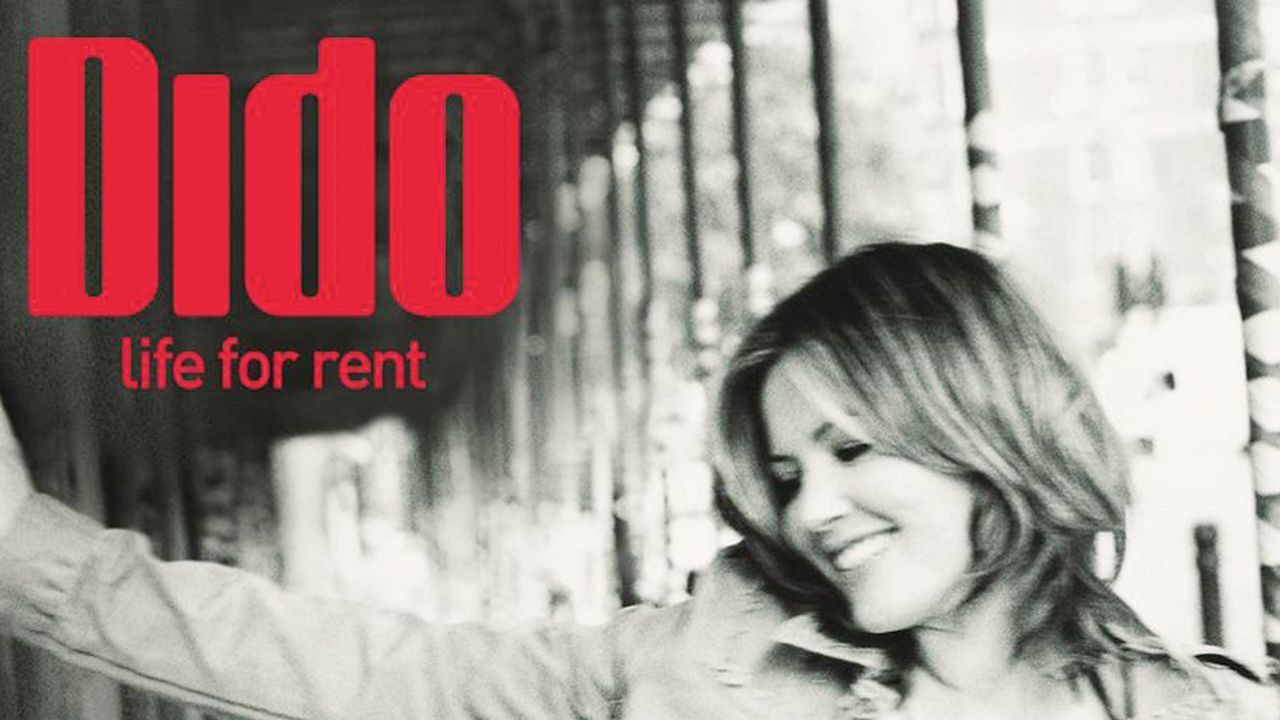
Growing up, all Florian Cloud de Bounevialle Armstrong wanted was to be normal. Her parents didn’t allow television or visitors to the house; her mother, a poet, put rye bread in her packed lunches; her father published books about military history. And she hated her name. She wished she were named Chloe, and once told kids she met playing around the corner that she was named Clare. The gambit worked, until her mum—named, incidentally, Clare—arrived and started asking for her daughter, using the quirky, Virgil-inspired nickname she’d had her whole life: “Where’s Dido?”
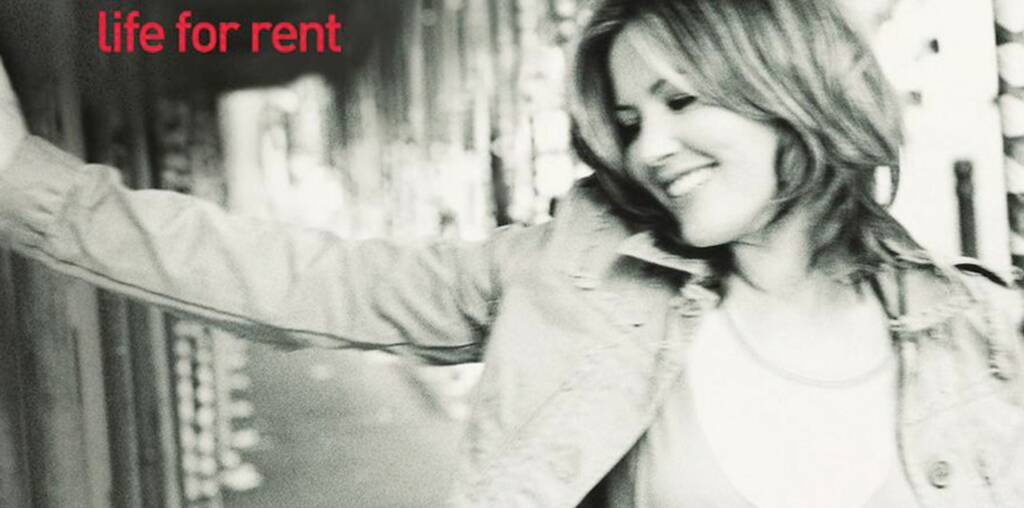
As if out of spite, Dido became the most normal pop star in the world. On the cover of her second album, 2003’s Life for Rent, she is pictured wearing a sensible jacket to match her sensible long bob and her sensible-sounding music, smiling to herself like the model that comes with the picture frame. She once described her perceived audience as families and couples—customers looking for a calm disc to throw on in the car during a tantrum or a row. Although the moody, groovy songs on her 1999 debut, No Angel, seemed to hint at danger or allude to Dido’s former life as a teenage wild child, Life for Rent was all middle-class Islington status quo. Would anyone other than a totally normal woman make homeownership the central metaphor of a record?
No score yet, be the first to add.
Life for Rent ended up selling more than 10 million copies globally—an astronomical figure for anyone in the CD era except Dido herself: No Angel has sold more than 15 million. The world, it seemed, liked normal. More realistically, I think the world liked that, beneath the Marks & Spencer drag, Dido was kind of a freak. Like characters in a Nora Ephron film or Sally Rooney novel, the protagonists in Life for Rent are mild-mannered women with dramatic, chaotic inner lives, sitting quietly at their lit agency jobs as they plot knock-down, drag-out arguments and seduce their best friends’ boyfriends. The entire record is a Trojan horse—a clear vision of white womanhood that hides a whole lot of churning, uneasy feelings.
Dido grew up in the center of upper middle class artistic London. Her parents might be best described as posh hippies: They didn’t allow television, sure, but they nurtured their children’s interest in music; when Dido wanted to start playing instruments, her mother did too. Dido was educated at all the best schools—City of London School for Girls, Westminster, Guildhall on the weekends for recorder classes—but she was also, ultimately, a Gen X-er growing up in ’80s London. By 12, she was going out to clubs in Brixton to listen to reggae, which her parents didn’t really seem to mind at first. As an early teen, she would come home at 5 a.m., wasted; her mum would simply run her a bath, and that would be that.
But the partying escalated. Dido has said she was never really into class-A drugs, but she was living by her own set of rules from early on. Around 15, she was kicked out of home; when she returned before her A levels, her parents tried to enforce a curfew. “I’d been out clubbing from the age of 12, then suddenly I had to be home at 10:30 p.m., which was the most inconvenient time you could imagine,” she once said. “I’d only got to the pub by 10.” The unruliness of Dido’s life—“I just smoked myself silly through school, went out every weekend”—meant that her parents refused to pay for her to go to university, as they had done for her older brother, Rollo. When she graduated, Dido got a job waitressing to pay her own way through school.
Best laid plans, right? By the time Dido had finished her A-levels, Rollo had started producing dance music and, in 1991, set up a studio and a label called Cheeky, both of which he ran out of his house. Dido, who was working at a literary agency by day and studying law at night, found herself spending more and more time at the studio, sometimes driving an hour across town just to hang out with Rollo and his friends, often providing demo vocals before he recut tracks with other artists. Sometimes, she would cut her own demos too.
Occasionally, Rollo just left Dido’s vocals intact, as was the case with the intro to “Salva Mea,” the totally nuts, 11-minute-long debut single by his trance band Faithless, released in 1995. It sold over a million copies, and Dido started to make a name for herself; she played some shows with Faithless, although her career with the group was short-lived. Later that year, she was performing with the band in Dublin when six people in the audience were stabbed; the set was cut short, but Dido still had to go onstage to perform one final song. That evening, she had the first of what would become persistent and crippling panic attacks, effectively ending her time with the band.
It was the right move anyway. Within a year, Dido had signed a publishing deal with Warner-Chappell—a momentous occasion that nonetheless left her anxious, as music had always felt like relief from her working life—and, shortly after, she signed with Cheeky, Rollo’s label, to release her first album. Other labels had come knocking, but Dido found the music industry “a pretty hostile place,” and she wanted artistic freedom.
No Angel, the 1999 debut album she largely made with Rollo, was a slow burn; its warm, post-Portishead pop—trip-hop in a Max Mara blouse—had mainstream appeal, but wasn’t considered particularly unique in the UK, where artists both mainstream (Everything But the Girl) and alternative (Beth Orton) were working in similar lanes. Its success came in despicably ’90s fashion: Before the record was even out, “Thank You” got a placement in Sliding Doors, the 1998 Gwyneth Paltrow film; Dido took part in a Lilith Fair tour; and “Here With Me,” one of the album’s singles, was selected as the theme song for the TV show Roswell.
Contractual issues stemming from the sale of Cheeky to BMG meant that No Angel wouldn’t be released in the UK until the following year; Dido filled the time in between with a relentless stateside press tour. “I was tired and wanted to go home, but my manager would say, ‘Yes, but last week you sold 3,978 and this week you’re selling 3,979!’” she once said. “It was that slow. There was always this sort of hope—this assumption—that things would be huge.”
Thanks to Roswell and Dido’s promotional grind—she took on “Margaret Thatcher’s sleeping patterns” for three years, she said—No Angel had sold a million copies by the time it was released in the UK in October 2000. But her ascension to supernova status came in despicably noughties fashion: “Thank You” collided head-on with the one-man culture war known as Eminem.
The 45 King, a New York beatmaker known for flipping obscure 45s into beats, happened to be watching Sliding Doors one day, heard the laid-back, beachy groove of “Thank You,” and immediately taped it off the TV to turn into a loop. The beat found its way to Eminem, who was in the process of recording The Marshall Mathers LP, his first since barrelling to fame with 1999’s The Slim Shady LP. “When I heard the words to that song, I was like, ‘Yo, this is an obsessed fan,’” he told VH1. He was sick of the perception that he “just rapped about killing and faggots,” and inverting the meaning of “Thank You”—originally a love song for Dido’s longtime boyfriend Bob Page, a main character in her music—gave him the chance to prove that he could be as conscious as the rest of them.
It didn’t work, exactly: “Stan” was still, after all, written from the POV of a disturbed fan who murders his pregnant girlfriend. The song and video—which featured Dido, bound and gagged, as Stan’s girlfriend—were heavily censored on radio and MTV; the clean version cleaved whole chunks out of the track, taking the nearly seven-minute album cut to a more polite five-and-a-half minutes. The upshot was that this new version of “Stan” had even more Dido, and allowed those catchy seven lines to penetrate even further into the collective psyche of the world’s youth.
Eminem—whom Dido spent multiple years defending in the UK press, calling him a million variations of “incredibly kind and gentle” when she wasn’t batting down rumours that he was gay or that they’d hooked up—invited Dido to perform with him on SNL and on the Anger Management tour with Limp Bizkit and Papa Roach. The Marshall Mathers LP sold nearly two million copies in its first week, but by some fiendish machination of the Hot 100 chart, “Stan” peaked just outside the Top 50; a few months later, in April 2001, “Thank You” floated its way to No. 3, and No Angel had become a hit the world over, often on import sales alone.
This being the early 2000s, and Dido being a beautiful young white woman, she became a tabloid fixation pretty much instantly; like Jennifer Aniston before her, even her hairstyle was subject to its own craze, and became known as the “Dido flip.” By the time she wrapped up the promo for No Angel, her 12-year relationship with Page was over, and “there was Dido at home and a sort of popstar Dido,” she said. “But it practically sent me schizophrenic. It was a mistake.”
It’s hard to overstate just how much the British press hated Dido at this point; as she herself said in interviews, she’d “never had one bad review” until No Angel blew up, at which point she was no longer a singer with an underground pedigree. She was instead reduced to a basic girl who lived in Islington, who had basically stumbled into her success. Writers were obsessed with the idea that Dido was a rich kid, but they also hated that she wasn’t born that rich: Two separate profiles from this time describe her accent as “classless.”
In late 2002, Dido and Rollo began work on what would become Life for Rent. It was smoother and more polite than its predecessor, and did nothing to dispel the notion that the now 31-year-old singer made music for people who bought only one CD a year. But in the press, Dido was letting her confrontational teenage self out to play. When a writer for the Sunday Times fumbled for an adjective to describe her music during one interview, she cut him off: “Bland. Go on, say it.”
Life for Rent’s blandness was only skin deep; Dido and Rollo recognized that chilly downtempo electronica was the de facto soundtrack of their generation—heard in lucite-filled bars from West Kensington to The Standard West Hollywood—and populated that music with subtle tales of betrayal, heartbreak, and infidelity befitting her supposedly unbothered, middle-class listeners. These songs aren’t edgy—perhaps because Dido was suddenly worth tens of millions and had her team call hotels before she stayed at them to check swimming pool lengths—but the medium works. Dido wasn’t a child of the underground who happened to have a knack for melody. She was a folk singer in the truest sense, writing elegant songs that focused on small-scale losses.
Scrubbing away the cigarette ash of No Angel had a clarifying effect on Dido’s music. The singles on Life for Rent are cathedralesque: more space for Dido’s lyrics to breathe and more room for a voice that had grown from pleasant to powerful thanks to years of non-stop touring. “White Flag,” the album’s first single and opening track, is, to put it bluntly, a rewrite of “Here With Me,” the first single from No Angel. Both songs are big, aching ballads; both are built around the same sauntering trip-hop groove; both were written about Bob Page.
But unlike the slightly noncommittal-sounding “Here With Me,” “White Flag” is one of the most indelible hits of the 2000s—a sunny folktronica song imbued with the yearning of Bonnie Tyler and the drama of Céline Dion with none of the schmaltz. Part of what’s so deceptive about Dido’s music is the way she packages large feelings in decidedly low-key boxes; you can imagine a pensioner taking “White Flag” to the Antiques Roadshow in a Ziploc bag and being shocked to discover it’s a one-of-a-kind treasure. The 1000-thread-count production—strings, chimes, acoustic guitar—swaddles Dido’s lyrics, which are almost aggressive in their unwillingness to let a relationship end. It’s hard to sum up the song’s brilliance, because it feels like it exists beyond analysis, beyond taste: It is just the breakup ballad that you might show aliens if they asked for a perfect example of the form, defiant and triumphant and wounded in equal measure, bolstered by Dido’s voice, which is loud and resonant but unshowy.
“White Flag” sets the terms of engagement for Life for Rent: Sweet and sour songs that don’t flaunt their complexity. Dido was basically beholden to two types of songs—loud ballads and small ballads—but there were occasional flashes of experimentation. “Don’t Leave Home” is one of her darkest and most interesting: a love letter from a drug to its user that uses the warmth and sweetness of Dido’s voice to capture the unerring pull of addiction. “Oh how quiet the world can be/When it’s just you and little me,” she sings, not an ounce of sinister intent coming through in her voice.
Most often, she uses the placid veneer of her music to hit below the belt: Telling a boyfriend that their sex feels “a little desolate” of late on “Stoned,” or brushing off a failed relationship by claiming that he’ll be “lost and all alone” at 40, “sad because you thought it was cool to be sad.” Although Dido rarely spoke on the direct influences behind the songs on Life for Rent—instead preferring to claim she drew inspiration from friends, or that she was writing fiction—her songs tell the story of someone with too much self-respect, or too little time, to humor the whims of fickle guys.
But even that idea is up for debate. “Mary’s in India,” a meandering story-song about two friends breaking up because one wants to travel, closes with the strong implication that the song’s protagonist is now sleeping with her friend’s ex. And on the album’s title track, Dido considers the merits of singledom at the peak of Sex and the City-era debates on whether working women needed relationships at all. “While my heart is a shield and I won’t let it down/While I am so afraid to fail, so I won’t even try/Well, how can I say I’m alive?” she wonders, the gentle handclaps that undergird the song’s chorus belying its gravity. “Life for Rent” is one of the album’s weakest songs—its central metaphor is too labored by half, and its melody is painfully repetitive, never building or breaking like the better songs on the record. But it’s instructive in its outlook. Dido’s records were frequently cast off as “chick music,” despite her large male fanbase, but the label fits; these are songs about the contemporary concerns of women in the same way that “chick flicks,” maligned as they may have been, attempted to chart the double-edged sword of working and dating in the 2000s.
Perhaps this is the reason that Life for Rent, like 27 Dresses or Sweet Home Alabama, doesn’t really have a legacy: Despite being one of the best-selling albums of all time, it was too resolute in its sociological interests, too avowedly normal in its presentation. Dido’s childhood of playacting plainness had made her the kind of artist most people dismiss as shallow; now, she may be best known for her part in “Stan.”
Part of this, of course, can be chalked up to Dido herself: Her tour in support of Life for Rent was her last for 15 years; she releases an album every five or six years, but has never made any real attempt to recapture the spotlight of her early career. When she does emerge—as she did a few years ago, to feature on Caroline Polachek’s “Fly to You”—it feels slightly miraculous, like seeing a friend you loved dearly who moved far away. You can hear echoes of her music in the downtempo realism of artists like Erika de Casier and james k, but it can feel silly to bring her up, if only because no real attempts have been made to affirm her legacy. But that makes sense: All Dido ever wanted was to be a normal girl.
Additional research by Deirdre McCabe Nolan.