 Written by
 Heavy metal is a world of weird contradictions. For those of us devoted to it, the music is life-saving, while others hear nothing but worthless noise. It’s a scene that champions the outsider, yet the majority of people who make and listen to it are cis-het white men. And, as passionate as we metalheads are about their favourite bands, some of us like to gatekeep and ‘protect’ them from a broader listenership.
We love metal, although sometimes it feels impossible to understand. So, we sought enlightenment from Robyn Ward, better known as The Metal Therapist. She’s a content creator with 39,000 Instagram followers, but more importantly for us, she’s a practicing therapist with eight years experience. She discovered heavy music in her early teens, when her friends took her to a local rock and emo club in Wigan, which is around the same age that many people start to enjoy metal.
Robyn believes that how old you are when you first encounter this kind of music has everything to do with whether you fall in love with it or dismiss it. The volume inherent to the genre, as well as its often-angsty lyrics, connects with the confusion, anger and alienation that teens feel as they transition from their childhood identities into adulthood.
“When you’re going through your teenage years, in terms of psychological theory, that’s when you’re finding your identity,” she explains. “You’re coming into your own a lot more, so you become a lot more independent from your family. I think it’s fascinating, because that was definitely the case for me: all of my siblings are a lot older than me, so I felt like I was a bit different to everybody.”
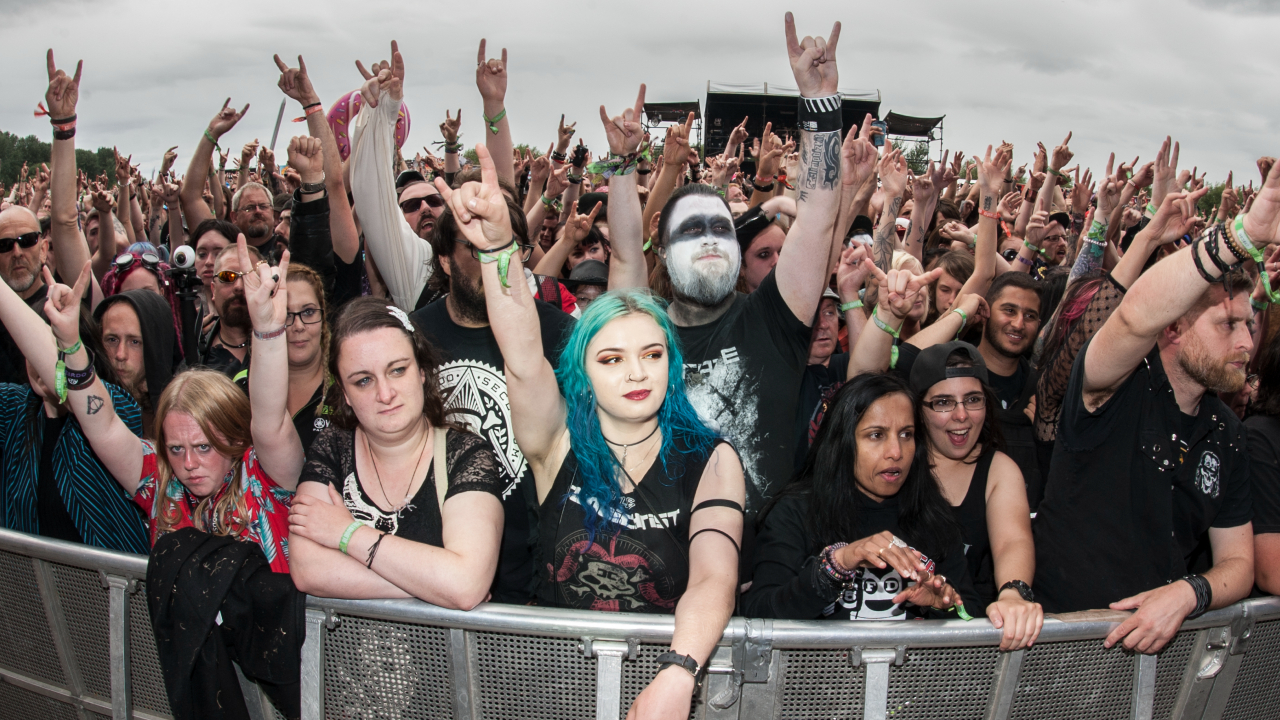
Every metalhead has been told “it’s a phase” while discovering this darker, heavier side of music, but it appears that the opposite is true. While Hammer couldn’t find any studies or surveys about people who initially enjoy metal only to turn their backs on it in later life, anecdotally, they seem few and far between. What is it that makes the music linger in people’s lives long after the teenage angst fades away?
“It’s not just the music, but the community,” Robyn answers. “I suppose it’s the same as when you go to therapy: you want to find a therapist that you feel safe with, and you feel seen by, and you feel understood by. This is a community who, more often than not, knows what it’s like to suffer. We are the outcasts! There’s a level of compassion within the scene that I just feel like helps people feel just a sense of belonging.”
She also points out that metal can be a haven for neurodivergent people or those with mental health issues. She has ADHD, which means “you seek dopamine more than a typical person”, and explains that the “complex”, “layered” nature of metal music gives her a greater “hit” than other genres. Similarly, this writer has anxiety disorder, and few things are better at disrupting a downward spiral than being hit with an attention-demanding brick of guitars, drums and screams.
New York psychologist Dr Nicole Andreoli, Ph.D lent credence to this in a TikTok video in 2023, arguing that metal makes its fans more logical thinkers.
“Heavy metal has been found to lessen negative emotions by reducing cortisol levels, which helps to lessen stress,” she said. ”Research has found that people who listen to heavy metal tend to think more logically and in more complex terms than those who don’t listen to heavy metal. Heavy metal has been found to help the most with focus.”
It all makes sense so far, but this is where metal gets trickier to understand. For as accepting and community-driven as the metal scene often is, there’s also intense division. The genre is split up into almost countless subgenres, many of which have micro-genres and fusion genres of their own. Plus, we’ve all seen gatekeeping in practice, where any popular band from Metallica to Sleep Token can be lambasted for not being “true metal” and their fans branded as posers.
This is an intense, toxic form of passion. Gatekeepers found their place in metal after feeling alienated in some way by the mainstream world, or they’ve felt belittled in some way for liking the music. So now, they feel a duty to protect this thing that’s welcomed them from outside, fraudulent forces who may sully their paradise.
“I think it’s protectiveness,” Robyn summarises. “A protectiveness over this thing that has made them feel so seen and a fear of it becoming a bit more like the mainstream.”
Also, there has always been a gender imbalance. Since the days of Black Sabbath and Deep Purple, metal has been a male-dominated scene, with respect to both the fanbase and the bands themselves. It’s not hugely surprising, especially when you consider its origins in 60s and 70s UK, given what the music embodies aligns with what the late 20th century conditioned men to be. Metal is aggressive, confident, domineering and powerful, which are all traits that have been traditionally associated with expectations of manhood.
Many essays have been written about how men use metal as a way to reassert their rowdy, chest-beating masculinity amidst the changing gender dynamics of the past few decades, and that doubtlessly plays into the dismissal of softer-sounding bands as “not real metal”. Not to mention, the sexism that many female fans and artists will tell you they’ve endured over the years. But, Robyn senses a change in the guard, with more women – such as Poppy, Spiritbox’s Courtney LaPlante, Jinjer’s Tatiana Shmayluk and Castle Rat’s Riley Pinkerton – becoming dominant figures and smashing stereotypes.
“I wonder if there’s something there about metal also giving women a reason to delve into those more typically masculine feelings, like anger and aggression,” she says. “I’m starting to see more women in pits, and it’s great. I think it’s just giving women a bit more permission and allowing them to be taken a bit more seriously in the scene.”
Ultimately, metal is a vast culture, and like any population that’s millions of people strong, you can never hope to understand every detail of it. Yet there’s a logic to its trends and defining behaviours, even the ones that don’t seem to make sense. It offers a place of security for the outsider, but that outsider can sometimes be so alienated that they police the very place that embraced them, hoping to weed out any trace of the mainstream that they’re weary of, be it the music, the social dynamics or anything else.
“Metal has not been perfect,” Robyn states, “but it is still a scene that has allowed me to experiment and not feel judged for that. I could go to a festival in a unicorn outfit and no one would bat an eyelid. Nobody cares.”