 Written by
Share this article
Join the conversation
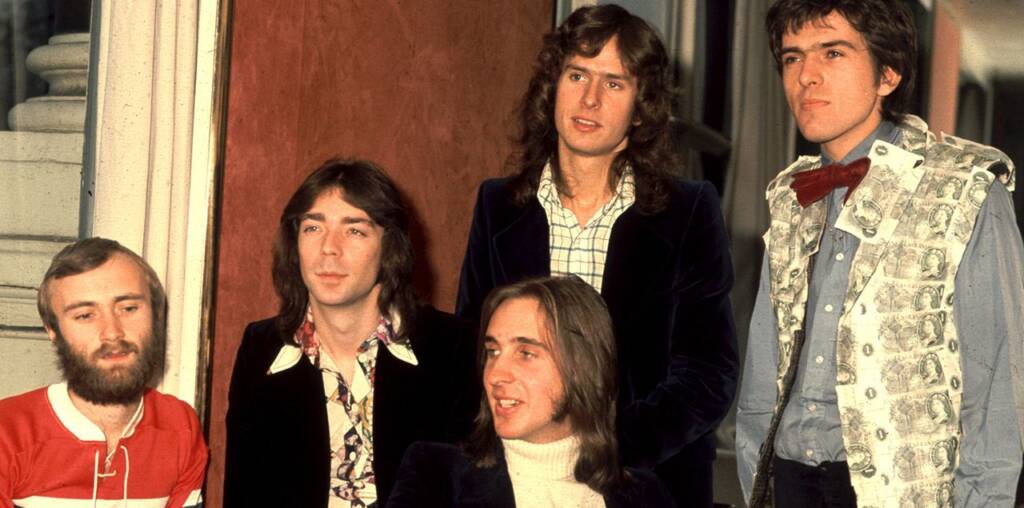
Genesis’ future was very far from guaranteed when co-founding guitarist Anthony Phillips decided to leave the band in 1971. After making the decision not to break up, Peter Gabriel, Mike Rutherford and Tony Banks set about creating a new line-up. The arrival of Phil Collins made a big difference, then the recruitment of Steve Hackett secured their future as a musical force via third album, Nursery Cryme, as Prog explored in 2022.
It’s well documented in Genesis lore how devastated the rest of the group were when co-founder, guitarist Anthony ‘Ant’ Phillips left the group after the show at the Sussex [now Clair] Hall in Haywards Heath on July 18, 1970. Trespass, their second album, and the first for Charisma, had been recorded that June but wouldn’t be released until October.
After much contemplation and encouragement from tour manager Richard Macphail, Peter Gabriel, Tony Banks and Mike Rutherford decided to continue, advertising not only for a guitarist but also a drummer – the watershed had provided an opportunity for their third percussionist, John Mayhew, to move on. After seeing their advert in Melody Maker, ex-Flaming Youth drummer Phil Collins auditioned; he arrived early at Gabriel’s parents’ farm in Chobham that August, with his guitarist friend Ronnie Caryl, and went for a swim in the pool while he overheard the other candidates play. By the time it was his turn, he was familiar with what he was asked to perform.
Latest Videos From Louder
Caryl auditioned for the guitarist’s role. Collins was successful but Caryl, being too bluesy, was not. Gabriel later said: “I knew when Phil sat down on the kit, before he played a note, that this was a guy who really was in command of what he was doing, because he was so confident. It’s like watching a jockey sit on a horse.”
After a handful of summer shows and the impending release of Trespass, Genesis, including Collins, returned to the road at Chatham’s Medway Technical College on October 2, 1970. The group had rehearsed extensively at the Farnham Maltings near Rutherford’s parents’ home in Surrey. “We just couldn’t replace Ant,” Macphail says.
Banks notes: “The nature of the guitar is that it tends to attract people who like to be flamboyant, and out there making a lot of noise as the centre of attention. We were looking for exactly the opposite of that.”
“Gigs were in the book, so we went on as a four-piece,” Macphail continues. “Charisma’s Fred Munt suggested that we get a Hohner electric piano with a fuzzbox, and put that on top of the organ. That was the beginning of Tony’s multi-keyboard thing.”
New roadie Paul Davidson – lured away from university for a life on the road by Macphail – was there that night: “Phil needed quite a lot of attention because at that stage, he hadn’t got a drum board to set up on, so his kit was always moving around. Part of my job was making sure it didn’t move around too much by a putting couple of nails into the stage.”
“When Phil came in, he could do a tap dance on stage,” Charisma PR Glen Colson says. “He was made for showbiz. He still is.”
It was during this brief period as a four-piece that Banks, Collins and Rutherford truly gelled, establishing a musical telepathy between them that exists to this day. “We literally left Ant’s amp on stage right and took a long lead and plugged the electric piano into it,” Macphail recalls. “Tony would play Ant’s solos on the repertoire that was being played live at the time.”
Collins’ pal Caryl played guitar with them at a show in October, before Mick Barnard was drafted in and played at gigs from until January 1971. It was the band’s Friars Aylesbury champion David Stopps who’d suggested Barnard, whom he knew from local band The Farm. “He helped them out at that moment,” Stopps says. “When Peter asked me if I knew anybody, I thought of him.”
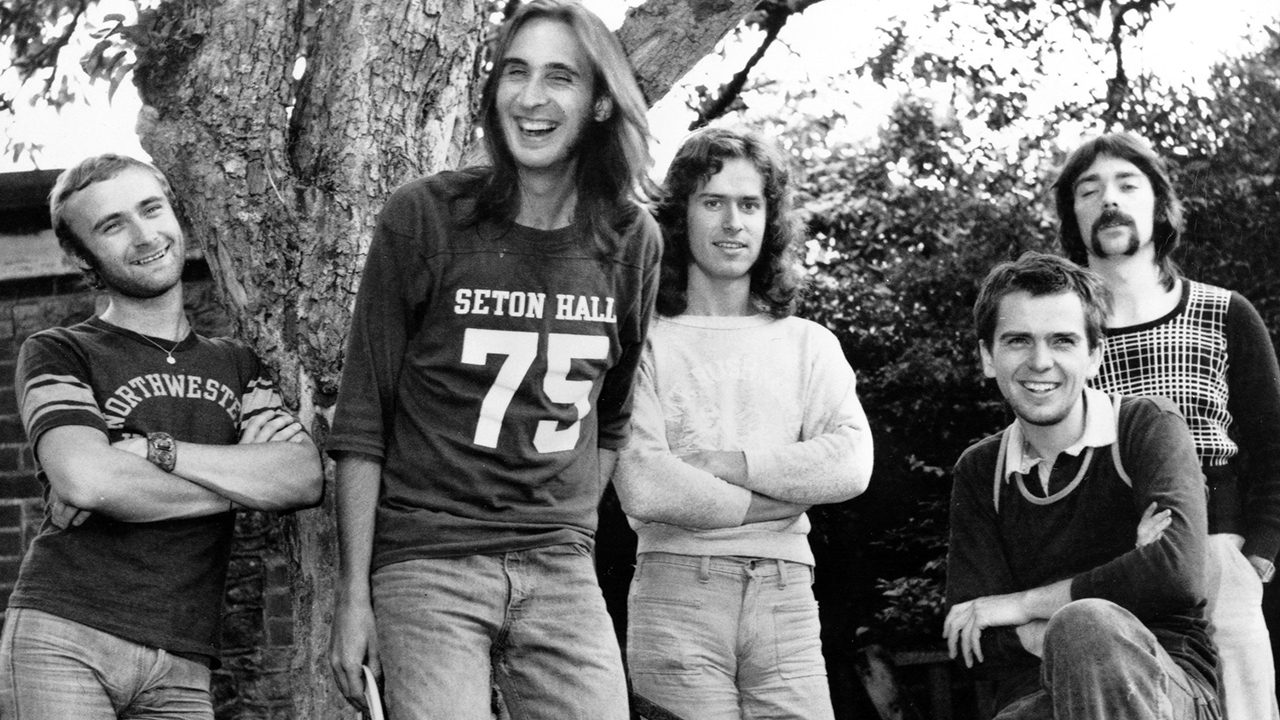
“Mick was much more of a member than Ronnie,” Macphail says. “He was quite quiet, a good player, no doubt about it.” Although Barnard was with them, the search for a permanent guitarist went on: “They didn’t just need an axeman – they needed someone who was more than that,” Macphail adds.
Gabriel was intrigued by an ad placed by Steve Hackett in Melody Maker on December 12, 1970: “Imaginative guitarist-writer seeks involvement with receptive musicians, determined to strive beyond existing stagnant music form.” Gabriel phoned Hackett and suggested he listen to Trespass and see the group live.
Yearning, looming build-up of compressed energy… Steve had a dollop of unfulfilled frustrations
Peter Gabriel
He went with his brother John to see Genesis with Barnard, at London’s Lyceum on December 28. “They seemed almost like a semi-acoustic band,“ Hackett remembers. “They started with Happy The Man – I thought I was supposed to be seeing a rock band. I realised there was as much acoustic music in this as there was rock. They were different from most bands in that way.”
As 1971 dawned, Banks and Gabriel went to Hackett’s flat in Pimlico. “They said they had a guitarist, but they wanted someone who not only played electric, but 12-string as well,” he says. “I was a huge fan of the 12-string. I played them a number of things in different styles. It was very interesting: Pete did all the talking; Tony didn’t say a word.”
Hackett was asked to join, and out went Mick Barnard. There was little doubt that the latter was a good player who’d assisted the group immeasurably. “In a way, looking back, they really were waiting for Steve,” Macphail states. “Steve had so many other irons in the fire because he was into unusual tunings, 12-string acoustic and all that stuff.”
Many were to wonder what happened to the missing Genesis player. “Mick was a local legend. He was and still is a brilliant blues player. He’s still playing today,” Stopps says.
Steve Hackett brought his intense musicianship with him as the band began work on third album Nursery Cryme. As Gabriel would later say, the guitarist was “the colouring agent – the dark contained personality that was struggling to get out. Yearning, looming build-up of compressed energy. Steve had a dollop of unfulfilled frustrations.”