
 Written by
 It’s no knock on SUSS’s excellent music to admire the strategy behind their success. Their first savvy move was to embrace the kind of pat labeling that many artists try to avoid. Self-branding as “ambient country,” they made the tradition of diffusing American roots music through a new-age filter sound sexy and modern and algorithmic. They played to the playlists and got results, and were branded as pioneers in the process
SUSS expanded their brand under the rubric Across the Horizon, which consists of a podcast; a compilation series featuring fellow travelers like Mark Nelson of Pan American, William Tyler, Marisa Anderson, and Chuck Johnson; and now a revolving all-star jam at the Big Ears Festival, a booking that’d be a feather in any upscale experimental musician’s cap (and an intuitive pairing of artist and venue that I called back in 2022).
No score yet, be the first to add.
It helps that, all being at least 60, SUSS have well over a century’s worth of combined industry experience. Jonathan Gregg plays pedal steel, an ambient-country must, and has a tidy Americana background. Pat Irwin, who primarily handles piano and synths but also dips into slide guitar, harmonium, and autoharp, comes from surf rock and new wave, and played with the Raybeats and the B-52’s. And Bob Holmes, on acoustic guitar, harmonica, and unobtrusive tape loops, is the bridge between: He’s best known for a countrified new-wave band called Rubber Rodeo, with Gary Leib, a SUSS cofounder who died in 2021.
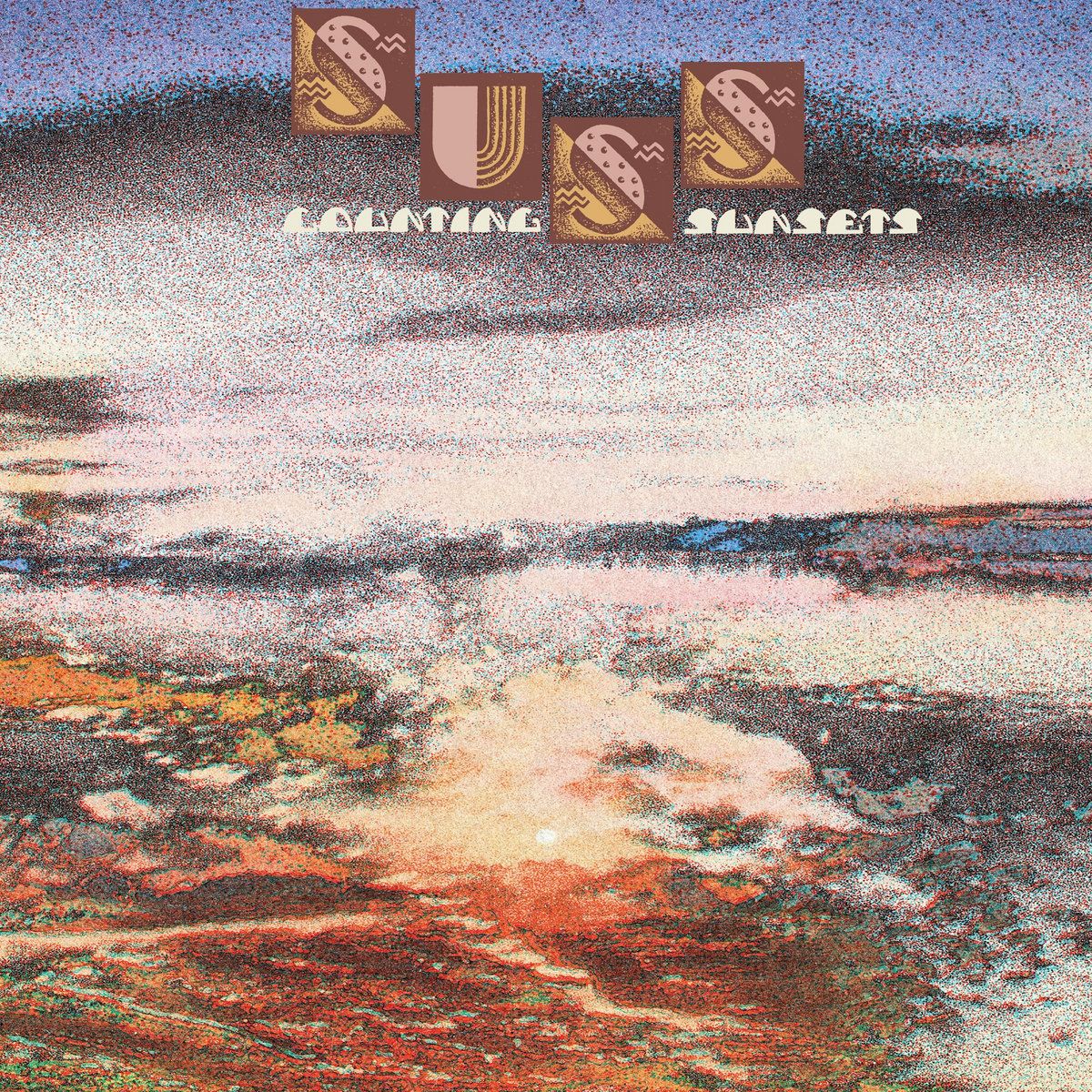
With all the promotional heavy lifting done in the background, they get down to making their albums, half a dozen since 2018, without fuss or frills. No overinflated concepts—after making a record about nature called Birds & Beasts, they named their new one Counting Sunsets. Then they counted them: “Sunset I,” “Sunset II,” and so on. Supply your own themes of mortality if you like. But you get what it says on the artfully dented tin: the American West in slow motion, low slung and high lonesome, like a lost Brian Eno album called Music for Outposts.
Whereas Birds & Beasts was light and air, Counting Sunsets has an earthier heft and grain. The acoustic instruments protrude from the ethereal swirl, often implying widely spaced grooves. Sometimes they’re made explicit with synthesizer arpeggios, deployed with typical restraint, like neon signage flashing between passing trees at night. Arps burble in and out of “Sunset II” to furnish an air of hushed expectancy, while “Sunset IX” sounds like someone on an ’80s Windham Hill compilation reinterpreting the “Reading Rainbows” theme.
There are no indulgently long songs—SUSS record in the present perfect. They don’t jam; they have jammed, then distilled digestible essences of three to five minutes each. “Sunset I” feels faintly Hawaiian, with a hint of smoky noir, as the guitar softly strokes along and the tape loops describe a slow infinity sign. The loops are often the secret sauce, as on the gorgeous “Sunset III,” which wouldn’t be the same without that plaintive little whine skirling at the bottom. The album has an ASMR sense of stereo space, full of louvered shapes you can almost touch.
Counting Sunsets is very pretty, but there’s always something tense to give the beauty character, like the wowing frequency stuck at the spine of “Sunset VII.” You can make pictures from the music—the harmonica on “Sunset IV” is like a train passing through a ghost town—but only the last track feels merely cinematic. This is serious music for serious listeners, expertly realized and efficiently delivered: another smooth move from a crew of versatile long-timers who turned experimental traditionalism into a marketable movement with themselves at the center.