
 Written by
Around the time that “Vertigo” was achieving mainstream ubiquity in the mid-2000s, Bono had a profound disagreement with music journalist Greg Kot about the definition of rock’n’roll. To Kot—a professed fan of U2, particularly during their arch, visionary run in the ’90s—the group’s integrity was being compromised by their recent iPod commercials, back-to-basics songwriting, and stadium sets full of hits. Bono, on the other hand, believed their message could only achieve its highest goal when heard by as many people as possible. In Kot’s eyes, the band was stunting its artistic growth by becoming a familiar, corporate brand à la the Rolling Stones; for Bono, there were some good songs on Voodoo Lounge.
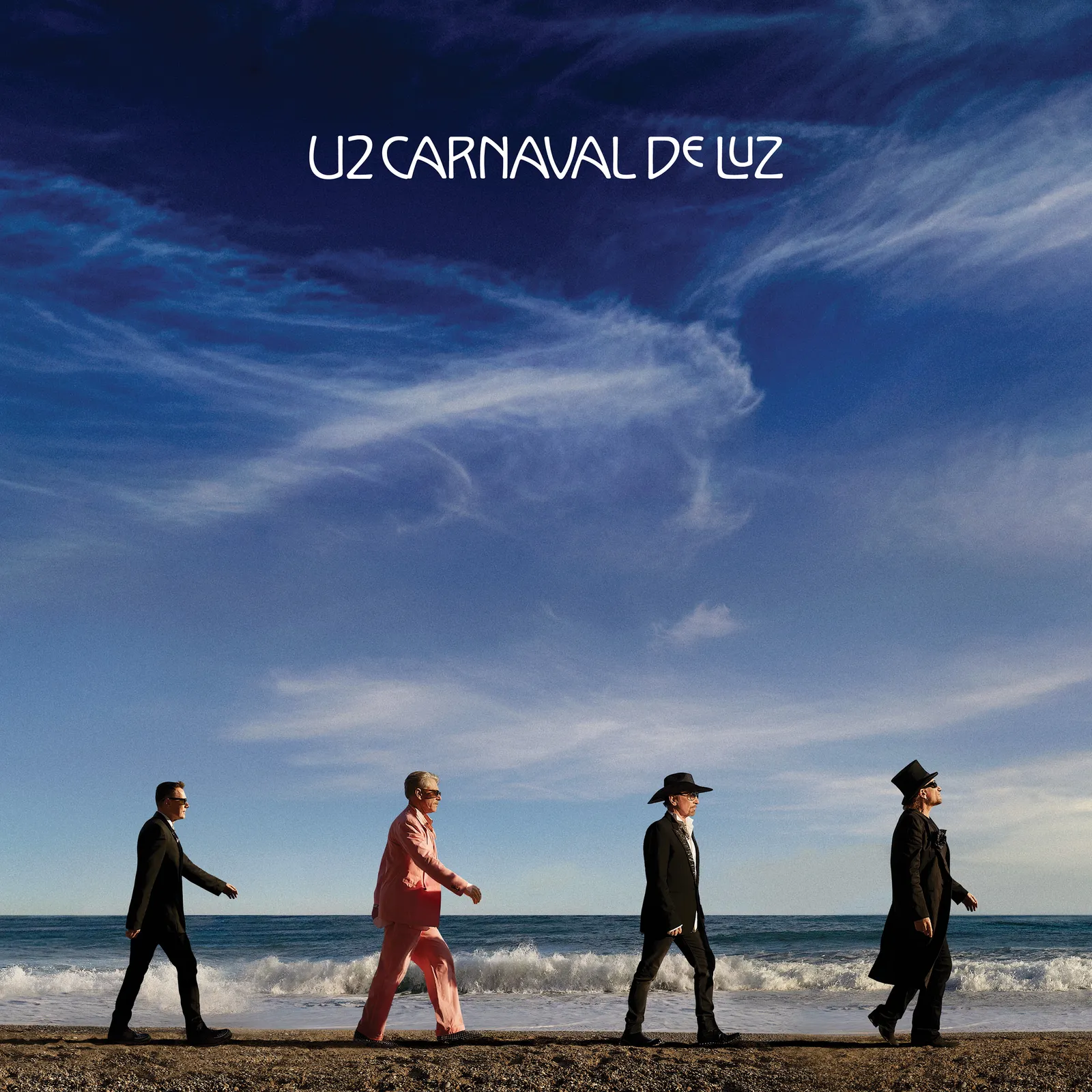
On Carnaval De Luz, U2’s first album of original material in nearly a decade, Bono considers the debate from another angle: “No such thing as rock’n’roll,” he sings. “We just needed it to be.” The 66-year-old singer makes this concession, partially, because he’s got bigger things on his mind lately. Never mind the creative rut his band has endured for the better part of this century, nor the concurrent PR debacles that have garnered more attention than the actual music. The animating incident of the band’s concise, colorful new album was a neck injury sustained by drummer Larry Mullen Jr., a late-career obstacle that put a question mark to the future of a four-person democracy that’d been operating intact since 1976. Forget all your big ideas about spreading your message—what happens when there’s no one to deliver it alongside you?
No score yet, be the first to add.
Embracing Mullen’s return to the band—and perhaps finally accepting that even spamming your record to 500 million phones at once does not guarantee a hit—U2 decamped to make new music with (relatively) lower stakes. Brian Eno stopped by to help. So did Jacknife Lee, the How to Dismantle an Atomic Bomb co-producer I associate with dry, tinny distortion that has never felt like the right fit for this band’s sonar depths (but hey, it could be worse). The sessions were reportedly bountiful, and early this year, they started teasing out the results with two surprise-released EPs. Despite some promising moments, February’s Days of Ash and April’s Easter Lily felt more exciting for what they represented: a band finding its groove, trading ideas, reconnecting with its core audience.
Carnaval De Luz picks up where the EPs left off, spiritually and sonically, with a siren blast that completes the outro from Easter Lily. The opening fanfare of “Go (Carnaval De Luz)” goes down in just two and a half minutes, sprite and spunky, establishing a mission statement “to find the other people who feel like this.” It’s followed by “La Reina,” a callback to the sinewy, devilish glam of 1991’s Achtung Baby, affixed with a new-wave coda that reaches even further back. There’s some connective tissue throughout the record about the Brazilian festival that inspired its title, and about half the songs incorporate lyrics sung in Romance languages, but the real conceptual thrust is this self-referentiality—Bono considering his role as a frontman, a long-standing purveyor of hope, who can only summon this strength with the right people around him.
The members of U2 have spoken about seeking a sense of “defiant joy” on the album, and it quickly becomes clear they found a spark that was missing. Pieced together with questionable teams of co-writers and collaborators, 2014’s Songs of Innocence and especially 2017’s Songs of Experience were lumbering and anonymous. (Say what you will about 2009’s No Line on the Horizon, at least it was U2’s own bad ideas dragging it down.) Reflecting on his previous work with the group, Jacknife Lee confessed to Rolling Stone, “I, shamefully, didn’t understand the power of Larry and [bassist] Adam [Clayton].” I’d argue this should be grounds for dismissal, but the thinned-out sound of Carnaval De Luz lets each member take the spotlight. Bono, in turn, avoids the autobiographical reckonings and state-of-the-union addresses of the Songs records in favor of embracing the moment: “I see a summer down the road/Of songs and a silver sea,” he prophecies in “Can’t Stop Us Now,” as if aiming his troublesome ambition solely at the prospect of heading back on tour.
The lyric about rock’n’roll I quoted earlier appears in a sparse, mid-album song with the very Lana title “If the World Is at War We Better Not Be.” It is around here that the record loses some momentum and their trademark ability to transcend—whether through the clumsily structured ode to joy “Superficiality” or the odd but well-meaning fan letter “The Mirror Maker (Rosalía)”—still seems beyond their grasp. It’s inevitable and frustrating in situations like this to consider what would happen if they swapped in some of the stronger cuts from the EPs—the trancey “Easter Parade,” or the theologically sweeping “The Tears of Things”—because the record closes just as confidently as it begins. “Can’t Stop Us Now,” an Eno collaboration, is fresh and lush, a verdant runway where Bono seamlessly invokes Hemingway and delivers one of the album’s breeziest choruses. And “Torn,” a duet that marks the final recorded appearance by Dolly Parton, brings enough gravity and pathos to round out a record that’s otherwise notable for how squarely it focuses on the sound that these four men have built and rebuilt together, time and time again.
Fifty years into U2’s career, this dynamic carries Carnaval De Luz. If “Street of Dreams” felt somewhat trite as a standalone single this summer, it gained resonance upon learning it was among the first things they tracked after Mullen’s surgery: a communal rallying cry whose moments of tentative ambience are just as crucial as its steady march. And “The Greatest Show on Earth,” a climactic ballad that Bono has hailed “a reason to stay in the band,” is neither their most elegantly composed anthem nor their most immediate, but its wounded spirit feels distinct. “Is that a smile or a tear?” Bono asks. “Is it all show business here?” The words are fragile and self-incisive, an acknowledgement that committed, long-term relationships like theirs are often the ones in danger of being taken for granted.
For a long time, nothing deterred U2 like success and nothing inspired them like failure. You don’t get the bold reinvention of Achtung Baby without the backlash to 1988’s Rattle & Hum, itself a response to the heightened stature afforded by 1987’s The Joshua Tree. At a certain point along their ascent, however, this back-and-forth stalled: When you’re too big to fail, success means something different, too. Kot’s criticisms in the 2000s likely struck a nerve because Bono could sense U2 were crossing a rubicon. Their music was finding a new generation of fans, sustaining a longevity that may have otherwise been hard to fathom; at the same time, they were on a path that would eventually cost them loads of goodwill and, more painfully, their creative compass. Carnaval De Luz rides on the back of these hard lessons and pushes forward, with a lighter heart and unlikely grace. Call it a comeback; call it rock’n’roll—thankfully, this time around, the only skeptics U2 are here to convert are one another.