 Written by
 In 1974, on the back of Roxy Music’s success, guitarist Phil Manzanera was invited to make his debut solo album. While he was recording that record, 1975’s Diamond Head, he reformed previous band Quiet Sun to make their own debut, Mainstream, during studio downtime. With the announcement of Mainstream’s remixed and remastered return in September 2026, Prog looks back on Manzanera’s 26-day slog to complete both works.
They say if you want something done, ask a busy person to do it. In the mid-70s Phil Manzanera had his hands full with Roxy Music, but he’d been upping the avant-garde ante with Nico on her mercurial, bleak essay The End, as well as locking horns with John Cale on Fear.
In the wake of Roxy’s success hwe was asked if he’d like to record a solo album, he grabbed the opportunity with both hands. For 26 days during December 1974 and January 1975 he worked with a stellar cast that included all of Roxy Music minus Brian Ferry, John Wetton, Robert Wyatt, Brian Eno, and his pre-Roxy band Quiet Sun.
By day, the team worked on the official recording, Diamond Head. But during at night, Manzanera and Quiet Sun taped an entirely different record without the knowledge or approval of management or label.
These two albums that emerged from having burnt the candle at both ends provide an absorbing inventory of enthusiasms that the guitarist hadn’t always found an obvious outlet for in Roxy.
The contracted solo album Diamond Head is a beautifully judged collection, sensitively designed and liberally laced with tangy, exotic flavours. Predominately light and airy, his collaborations with Eno on Big Day and Miss Shapiro are guaranteed to make you smile. Frontera, on which Wyatt sings nonsense lyrics gleaned from a Spanish phrase book, hurtles forward like the iconic train that leaps out from the cover.
Manzanera is a generous and unassuming host, often allow other contributors to bask in the limelight. Even on the instrumental numbers, replete with ornate arrangements and intriguing mood shifts, he’s a tasteful presence rather than a dominant force. Only on the stately pomp of Alma does he let his inner rock god properly off the leash.
But if Diamond Head shows the lighter side of his musical personality, the other album, Mainstream, is an altogether darker, harder place. Wearing their love of Soft Machine on their sleeves, Quiet Sun had broken up in the early 70s with only a couple of demos to their name – but it had been an educational experience for Manzanera.
“That period, generally, opened up a lot of musical horizons,” he told Melody Maker in 1975. “Just listening to all those different groups like Soft Machine, and the groups which came out of America like Zappa – who was using the techniques of jazz in a rock context – that really changed the direction of our music. That whole period for me was like a musical university.”
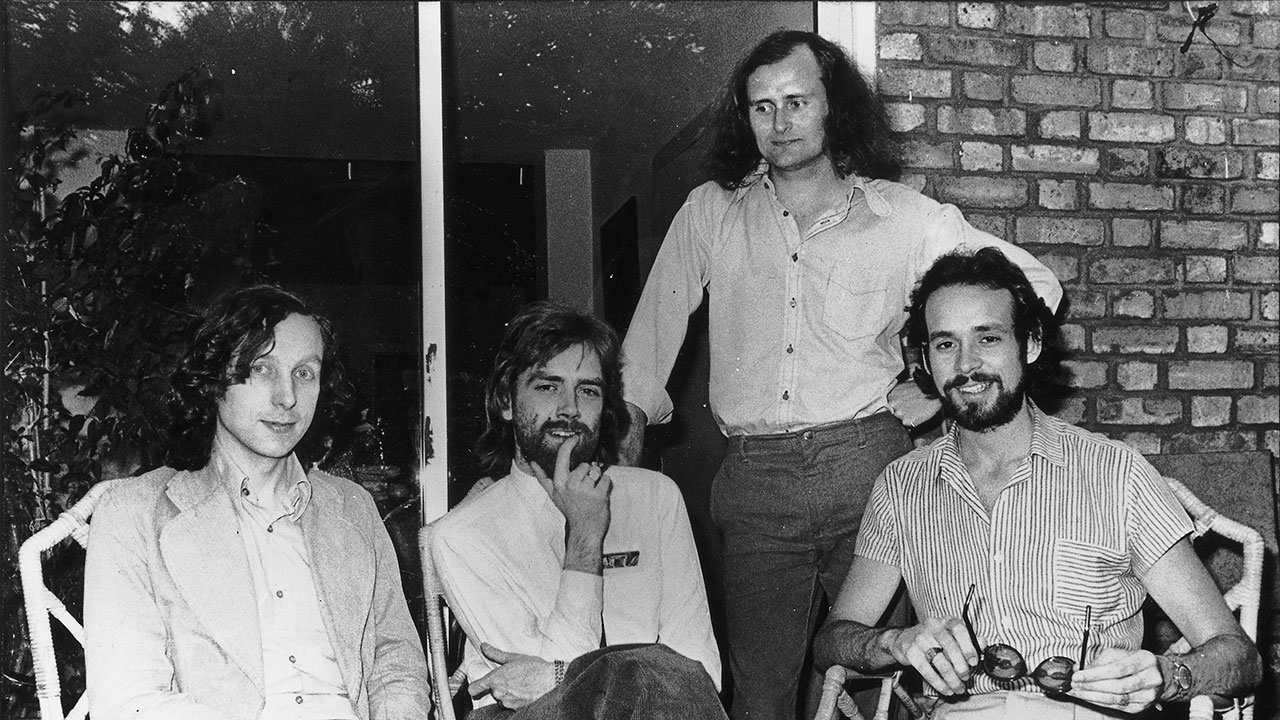
Using the recording of Diamond Head as cover, they really make up for lost time. “I listened to some of the live tapes we’d made of Quiet Sun,” Manzanera explains, “and it seemed such a pity that we’d never put it down on record; there was so much good music there. I thought it would be valid, and I fitted it into the 26-day schedule I’d arranged for recording Diamond Head.”
Bassist Bill MacCormick (ex-Matching Mole), drummer Charles Hayward (later of This Heat) and the brilliantly wacky Dave Jarrett on keys together with Manzanera – plus a little Eno magic – produce a powerful and still fresh-sounding record. Far removed from any superfluous noodling, it bristles with tightly-drilled compositions such as Mummy Was An Asteroid, Daddy Was A Small Non-Stick Kitchen Utensil. Delivered with punch and gusto, there’s also finesse, dexterity and outbursts of ecstatic, rapturous playing to be found across the disc.
I wasn’t afraid to fail with Rozy; I had the chops from having done the equivalent of prog rock in Quiet Sun
“The group had time for only two brief rehearsals and most of the basic tracks on the finished album are first-takes,” the Mainstream press release revealed. “It sounds hectic, and it was. Not only were Diamond Head and Mainstream the first twins born in a London studio, but they also shared many musical features.
“For example, Diamond Head’s Lagrima, Frontera, East Of Echo and Alma all derive from one extended Quiet Sun composition – Phil Manzanera’s Corazon Y Alma (“Heart And Soul”), written in 1971. If you listen to East Of Echo you encounter three or four Quiet Sun references now placed in their original context by Mainstream. The two records co-relate, in other words. In their duality they illuminate each other.”
With the job done, Manzanera reflected: “In a way, I’m glad that it was recorded now and not four years ago. Because at that time we would never have had the conviction to record the album as we have, with all the roughness left intact. Whereas now we can say, ‘That’s just how it’s meant to be.’”
In 2024 he told Prog how the lessons learned in Quiet Sun helped him secure his position in Roxy (after having failed his first audition), saying: “I’d listened to so many different kinds of music and I understood prog, or whatever it was called then. I understood complicated music, I understood systems music, and then experimental music and free-form.
“I wasn’t afraid to fail; I had the chops from having done the equivalent of prog rock in Quiet Sun – songs in 17/8, 7/8 and 5/4; really tricky stuff. And then meeting the Roxy guys and auditioning on a two-chord number, I sort of stepped up.
“Roxy were arty types and we all loved the Velvet Underground, so I knew what to do in that musical context. And it wasn’t jazz. I didn’t want those kinds of chops – I wanted ambient-type sonic textures. Roxy seemed to combine so many things and it was experimental and different. I was looking at these guys and thinking, ‘Wow, this is my dream!’”
The 2026 remixed and remastered edition of Mainstream is available for pre-order now.