
 Written by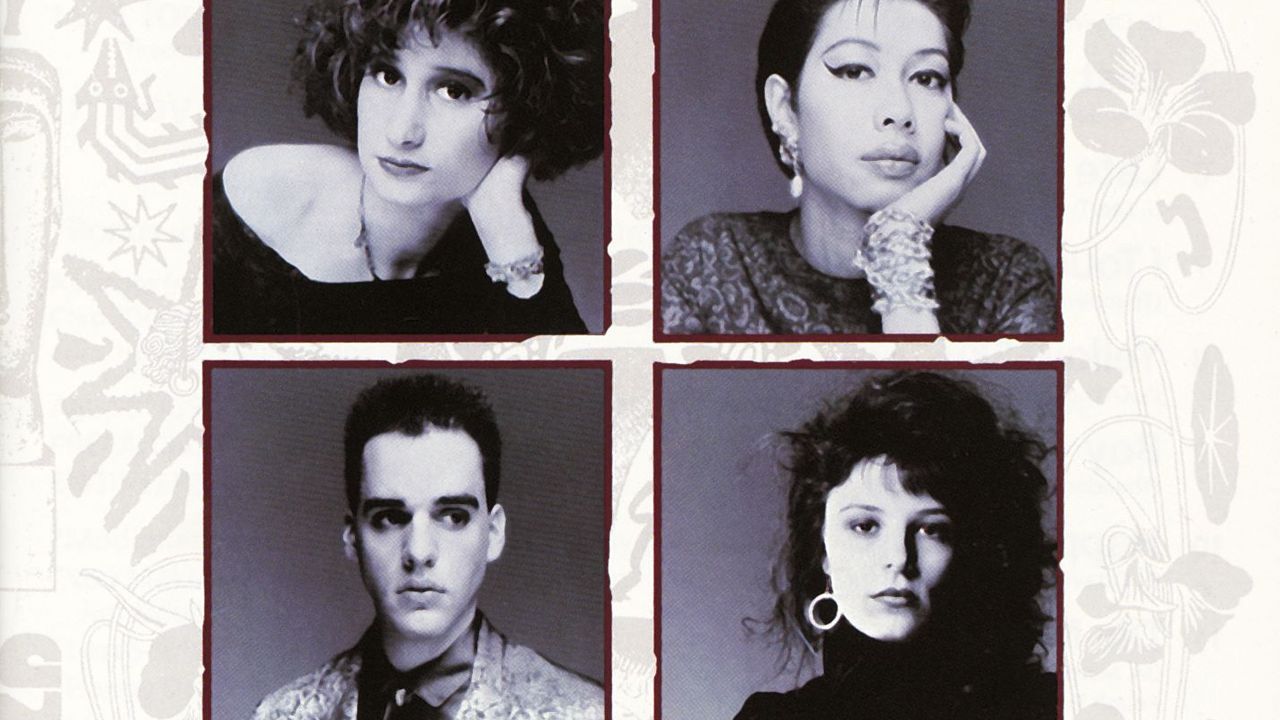
There was once a time, a very simple time, when you could start a new wave band with your art-school friends, record a few demos, play fewer than a dozen shows, and suddenly you’re on tour with Depeche Mode. Book of Love strutted into their brief moment of fame with the same laid-back attitude that colors their music. They were so naturally cool, so unabashedly themselves, that their brief moment as mid-1980s club superstars seemed like a happy accident. In an era when modern, up-and-coming bands had to dress louder, sound louder, and act louder than their peers to even have a chance at fame, Book of Love calmly asked, “Can’t it all be so simple?”
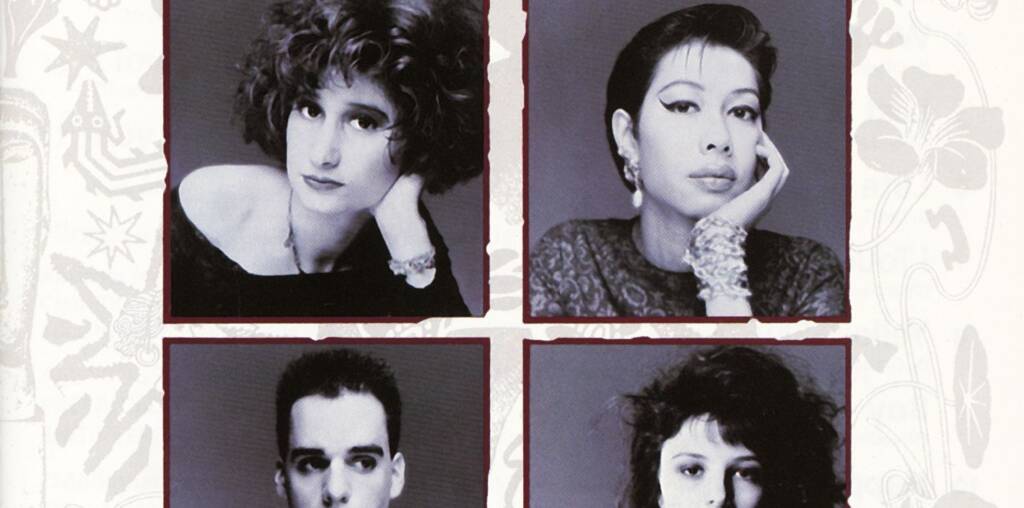
Their strategy of success via simplicity was impressive for many reasons, but mostly because the quartet had a ton to be loud about. Chief songwriters Ted and Susan Ottaviano are unrelated, despite growing up in the same Connecticut town, attending the same high school, and sharing the same last name (trust me, this sort of thing just happens to us Italian Americans). That they were also both queer art-school students might have been the least weird thing about them. Despite leaving their hometown to attend different institutes in Philadelphia and New York City, respectively, they managed to start the band long-distance, recruiting Susan’s classmate Jade Lee and Ted’s classmate Lauren Johnson (née Roselli), both multi-instrumentalists. That made them a three-quarters female and one-half queer new-wave band, an oddity even within their outwardly gender-fluid scene.
No score yet, be the first to add.
When they all finished school and moved to NYC, Book of Love managed to stand out from the “playground of misfits” and “eccentric characters,” in their words, that populated the city’s club scene. But they didn’t stress their queerness, nor their gender; neither aspect was worn as fashion or, really, marketed in any sort of way. It never had to be acknowledged; “it was just understood,” Ted told The Advocate in 2001. They let their nature be natural; it subtly blossomed on “Boy,” the demo that earned them a deal with Sire and the Depeche Mode tour before their debut was even imagined.
“Boy” was, in fact, just that good. A minimalist masterpiece released smack dab in the middle of the maximalist ’80s, a song about the struggles of gender nonconformity written by a queer man and performed by a queer woman, was a smash hit in clubs both gay and straight. It felt personally plucked out of a queer diary (“I wanna be where the boys are/But I’m not allowed”; “It’s not my fault/That I’m not a boy/It’s not my fault/I don’t have those toys”). There’s no specific narrative at play beyond the nonconforming angst. Gracefully open-ended, it’s just as readable by trans men, trans women, and any other denomination of nonconforming queerness. Scored only by drum machine, a single synth, chimes, and tubular bells, the song’s straightforward tale sounds dramatically magnificent in spite of its spareness. The bells, especially, mask its minimalism as something bigger: Soft chimes clink away during the verses, while tubular bells pair up with Susan’s gothy delivery as the hook’s dramatis personae.
Immensely personable, purposefully grand, but deceptively uncomplicated, “Boy” and its B-side—the group’s eponymous theme song and album closer, “Book of Love”—precisely capture the ethos that eventually drove their debut. Over the course of the tour and their subsequent club success, the band spent two years crafting the “pages from my book of love” that Susan—in her signature melodramatic monotone—sings about in the latter track: 12 charming art-school diary entries written with as much childlike whimsy as showy pompousness. Bridging the stylistic gap between the dominant schools of new wave—finding middle ground between the style’s artsy pretense and looser commercial crossovers—Book of Love presents queer and fem perspectives as spectacularly down to earth, natural as they are divine, and uncompromisingly innocent.
As songwriters, the Ottavianos usually only needed a metaphor, a single beautiful image, or a fun double entendre to serve as narrative backbones. The rest was filled in by Susan’s vampire-next-door vocal performance and wistful instrumentation. When the band stumbled upon a vast array of bells and chimes in a corner of Noise recording studio in Manhattan, Ted felt it was “a message from God” to make them the album’s signature instrument. All 12 songs incorporate bells or bell-like instruments into their sparse mixes. They’re the first thing you hear on album opener “Modigliani,” softly twinkling as they set the scene. They underscore the pretty verses of “White Lies” and bang away in the refrains of intense cuts like “Still Angry” and “Yellow Sky.” No matter how soft or hard, these bells bring a bittersweet undertone to Book of Love’s minimalist character, filling sparse mixes with soft reminders of the band’s innocent core.
“I Touch Roses,” the album’s other massive club hit, might remind new wave aficionados of “I Know What Boys Like,” only this time with a seemingly queer double entendre. Both punky, guitar-driven tracks feature a seductive, monotone female lead teasing men in almost juvenile fashion (where Waitresses lead singer Patty Donahue mockingly sings nana-nana-boo-boo, Book of Love’s song innocently plays it on the bells). But “I Touch Roses” has much more going on. For one thing, its distorted guitar stabs are contrasted by an array of clean-cut synths and bells, making the song feel more playful than conniving. And considering the queer man who wrote it and the queer woman who sings it, we actually might understand why the song’s subject is teasing their man; “roses” feels like a damning innuendo (“Roses bloom with my touch”; “You still can’t touch my roses”). The writing in Book of Love thrives on this sort of ambiguity; the band would rather listeners read between every one of its lines than have the story spelled out for them.
The less-is-more mantra sounds different depending what page you’re on. Sometimes it manifests in the band’s affinity for the girl groups of ’60s soul, who conveyed unwavering devotion through nothing more than sound and feeling, their songs unadorned love letters shrouded in a romantic force of will. Though Book of Love took their band name from the Monotones’ 1957 doo-wop hit, their electronic take on the sound was more reminiscent of Motown’s Holland-Dozier-Holland. Book of Love’s “You Make Me Feel So Good”—the album’s only contemporary radio hit—is an entry into the exceptional lineage of new wavers doing soul; its happy-go-lucky bassline and plainly aching lyrics evoke the prime songwriting of H-D-H, masters of conjuring unrelenting affection within straightforward lyricism and tight, controlled grooves.
But even at its most tender, Motown never dared to be as unabashedly sultry as the Ottavianos. The track’s mostly rudimentary attractions cascade in an erotic metaphor: As Susan longs and dreams in her bed, she imagines her bedroom as the sea, where she calls for her lover to join her on the sandy “white sheets” where “white caps break on my wet dream.” In her lying and longing, we can hear her heart and soul: her heartbeat personified through pounding percussion, and the twinkling bells and pianos fluttering in the background like the wishes she projects into the air. Everything’s wrapped together by a lovely melodica solo, just in case the song wasn’t precious enough.
When Book of Love aren’t telling sweet tales of lust, they’re painting clear pictures. “Modigliani” conveys its tale of attraction through an allusion to the Jewish Italian modernist painter, but you don’t need to know that in order to understand its basic premise. Susan needs few words to express how it feels to be lost in someone’s eyes the same way you’d get lost staring at a beautiful work of art: She “swims inside” their clear blue color, they cut like knives, they’re “all seeing.” The details she leaves out are made up for by the song’s gorgeous synthetic choir and chopped-up vocal decrescendos. “Yellow Sky” could have conveyed the chilling desire to end up in the afterlife with a lost lover by constructing a complex story, but the ominous tone instead cuts deep through astral imagery and melodramatic oohs and ahhs.
Book of Love was released around the time that sophisti-pop—new wave’s most self-consciously classy spin-off—was in ascendance, but however they might have looked, the band never tried to sound overly smart or complicated. Their high taste was easily digestible; it was just who they were. “Modigliani,” despite its art-history references and heavenly choral refrain, doesn’t sound out of place playing next to popular mid-’80s hits like “Crazy for You.” If it were any more visionary, it might not have made it to the soundtracks of Planes, Trains, and Automobiles and Miami Vice. The album’s only cover is of a Swiss punk song called “Die Matrosen” (“The Sailors”). A more progressive band might’ve attempted to spruce up the Kleenex / LiLiPUT classic with high electronic ambition; Book of Love merely take the earwormy whistled refrain that bookends the original’s verses and makes it into a hook, creating something with gripping pop sensibilities that works in harmony with the original’s underground roots.
The quartet lived and died by its spontaneity. Book of Love is the sound of musicians aware that the world knows nothing about them laying out their essence—their queerness, their femininity, their reserved artsyness—in the matter-of-fact terms that give their debut its unique character. The more sophisticated they subsequently grew—the more they felt the need to add to their toolkit, rather than simply work with what they already had—the less compelling their music became.
Lullaby, Book of Love’s 1988 follow-up, is the sound of a band that felt surprised and flustered by unexpected success. (In the liner notes to the album’s 2009 reissue, Ted wrote that in making their second album, they had no time to process what building upon their debut might entail.) The album has its great moments—it opens with a very meta cover of Mike Oldfield’s “Tubular Bells,” of Exorcist fame, that seamlessly transitions into the daring AIDS-awareness anthem “Pretty Boys and Pretty Girls,” which brushed the Billboard Hot 100 at No. 90—but the rest of the album lacks the genuine personality of Book of Love. “We kind of wanted to be slick or something, and I think that held us back,” Johnson said in a 2001 interview. Candy Carol, from 1991, was a great return to form, but as it stared down the barrel of the edgy new decade, it was too little too late for a new wave band so blissfully innocent. Book of Love went on hiatus after 1993’s Lovebubble, and have only sparingly reunited for reunion shows and a few tracks here and there since.
The further we move away from the ’80s, and the more we judge the decade in retrospect by its normative conventions, the more Book of Love stand out. By staying true to their vision and keeping it simple all the way through, the band’s personable debut gets at something deeper than new wave’s glossed-up poster boys and girls. They could have been among the loudest synth bands in both sound and stature, but as Ted noted even back then, “We couldn’t be Jimmy Jam and Terry Lewis… even our most blatant commercial attempts come off as quirky and personal.” Today, as queer voices are louder than they’ve ever been in music, the band’s founders could flaunt their status as legends. But that wouldn’t be very Book of Love of them; beyond an annual post for Pride month, they’d rather the music speak for itself—music that tells us who they are with as much transparent conviction as day one.
Additional research by Deirdre McCabe Nolan.