 Written by
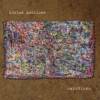
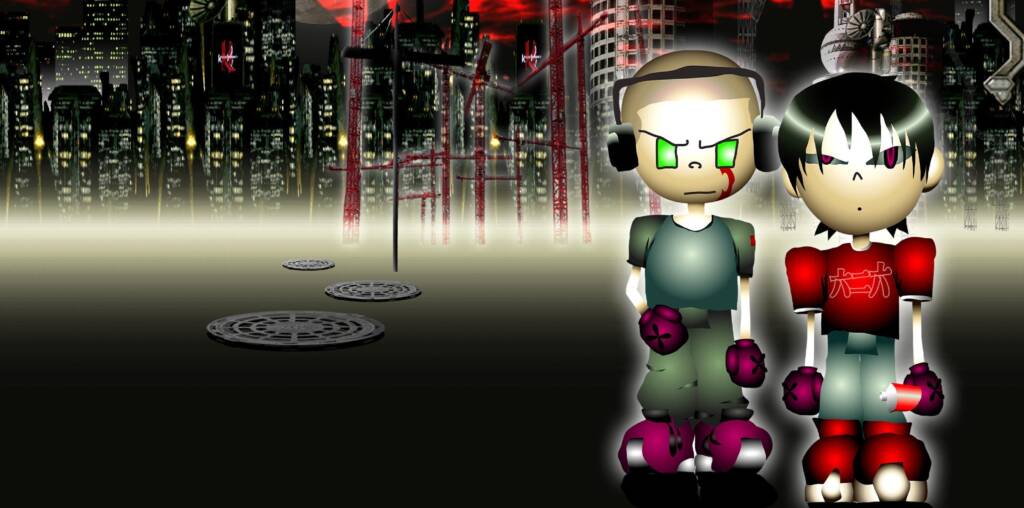
Chengdu rapper jackzebra’s approach to the Chinese language is like that of the eighth century calligrapher Huaisu. Just as the latter’s elegant cursive lines eschewed legibility for pure, drunken expression, the former’s Auto-Tuned vocals form only the contours of words. Huaisu was one of the greatest Tang Dynasty calligraphers, often named alongside the older Zhang Xu as “the crazy Zhang and the drunk Su” (顛張醉素); twelve centuries later, Bloodzebra is the young rapper’s long-awaited collab with his older mentor, Bloodz Boi.
Mumble rap has long been critiqued for its illegibility—a quality that, as scholar Heidi Lewis has argued, naysayers have long cited to marginalize and malign hip-hop. There’s an added layer of context when you consider that jackzebra and Bloodz Boi are picking up this mantle in Chinese, a language that has its own long history of complex relationships between text, meaning, and sound. Take, for example, the way civil officials and literati between China, Korea, Japan, and Vietnam have, since the Sui dynasty, engaged in calligraphic “brushtalk,” communicating silently across language barriers through the shared Classical Chinese of administrative life. Far from spewing indistinguishable babble, jackzebra and Bloodz Boi rap at the edge of meaning and expressivity, with lyrics that mine specific Chinese cultural references to express more universal feelings.
No score yet, be the first to add.
Bloodzebra’s executive producer, cutspace, is also interested in the limits of legibility, leaning into the mythos of cryptic symbols at the boundary of the written word and abstract visual art. Over the past several years, the Syrian producer has built on a signature IDM-meets-plugg sound, melding pointillistic microsound with synthetic ambience and devilish sub bass in the lineage of forebears like 990x, ak colette, and the fringes of L.A.’s beat scene represented by YAYAYI. Typically collaborating with spaced-out SoundCloud rappers like Xang, Moh Baretta, and ian (before his viral fame), cutspace’s erratic beats channel apocalyptic noise into hermetically-sealed sound worlds, often challenging rappers to keep up with his asymmetrical kick patterns and craggy percs. With jackzebra’s seemingly gibberish flows and Bloodz Boi’s slightly more intelligible hooks, however, cutspace has finally found a duo that can hold their own on his beats.
If at first Bloodzebra seems incomprehensible, don’t fret: Even Bloodz Boi admitted he didn’t get the record at first. Under cutspace’s direction, however, slurred Mandarin intersects beautifully with stuttering synths, a sonic representation of something like Xu Bing’s monumental Book from the Sky filled with thousands of invented Chinese characters. Zoom in and you’ll find remarkable details reveal themselves in microscopic blips and sibilations; zoom out and you get dramatic, emotional soundscape in widescreen.
Bloodzebra shows there’s much meaning to be gleaned in the gaps between surface and interior. Just as cutspace’s abstract beats and calligraphy performances trouble the connection between text and meaning, jackzebra and Bloodz Boi scrutinize surface-level social behavior and its disconnect from our internal worlds. Opener “Timezone” is biting in this regard: “On the surface you’re strong/A fake person moved into Hailan Home,” (表面装的很坚强/一个假人住进了海澜之家), jackzebra puns on the name of Chinese fast fashion brand HLA atop a gurgling, lurching beat. “Follow For Unfollow (F.F.F.)” is even more scathing, Bloodz Boi matching the jagged subs by calling out opportunism in the rap scene: “You may know a person’s face but not his heart/The hearts of men are far apart” (知人知面不知心/你我人心隔肚皮). The theme of social interactions as meaningless theater is revisited on “The Truman Show,” amid a sparse atmosphere punctuated by sporadic breaks. jackzebra riffs on the emptiness of life with the polysemous Chinese word for air (气): “The room is too big/It feels lifeless/There’s just a heater/Accruing interest from good fortune” (房间太大了/没有人气/只有暖气/用福气积累的利息).
The most inscrutable track might be “Anorexia,” in which jackzebra mirrors a stuttering, top-heavy kick pattern by interrupting himself with the repetitive refrain of “I eat grapes without spitting out the skins” (吃葡萄不吐葡萄皮). Bloodz Boi turns jackzebra’s enigmatic references to classroom antics and the trickster god Nezha into a reflexive critique of their haters: “Everything I eat has been chewed over by someone else, so my lyrics are not nutritious” (吃的东西都是别人吐出来的所以我歌词没有营养). These abstract disses get personal in “Copy & Paste,” where Bloodz Boi goes in on Lil Tjay and 2hollis copycats in China: “You guys should be composted/I flow like breath on this beat/I’ll forgive you even if you don’t understand” (你们就应该被丢进厨余垃圾/我就像呼吸容易在这个beat/你听不懂我也会原谅你).
Yet the duo end where they’re both more comfortable, a poignant space of self-doubt and anxiety that nevertheless aims for something better. Bloodz Boi croons about being adrift on a sea with only his shadow to guide him; jackzebra responds with a plainspoken plea for understanding wrapped up in a fragile falsetto: “If you give me some time/Will you still wait for me?/I don’t want to let you down/I want to be your pride and joy” (如果给我点时间/你还会等我吗/我不想让你失望/我想成为你的骄傲). The Chinese duo’s voices pirouette around a pulse that sounds like a car door chime as abortive crashes puncture the otherwise placid, kickless ambience. It’s as if jackzebra and Bloodz Boi are taking nothing for granted, recognizing that the things that purportedly give life meaning could be swept away at any moment and relying on an internal strength to face the next day.