 Written by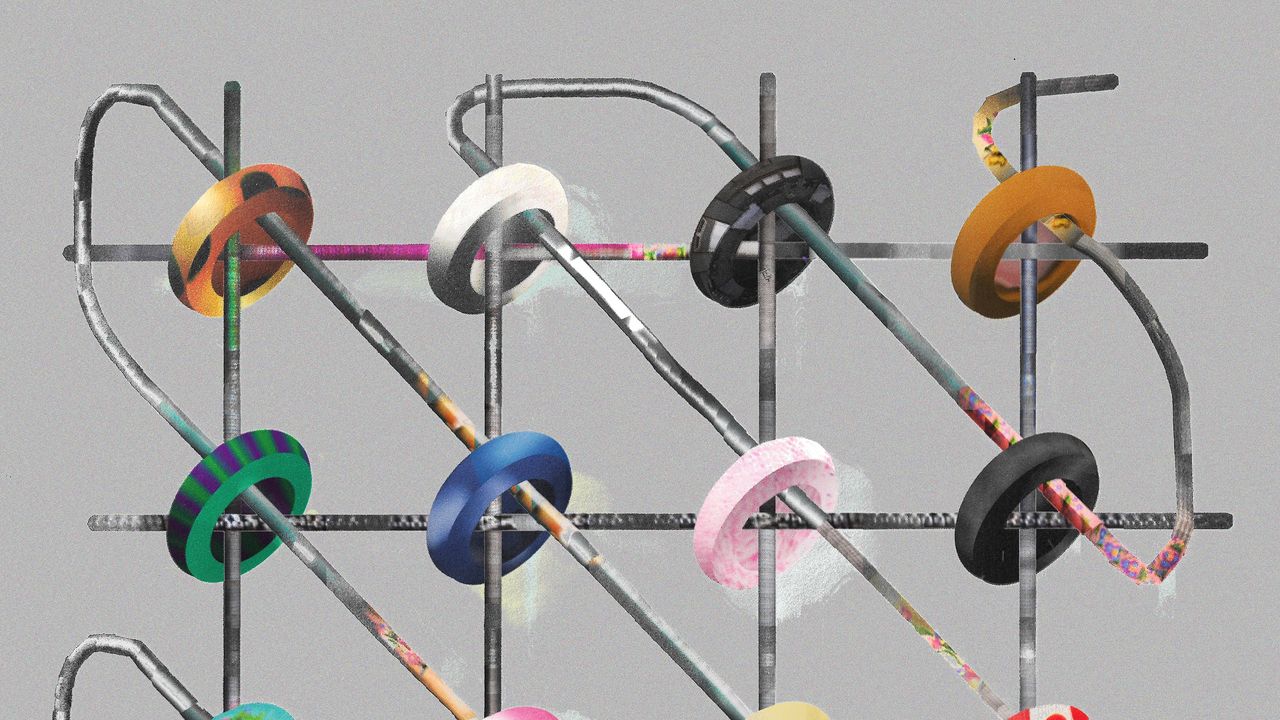
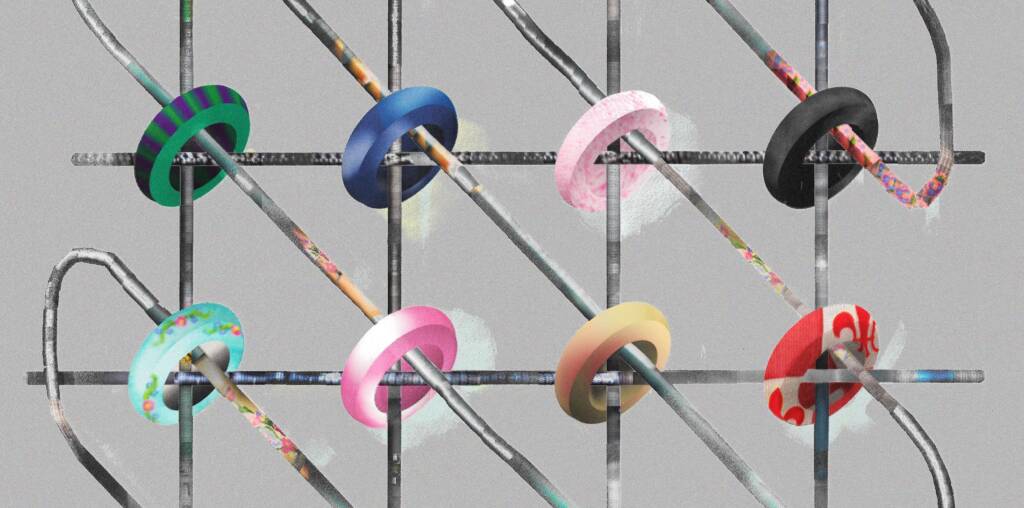
The high-tech was once handmade. From the 1950s through the 1970s, computers stored data in ceramic rings called cores. These cores were strung with wire by a single worker and formed a neat grid of power and memory. Electricity being sent to one core would induct the adjacent wires, the activation of one bit empowering its neighbors. As a data storage solution, it was effective: each core could retain its data even if it lost power. As a craft object, it was elegant, a loom of information partway woven. This interdependent system of lines intersecting tiny nodes of history was called a coincidental core memory matrix, eventually shortened to “core memory.” Like so much language and culture, that phrase has drifted from the abstract to the physical, only to wind up as a metaphor that feels completely unrelated—words that were once meant to describe an arcane bit of computer science history are now used to refer to having really liked something as a child. Like a scrap of data, the phrase holds its origins in deep storage, even as it’s powered by the meaning inherent within it; despite the overwhelming power and influence of capitalism, things always drift back toward the human.
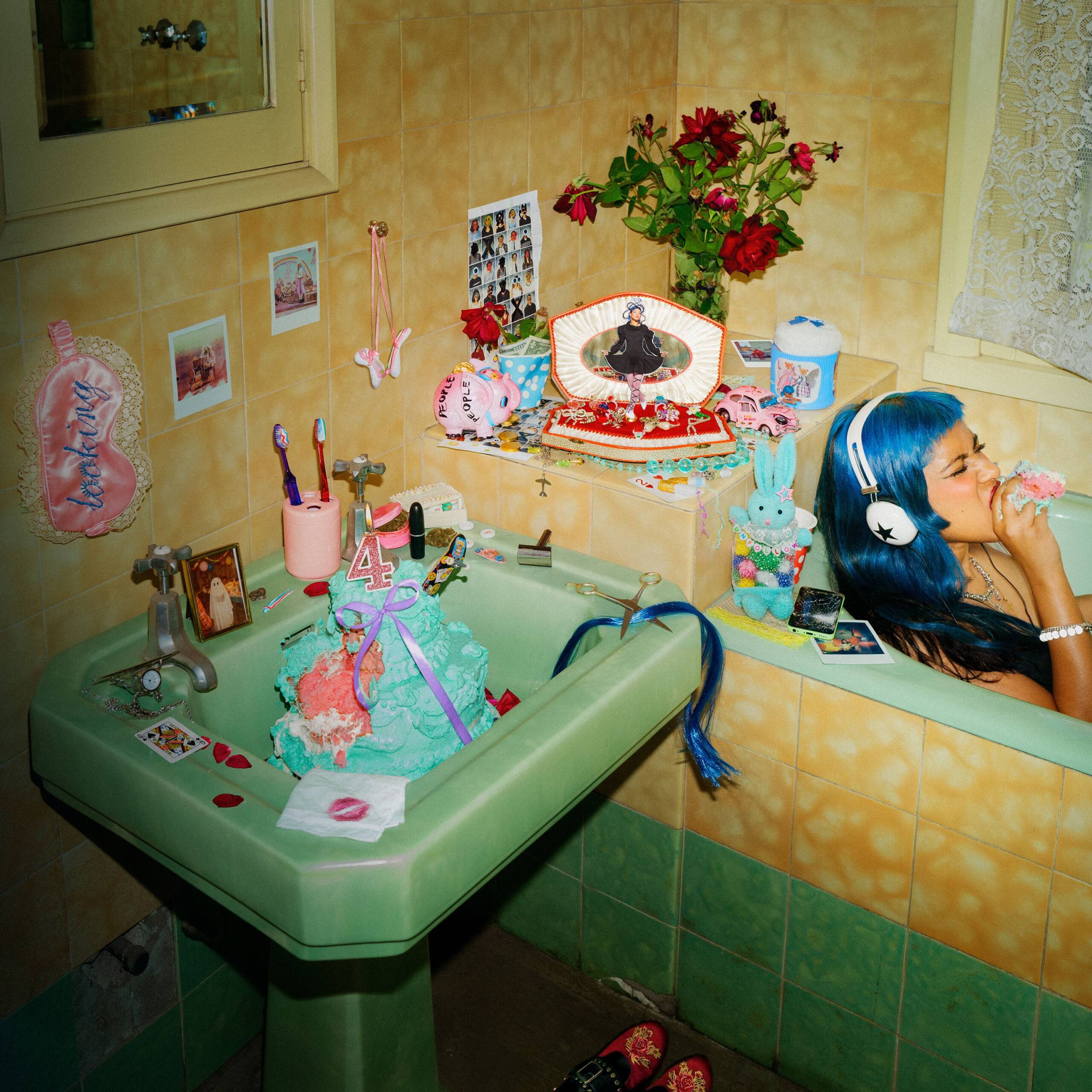
bitknot plants another peg in the circuit board. On Feeble Little Horse’s third album—and first without founding member Ryan Walchonski—the Pittsburgh trio uses production tricks left over from Sebastian Kinsler’s time making beats and singer Lydia Slocum’s voice to wind sharp critiques of big tech around crunchy indie rock. While they haven’t lost the homespun charm that made 2023’s girl with fish feel like a particularly twee take on Swirlies-esque slacker shoegaze, their command of their sound has increased dramatically. The songs on bitknot are heavier, uglier, and far more glitched out than those on their predecessor. They’re also lovelier, more full of life, and more empathetic.
No score yet, be the first to add.
The components might be familiar—guitars that sound like they’re played through a busted Zenith TV at full volume, heavy acoustic strumming à la ’90s folk-grunge group Days of the New, Slocum’s fading read-out of a voice—but they’re all pulled into slightly unusual shapes. It’s just enough to catch you off guard; while you’re trying to figure out why “Dior”’s main riff sounds like it’s missing a couple of notes, Slocum’s take on how capitalism puts us into competition with one another slides in almost unnoticed. Like the systems it challenges, bitknot tries to rewire how you think and feel.
The songs are largely built around grimy riffs whose smears of overdrive sometimes blot out Slocum’s voice and make the record feel like a sonic cousin to Psychocandy, so it feels weird to insist that this is music you need to hear in good headphones. And while there’s always sunken treasures hiding in shoegaze’s murky waters, so much of the sonic detail on bitknot bolsters the writing, upping the emotional impact of the songs. After a guitar punchout opens the record in the first seconds of “Doorway,” the band settles into a homemade Stereolab groove, while a distant guitar that sounds like a calliope feels like a marshmallow pumps along. “Paris” seems to emerge from the fallout of “Dior,” its beatific vision of family vacation turned hyperreal and mildly horrifying by the way processed windchimes and field recordings of passing cars make it twinkle in the sun. Even the individual guitar tones feel set to the narrative tenor of the songs; the circle of distorted harmonics that ping through the dire “DMT” (“death, money, tech”) spin like a rusting can opener through tin, as if they’re mimicking the way the internet rips us apart to harvest the meat within.
Slocum’s voice is thin and soft, like the paper covering your doctor’s examination table. Its translucence tends to catch the light the band shines through it: She’s warm and glowing in the lazy afternoon haze of “Cradle,” then one color among many in the rush of “Shopping.” She sometimes seems to stumble into nostalgia in the middle of a line without ever indulging it, like when you’re telling a story and remember a particularly fun detail but know you can’t let it bog down the momentum. “Does this thing take diesel gasoline?/My country is what I need to leave,” she sings in “Cradle” with an everyday nonchalance. It feels like the right approach: The need to escape American life right now can be both urgent and kinda boring to talk about.
It’s generally boring to listen to other people sing about it, too, no matter how well-produced their record might be. And, to be sure, the last thing the world needs is another group of angsty indie rockers with too many unread Verso books on their shelves. What makes bitknot’s critique work—what makes it feel less like critique and closer to something like storytelling—is in the way these songs understand that the evils of “late” capitalism aren’t abstract concepts but the effects those concepts have on the lives of people subject to them. Meaning: It sucks to have your passions inflamed and your sense of self fractured because you’re jealous of your hot friend’s social feed. And it’s humiliating to realize the whole thing has been engineered mostly to make Mark Zuckerberg richer.
Petty jealousies ping across bitknot. “She’s just like me but prettier/It’s just not fair,” Slocum sings in “Shopping” before fantasizing about stealing the pretty girl’s phone to rifle through her Ssense. In “Dior,” she sends a kiss-off to some indie-rock frontperson: “You are not David Berman/You are not Kurt Cobain.” The identity of the singer isn’t the point—their name is in fact bleeped out, like a curse on the radio—so much as Slocum’s frustration with having been forced into artistic battle by the need to sell records, and the way that battle makes people present as something bigger than what they actually are. She turns her knives inward, too. “I’m not insured/But nothing hurts/Wearing Ben Doctor,” she sings, referencing the indie designer. It’s an acknowledgment that the vanity and consumption the system instills in us is a way of bypassing the misery it creates; it’s also a sincere celebration of looking and feeling good. She can’t see a doctor, but she can be seen in one.
Pleasure and pressure, individual desire and collective manipulation—these would-be poles all overlap on bitknot because they can’t be pried apart in life. This is an album in which harsh, scraping sounds make sweet vocal melodies sound even sweeter, where that kindness of spirit may flicker but never quite fades away. Far from a dogmatic takedown of our techno-capitalist ruling bros, bitknot is an empathetic, expertly arranged collection of songs that doesn’t look down its nose at those of us struggling to feel good and create a little beauty inside of a system designed to make us miserable. For Feeble Little Horse, opting out of commerce and its millions of downstream effects isn’t as simple as saying, “I don’t like that, and I won’t be doing it.” After all, we don’t blame the target for being shot.