

 Written by
Founded by Olympia-born music fanatic/fanzine editor Bruce Pavitt and Seattle-based promoter and radio host Jonathan Poneman after the pair decided to document the obscure underground punk scenes cropping up in the Pacific NorthWest, Seattle’s Sub Pop Records was, and remains, a label born out of pure passion for music, mixed in with a whole lot of bravado.
Its long-standing motto, “Going out of business since 1988”, may seem tongue-in-cheek given how much the label is celebrated globally for its pivotal role in fostering the grunge scene and unearthing Nirvana, whose debut album Bleach was released in June 1989, but the Sub Pop journey has been far from smooth.
Often scrambling to keep afloat amidst financial struggles and internal conflict, what the Seattle label has never lacked is personality, as evidenced by its extensive, eclectic roster. Spanning four decades, the Sub Pop catalogue ventures everywhere from garage rock to folk to psychedelic rock to post-punk, while retaining a distinct regional identity.
The label that served as the beating heart of grunge in the late ’80s and ’90s, has cleverly and cannily adapted to live on into the 21st century. Here is the Sub Pop story, post-grunge, told through five essential albums.

The Shins – Oh, Inverted World (2001)
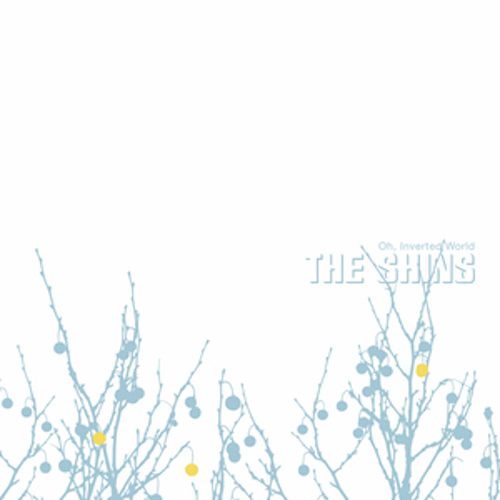
After forming a joint venture with Warner Music Group in 1994, Sub Pop was struck by an identity crisis. With Pavitt keen to retain the company’s DNA and Poneman fixated on increasing revenues and stabilising their financial situation, the duo were at a crossroads.
With pressure to churn out new Next Big Things as the profile of alternative rock grew ever larger, there was a distinct shift in Sub Pop’s company culture, resulting in Pavitt exiting the label for good. Struggling to find stability and cycling through multiple new identities as it attempted to define itself post-grunge, by 1997 Sub Pop had almost collapsed completely.
After years spent trying to turn the label into a corporate force, eventually Poneman realised why nothing was working. Reflecting on Sub Pop’s DNA, it became apparent that bands weren’t seeking out contracts with Sub Pop for the chance to become global megastars, they were drawn to its community foundations. After deciding that the way forward for Sub Pop was to realign with its initial vision, Sub Pop needed a new marquee artist: enter The Shins.
Clocking in at just 33 minutes, the Albuquerque band’s debut Oh, Inverted World is a near-flawless summer pop rock record. With frontman James Mercer’s clever wordplay laced over endless swirling hooks, it proved to be a huge seller for the label, and a landmark release: suddenly, Sub Pop was cool again.

The Postal Service – Give Up (2003)
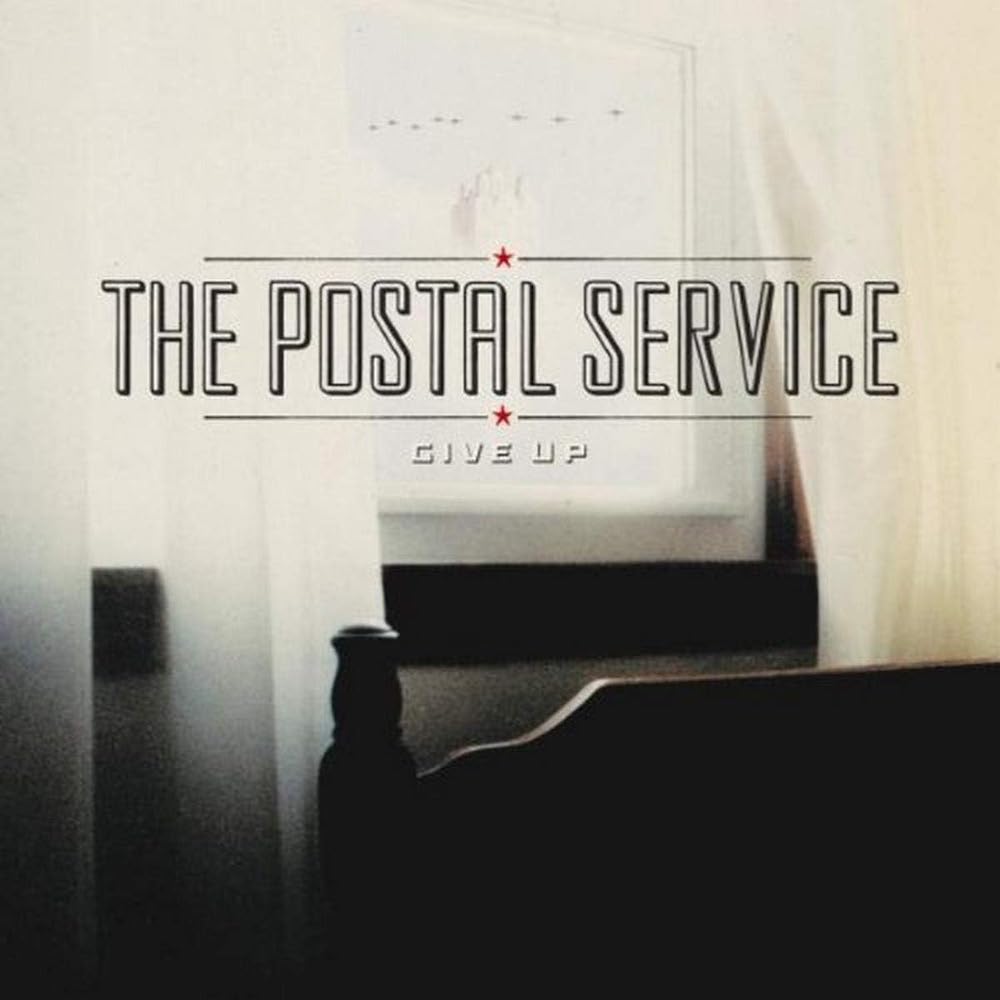
With The Shins’ success empowering Sub Pop, the label began to forge a new identity. Rebranding as the home of dreamy American indie music, it would become home to artists such as Iron & Wine, Fleet Foxes, and Band of Horses. But no-one would release anything with quite as much impact as The Postal Service’s, Give Up.
Arriving at the label by chance due to Sub Pop A&R head Tony Kiewell’s friendships with Ben Gibbard and Jimmy Tamborello, the band’s only album brought an entirely new audience to the label, but its success was more than the label bargained for.
Predicting that Give Up would shift around 20,000 copies, Sub Pop feared their own figures may be optimistic, and duly recruited two of their heaviest hitters – The Shins and Iron & Wine – to cover the album’s tracks to help with promotion. But, once Gibbard and Tamborello returned from a month-long US tour following the album’s release, they were indie superstars.
Becoming the second-best-selling Sub Pop album after Bleach, the group’s debut brought nods to new wave and synth sounds of the 80s, but most importantly it brought a sense of connection. With music fans all over the world delving deep into their emotions while immersing hearts and souls into songs of doomed love and bittersweet memories, 2003 would be the year that indie broke worldwide, and Sub Pop was right at the heart of it.
Latest Videos FromLouder
![The Postal Service - Such Great Heights [OFFICIAL VIDEO] - YouTube](https://halloffans.com/wp-content/uploads/2026/10/maxresdefault-3.jpg "Beyond Nirvana: how Sub Pop shed its grunge origins to become one of the world's most daringly disruptive record labels 14")
Metz – Metz (2012)
In the ’90s, the debut album by Canadaian noise-rockers Metz would likely have emerged on Amphetamine Reptile Records, or perhaps on Trance Syndicate, the Austin, Texas indie label founded by Butthole Surfers drummer King Coffey. But the Ottowa trio were so enamoured with the iconic Seattle’s label’s catalogue that, even before they signed a deal with the label, they joked about naming the record Sub Pop in its honour.
With eleven songs packed into its 29 minutes and 50 seconds run-time, Metz sounds like some of the best bands of the ’90s – The Jesus Lizard, Helmet, Fugazi, Unsane, Shellac, Drive Like Jehu – melded into one beautiful slab of black vinyl. A cursory glance at the album’s song titles – Headache, Sad Pricks, Rats, Wasted – telegraphs the tense, caustic, relentlessly aggressive vibe of the record, with walls of riffs erected, smashed into atoms, reconstructed and deconstructed. Metz are currently on an indefinite hiatus, but even if they’d imploded after this record, their place in noise-rock is assured.
Father John Misty – Pure Comedy (2017)
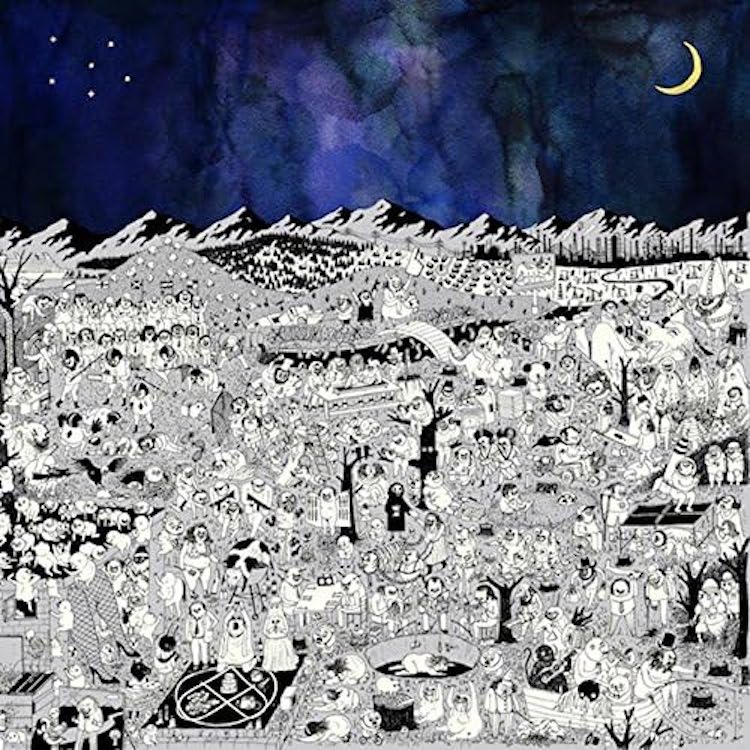
Initiated into the Sub Pop family with Fleet Foxes back in 2008, Josh Tillman was always destined to be more than a drummer in a Seattle folk rock band. Though the band’s first two albums brought considerable success for the label, Tillman was a star in his own right, and upon his departure from Fleet Foxes in 2012, his potential began to be truly realised.
Adopting the stage name of Father John Misty, 2012’s Fear Fun and 2015’s I Love You, Honeybear introduced a deep, introspective approach to songwriting worlds away from Fleet Foxes’ earnest expansiveness, chronicling the darker aspects of the human condition. Paired with a wry stage persona, this vision came to full fruition on his 2017 masterpiece, Pure Comedy.
An immersive character study into his semi-fictionalised self, Father John Misty’s third album merged contemplative lyricism with gorgeous melody to completely shake up the alternative music scene. A melting pot of music, politics, technology, human nature, and connection, with Pure Comedy Sub Pop moved beyond simply providing a platform for incredible albums, to emerge as an incubator for some of the greatest and most ambitious songwriters of the modern age.

Slift – Fantasia (2026)
A genuine word of mouth sensation whose reputation spread spread globally following the recording of a session for Seattle’s KEXP radio station, Slift – brothers Jean Fossat (vocals, guitar, synthesizers) and Rémi Fossat (bass), plus drummer Canek Flores, a friend of the duo since they were in high school together in Toulouse, France – formed in 2016, and signed a worldwide record deal with Sub Pop in 2023.
Never shy of hyping up its artists, the label suggested that the trio’s fourth album, this year’s Fantasia, had the potential “not just to disrupt the status quo but perhaps to destroy it completely.” Released in June, Fantasia has yet to turn the planet upside down, but its early days yet.
A thrilling amalgam of post-rock, psychedelia, jazz-fusion, space rock, krautrock and prog, it’s an unforgettable, DNA-rearranging sonic adventure, with the potential to make a solid 98% of modern rock bands seem utterly irrelevant. Released as Sub Pop turns 40, its a record that suggests that the label hasn’t lost its hunger to disrupt and redefine rock for future generations.