 Written by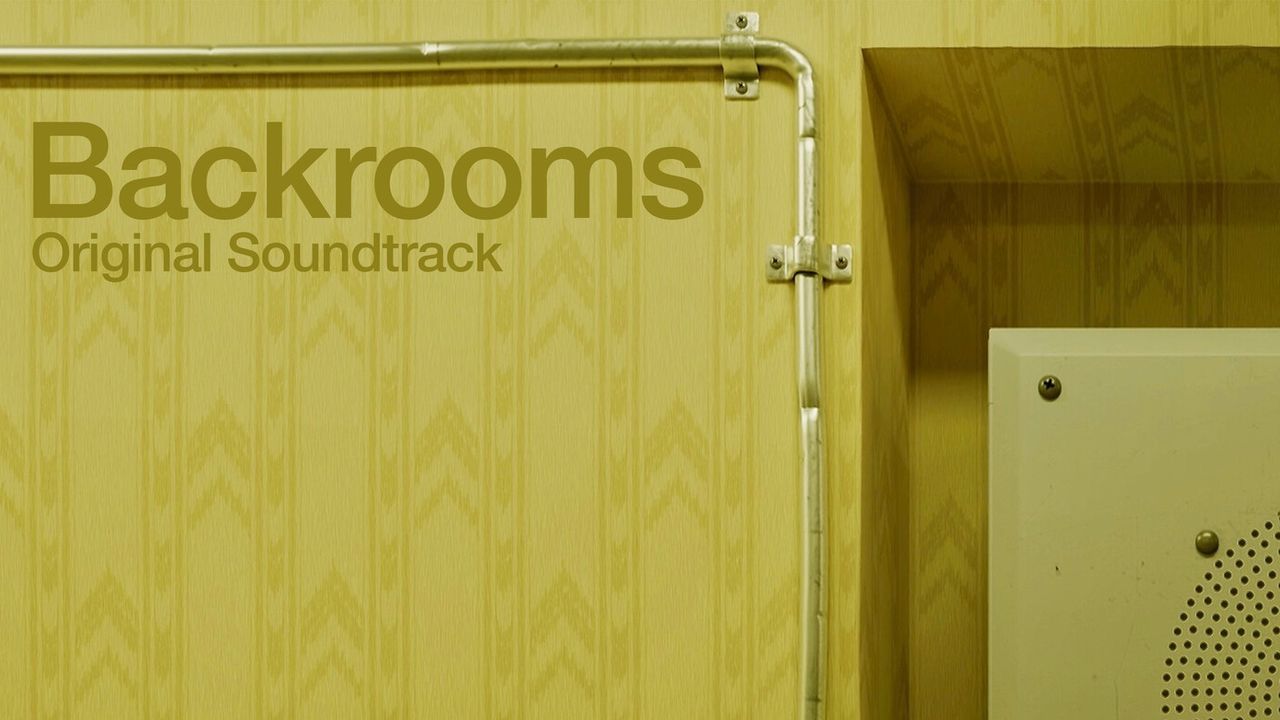
Lately, the Backrooms have felt inescapable. The breakout horror movie now reigns as A24’s highest-grossing film to date, but the lore bears repeating: In 2019, a a drab office space with sickly yellow wallpaper, photographed from an askew angle, was shared anonymously on 4chan. A comment suggested this place lies on the fringe of reality and you could slip into it and get lost forever. The post quickly became a vaunted piece of creepypasta, influencing everything from Severance to Playboi Carti, and it has been adopted as everyday parlance to describe any eerie, liminal space. A 16-year-old Kane Parsons ran with the concept, producing found-footage-style short films on YouTube set in this nebulous purgatory, inspired by a lineage of plucky upstarts from The Blair Witch Project to Paranormal Activity.
Sound played an integral part in Parsons’ short films: The diegetic whirr of light fixtures, shuffled steps, and heavy breathing were a masterstroke in stifling, immersive sound design. The sonic world became an online phenomenon unto itself, as users paired wistful and dreamy sounds with their own photos of deserted corridors and empty malls. Parsons went on to self-release multiple full-length soundtrack albums of ominous sci-fi pads, glitchy electronics, and lulling melodies before A24 announced the release of a feature-length film. Backrooms (Original Soundtrack), composed by Parsons and Canadian composer Edo Van Breemen, builds upon this sonic world, merging the brooding atmosphere of the best horror scores with an interest in popular ambient. As a result, it plays like a standalone album of dark ambient for a time when AI simulacrum and abandoned public spaces are part of the everyday and the liminal and uncanny are the pop-psychology du jour.
No score yet, be the first to add.
The film’s introduction of fleshed-out characters—a recent divorcee named Clark, and Mary, a therapist with a traumatic past—breathes new life into the concept, and it invites the sound design to reach for more complex emotions than merely creepy. “Handprint” opens on a delicate, gently optimistic arpeggio, evoking the serenity of Hiroshi Yoshimora. There’s a cosmic irony in referencing Yoshimura, whose soothing compositions were famously commissioned to accompany showrooms for model homes in Japan in the 1980s and have since become synonymous with domestic comfort. The best moments on the score feel suspended in the uncanny valley, like the woozy “Furniture Lament,” which sounds like a groggy memory of Yoshimura’s “Something blue.” Here, the score works as connective tissue for the plot and its headier philosophical themes, a reminder that the word uncanny comes from the German unheimlich—which directly translates to “un-homely.”
Parsons and Van Breemen don’t hold back when it comes to more traditional scares, which persist for large stretches of the album’s 92 minute runtime. They are effective if familiar: voices trapped in sludgy reverb, growling bass, and cascades of sharp violins followed by sudden silence—the manic “Homothet” is pure, icy dread. But the peculiar appeal of the Backrooms is rooted in what theorist Mark Fisher coined as “the weird and the eerie” rather than the sinister. The score truly unsettles with its off-kilter moments that seem transported from another reality, like the kitschy “Pirate Shanty,” a cue from the film when Clark records an infomercial dressed as a pirate, and “Cafe Bossa v1,” two minutes of faceless hold-music. These recordings most resemble Fisher’s description of the “eerie” as “something present where there sound be nothing, or nothing present where there should be something.” They evoke the same inexplicable discomfort of seeing that sickly yellow office room for the first time.