
 Written by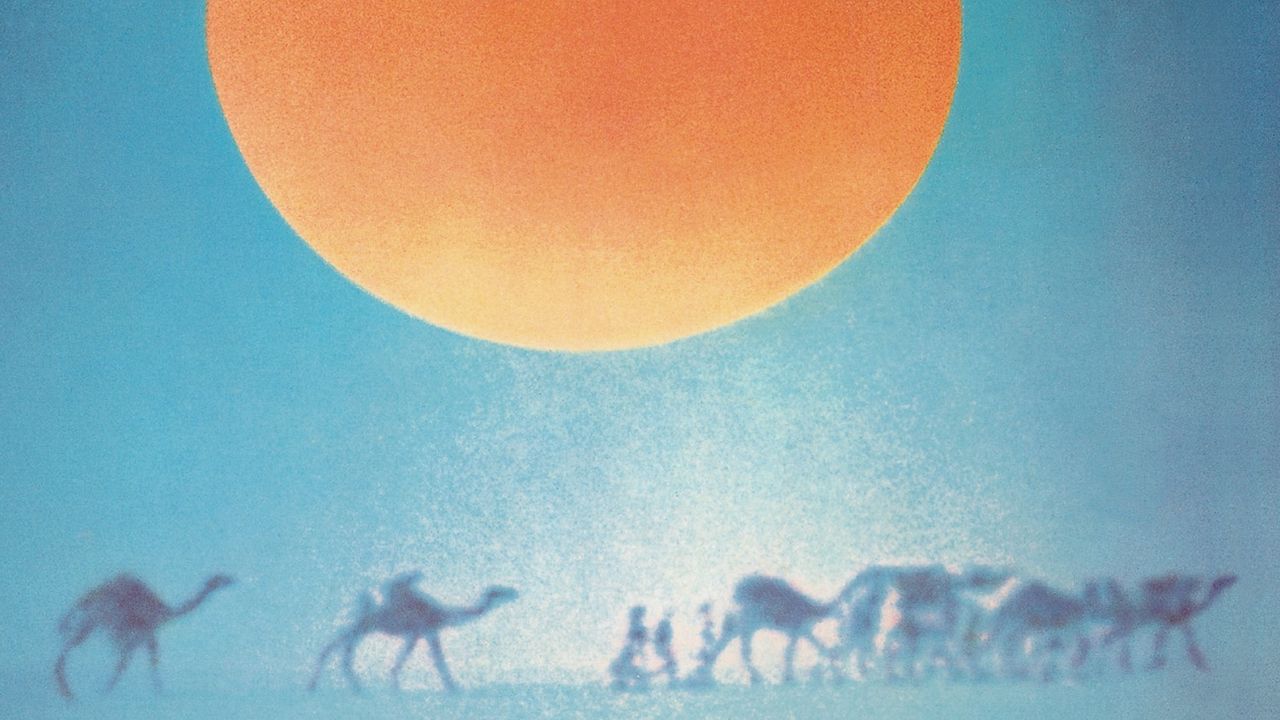
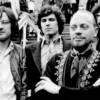
Though Santana were a major draw in their San Francisco hometown and had become favorites of influential impresario Bill Graham, they were virtual unknowns outside their city when they began playing the Woodstock Music & Art Fair at 2 p.m. on Saturday, August 16, 1969. By the end of their 45-minute set, they were on their way to being superstars. The energy and focus of their performance, so loose and funky and also precise, is still palpable, and Carlos Santana, the band’s leader and guitarist, appears to be inhabiting another plane (in a sense he was, due to an ill-timed dose of a hallucinogen). The band’s self-titled debut album, released a few weeks later, was an instant hit.
Watch and listen to the film of them onstage at Woodstock: the flurry of percussion, all the metal and wood and rawhide and human hands, is where the ear goes first. Carlos, then 22, became enamored with Afro-Cuban music after he’d been playing for quite a while. He grew up in Mexico, first in the small town of Autlán and later in Tijuana, where his father supported his family playing violin in mariachi bands. Money was tight, and José Santana would be gone from his family for months at a time. He taught Carlos to play violin, and the boy eventually turned to guitar, falling in love with blues players like B.B. King, Jimmy Reed, and Muddy Waters.
No score yet, be the first to add.
This grounding in blues would serve Carlos well when his family relocated to San Francisco. They settled in the Mission district, where he attended high school, washed dishes in a local restaurant, and paid close attention to the city’s rapidly developing rock sounds. At the same time, the Mission was a West Coast outpost for new developments in Latin music, and the young guitarist was a sponge. He’d encountered a wide range of Latin styles while living in Tijuana but didn’t fully embrace it, and remained suspicious. “If you said ‘Latin’ to me at that time, I would think about what I saw on TV—Desi Arnaz and ‘Babalu’ and guys in puffy sleeves shaking maracas—and I knew I didn’t want to go there,” he writes of his teenage years in his memoir, The Universal Tone. But immersion in the sounds of Tito Puente, Eddie Palmieri, and Ray Barretto on the radio and in San Francisco clubs changed all that.
Carlos formed the Santana Blues Band and started gigging around town—congas and timbales entered the mix via percussionists Michael Carabello (in 1967) and José Areas (in 1969), which helped set them apart in one of America’s great rock scenes. Most of the local groups competing for slots at the Fillmore played a mix of blues, rock’n’roll, and R&B, and many, like the Dead, Jefferson Airplane, and Quicksilver Messenger Service, were steeped in American folk. Santana essentially swapped the jug-band and bluegrass roots for Afro-Cuban elements.
This emphasis on rhythm would serve the band well as they expanded their sound across their first three albums—Abraxas followed in 1970, and Santana III in 1971—each was a massive seller, and they twice covered tunes by Puente. Carlos’ guitar playing took a leap—he wasn’t a god-tier technician like Jimi Hendrix or Jeff Beck, but the warmth of his touch and clarion tone were instantly identifiable. On tracks like “Samba Pa Ti” from Abraxas, his melodic imagination put him in league with Beck and Duane Allman, and his leads have the fine-grained expressivity of the human voice. “I had to find my way to become Aretha, Etta James, Tina Turner, Nina Simone, with that kind of Miles-ish phrasing, in all this rush of feeling,” is how he later put it in his memoir.
As the ’70s began, Carlos was feeling restless. His ever-expanding record collection served as a kind of muse—he gorged on new albums after signing his first record deal—and he was hearing the call of jazz. A few years earlier, Santana drummer Michael Shrieve had turned him on to Miles Davis and John Coltrane, and Carlos’ interests grew alongside those of the jazz world at large. Bitches Brew was an earthquake, John McLaughlin showed how new electronic textures in improvised music could translate to guitar.
His expanding tastes dovetailed with a consuming interest in non-Western spiritual modalities. In the earliest days of Santana, Carlos felt outside the Summer of Love/Flower Power movement and took pride in his group’s grittier, street-derived music. A move north to Marin reacquainted this city kid with the rhythms of the natural world, and encounters with books including Paramahansa Yogananda’s Autobiography of a Yogi and Metaphysical Meditations shifted his perception.
For Carlos, each cosmic revelation drove him to translate the feelings they inspired into sound. He saw himself as a conduit, with little separation between the spiritualism he was taking in and the music he was putting out. Naturally, he had an instinctual connection to the more mystical branch of the music that would later be called spiritual jazz, and Pharoah Sanders’ 1971 album Thembi became an obsession. Adding to the desire for a chrysalis-like transformation, the band’s lineup fractured: Areas was recovering from a near-fatal brain hemorrhage, and Carabello and bassist David Brown were no longer in the band.
With the confidence that comes from the knowledge that they had been making their record company a whole lot of money—such was the band’s popularity in 1972, a tossed-off live album pairing Carlos with Buddy Miles became another hit, eventually selling a million copies—Shrieve and the guitarist served as co-producers and embarked on a new adventure. They would call it “Caravanserai,” a term Carlos learned in “Metaphysical Meditations” that used the resting places for ancient caravans as a metaphor for humankind on Earth—this life is just a stopover on an eternal journey.
They recruited new Santana members and contributors, including new bassist Doug Rauch and percussionists ranging from 17-year-old James “Mingo” Lewis, who was in the crowd for a Santana gig and joined the band after a member failed to show, to 47-year-old Armando Peraza, who left Cuba in the 1940s and had played with jazz royalty including Charlie Parker, Dizzy Gillespie, and Charles Mingus. Guitarist Neal Schon, another child prodigy, had joined the band for its third album and was still around. Only three of the 10 tracks would have vocals, and only one of these featured Gregg Rolie, who to this point had been the band’s lead singer. When the song structures lost their blues grounding, he began to lose interest, and he and Schon would soon leave to form the eventual pop-rock behemoth Journey.
The arc of Caravanserai mirrors the guitarist’s spiritual quest. The first side, which features most of the writing contributions from Carlos, is searching, exploratory, even tentative—you can hear the band trying out ideas, developing pieces until those ideas run out, and then fading out into the next track. There’s a sense of innocence in their quest, and then occasionally they return to a familiar place of safety. Where Miles had Teo Macero to wrangle his ideas and piece them together into a grand whole, Carlos and Shrieve almost seem like they are turning pages in a book, each of which has a poem or instruction with a new idea for the band.
The opening track, “Eternal Caravan of Reincarnation,” begins with crickets chirping, which lasts longer than it seems like it should, as if inviting listeners to slow their breath and sink into this record’s world. The combination of chimes, a bass ostinato, a repeating chord that echoes into the distance, and a growling saxophone placed as pure texture from jazz musician Hadley Caliman evokes Sanders’ version of Lonnie Liston Smith’s “Astral Traveling,” the track that opens Thembi. It’s like a floating plume of smoke that resists shape, and then it abruptly fades into “Waves Within,” whose slashing chords, cymbal rushes, pounding drums, and surges in volume evoke the ocean. Carlos solos over the din, his instrument relatively low in the mix. Months earlier, Mahavishnu Orchestra’s The Inner Mounting Flame had blown his mind, and his dramatic, screeching runs recall McLaughlin’s outpourings, but Caravanserai is democratic in comparison, with every instrument sitting on an equal plane.
Both “Look Up (To See What’s Coming Down)” and “Just in Time to See the Sun” try to square elements of Santana’s early sound with its new direction. “Look Up” is a roaring shot of energy with chicken-scratch funk and swells of organ, along with a few insane drum fills from Shrieve. “Sun” has power chords intensified by Rolie’s organ, and marks his sole lead vocal on the record. His impassioned bellow, the kind of bluesy yowl that instantly makes you think “60s,” was a perfect fit for Santana early on—that it’s slightly out of place here makes it feel like a warm farewell. “Song of the Wind,” on which Carlos and Schon trade solos in a seamless duet, is a startling display of beauty and the band at its most melodic. We hear Carlos’ style in quintessence—he often puts a single note into the air, lets it hang there as a suggestion, and then begins to comment upon and embellish that note with passages of startling lyricism. His tone, piercing and comforting, its purity of intonation flecked with distortion, is like a beam of light cutting through the night sky.
The B side of Caravanserai puts the focus squarely on rhythm as the band’s drummers take the creative lead. “Future Primitive,” composed by Areas and Lewis, begins in near-silence with a few dissonant chords of smeared electric piano, and then layers of congas, timbales, and bongos appear. If the album were a Dead show, this would be both “Drums” and “Space”—there’s not much development, but the clattering texture of the instruments serves its place on the record and sets up the following “Stone Flower” nicely. It’s a cover of a tune by Brazilian composer Antônio Carlos Jobim. The original is a light and supremely melodic slice of jazz-pop over the irresistible syncopation of a baião rhythm. Santana retains the dancing forward motion but packs weight into its arrangement, with extra percussion, blocky organ chords, and a thicker low end. They also add vocals and lyrics, which they delivered in a breezy low-key style—it’s an arresting hybrid of sounds from all over, the record’s best showcase for how Santana was thinking beyond genre.
The final two tracks favor speed and density. “La Fuente del Ritmo” (“the source of rhythm” in English, which in this case points directly to West Africa) was composed solely by Lewis. It’s fleet and powerful—it begins with the three-against-two clave rhythm, and a repeating rhythmic cell on piano underscores the Cuban feel. A lattice of manic percussion anchored by Shrieve becomes a foundation for improvisation, with fiery solos by Carlos and then Tom Coster on electric piano.
The closing “Every Step of the Way” has a bit of everything. It’s packed with bluesy riffs, wild percussion, a swelling orchestra—everything is about more, as if the band is making a final charge toward some destination on the horizon. Caliman reappears for the first time since the album’s opening moments, this time playing flute, and he’s overblowing and vocalizing, splintering the tone of the instrument with a breathy howl. It brings to mind the way saxophonists like Sanders and Albert Ayler would sing and scream through their horns, as if the volume of feeling behind the music had become too much to channel through an instrument alone.
Carlos and Shrieve were terribly proud of what they’d just accomplished and excited about Santana’s future when they filed into Clive Davis’ office at Columbia to talk to him about the new album. “Clive was definitely not happy. He had heard the music, and he was not smiling,” Santana wrote. The legendary record man had been a huge champion of the band since the beginning, but now he was bereft. “I’m sorry; I have to ask. Why would you want to do this?” he said, adding “Clearly, there’s not one single within a thousand miles of this album.” But Carlos had no reason to back down or change a thing, and his relationship with Davis was such that he wasn’t asked to.
Carlos’ spiritual quest became everything for him in the years following Caravanserai, and it all happened fast. He cut his hair, stopped smoking weed for a time, and became a disciple of Sri Chinmoy—the guru who would appear on the back cover of the album he’d make with McLaughlin, Love Devotion Surrender. He went from being inspired by Coltrane to recording his music—the next Santana album, Welcome, was named for a tune by the saxophonist, and he covered “A Love Supreme” and “Naima” with McLaughlin. He made an instrumental album with Alice Coltrane. Santana made several more great jazz-rock records in the ’70s, losing only a little of Caravanserai’s adventurous spirit with each one.
Davis may not have heard what made the new album special, but it found an audience and critics understood where it was coming from. It came out on the same day as Miles’ On the Corner, the kind of coincidence that makes you wonder if God is real, and Rolling Stone assigned a double review to jazz writer Ralph Gleason, who adored both records. Carlos never forgot about the praise he found in that piece, just like he never forgot about the magazine’s review of his first record, which called his music “psychedelic mariachi.” The dig stung not only because it was inaccurate—he grew up with mariachi as the family business, but his work had nothing to do with the form—but also because he sensed someone trying to box him in, to put limitations on the freedom that was so important to his musical conception.