 Written by
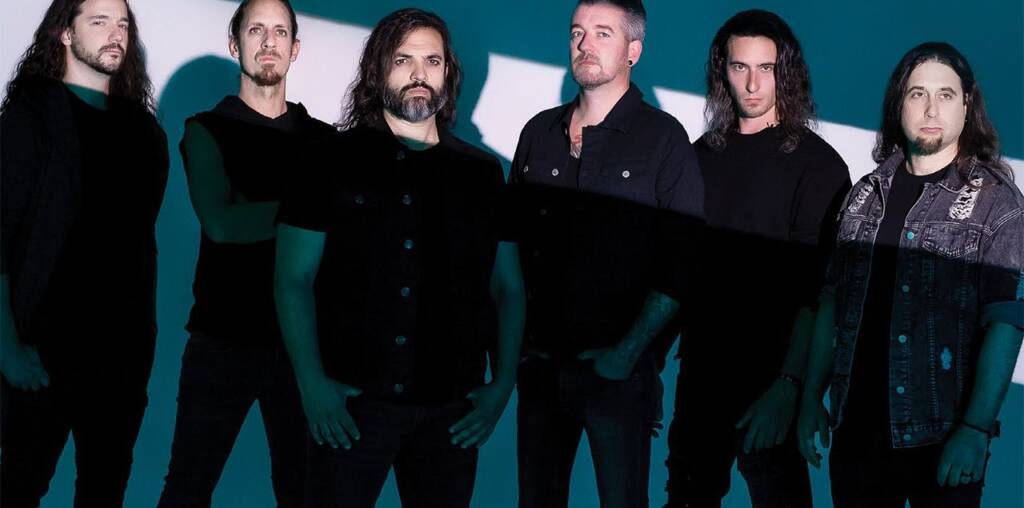
 Textures once helped pioneer the modern dent and heavy progressive blueprint. But the Dutch sextet disbanded at the end of 2017 when it felt like the bands they’d inspired had overtaken them. Now, back from the dead and sounding more complete than ever before, returning keyboardist Uri Dijk tells Prog about their resurrection via sixth album Genotype.
Djent has been a big part of the modern prog ecosystem for nearly two decades – but when Dutch band Textures came to the fore with their debut album Polars in 2004, the term was yet to be coined.
The record was a creative echo of the technical aggression of Meshuggah’s late-90s and early-00s output, characterised by complex polyrhythms and a near-industrial intensity. Soon Textures would find their own pioneering identity.
Article continues below
With Drawing Circles (2006) and Silhouettes (2008) – their first record with second vocalist Daniël de Jongh – their technicality became more graceful, their songs more dynamic and emotional. Suddenly there was a softer side to their angularity, offering an innovative reimagining of Meshuggah’s pre-djent recipe.
By the time their fourth album, Dualism, dropped in late 2011, TesseracT had emerged with their debut LP One; and Periphery were making waves across the Atlantic. Both bands drew heavily on the Textures template: they saw the Dutchmen as torchbearers for a style now firmly established in prog lore.
But not all pioneers are immortalised. After touring Phenotype in 2016, the band broke up, despite having written companion piece Genotype. “There was a feeling of irrelevance,” says keyboardist Uri Dijk, who joined the group in 2010. “We’ve had our moments of pioneering, but when you see bands surpass you, you start to question yourself. It felt like we didn’t have anything more to say, musically and artistically.”
Their decision was further provoked by changes behind the scenes, as several members started to prioritise family life. But there was never a falling-out. Guitarist Bart Hennephof and drummer Stef Broks – who both work at Eindhoven educational institute Metal Factory – remained close; de Jongh and guitarist Joe Tal formed Crown Compass, with their debut album arriving in 2022; and their WhatsApp group was always pinging.
The sense of being eclipsed loomed over them; eclipses, though, are always fleeting. “We never intended to get back together, although some of us wished it,” Dijk says. “Then about two years ago we were having a barbecue together and we started talking about the band. Everyone was really positive.”
There was a general acceptance that, if they were to return, some things would need to change. The experiences of writing Phenotype would be their yardstick. “With that album, everybody wrote and brought something to the table,” Dijk says. “It was cool having a lot of ideas and different angles. But it also made it quite difficult to get things done, because we’re a very democratic band. It was very time-consuming.
“Joe decided to take a backseat with this album, but stepped up when we asked him to. Daniël was really busy with a new job and a new house. So it was agreed that most of the writing would be between me, Steph and Bart.”
An entire record had been written circa 2015, but that material didn’t survive the reformation. “It didn’t feel like it fit us any more,” Dijk says. “The original idea had been to write one 45-minute song, and it was a really, really big challenge. That’s not how music works nowadays with streaming services. So we started with a clean slate. It allowed us to better express ourselves.”
One thing that did survive was the need to give Phenotype its counterpart LP. As Dijk says, “We knew we had to finish the story.” A genotype is an organism’s unique genetic code, defining such things as one’s eye colour; while phenotype relates to those traits interacting with the world.
“Phenotype was about observing the world around us, trying to analyse ourselves, what we do and how we react to our environment, religion, and science,” Dijk says. “Genotype is more introspective – looking at where we came from, our emotions and how we deal with ourselves and the world around us.”
It starts simply and gains traction; just one groove or melody per song, and when we’re done exploring, the song is over
Writing started simply: musical and conceptual ideas were shared at weekly meetups. Then the trio would scurry off home to flesh them out independently. “What really helped was not going into the details that much,” Dijk says. “From thinking about the concept for a song to sketching it out was really efficient – we didn’t get lost in the details.”
Which is not to say there were no challenges. “We had to find ourselves again. We were writing for Phenotype and Genotype 10 years ago.I still had this young energy going where I wanted to see how fast I could play or how difficult I could make it.
“I’ve gotten into electronic music since we broke up, so I wanted these new songs to have more room to breathe. If you compare this album to Polars, it’s very different: we’ve grown up. Every Textures album has been different to the previous one without losing the sense of what we’re about. We’ve challenged ourselves to make something artistically relevant.”
Finding themselves again meant abandoning their biggest crutch. “The songs are still complex in a lot of ways, but we also let go of trying to be complex,” Dijk explains. “Phenotype was forced: it was intended to be wild, like sitting on a really fast train. Genotype is smooth sailing; ideas came naturally.
“It has a very minimalistic approach; we’re drawing from Steve Reich and Philip Glass. We have a small set of components that are explored in every way possible. It’s very additive: introducing a small part then building tension. It starts simply and gains traction; just one groove or melody per song, and when we’re done exploring, the song is over.”
It feels natural to keep doing what we want to – that’s we’ve always done
Time can be a great healer; and Textures feel it’s given them a greater sense of belonging. “I think this album is better suited than it would have been eight years ago,” Dijk adds. “You could say we need more breakdowns or a lower tuning to be able to stand alongside the biggest progressive metal bands of today. But it would also be really easy to lose ourselves along the way; we’d sound like every other band.
“I hear from a lot of people who appreciate what we’ve done in the past. It feels natural to keep doing what we want to – because that’s we’ve always done.”
Their return has been celebrated, but they’ve still had to face hard truths, the keyboardist admits. “We toured Europe with Jinjer and Unprocessed, which is a pretty big deal. But we’re back to being the opening act. That was a difficult pill to swallow at first. Then I look at the venues we’re playing, and I see it as a great opportunity.”