
 Written by
 On March 17, 2006, Billy Talent drummer Aaron Solowoniuk wrote a letter to fans explaining the meaning behind the song This Is How It Goes.
It opened their debut album, which had already been out for almost three years. The meaning behind the song itself was vague as vocalist Ben Kowalewicz would quietly note it was about someone close to the band, but declined to go into specifics.
The band were wise to sit on this demo which was recorded years earlier under their previous moniker Pezz. Produced by Gavin Brown, the three-and-a-half minute blast brims with piss and vinegar, and it’s hard to think of many better opening songs on a debut punk album in recent memory.
And it was time to reveal the sad truth behind the fan-favourite.
“This is a song about one of Ben’s friends that has multiple sclerosis,” explained Solowoniuk in a post via their official site. “Today I would like to let you know that I am that friend with MS. I want to start with saying that this changes nothing about my band or me. I’m actually stronger both mentally and physically than I’ve ever been in my life.”
Almost a decade earlier, Solowoniuk started experiencing symptoms of the chronic disease. Like his bandmates, the drummer held down a day job while they were finding their way around the Toronto scene as Pezz.
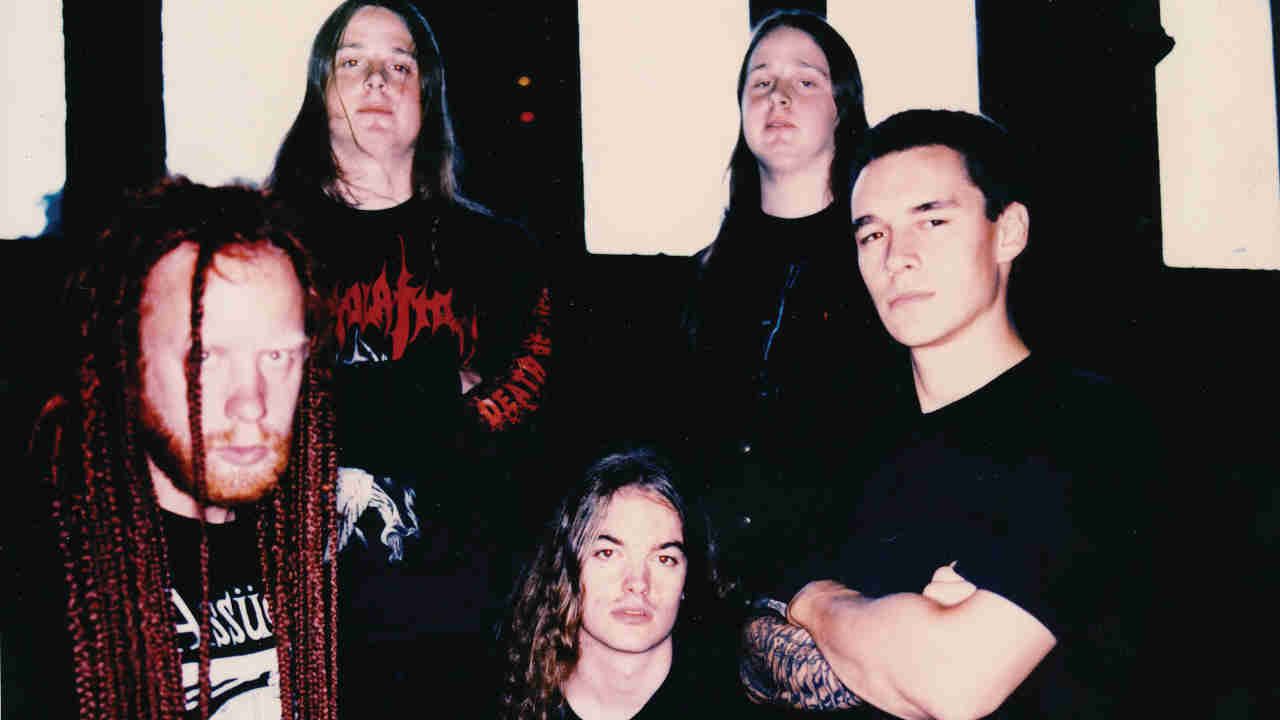
Kowalewicz worked at a radio station, guitarist Ian D’Sa studied animation, and bassist Jonathan Gallant pursued a business degree (he didn’t complete it, by all accounts). Solowoniuk, meanwhile, worked at the DaimlerChrysler plant, helping build the Intrepid, Concorde and 300M models; he earned more than he had at the Toronto Auto Auction while his flexible shifts gave him more time to play shows with Pezz.
But just days into his new job, he began to feel a numbness in his legs and thought it was due to the physical demands of his job. Following several tests, it was decided that the drummer most likely had multiple sclerosis, but a full diagnosis could not be made for two more years, should more symptoms appear.
Article continues below
Soon after the diagnosis, he could make the numbness appear by leaning forward, and began to feel an excruciating pain in his left eye.
“It was like being punched in the eye by a ghost and the ghost had done some serious damage,” he explained. “I instantly started to squint my eye shut and went straight to my eye doctor. He told me I had optic neuritis. When I told this to my neurologist, I found out that it’s very common for people with MS and the disease was progressing.”
His doctor suggested a new treatment which would involve three, self-administered injections “indefinitely”. And that’s if it worked how it should.
“Coming to terms with the fact that I had to start giving myself needles forever was really hard,” Solowoniuk admitted. “A couple of the side effects really hit me once I started the medication. I fell into a deep depression and started seeing a psychiatrist. I really felt like my life was falling apart. None of my dreams had come true and I now had an incurable disease.”
His medication began to work, and with the help of the MS Society of Canada, he began to find a way to manage his condition. Pezz, in the meantime, changed their name to Billy Talent after a dispute with an American band of the same name.
After recording a four-song demo, the quartet landed a record deal. A major one, at that. Solowoniuk’s dream came true and duly gave notice at the plant. But this meant he’d have to manage his condition in cramped vans, “crappy motels” and dressing rooms across North America and further afield.
“My medicine needed to be refrigerated and I was about to spend a big chunk of my life driving around in a van with six grown men,” the drummer explained. “I can’t believe I never had to explain why I had a mini fridge filled with needles to the authorities. We spent about 12 months driving all over North America and Europe.”

Almost a decade after his personal letter to their fans, Solowoniuk suffered a debilitating relapse and was unable to record the songs he’d written with the band for their album Afraid Of Heights. With Solowoniuk’s blessing, longtime friend and Alexisonfire drummer Jordan Hastings stepped in to help them finish the recording.
“I had been quietly expecting all of this to happen one day,” Solowoniuk told the Toronto Guardian. “Playing drums just kept getting harder and harder. When we went on tour that summer, I was getting on stage each day worried if I would be able to finish the set. When I was diagnosed with relapsing-remitting multiple sclerosis in 1998, the doctor told me I should consider not playing drums anymore. I went on to record four studio albums and tour all over the world for over a decade.”
Following the release of Afraid of Heights, Kowalewicz admitted that he would do anything to have his friend behind the kit again.
“[Hastings] is so sympathetic to what’s happening, and to Aaron,” he told the Montreal Gazette in 2017. “I would give anything and pay any amount of money to have my buddy Aaron back playing drums and feeling better, but right now he’s going through this journey. And we’re going through it with him.”
He’s an amazing, amazing, inspiring person to anyone within our group of friends – and he’s not done fighting yet.
Ben Kowalewicz
“The thing is, it’s such a finicky disease, because with his type of MS it can come and go,” he added. “You could start feeling better, and then you can relapse. So he has episodes. And he had an episode about a year ago, a year and a half ago, that’s really thrown him. But there’s no saying that it can’t reverse itself and slow down and become better. And that’s just as much of a mindfuck.”
While Solowoniuk doesn’t currently play for Billy Talent, he remains part of the gang. For their most recent album, Crisis Of Faith, he’s credited with providing “good vibes” and occasionally does charity work to raise money and awareness for MS causes.
“He’s an amazing, amazing, inspiring person to anyone within our group of friends,” says Kowalewicz. “And he’s not done fighting yet.”
The opening song on their debut album is a permanent testament to their friend and bandmate’s resolve under the most trying of circumstances: You can steal my body but you can’t steal my soul, ‘cos this is how it is, and this is how it goes.
For more information on multiple sclerosis, visit the NHS website.