 Written by
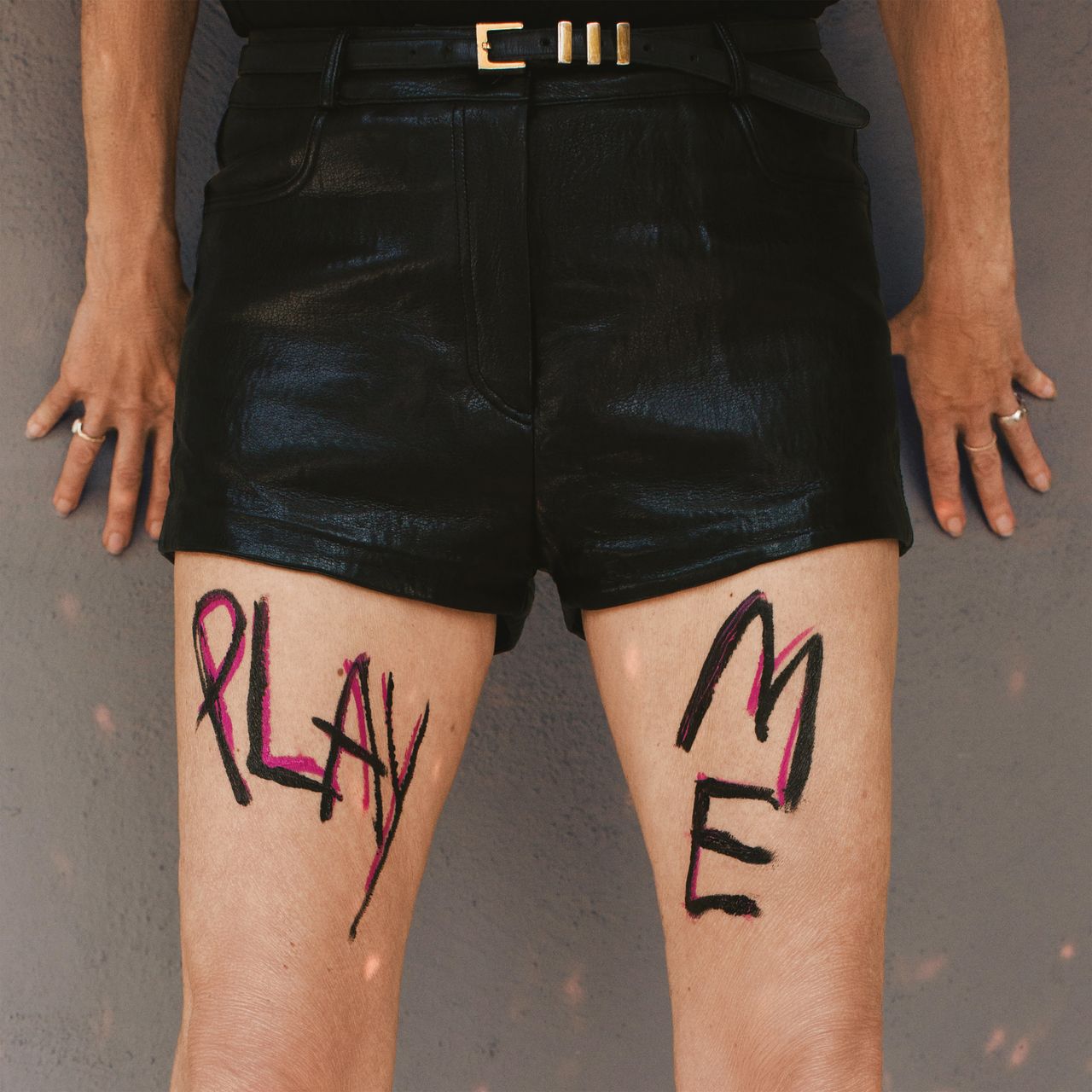
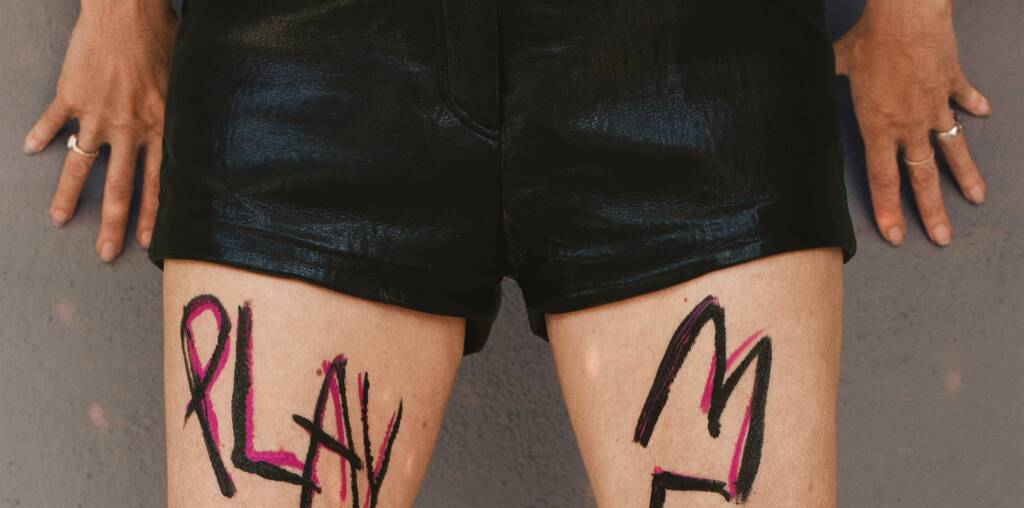
 In a recent interview, Kim Gordon said it was hard to talk about anything with subtlety anymore. The gray areas are disappearing; everything’s black and white. Her third solo album, PLAY ME, takes that conclusion at face value. Its surfaces are declarative, its jokes land at the speed of recognition, its politics arrive pre-interpreted. It is the most we live in a society, phone bad, our president’s a Cheeto record of her oeuvre so far.
On every level, PLAY ME is the most populist and literalist music Gordon has ever made. There are fewer jagged ruptures than on her previous solo records, more clearly demarcated beats, hooks that resemble hooks. The loops recur and aren’t so violently flayed open. They chug forward with modulating basslines and a steady krautrock insistence. At just under 28 minutes, PLAY ME is addictive and brisk, ending by the time you’ve finished the washing up.
No score yet, be the first to add.
Working once again with Justin Raisen—the pop producer with an East Coast punk background, like Gordon—the beats mine less fresh sources than on their previous two records together. Gordon recently said she doesn’t listen to “contemporary music,” meaning she’s probably not tapped into peers like 2slimey and Black Kray. The production functions as a cross-section of hip-hop history, from the Camp Lo-like horns of the title track to the Death Grips internet-era abrasion of “Girl With a Look,” a Lil Baby type beat on “Dirty Tech,” and the blurry, Opium-esque distortion of “Black Out.”
Into the overdriven fuzz of her first solo albums—a sound that would become associated with Carti on Whole Lotta Red—she brought long-stewing thoughts. Gordon has been alive for nearly the entire lifespan of modern pop culture and advertising, and she has spent decades thinking about how marketing shapes identity. PLAY ME, her second new album in just two years, is more quickly reactive to the moment. Its chief inspiration was the news: She touches on Trump’s deportations of migrants, Musk’s bid to reach Mars, and her future employer, Big AI. Across the record, there is an itch to venture an opinion without the acuity to turn it into insight.
The most representative example of the drop in quality from her excellent previous two albums is the 2025 reworking of THE COLLECTIVE’s banger “BYEBYE.” “ByeBye25!” remakes the track with new lyrics repurposed from Trump’s banned-words list. It is “timely” and “necessary”—rhetorically potent terms that often strip art of aesthetic discernment. On the original version, she lunged into the beat, cutting through it with the blunt scythe of her voice; here, she falls flat, leaving awkward silences between “men who have sex with men,” “they/them,” “measles,” and the instrumental.
Gordon’s lifelong fascination with the intersection of commercialism and lifestyle could perhaps be epitomized by the editorially curated Spotify playlist, which pre-packages music into moods, aesthetics, and sanctioned parts of the day: brunch, barbecue, fucking, running. Gordon, a very funny person, makes very funny choices on this album, including speeding through a choice cluster of Spotify playlist titles—“Seventies Hippy,” “Chill Vibes,” “Rich Popular Girl”—over flat-cap-wearing boom-bap on the title track.
On paper, a song that recites hypothetical Spotify playlist titles ought to be a sharp conceptual move. It reads as a Warholian catalog of algorithmic curation, and the argument is clear: If identity is now sorted and sold back to us as metadata, then the most honest lyric might be metadata itself. But the gesture contains its own gloss. The joke lands, the critique registers, and the song moves on.
“Busy Bee,” one of the album’s saving graces and one of the best of Gordon’s solo career, provides some of the ambiguity sorely lacking from the rest of the album. Sampling a media appearance from the ’90s with her Free Kitten bandmate Julia Cafritz, the song contains one of the most unintelligible and stupidest (best) hooks of the album: “Busy bee! Taking money/On your kne-e-es like it’s honey” while a Sleigh Bells-like guitar chugs along. Dave Grohl plays drums, and absolutely rips. It’s surely one of his greatest contributions to music alongside Nirvana and that one good Foo Fighters song. Gordon’s voice, full of nonchalant mastery, searches out new tricks: finding flow in inhales and outbreath, and wiggling its way between syllables.
Outside of moments like this, however, such playful absurdity is often absent. The album’s pared-down lyricism—its declarative naming and pointing—suggests a deliberate flattening. But flat circumstances do not automatically demand flat art. In an era defined by unsubtlety, simply pointing at the surface can feel indistinguishable from scrolling through it.