 Written by
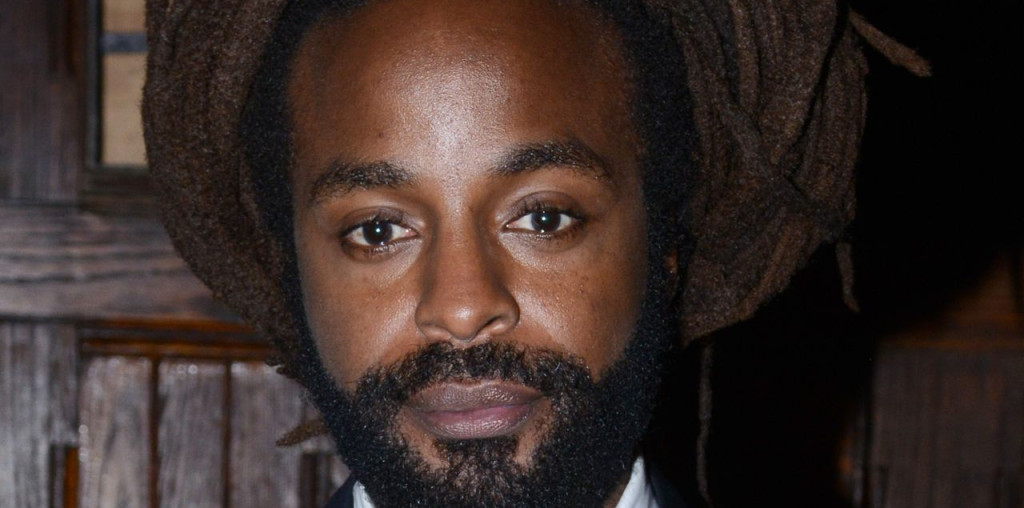
 John Forté, the rapper and producer who emerged as a key contributor to the mid 1990s New York hip-hop scene and close collaborator of Fugees, was found dead at his home in Chilmark, Massachusetts, on Monday (January 12), The Associated Press reports. There was no sign of foul play or a “readily apparent cause of death,” Sean Slavin, the Chilmark police chief, said in a statement, adding that the state medical examiner’s office would investigate.
Forté was born in Brownsville, Brooklyn, in 1975, and studied classical violin as a child, eventually becoming first violin in a youth orchestra. As much enamored with jazz, soul, and Vivaldi as he was with hip-hop, he nonetheless found his way into rap circles. Chancing into a spot in the studio where Gang Starr were recording second album Step in the Arena, he learned beatmaking by watching DJ Premier and began experimenting with rap as a way of “superhero-forming,” as he told GQ’s Marcus J. Moore in 2020.
After graduating from Phillips Exeter Academy in New Hampshire on a violin scholarship, Forté returned to New York to attend NYU as a music business major. He mingled with fellow New York musicians including Talib Kweli, his then-roommate and future collaborator, eventually dropping out of college to work in A&R at nascent rap label Rawkus. He introduced Kweli to the label, where he joined the likes of Mos Def and Pharoahe Monch; Kweli would later return the favor, releasing Forté’s 2020 album, Riddem Drive, on his Javotti label.
Forté befriended Lauryn Hill through his connections at Rawkus. The pair bonded over music, and Forté, then a relative unknown juggling music with his industry day job, got his commercial breakthrough when Hill and Pras invited the 21-year-old to appear on Fugees’ classic second album, The Score. Forté contributed vocals and production to “Family Business” and “Cowboys,” as well as joining the remix of lead single “Fu-Gee-La” that appeared on its B-side. A year later, having picked up a Grammy nomination for his work on The Score, he was one of many Fugees associates—collectively known as the Refugee Camp All-Stars—to appear on Wyclef Jean’s 1997 solo debut, The Carnival, guesting on two songs including lead single “We Trying to Stay Alive.”
In another instance of the community and camaraderie that characterized his life and career, Forté had Jean produce his own debut album, Poly Sci, in 1998. Its commercial failure rattled him, however, and Forté fell into a depression. “The opportunity presented itself for me to involve myself in a criminal enterprise,” he told GQ, “particularly as a middle man between [an associate] and encouragers, carriers who would carry anything that needed carrying.” In 2000, he was arrested at Newark International Airport and charged with possession of liquid cocaine and drug trafficking. He received a 14-year prison sentence.
His release was thanks in no small part to Carly Simon. At the invitation of her son Ben Taylor, Forté had visited their Martha’s Vineyard home one weekend and ended up staying all summer, getting together with Simon daily for mutual songwriting workshops. When Forté was arrested in 2000 and given one phone call, he dialed Simon’s number. In addition to putting up $250,000 towards his bond, Simon “buttonholed old political friends, sought out new ones,” and sold “Free Forte” merchandise to benefit his legal fund after his incarceration, as The Times reported in a 2005 profile. (At the time, Forté blamed himself: “I don’t think I got smart until I got here,” he told The Times from prison.) Led by Simon, a coalition formed to campaign for Forté’s release. Two years later, George W. Bush commuted his sentence; he was released almost seven years early.
Forté came back to music, sometimes performing with just an acoustic guitar—the instrument he learned to play in prison. He had released a second solo album, I. John, in 2002 while awaiting his sentencing, and returned with the EP Stylefree—including his first collaboration with Ben Taylor—in 2009 and the album Water Light Sound two years later. He wrote “Something to Lean On” as the inaugural theme for the Brooklyn Nets in 2012, and kept his collaborative spirit alive with a string of duets and co-writes, including a 2018 track with fellow Martha’s Vineyard resident and flamenco artist Peter More.
His 2020 album, Riddem Drive, featured another song with both Taylor and Kweli, “Being Is Believing.” In 2021, he released the final studio album of his lifetime, Vessels, Angels & Ancestors—a response to the killings of George Floyd, Breonna Taylor, and Ahmaud Arbery. The album, he told GQ, was “a testament of mindful, loving awareness. How you can see the atrocity and still believe that we are stardust, that we are divine…. That’s what I’m wrapping up in my art right now. I’m trying to do that in the most loving, collaborative, open way possible, because it feels better.”
Forté went on to score and soundtrack the documentary Kerouac’s Road: The Beat of a Nation, which premiered last year at Tribeca. He is survived by his wife—the photographer Lara Fuller—and their two children.