 Written by
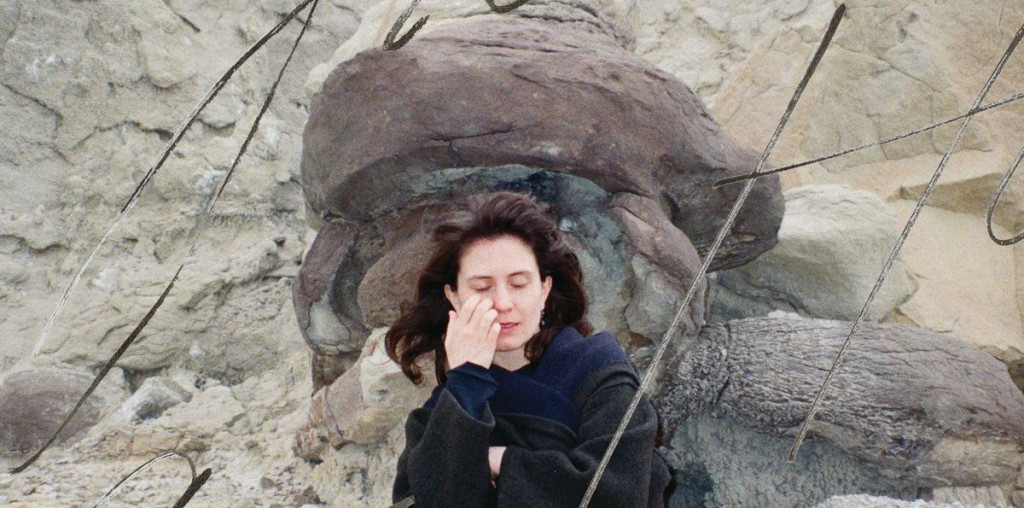
Rhetorical questions bubble up throughout Jana Horn’s latest album: “Is this all there is?” “What can I say?” “What is left?” Well, perhaps they’re not entirely rhetorical; she follows up that last one, on the sweetly forlorn “All in bet,” by clarifying: “I’m honestly asking.” This searching sincerity is a hallmark of Horn’s songwriting, delivering existential probing with a dry, conversational delivery and a minimal instrumental palette.
Her third album, which is self-titled, is a document of wandering. Horn first began writing songs in Texas, where she grew up, but her music career blossomed in Virginia, where she studied in a creative writing MFA program. During that time, her elegant debut album Optimism was re-released, and she put out its follow-up, 2023’s crystalline The Window Is the Dream. After graduating, she uprooted herself, moving to New York—a transition she’s said felt like an unfortunate “arranged marriage,” one that wound up draining her and exacerbating her longing for friends and family.
No score yet, be the first to add.
Most of Horn’s new record comes from that first difficult year in New York, which may account for the untethered nature of its lyrics; they’re concerned with beginnings and endings, “a feeling/that comes and goes,” the sense that “nothing feels the same.” The opening track (which Horn wrote years ago, but felt drawn to rework for this album) depicts an unshakeable instability: She considers the advice to “follow your bliss,” but wonders, “What do you follow/When there’s no scent of it?” It’s an elegant refinement of how you might feel if you found yourself torn between the place you come from and a place that promises you growth, or employment, or community—and might ask yourself again (and again) when moving between those places leaves you feeling more worn down than inspired.
Horn sings with a light touch: her voice serene, her melodies uncomplicated. Her guitar parts are similarly unfussy, and usually avoid the spotlight; songs like “Unused” and “Designer” foreground the melodic qualities of bassist Jade Guterman’s playing instead. Horn traveled back to her home state to record the album at Sonic Ranch, alongside Guterman and drummer Adam Jones (the three regularly perform as a trio in New York); Adelyn Strei also joined them to add flute and clarinet. The time they spent together, isolated in the studio, is reflected in the understated intimacy of their playing: Toward the close of “Don’t think,” clarinet, bass, and flute wind effortlessly around each other; on “Come on,” subtle percussion falls like punctuation among Horn’s sung phrases. She has described writing music as “a way of unletting some of the density” of writing fiction, and these patiently unfurling songs have enough confidence to let a little silence in.
Still, sparse as it may be, her music offers its own richness, and these songs often reach full-band conclusions that feel warm and inviting. “It’s alright,” whose lyrics make the song’s titular optimism feel like a minor miracle, builds toward a gently tangled coda where piano, percussion, and pirouetting guitar accompany Horn as she coos wordless syllables. She pulls off something similar on “All in bet” and the slight but affecting “Love”—each time letting the band’s energy build and recede underneath her as she vocalizes. Her fragmentary lyrics aim for the edges of a story, rather than mapping its entire narrative. But hearing her drop the need for words altogether seems to provide a further distillation of that unletting. It’s an affecting touch on a record that emerged from an epoch of loneliness: letting her questions drift to the wind, and letting her communion with her band suggest its own kind of response.