 Written by
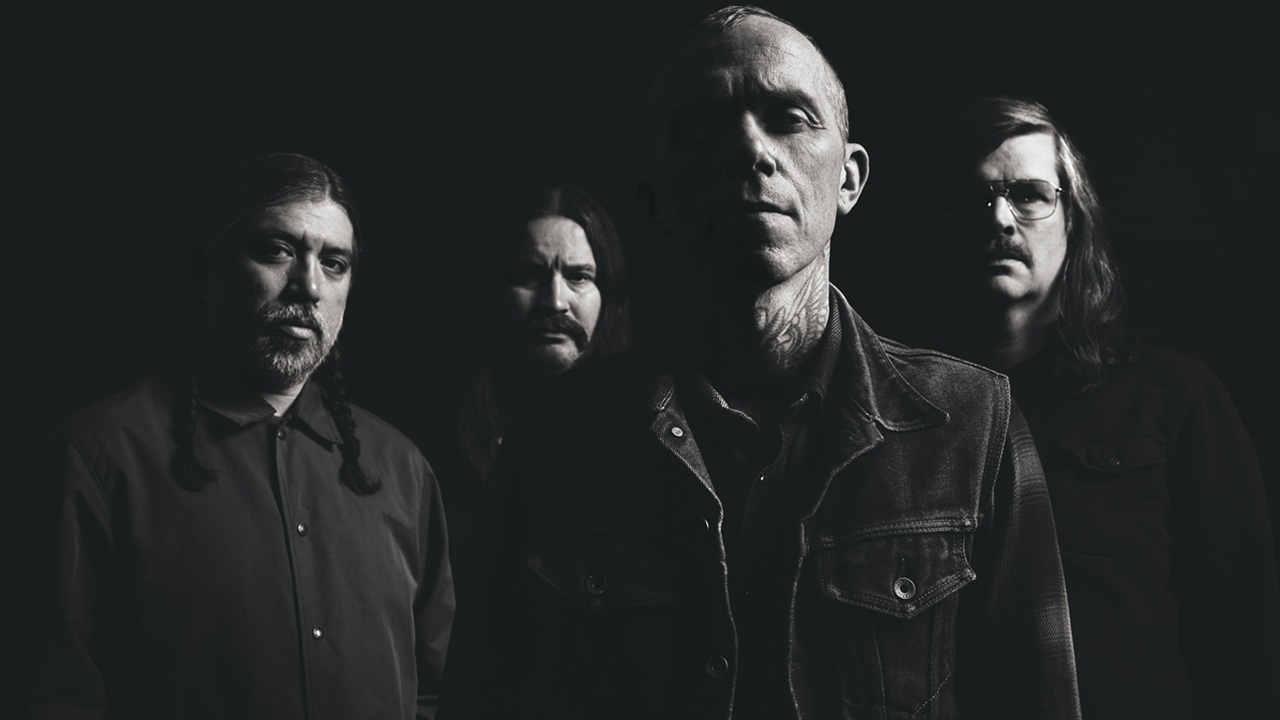
 Few bands can genuinely say they changed the face of music. Truth be told, Converge probably wouldn’t make such a ballsy claim either – these metallic hardcore trailblazers are too modest and self-reflective for chest-beating braggadocio.
Yet this Massachusetts band have undeniably altered sonic extremity as we know it. Their 35-year-plus career has seen them become a truly singular entity, splicing speed, fury and face-clawing riffing with wounded-pterodactyl vocals, poetic lyrics and a knack for expansive experimentation.
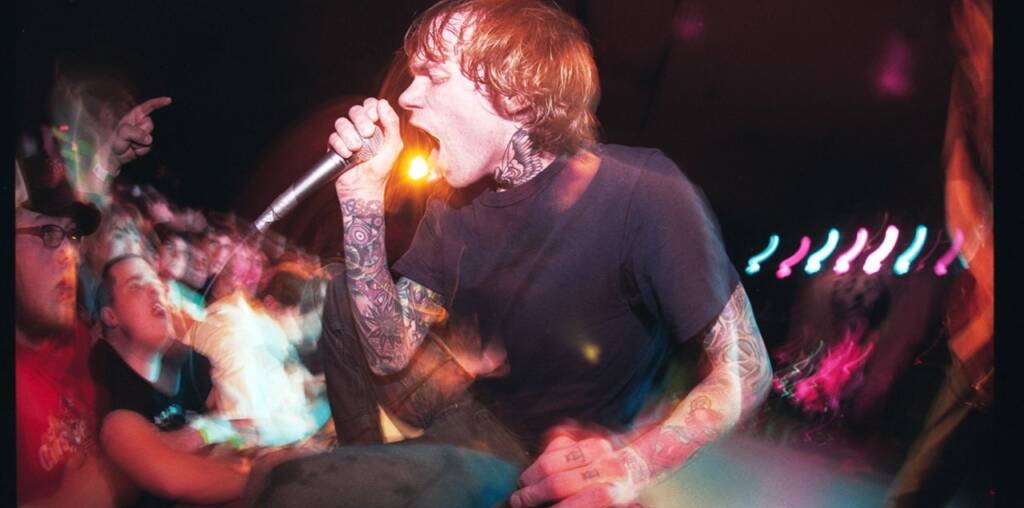
“It’s a natural purging of emotion,” is how frontman Jacob Bannon sums it all up. “I scream at the fucking world and I try to put myself through the stage.”
Article continues below
He makes it sound simple, but Converge are a complex band, musically, emotionally and artistically. The run of albums they’ve released from 2001’s landmark Jane Doe onwards have inspired a generation of hardcore, thrash, screamo, sludge and post-hardcore musicians to get neck tattoos, torture their riffs into strange new shapes and pen 11-minute, heart-on-sleeve epics.
All that was unthinkable when Jacob formed Converge in Salem, Massachusetts in 1990. Back then they were schoolkids cutting their teeth on thrash metal and hardcore punk, gleaning intel on bands and the scene from Thrasher magazine and skateboarding videos. Jacob played bass.
“One of the covers we wanted to play was You Can’t Bring Me Down by Suicidal Tendencies,” says Jacob, talking to us from his office, where he’s taking time out from his parallel responsibilities as an in-demand graphic designer and head of Deathwish Inc., the label he founded in 2000.
“It was beyond our skill set and we didn’t even have a singer, so we kind of shifted stuff around. I moved from bass to vocals.”
Things changed when they were joined by Kurt Ballou, a metal-loving kid a year or two ahead of them in school. Kurt had a degree of musical proficiency his new bandmates didn’t – as well as guitar, he could play saxophone and clarinet.
“I came from a background where music was a discipline, not a hobby,” says Kurt, who’d played with his school orchestra and jazz band, and seemed on course for music school. “While I brought some of that discipline with me I also selectively ignored it, because the guitar gave me the opportunity to make something that was my own.”
Converge’s early line-up – also featuring bassist Jeff Feinburg and drummer Damon Bellorado – spent the first half of the 90s finding both their sound and their feet. Their earliest recordings projected a tough, rough’n’ready sound that wore the influence of Suicidal Tendencies, Biohazard and cult Ohio hardcore flagbearers Integrity.
“The name Converge sort of stuck through that whole iterative process of us discovering ourselves,” says Kurt. “There’s a history of the band with that name that kind of predates us really finding our voice. We were going to hardcore shows and seeing the third wave of Boston hardcore and being inspired by that, but at the same time we were watching [MTV metal show] Headbangers Ball in our living rooms. I think we were unconsciously trying to find a way to fuse those things.”
While Kurt isn’t overly fond of his band’s early rumblings, he acknowledges there was something to be said for the white-knuckle nature of DIY life.
“It was definitely a wild time and everything was much less professional,” he says with a smile. “On the first tour we did, which was really only a weekend, one of the venues burned down the day before we were supposed to play it. You’d go away for a week of shows, and maybe three of the shows would happen because the cops would shut things down. Crazy stuff just happened.”
Converge released their debut album, Halo In A Haystack, in 1994. Jacob partly financed it with earnings from his job working in a nursing home. It was unrefined by their later standards, but amid its mix of hammerblow chugs, Slayer-esque dissonance and emo-tinged prettiness lurked the seed of the band they would become.
Halo In A Haystack wasn’t a huge success – not surprising, given only 1,000 copies were pressed (the album has never been repressed, making it a prized rarity). But it reaffirmed Converge’s growing self-belief, and helped them make even more connections within the febrile hardcore scene.
After the album’s release, Converge played a handful of dates with Boston punk act Daltonic. Jacob stayed on to sell copies of the album at shows. Sliding around in the back of a U-haul truck and subsisting on tinned chickpeas and sweetcorn for three weeks might not have done much for his health, but there were far more sobering experiences to be had – like almost being beaten to death in a Louisiana car park as he mulled the ethics of a vegan buying a portion of McDonald’s french fries.
“It was like a movie,” he says. “A pick-up truck pulled up and a bunch of guys got out and surrounded me. Then our band of guys pulled up, and it was a whole fucking thing. I was with some of the people that were there recently and they’re like, ‘Oh, yeah that was fucking real. You were gonna get killed.’”
As Converge continued to find their voice, they became increasingly aware that they weren’t alone in terms of ambition and intent. Acts such as Rorschach, Starkweather and Deadguy had broken early ground with jagged, angular hardcore that looked far beyond Big 4 thrash for metallic inspiration, while the likes of Cable, Botch and The Dillinger Escape Plan were beginning to splice their own awkward, obstinate sounds.
“A lot of these things were bubbling up independently of each other,” says Kurt. “Some of these folks we knew, and some of them we came to know because we found out we had this mutual experience of not really fitting in anywhere.”
Converge’s abrasive, unfamiliar sound and ability to fire up a crowd caught the attention of Steve Reddy, owner of hardcore label Equal Vision Records.
“I talked to Steve about this and he mentioned seeing us for the first time at a music festival,” says Jacob. “He remembered thinking, ‘I don’t even know what the fuck this is. There’s young kids losing their minds over it, and it’s not like anything else.””
Equal Vision released an expanded version of Converge’s 1996 EP, Petitioning The Empty Sky. Lead track The Saddest Day became a live favourite thanks to its chaotic energy and savage blend of Meshuggah, Entombed and Slayer influences.
“That song is definitely worn out,” laughs Kurt. “We have a pact to never practise it ever again, so if you see us playing it, we have not rehearsed it.”
As well as Converge, the guitarist was embarking on a career as a producer. He’d used severance pay from his job as a biomechanical engineer to set up his own studio, GodCity, and embarked on a parallel career as a producer. One of his first production jobs was Until Your Heart Stops Beating by friends and contemporaries Cave In, whose guitarist Stephen Brodsky had briefly been a member of Converge.
“I actually felt guilty about it, because I’d witnessed surgeries where people’s lives were saved using devices that I helped engineer,” says Kurt of the contrast between his old job and his new vocation in music. “I felt I was moving from something benevolent that benefited humanity to this selfish, artistic career.”
Converge made another step forward with 1998’s ugly, writhing When Forever Comes Crashing, embarking on their first European tour the following year. But despite their growing success, internal problems were starting to rear their heads.
“It was pretty clear that the line-up was fragmenting and we weren’t really on the same page,” says Kurt.
Rather than rupture, Converge reconfigured. Bassist Nate Newton joined in 1998, while drummer Ben Koller came onboard in 1999 after being drafted in at the last moment when the band’s then-drummer failed to show for a gig. With the new line-up bringing strength and stability, the band began work on the album that would change everything for them, and for the metallic hardcore scene: Jane Doe.
Recorded in seven days but the result of three years’ worth of physical and emotional graft, Jane Doe saw the band emerge from their sticky, larval state as something bold, new and frequently terrifying.
“We knew we wanted to make something different,” Kurt says simply.
With Jane Doe, that’s what they did, and then some. Vitriolic, fraught and at times strikingly beautiful, the album saw Converge condense their jagged, dissonant hardcore into laser-focused blasts, while demonstrating an increasingly experimental edge that nodded to everyone from The Jesus Lizard to The Cure and Depeche Mode. It culminates with the 11-and-a-half-minute title track, a sour, soaring, doom-laden systems purge that channels the bleak grandeur of Swans and Neurosis through a fractured hardcore filter.
These were all elements the band had hinted at in the past, but this was the first time they’d been so effectively united in one pure, seething vision. For Jacob, the process of making the album was a visceral one, whereby he documented crushing despair and a collapsing relationship.
“I was trying not to be sad,” he says matter-of-factly. “I was suffering a lot, and I looked to art and music to turn it into something because that’s all I had. I felt like I needed to scream at the world around me, and this was my opportunity to do so.”
Jane Doe was released on September 4, 2001. With a now iconic cover designed by Jacob, featuring a sombre, shadow-shrouded image of a mystery woman (identified 20 years later as French model Audrey Marnay), it instantly blew punk rock’s established parameters wide apart. It has subsequently received innumerable benefit-of-hindsight plaudits, but for the band there was no sense at the time that they’d helped shift the needle.
“When it was released, most folks didn’t really get it or like it,” says Jake. “I’ve got a thick packet of photocopied reviews up on my shelf and it’s, like, 70% negative. The audience just wasn’t there for it.”
Jane Doe certainly didn’t transform the lives of the members of Converge financially, but it helped cement both the band and the members’ individual artistic endeavours – Kurt as a producer, and Jacob as an in-demand artist and graphic designer (his covers have adorned albums by the likes of Poison The Well, Every Time I Die and Underoath), as well as one of the driving forces behind Deathwish Inc., which has put out more than 250 releases over the years.
If Jane Doe helped define Converge’s sound, they didn’t let it define them. Like sharks that have to keep moving to survive, the band’s post-Jane trajectory has been marked by restless forward motion. You Fail Me followed in 2004, and while many might have been content to ride on the coattails of previous success, Converge instead delivered a raw, lean, ravenous album, pockmarked by subtle experimentation. In subsequent albums, the band have balanced their customary intensity with some surprises. For every slab of intense raging noise, such as 2012’s All We Love We Leave Behind and just-released new album Love Is Not Enough, there have been unexpected left-turns, such as 2009’s bombastic, prog-tinged Axe To Fall (featuring members of Cave In, Neurosis and Entombed, among others) and 2021’s Chelsea Wolfe collaboration, Bloodmoon: I.
The latter marked their most significant departure since Jane Doe. Rooted in a series of performances that reinterpreted a suite of Converge songs, it was sonically startling, closer to an elegantly doomed slice of film noir rather than nerve-flaying psychological horror.
It saw lyric-writing duties shared between many, including Jacob, Kurt, Chelsea Wolfe and old friend Stephen Brodsky, who also appeared on the album – something of a respite for the frontman.
“The effect of being vulnerable is that other people who are also in a vulnerable place want to connect with you,” he says of the Converge day-to-day. “I think that’s a very beautiful thing, but it can be very fucking dark. With Bloodmoon, I had a different connection to the music. It’s not to say that those songs aren’t deeply emotional as well, but it’s a different hat to wear.”
This protean approach to their music defines Converge in 2026. They give a fix of extremity for those craving it, but their unique strain of noise comes with multiple dimensions.
“We do things by our own compass,” says Jacob. “We’re not concerned with trying to repeat ourselves, we just write personal stories about these times in our lives. And they shouldn’t be the same, because while we’re the same people in blood, we’re not the same people when it comes to life experience.”
“I think there’s something to be said for never stopping,” says Kurt. “Everyone has their pride and everyone has their good days and bad days, but we all have the same goal even if we have different ways to get there.”
Those kids trying to play Suicidal Tendencies more than 35 years ago would be shocked at how long and influential Converge’s career has been.
“I’m angrier now than I was when I was 20,” says Jacob. “It’s much more layered and more complex, but it’s still very much there, and there’s still a need for this art form in my life. Just because you get the poison out one day, doesn’t mean that there’s not more the next, right? I don’t want to be dark all the time, and that’s what we do with our music – we work through that darkness, searching for the light.”
Love Is Not Enough is out now via Epitaph. Converge have also announced new album Hum Of Hurt for a June 5 release. The band play Outbreak Festival in June.