 Written by
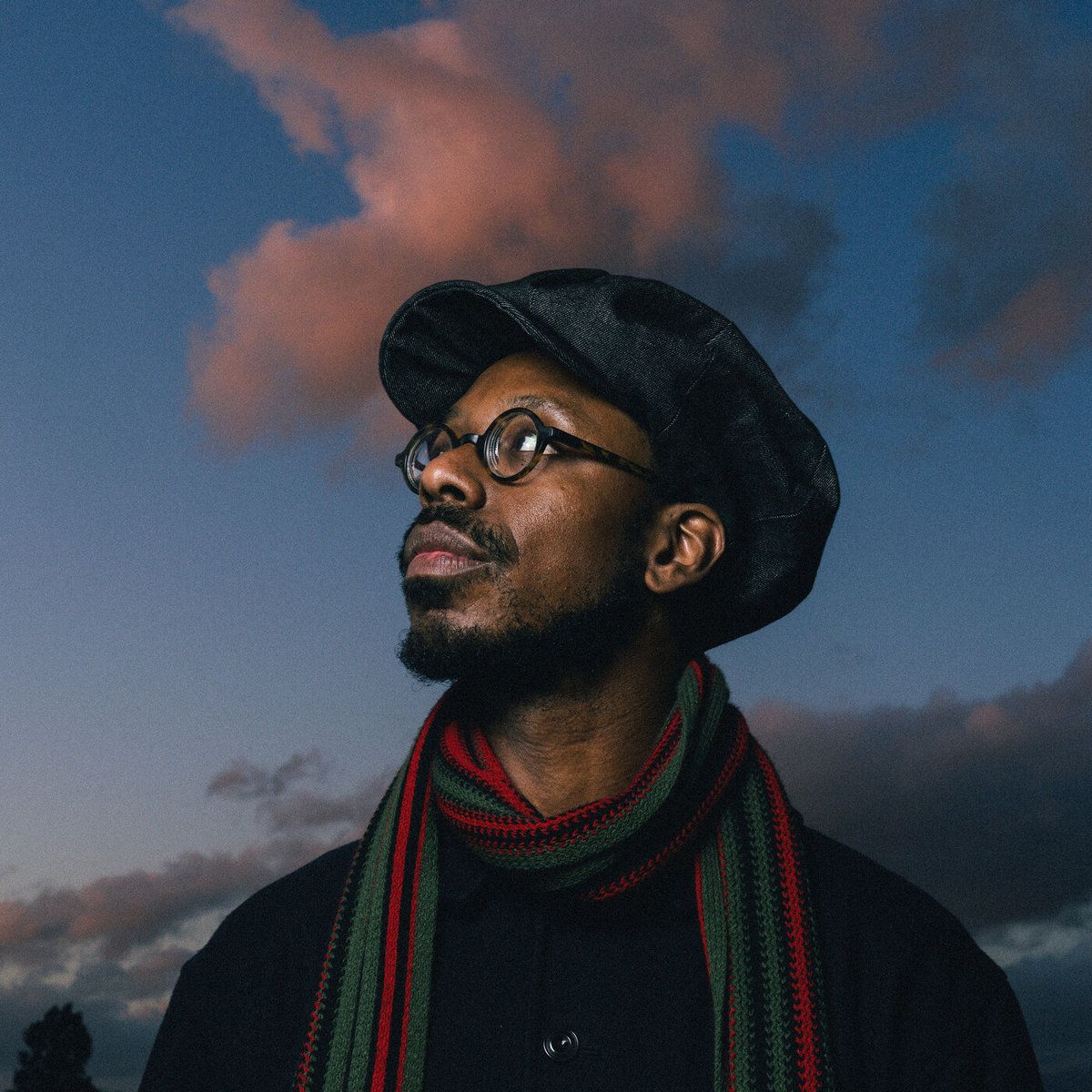
 When Shabaka Hutchings indicated that he’d be stepping away from playing the saxophone onstage in January 2023, his reasons included the physical challenges of the instrument and an encroaching feeling that his performances were becoming commodified. You also have to wonder how much audience expectations and the symbolic weight of the instrument may have played into it. In September of that year, he participated in a performance of the Pharoah Sanders and Floating Points piece Promises and in December followed with a gig that presented John Coltrane’s A Love Supreme at London’s Institute of Contemporary Arts. It’s not unreasonable to wonder if these prestigious shows fueled a desire to keep searching for something new. And what better way to break from the past than to forgo the instrument with which you made your name and learn how to make music with new ones?
Shabaka has since put out an excellent album (Perceive Its Beauty, Acknowledge Its Grace) and an EP (Possession) in which he played flute and assorted wind instruments from around the world in highly collaborative settings. He worked with artists from across the genre spectrum—billy woods, Brandee Younger, André 3000, Esperanza Spalding—and seemed poised to continue on the path of spiritually minded improvisation where jazz meets new age, a sphere of music that’s become increasingly prominent over the past decade. But the restlessness remains. Having landed on an au courant sound at the moment when its market was expanding, he decided to try something else: His new LP, Of the Earth, is a solo album in the literal sense, with Shabaka writing, producing, playing, and mixing everything on his own.
No score yet, be the first to add.
Jazz musicians find meaning through interaction. A record built entirely from your own parts inevitably puts composition and editing in the foreground. The structural foundation of Of the Earth is the loop—rhythms of various shapes and sizes tumble out of silence and whirl in place, and when Shabaka lands on an interesting pattern he’s not afraid to let it play on its own for a few bars. The tension in a given track comes from how those repeating cells support and interact with wind parts, which are melodically rich and thick with harmonies.
Sometimes the album feels like an abstracted version of electro-acoustic jazz in the ’80s, when the frontline instrumentation of traditional jazz was still intact but the tools for rhythm had changed completely. On “Those of the Sky,” flutes and reeds circle each other and spin off into intricate patterns, and the ear darts from one line to the next as the melody builds and then unravels. In another musical world, the opening pulse of “Step Lightly” might lead into a synth-pop tune, but Shabaka assembles a handful of flute lines into a slightly dissonant harmonic arrangement before a programmed soca beat enters alongside a looped metallic chime. Most of these pieces have a lot going on, designed for listeners who take pleasure in guiding their ear through each successive layer.
Shabaka has mentioned Flying Lotus as an inspiration for his approach; his influence is more apparent on the structure of these songs than their mood. The music on Of the Earth doesn’t fetishize texture or strain for otherworldliness, but it shares with FlyLo a preference for density, where a given track’s container is steadily packed with as many sounds as it can hold. “Call the Power” begins with a hypnotic guitar-like riff on what could be a kalimba run through a distortion pedal, and an array of clattering noisemakers—bells and woodblocks, fluttering synths, a bass pedal, flute—transforms it into a kind of noisy asymmetrical march.
The skittering percussion loop on “Marwa the Mountain” has a similarly oblong gait, like a skipping record that’s tantalizingly short of completing its cycle. Above this playful mess of a beat, which includes a music box-like instrument that sounds partially broken, Shabaka rips out brief and noisy phrases on tenor sax. Most pieces last for three or four minutes, and the album feels like a collection of closely connected miniatures. The gaps between the tracks are extremely short and sometimes nonexistent, which reinforces the similarities between them and lends a suite-like unity.
Two cuts feature Shabaka’s vocals alongside his music. “Go Astray” is a meditation on colonialism, capitalism, and the horrors of the slave trade over sequenced electronics and metal-on-metal percussion, and his cadence, delivered in a pitched-down voice, is highly musical even if you’re not focused on his meaning. At the end of the record, the minute-long hauntological interlude “Space Time” bleeds into the closing “Eyes Lowered,” a mantra about struggle and endurance while living in a world that wants you to disappear: “Keep firm your spirit/They desire your soul/Steady the way/Emit the essence, let them study your role,” he speaks, a rare moment of certainty on an album that celebrates the beginner’s mind.