 Written by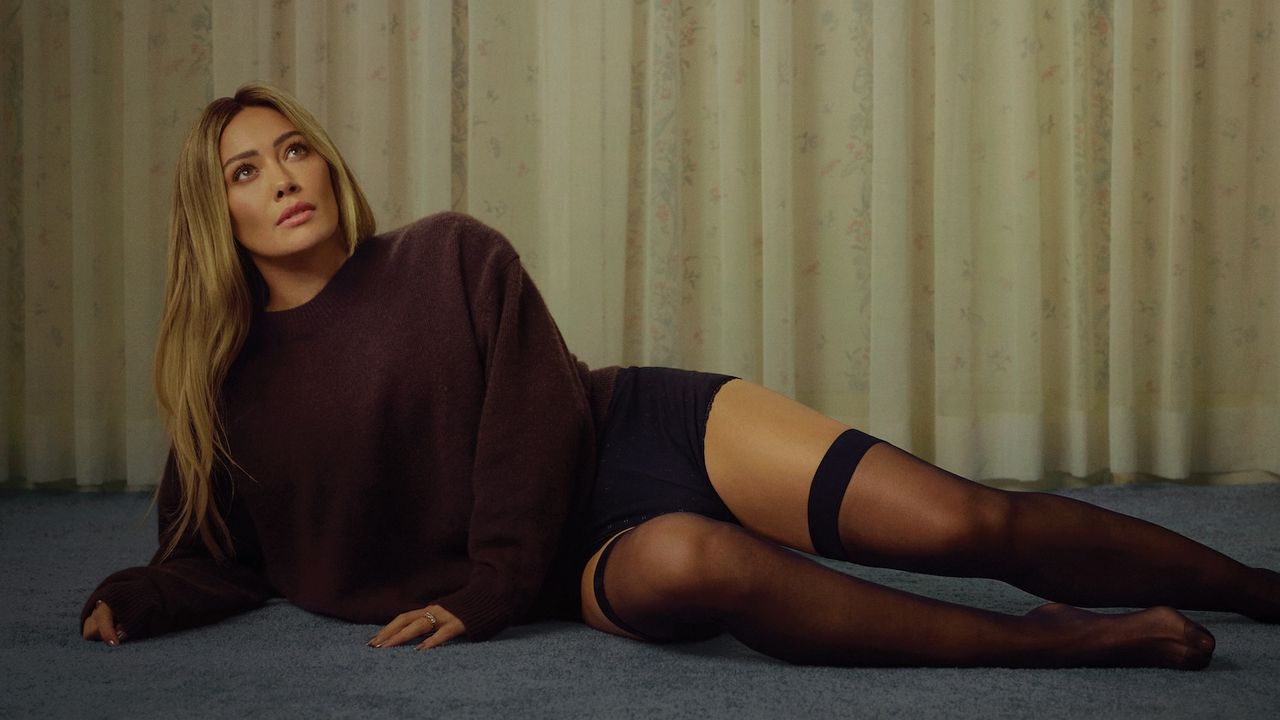
I’ve known that there would be another Hilary Duff album since that Halloween when Kendall and Kylie Jenner dressed up as characters from The Lizzie McGuire Movie. Actually, I knew the year before, when I was at a wedding and the dancefloor was mobbed the second “What Dreams Are Made Of” came on. Last year they made a Freaky Friday sequel and Jesse McCartney toured with the Jonas Brothers and I said, “What about Hilary?” Nostalgia is a barrelling train overrun with Zillennials weaned on the Disney Channel. We’re starved for comfort. Duff was bound to get on board.
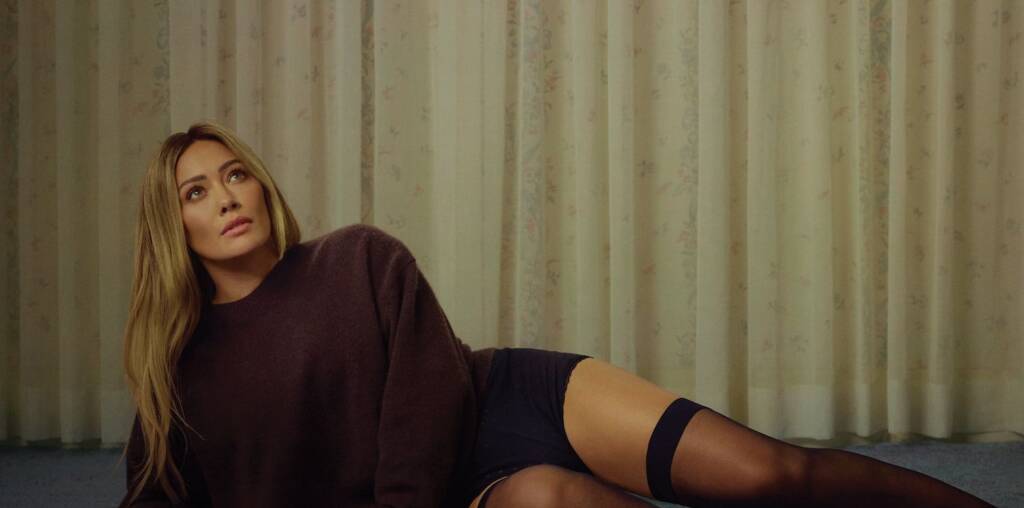
It’s nice to like something so wholesome. Duff is among the purest surviving cultural relics of the McBling era, with a quarter-century career unblemished by any of the public stumbles that we’ve come to expect from the child stars we ruthlessly break into adulthood. Since her early days as the beloved middle school misfit Lizzie McGuire, up through her recent role as a searching thirtysomething on a short-lived How I Met Your Mother spin-off, she’s been the ultimate girl next door. In the real world, Duff is a 38-year-old mom of four who’s lived more than a decade of life since her last studio album. But on her new record, luck…or something, she’s as familiar as ever. That’s largely because this is music you’ve heard before: fizzy, centrist pop, precisely positioned at the crossroads of autobiography and universality.
No score yet, be the first to add.
The girl-next-door actress’ close cousin, the relatable pop star, is a common character these days. She’s hapless and horny and acting a fool over some loser who won’t pay attention to her. The most prominent models of this type are women in their 20s, but her struggles are enduring, as evidenced by Duff’s preoccupations on luck…: anxiety, jealousy, unfulfilled desire. “I want the part where you say goddamn,” she sings breathlessly on “Roommates,” a pining single about trying to stoke the embers of a long-term relationship, then details a fantasy (memory?) of giving the guy head in the back of a bar (Hilary!!). In the song’s unvarnished lust and endearing self-consciousness, I hear echoes of the singer-songwriter-comic Audrey Hobert, of whom Duff is a fan. I definitely hear Taylor Swift, matriarch of the relatable pop stars—and not just because the song sounds like “Anti-Hero.”
luck… was co-written and produced by Matthew Koma, Duff’s husband, whose best-known work is with Zedd (he co-wrote “Clarity”). He also collaborated with Duff on her last album, 2015’s Breathe In. Breathe Out., which leaned into the ultra-processed dance music of the day. That record featured contributions from the Swedish pop heavyweights Tove Lo and Bloodshy, and was “a little clunky,” per Duff’s own description. “It was a case of the label being like, ‘Go to Sweden and write with this person, everything’s coming out of Sweden right now,’” she recalled.
Thankfully, both Duff and Koma have moved on from the thumping theatrics of the mid-2010s. luck… is less Zedd and more Carly Rae Jepsen, another former Koma collaborator, whose bright, princess-y vocal tone resembles Duff’s. The album’s base notes are chirpy synths and strummy acoustic pop, embellished with gated drum fills and swoopy strings—softer, pliable sounds that offer a more natural foundation for Duff. Still, her voice is a limiting factor here: She lacks fluidity and range, often seeming to sing individual notes rather than full phrases. This is especially detrimental when her lyrics already feel forced, like on “You From the Honeymoon,” where she parrots Tinashe while looking back on young love: “Your kinda freak matched my kinda freak.” The words sound like magnetic fridge poetry—jumbled and foreign in her mouth.
This is the first of her albums on which Duff is a credited co-writer on every song, and she seems to still be finding her footing as a lyricist. She auditions different voices: At times she’s a painstaking wordsmith (the album’s opening lines rhyme “apologist” with “psychologist”); at others she’s a gal pal tossing off a bitchy text about her husband (“Future Tripping”) or fretting over an apparent rift with her sister (“We Don’t Talk”). There are clunkers (“You calling me batshit’s the fastest antibiotic/For thinking you’re different this time”). There are inscrutable metaphors (I’m still not sure what the holey T-shirt in “Adult Size Medium” is all about). There is even, inexplicably, an entire chorus cribbed from a blink-182 song.
But there are also moments of bracing clarity—little reminders of how relatable pop stars got to be so popular in the first place. Despite its sparkly guitar and triumphant tone, “Tell Me That Won’t Happen” is streaked with existential dread; its hook, “I’m worried that I’ve felt everything I’ll ever feel,” is about as pithy an expression of the terror of getting older as I’ve heard. On “Roommates,” Duff pre-empts possible humiliation with humor: “We would laugh,” she sings to her partner, emphasis on we, if she tried to light a spark by “walking in in something sexy.” It’s a joke, except it’s not. There’s something vital and deeply human in this vignette. Who hasn’t felt unwanted? Who hasn’t feared rejection? The rub, of course, is that Duff is beautiful, charming, successful, and desirable by any measure. This is the relatable pop star’s trick: showing us ourselves in a rose-colored mirror.
Things get most interesting when the mirrors multiply. We see ourselves in Duff; Duff sees herself in another woman on “Mature,” luck…’s high mark. It’s about recognizing yourself not as an individual but as a demographic—in this case, the sort of young, blonde woman that an older man habitually dates. Those familiar with Duff’s biography may plot some of the coordinates here: Beginning when she was 16, Duff was in a long-term relationship with a musician nearly a decade her senior. She has demurred on the specifics, but the contours of the story are familiar all the same, given the post-#MeToo reckoning that’s prompted many women to reassess their age-gap relationships. “If you can still be considered ‘mature for your age,’ you are not an older person’s equal,” Tavi Gevinson wrote in a poignant 2021 essay on the subject. “This observation can easily go from an act of respect to license for harm.”
Nostalgia can be a balm, but it can also be a smoke machine, obscuring that which is difficult to revisit. To her credit, Duff doesn’t let it overtake the narrative. While album closer “Adult Size Medium” has the hallmarks of a triumphant retrospective—it’s cavernous, sweeping in scope and sound, with callbacks to the golden days of youth and the blur of years gone by—it’s mostly just raw material. The bridge is a literal checklist: “Try-hards, icons, Sunday mornings, Super Bowls, turn ons, tampons, edibles, and booty calls.” Duff doesn’t try to mold it into a legacy. She actually sounds pretty ambivalent: “I remember it all/And I remember nothing.” Life has highs and lows, but mostly it has middles that we mostly forget. At what should be her curtain call, Duff admits that she’s still trying to remember her lines. Who can relate?