
 Written by
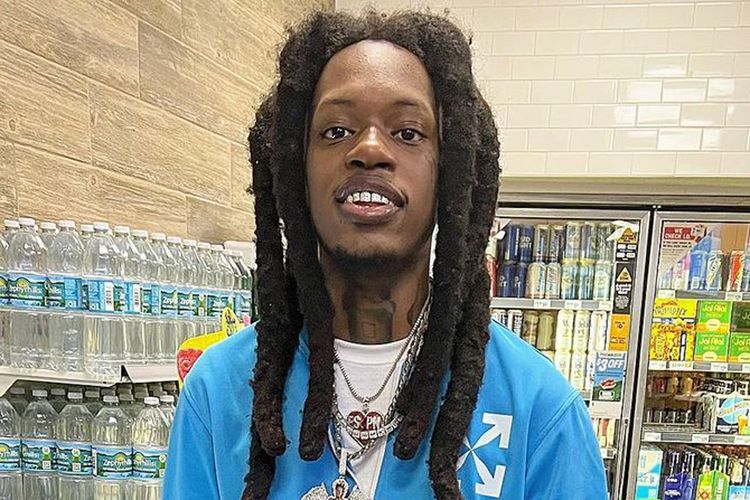
 Kay Flock: The Story Behind Bronx Drill’s Fastest Rise | Raptology Documentary
Some rap careers build slowly. Others feel like they are detonated into public view. Kay Flock’s rise belonged to the second kind. He did not arrive as a carefully polished mainstream product. He hit the rap conversation like a street signal amplified at maximum volume — raw, young, aggressive, instantly recognizable, and tied to a movement that already felt bigger than any single artist. By the time a wider audience caught up, the Bronx had already been speaking through him.
That is what made Kay Flock important so quickly. He was not just another rapper from New York trying to benefit from drill’s popularity. He became one of the faces of Bronx drill at the exact moment the borough was forcing itself back into the center of rap conversation. His records sounded urgent. His delivery sounded like confrontation. His songs felt built for crowded sidewalks, phone speakers, reaction clips, and neighborhood mythology all at once.
But what made his story so magnetic also made it fragile. The music rose fast. The notoriety rose even faster. And before the career had time to fully settle into something long-term, the legal pressure surrounding him began swallowing the narrative. The result is one of the most striking “what if” stories in recent rap: a young artist who looked ready to become a defining star of his lane, only for the streets, the courts, and the spotlight to collide before the story could mature.
The Bronx Was Already Ready for a New Voice
Drill in New York had already changed rap’s temperature before Kay Flock fully broke out. Brooklyn had established itself as a major center of the sound, and artists from that wave had already shown how local aggression could become national attention. But the Bronx was preparing a different chapter. Its artists sounded younger, more volatile, more online, and in many ways even more locked into neighborhood identity. Bronx drill felt less like imitation than escalation.
Kay Flock emerged right when that shift needed a central figure. He had the look, the energy, and most importantly the voice. His delivery did not sound smoothed out for radio. It sounded cramped with urgency, like every bar was being pushed out under pressure. That mattered. Drill has always relied on credibility, but credibility alone is not enough to turn a local rapper into a movement symbol. A voice has to feel memorable on first contact. His did.
Songs like “PSA,” “Being Honest,” and “Is Ya Ready” did more than generate numbers. They helped define an atmosphere. They made Kay Flock feel like somebody who was not waiting for the industry to validate him before acting like a star. His records carried the kind of natural aggression that makes fans believe the artist is not performing a persona but translating an environment.
That is why his rise happened so fast. The music did not need a long explanation. It landed immediately.
Need press for your music?
Get featured on Raptology and put your release in front of rap fans, artists, and industry readers.
Why the Early Records Hit So Hard
A lot of young artists can generate noise. Fewer can generate identity. Kay Flock’s best early records had identity in abundance. He sounded reckless in a way that felt convincing, but he also sounded composed enough to control the chaos. That balance is hard. Too polished, and drill loses some of its edge. Too wild, and the records lose shape. Kay Flock often found the lane between the two.
“PSA” became one of the clearest examples of that appeal. It was confrontational, quotable, and perfectly built for the internet age, where a song can function at the same time as a neighborhood anthem, a social media sound, and a piece of personal branding. “Being Honest” and “Is Ya Ready” helped deepen that effect. They were not just tracks gaining views. They were helping build a mythology around a young rapper who seemed to represent a borough’s newest wave in real time.
Part of what made the rise so intense was the sense that fans were watching the movement happen live. This was not a heavily delayed industry rollout where everyone pretended an artist was organic after the marketing money had already been spent. With Kay Flock, the buzz felt closer to ignition. You could see the attention expanding week by week, and that gave the rise a different kind of electricity.

Once that happened, the rest moved quickly. The success of the early singles helped him secure a Capitol deal, and it became clear that labels saw what the streets and the internet had already noticed: Kay Flock was not just part of the Bronx drill rise. He was one of its most commercially viable faces.
The Industry Opened the Door, but the Streets Stayed in the Story
Signing to a major label is supposed to be a threshold moment. It is supposed to suggest transition — from local heat to structured career, from neighborhood buzz to sustainable platform. But in rap, especially in street-rooted rap, that transition is rarely clean. The label can widen the stage, but it cannot instantly erase the forces that shaped the artist before the contract.
Kay Flock’s story exposed that contradiction almost immediately. Even as the industry started recognizing his star potential, the public narrative around him remained tightly tied to street affiliations, neighborhood rivalries, and the atmosphere that had already given Bronx drill its charge. In one sense, that closeness to the streets strengthened his appeal. Fans believed him because he did not seem disconnected from what he was describing.
In another sense, that same closeness made the future unstable. The very conditions that gave the music its force also kept the story vulnerable to collapse.
That contradiction is one of the central tragedies in modern drill. The authenticity people demand from the music often comes from environments that make longevity difficult. Listeners celebrate realism. The reality behind it can be career-ending.
“Not In The Mood” and “Shake It” Took Him Beyond the Borough
By the time Kay Flock appeared on “Not In The Mood” with Lil Tjay and Fivio Foreign, it was clear that his momentum was moving beyond local drill audiences. That record pushed him into a broader commercial space and showed he could hold his place next to artists with much more established national recognition. He did not sound overshadowed. He sounded like he belonged in the frame.
Then came “Shake It,” and with it one of the biggest moments of his career. The song linked him with Cardi B, Dougie B, and Bory300, turned the Bronx into the center of the visual and cultural rollout, and gave Kay Flock his highest-charting Billboard Hot 100 hit. At that point, the story was no longer just about a hot local rapper. It was about whether this young artist could become the defining breakout star of Bronx drill on a national level.
It felt possible. More than possible, it felt close. The songs had energy. The movement had visibility. The industry had interest. And for a moment, Kay Flock looked like the kind of artist who could translate raw neighborhood heat into a mainstream rap identity without losing the edge that made him matter in the first place.
Embedded from Kay Flock’s public Instagram page.
The Arrest Changed the Shape of the Story
A lot of rap careers survive controversy. Fewer survive the kind of criminal case that fundamentally changes the public conversation around the artist before the career has matured. When Kay Flock was arrested in late 2021 in connection with a fatal Harlem shooting, the story shifted immediately. What had been a rise narrative became something darker, heavier, and much harder to separate from the music itself.
Once federal racketeering charges followed, the situation moved beyond the level of a single headline. The case widened into something that tied his public identity to allegations around a larger violent street enterprise. Whether one viewed that through a legal lens, a cultural lens, or a hip-hop lens, the effect was the same: the momentum that had made him look like one of New York’s next defining artists was now frozen under a much more serious kind of attention.
This is where Kay Flock’s story becomes more than a celebrity crime headline. It becomes a document of how quickly modern rap careers can be interrupted when the artist is still too close to the forces that made the music feel real. The songs did not disappear. The fan interest did not disappear. But the career’s center of gravity changed. Music was no longer the only thing shaping how people understood him.
In some ways, that is what makes his case so haunting. The rise was not hypothetical. It had already happened. The question was not whether he had talent. The question became whether he would have enough uninterrupted life left outside a courtroom to actually build on it.
Promote your music video on Raptology
Get coverage, placement, and visibility for your latest release on one of hip-hop’s most active indie media platforms.
Why the Case Hit So Hard in Rap Culture
There are certain artists whose legal troubles feel separate from their music. Kay Flock was not one of them. His identity as an artist had already been tightly fused with Bronx drill’s atmosphere, crew politics, and neighborhood energy. That meant the case did not feel like an outside interruption. To many people, it felt like the darkest possible extension of the same world the music had been describing all along.
That is part of why the story remained so widely searched, debated, and discussed. Fans were not just asking what happened legally. They were asking what it meant culturally. Was Kay Flock a cautionary tale about how fast drill can escalate from viral energy to permanent damage? Was he a symbol of a system determined to fold rap narratives into criminal frameworks? Was he both? The debate itself became part of the story.
And then there was the question of timing. He was still so early in his career. The D.O.A. Tape had helped formalize his rise, but the catalog was still in the process of becoming something larger. That matters because it makes the loss feel more unfinished. There was no long era to look back on, no fully developed legacy phase, no complete commercial arc. There was promise, acceleration, and then stoppage.
From Breakout to Sentence
By March 2025, Kay Flock had been convicted on racketeering conspiracy, attempted murder, assault with a deadly weapon in aid of racketeering, and firearm-related counts, while being acquitted on the murder charge connected to the 2021 shooting after his defense argued self-defense. Then in December 2025, he was sentenced to 30 years in prison. That sentence transformed what had already felt like a stalled career into something much more final.
At that point, the question of momentum became almost painful to revisit. Before the case swallowed the narrative, Kay Flock had the kind of trajectory that makes labels, media outlets, and fans start planning for a bigger future. He had a distinctive voice, strong records, borough identity, controversy-driven visibility, and the kind of youth that makes the industry imagine scale. A 30-year sentence forces all of that into a different category entirely. Not delayed. Not paused. Redefined.
That does not mean the music stops mattering. If anything, it can make it feel more charged. Songs that once sounded like the beginning of something now sound like evidence of a future that never got the chance to fully happen. Every breakout record becomes shadowed by the knowledge of where the story ended up.
The Unfinished Legacy of Kay Flock
Rap has always been filled with unfinished stories, but some hit harder than others because the potential felt so immediate. Kay Flock belongs in that category. He was not a veteran whose best years were already behind him. He was one of the youngest, loudest symbols of an active movement that still felt like it was expanding. That is what makes his story linger.
He also remains important because Bronx drill itself needed central faces, and he became one of the most visible among them. When people talk about that period in New York rap — the era of neighborhood tension, fast-moving songs, social-media-fueled notoriety, and a renewed sense that the Bronx was dictating part of the national conversation — Kay Flock cannot be left out. His name is embedded in that chapter whether the future of his own career is still active or not.
In a way, his legacy may end up existing in two forms at once. One is musical: the records, the delivery, the feeling of a young rapper arriving with enough force to bend attention toward himself almost instantly. The other is symbolic: the reminder of how thin the line can be between breakout energy and irreversible consequence when the music is still bound so tightly to the life behind it.
Conclusion: The Sound of a Future That Got Interrupted
Kay Flock’s story is not memorable simply because it is tragic. Rap has too many tragic stories for tragedy alone to explain why one lingers more than another. His story stays in people’s minds because the rise felt so real, so immediate, and so close to becoming something even bigger. He was not just buzzing. He felt central to a moment.
That is what gives the story its weight. The Bronx had found a young star loud enough to represent its newest drill wave on a national level. The industry had started opening doors. The songs were already moving beyond local legend into commercial fact. Then the legal system closed around the narrative before it could fully mature.
So when people still search Kay Flock’s name, they are not only looking for court updates or old songs. They are looking at one of rap’s sharpest recent examples of interrupted momentum. A voice that sounded too big to ignore. A rise that came too fast to miss. And a future that, for now, remains frozen in the same unresolved question that hangs over so many modern drill stories: what might this have become if the music had been given time to outgrow the pressure around it?
Natalia is a Rap and Hip Hop enthusiast. After graduating from The New School of New York’s Public Relations Program and taking a course in Journalism at Michigan State University, she decided to dedicate her life to the music publishing business and to the discovery of new talent. She helps new artists gain exposure to the masses via online marketing and publications.