 Written by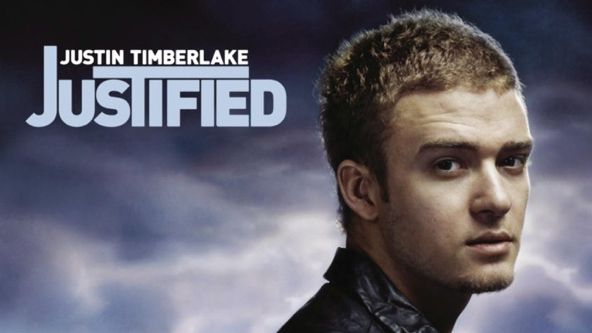
Meet Justin. He is a 21-year-old white boy from down South, with blue eyes and curly hair he can’t figure out how to style yet. He loves basketball and golf, Michael Jordan, Halo on his Xbox, fast cars, weed, and women. He calls his mom every day and tells her everything, even things about sex she doesn’t want to hear. He is not religious, despite being raised in a Memphis Baptist church, but he has a strong sense of “spirituality,” by which he means he lights a candle at the end of a long day. His sense of humor is ribald, flirtatious; he says he doesn’t really masturbate, mostly because he’s a perfectionist, and is sex with yourself the best you can do? Most of all, he loves music. He listens to Elvis and Donny Hathaway, Eminem and Coldplay, Al Green and his idol, Stevie Wonder; he claims, with confidence, that “real consumers” don’t care about genres.
Actually, you’ve already met Justin. He’s one-fifth of the most popular boy band in the United States, if not the world. This band sells millions (and millions) of records, is all over pop radio and sometimes what the industry calls “urban” stations, and holds the hearts of a militant demographic: girls under the age of 18. Justin is considered the cutest, the most talented; he is allowed to beatbox during their concerts. What the band does is not respectable at this point in time, but they do have power. Three years ago, when Justin was just 18, the band engaged in a vicious, victorious legal battle with their financial backer, who was making profits beyond his entitlement. From that, Justin took an important lesson: Be in control of your product—yourself. Be the one who’s getting the checks. Do not be the sucker who is exploited for doing what he loves.
No score yet, be the first to add.
Like the woman who publicly broke his heart weeks after he turned 21, Justin is in an interesting transitional moment. He’s not a boy, not yet a man, with expectations to subvert and fulfill. For his ex-girlfriend, that in-between state is confusing terrain; despite (or because of) her superstardom, she often seems lost, albeit glamorously. For boys, it will always be different. All of the above—the girls, the looks, the attitude, the voice—means Justin is being given a gift as he enters adulthood: his chance. He’ll get a lot of chances, as it turns out, but in 2002 here’s what that means. He finally gets to show the world who he is—and how much money that can make.
Years later, when Justin tells a story on Hot Ones about how Marilyn Manson called Justified, his debut solo album, a work of genius, he sounds like an aging star exaggerating, misremembering some ass-kissing as genuine praise. But that anecdote does describe how Justified felt at the time. By the end of 2003, most people, even cool ones like André 3000, agreed that the solo project from the cutest boy in *NSYNC was actually kind of great. Also, he was no longer cute—he was hot. And the singles were little monsters, catching hold and not letting go. (Chino Moreno from Deftones, to SPIN magazine: “I listen to [Justified] every day!”) Millions of copies and two successful concert tours later, with a beautiful movie star girlfriend to boot, Justin had a remit by his 23rd birthday to be the new prince of pop, and he would oblige us for the decade to come, putting his proverbial dick in a box for the world to open.
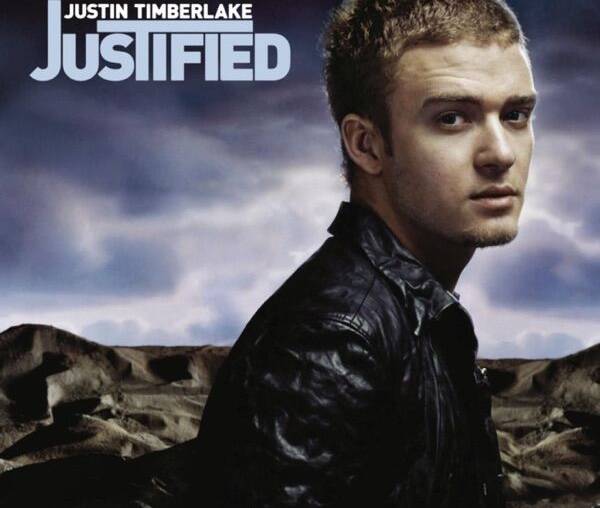
With its punny title (“I named it for myself”) and cover art like a Mac OS X background, Justified took just six weeks to record, a feverish creative incubation that produced 20 songs, 13 of which ended up on the album. In the months before its release, almost a dozen collaborators were teased to the press—Usher, P. Diddy, and Nelly, for starters—but only two rumored partners made the final cut: the Neptunes and Timbaland, whose productions were defining the hot pop-rap sound of the moment. Justin’s savvy, even at that age, could not be reasonably separated from his talent; his taste was as important as his vocal range. Despite telling journalists that he wasn’t trying to mooch off anyone’s reputation (semantics!), he looked at the darkness of those Clipse records, the tweaked-out wolfishness of “Shake Ya Ass,” and the mad-scientist freedom of Missy Elliott’s most recent opuses, and thought, Yeah, I can hang.
Justin already knew that he, Pharrell Williams, and Chad Hugo had chemistry, from hanging out with P in the club but also from their work together on *NSYNC’s “Girlfriend.” The Neptunes’ lush minimalism—those dry drums, the many-layered synths, and real strings—was a natural fit for his can-do professionalism. “Justin could have been raised in the Black church,” Pharrell said more than once to the press, which meant functionally that Justin could sing every part, both the smooth soul highs and the raspy rock lows. It also meant they would be drawing from the Black music of a generation ago, like Earth, Wind, & Fire, Al Green, and of course, Michael, Stevie, and a little bit of Pharrell’s favorite, Prince. According to Justin, the recording sessions that ensued were like “that period of time back in the ’60s and ’70s, when musicians got together and just jammed and worked out of inspiration.” (Justin also would later admit to smoking a ’60s and ’70s amount of weed at the time; when he became the first celebrity to be Punk’d by Ashton Kutcher, he cried the way you would if you were too damn high.) All that jamming produced a careful combination of the mood-boarded past and the playful present.
It certainly seems like the key to a white pop star’s “brave creative choices,” as some critics called Justified, was just imitating Black artists. Back then, Justin did this often: How can we forget what Britney Spears told us in her memoir about him saying “fo’ shiz, fo’ shiz” in front of Ginuwine? (Ginuwine has no recollection of this, for what it’s worth.) But to be kinder to the past—a foreign country with plenty of other white boys doing the same—maybe it was as simple as Justin knowing a good song when he heard it. (“I think Jive should hire me as A&R,” he once joked.) All but one of the tracks that the Neptunes contributed to Justified were originally written for Michael Jackson’s HIStory Volume I and Invincible. Michael rejected the Neptunes’ work fully, telling them via proxy that he wanted something closer to “Superthug,” their hit for N.O.R.E., but that didn’t deter Pharrell and Chad. They rewrote the songs with Justin in mind; he ran with it.
This hand-me-down story either helped or put a dent in Justin’s credibility, depending on which side of the fun police you were on. The fedora on the single art for “Like I Love You” (and in the debut performance at that year’s decidedly odd Video Music Awards) raised some eyebrows: Did this guy actually think he was… ? But Michael himself was half-retired, or at least sounding like it—were we supposed to turn down a hot meal? Today, with the benefit of some time and Justin’s own subsequent humbling, it all looks more like evidence of Justin’s immense talent for mimicry, his then-future career as an SNL fixture and semi-serious film actor. He sounds uncanny on the revamped Michael tracks, edging sweetly close to camp and knowing exactly what level to play. Derivative, sure, but a good derivative—both the Latin-esque call-and-response of “Señorita” and the sneaky snares and Spanish guitar of “Like I Love You” will stay in your head for days, if you’re not careful. “Nothin’ Else” sounds like the soundtrack for a movie about a Stevie Wonder type enjoying the perils of fame; the warm and familiar flow waives the need for originality. And the oddly weightless “Rock Your Body” is the bellwether for all bar-mitzvah hits to come, from Bruno Mars to the blurred lines of Robin Thicke. It’s the slickest Justified single of them all, with a “Rock With You” guitar riff, swooning (then dirty) synths, and a high come-on/dance-instruction ratio in the lyrics; it can make you feel as if you’re at a city parade and a private afterparty all at once.
However, the more interesting songs were made with Timbaland. Who wouldn’t want to play around in the studio with Timbaland? By 2002, his list of production credits already read like the King James Bible of the era’s hip hop and R&B: Behold Ginuwine’s “Pony” and “Tell Me Do U Wanna,” Aaliyah’s “Are You That Somebody?” and “Try Again,” Jay-Z’s “Jigga What, Jigga Who” and “Big Pimpin’,” and Missy Elliott’s everything, from “The Rain (Supa Dupa Fly)” to the brain-damaged bhangra-rap of “Get Ur Freak On.” Of the Justified album tracks, the standouts are his playthings: the crudely saucy “Right for Me” and “(And She Said) Take Me Now,” a sort-of duet with Janet Jackson that Justin wrote partially from the perspective of a woman. (“Get real wet if you know what I mean”—yes, understood.) Both songs are at their most enjoyable when you can feel Timbaland’s great mind buzzing: “(And She Said) Take Me Now” has an out-of-nowhere coda that is James Brown but chiller, with Jay-Z’s iciness. “Right for Me” features a Timbaland idea that he would use again later: Take the rhythm of Missy’s “Gossip Folks” verses and slow it down for a smooth pop vocal. Nice and relaxed, sidling up to the beat; like the performer he is, Justin nails this.
But Justin was not just plugged into these concepts as a performer. He is listed as the co-writer on every Justified track, and his lyrics are full of his boyish preoccupations. Like many 21-year-old boys, he is sometimes obnoxious; he is also annoyingly charming. As a songwriter, he has said that he always tries to have it both ways—his lyrics must be specific to him and his current moment, while staying ambiguous enough to fit a stranger’s circumstances. Later, that everything-for-everyone goal would get him into the plastic territory of the Trolls soundtrack, but within the confines of a straight R&B record, it works. His most transcendent Timbaland collaboration, “Cry Me a River,” is still the best attempt at scaling that impossible height, merging humor with snide anger, slavish compulsion with liberation. It was a defining hit that set the bar for every Justin single that came next; it still sounds like a sublimely stupid symphony, with Timbaland’s special mix of synths, beatboxing, and rain, Gregorian chants and vaguely Arab riffs, girls and men alike going “Oh!”
It’s also one of those songs that becomes fuck-off unbelievable when you hear how quickly it was born. According to Justin, he walked into the studio that day in a bad mood, code for a hangover or Britney bitterness, or likely both. Throughout 2002, Justin was being hounded to explain what ended his three-year relationship with the biggest female pop star in the world. And while he was always restrained in his answers, if not classy, nothing he said seemed to satisfy the public. He was rebounding with Alyssa Milano, flirting shamelessly with Britney’s rival Christina Aguilera, and unartfully bragging about more than a duet with Janet. Timbaland wanted to redirect this manic energy, so on the fly that day, he beatboxed the whole thing to Justin, who immediately blacked out and got to work. Hours later, with the help of producer Scott Storch, they had the completed track; certain people just hear the world differently. “Cry Me a River” remains a cold-hearted R&B classic, even divorced from the tabloid frenzy of its moment. Don’t rewatch the video if you don’t want to feel bad.
For an album with only one true skip (the unlistenable Brian McKnight production “Never Again,” a narrow piano ballad that makes Britney’s “Everytime” sound like Anna Karenina), Justified is frozen in amber. It sounded like right now back then; listening to it today evokes its time almost to a fault. For all its efforts to define and introduce Justin, the album describes a person who ceased to exist fairly quickly. More cynically, you could say that once Justin had the reputational glow of making a good R&B album, he didn’t need to stay in the “urban” market. The artist he would turn out to be was showcased on his next album, the quick-footed and surprisingly beautiful FutureSex/LoveSounds, which produced three singles that went to No. 1 in the U.S. (an ambition Justified didn’t manage to fulfill) and one risible but iconic catchphrase (we all, in our own ways, are bringing sexy back). FutureSex/LoveSounds incorporated moody guitars, trippy robot disco, and more self-confident collaborations with rappers like Three 6 Mafia and T.I.; with a shaved head and the aura of Terry Richardson behind him, Justin fashioned himself successfully as an uber-mensch for white men desperate to be down. He always got what he wanted, and looked great in a suit. This persona had already served him well, during what we all agreed to call Nipplegate: when he non-consensually tore Janet Jackson’s costume at Super Bowl XXXVIII, and sent the nation into puritanical septic shock. Nobody blamed Justin, everyone punished Janet. He has since apologized for benefiting from societal standards, but the idea that Justin only understood this imbalance over 15 years later is, respectfully, a stretch. Self-awareness was his whole deal; he would later play with his image as the savvy exploiter in his two best film performances, as the notorious Sean Parker in The Social Network (“Drop the ‘the’—just Facebook”) and as Jim, the guileless folkie who writes one of the best stupid novelty records I’ve ever heard, in Inside Llewyn Davis.
As he says at the end of “Like I Love You,” he used to dream about this when he was a little boy. In retrospect, what Justin did with his stardom revealed the scope of his imagination. He hosts SNL for the first time at the age of 22 and goes on to host four more times. He kicks it with the funniest boys in school, the Lonely Island, co-writing a few instant-classic digital shorts (one of which wins him an Emmy) and popping up in Pop Star: Never Stop Stopping, their wildly good movie that might be about Justin himself. He records with Snoop Dogg, Ciara, Duran Duran, Sergio Mendes, and Madonna, and writes for Rihanna and Beyoncé, giving the latter a beat he drums on some buckets. He acquires an ownership stake in his hometown NBA team; he designs Elvis-inspired clothes with his childhood best friend Trace, and Air Jordans that later go on to resell for $10,000; he acts in a number of movies, and stars in a candy-drunk children’s franchise that gives him an Oscar nomination for Best Original Song—the could-be-about-anything “Can’t Stop the Feeling!” is probably his most-played single; he plays so much golf. He is, needless to say, obscenely rich.
No one can be young, dumb, and full of it forever. Maybe we don’t talk enough about how hard it is for male sex symbols to age, too. If you are everything to everyone for long enough, the music can suffer; you become self-parody, just a gigolo. Justin’s talent for making famous friends and roping them into his work has kept his projects moving (if nowhere near the same quality) in the last decade. Other colts, even one also named Justin, have taken his place in the race for pop ubiquity. The young cop who pulled him over in Sag Harbor for drunk driving didn’t even know who he was, even when he protested that this DWI would “ruin the tour.” And even if, based on my own limited polling, this is not a sign of total washedness, you do have to wonder where the time goes. There will never be another chance to meet Justin Timberlake. But there could still be a chance—like there always is for someone like him—to surprise us.
Additional research by Deirdre McCabe Nolan.