 Written by
 Julio Foolio: Jacksonville War Music, Viral Infamy, and the Fatal Cost of Diss Culture | Raptology Documentary
Some rappers rise because the music industry sees commercial promise. Others rise because the streets, the internet, and the culture cannot look away. Julio Foolio belonged to the second category. He was not polished for mass acceptance. He did not soften his image to broaden the audience. He became known because he was willing to say things most rappers would never dare to say on a record, especially while the people and funerals behind those lyrics were still painfully real.
That is what made him unforgettable. It is also what made his story so dark. Foolio was not just a Jacksonville rapper with a loyal fan base and a catalog of raw street music. He became one of the central figures in one of the most visible and deadly rap feuds of the social media era. His music turned local violence into viral content. His enemies did the same. The result was a version of rap notoriety that felt less like entertainment and more like open conflict uploaded in real time.
By the time the wider public learned his name, Foolio was already carrying years of trauma, retaliation, neighborhood loyalty, and public disrespect that had moved far beyond music. Search traffic around him never came from just one thing. It came from the songs, the beef, the diss records, the shootings, the survival, and eventually the question that follows too many rap stories like his: how long can somebody keep turning war into content before the war answers back permanently?
Jacksonville Was Already a Pressure Cooker
Before the national audience started dissecting Jacksonville rap, the city already had its own hard realities. The local scene was not simply about talent, ambition, and regional pride. It was also shaped by gang conflict, retaliation, neighborhood divisions, and a youth culture that had learned to turn social media into a battlefield. By the time Foolio came into wider view, Jacksonville was not just producing music. It was producing a brutal hybrid of street mythology, diss culture, and online escalation.
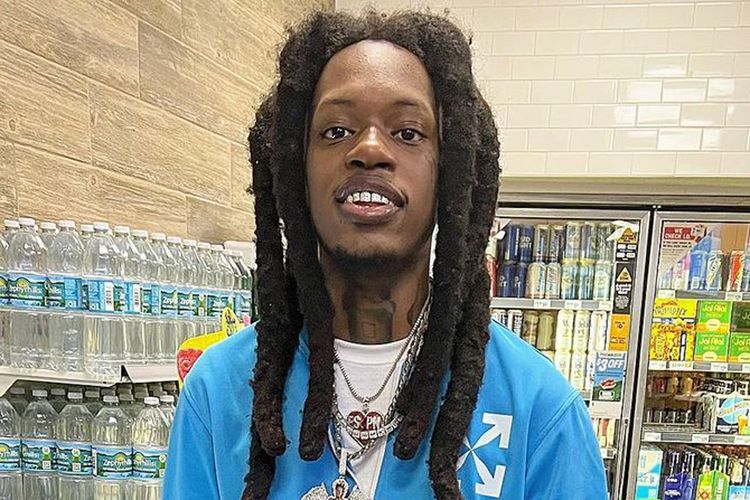
Foolio emerged from that world as one of its most recognizable voices. Born Charles Jones, he grew up in Jacksonville and became deeply tied to the city’s 6 Block identity and the broader KTA side of one of its most notorious feuds. He did not present himself as detached from the conflict. Quite the opposite. His image, his music, and his public persona were all built around the fact that he was inside it.
That authenticity helped him cut through, but it also made the story more dangerous from the start. Listeners were not just hearing a rapper describe violence from a distance. They were hearing somebody who sounded embedded in the exact world that had already buried too many people around him.
Embedded from Julio Foolio’s public Instagram account.
The Rise Was Built on Rawness, Not Safety
Foolio’s music never sounded carefully packaged. That was part of the appeal. The records felt direct, confrontational, and emotionally damaged in a way that made them believable to the people who cared most about that kind of music. He did not rely on polished crossover instincts. He relied on provocation, authenticity, and the fact that his songs sounded like updates from an active war zone rather than neatly crafted fiction.
Jacksonville’s rap scene began drawing broader attention when its internal conflicts became too visible to ignore. As outlets and audiences started noticing the city, Foolio became one of the names hardest to avoid. He was central to the tension with Yungeen Ace and the wider ATK versus KTA dynamic, and as that feud became more public, the music attached to it became more viral.
That kind of rise is powerful, but it is unstable. Fame built on conflict can spread faster than fame built on artistry alone because people are not just consuming songs. They are consuming danger, disrespect, and real-world consequence. Foolio understood that dynamic, and he leaned into it. The problem was that leaning into it only made the story more combustible.
Need press for your music?
Get featured on Raptology and put your release in front of rap fans, artists, and industry readers.
When Diss Culture Became the Main Attraction
A lot of rap beefs are more theatrical than real. What made Jacksonville different, and what made Foolio’s story so haunting, was that the line between music and retaliation was often too thin to pretend otherwise. Diss songs did not feel symbolic. They felt like extensions of grief, disrespect, and revenge. Names of dead people were used openly. Memorials turned into lyrical targets. The internet rewarded every escalation with more attention.
Foolio became one of the most recognizable figures in that ecosystem because he seemed almost built for it. He was taunting, defiant, and often fearless in a way that was magnetic to some listeners and disturbing to others. Songs connected to the Jacksonville feud drew massive interest not just because they were catchy or shocking, but because the public sensed that the stakes behind them were real.
This is what separated Foolio from a lot of other controversial rappers. His notoriety was not just a branding decision. It was tied to a city where deaths, retaliation, and rap visibility were all colliding in full view of the internet. That made his music impossible to fully separate from the violence around it.
When people searched his name, they were often searching for more than songs. They were searching for the next development in a conflict they understood as ongoing.
He Survived Too Much for the Story to Feel Safe
Part of what gave Foolio his aura was the fact that he had already survived repeated danger. Over the years, news around him often involved shootings, near-misses, and the kind of public awareness that suggested death was never far from the narrative. That repeated survival became part of his identity. It made him look reckless to some, resilient to others, and almost mythic to fans who viewed him as somebody who kept escaping a fate that felt increasingly close.
But survival can distort the way danger feels. The more a person lives through close calls, the easier it can become to treat risk like routine. In Foolio’s case, that pattern seemed to deepen the sense that the conflict around him was not cooling down. It was just pausing between chapters.
That is one reason his death hit so hard when it finally happened. The public had gotten used to the idea that Julio Foolio was constantly in danger and somehow still moving. Once somebody like that is killed, the shock comes not from learning the danger was real. It comes from realizing the luck finally ran out.
Another public post embedded from Julio Foolio’s account.
The Tampa Killing Turned a Feud Narrative Into a Final One
In June 2024, just after celebrating his 26th birthday, Foolio was killed in Tampa in what authorities later described as a targeted, gang-related attack. According to reporting and law enforcement statements, he had first been at an Airbnb gathering, was forced to relocate after occupancy issues, and was then shot in a hotel parking lot. The circumstances sounded grimly familiar to anybody who had followed his story for years. Public visibility, movement, enemies, and a known pattern of conflict all converged in one fatal moment.
His death changed the way the entire Jacksonville rap story was understood. What had already been one of the most disturbing examples of diss-culture escalation now had an ending that made it impossible to dismiss as performance. The violence that listeners had spent years consuming through songs, clips, rumors, reaction videos, and social media had reached another irreversible point.
That is the real horror in Foolio’s story. It was never only about a rapper being controversial. It was about a system of attention where real losses kept getting recycled into content until the content itself became part of the cycle.
Promote your music video on Raptology
Get coverage, placement, and visibility for your latest release on one of hip-hop’s most active indie media platforms.
The Arrests Confirmed What the Music Had Been Warning About
In the weeks and months after Foolio’s death, authorities announced multiple arrests tied to the case, describing the killing as targeted and related to gang retaliation. Later developments brought the total number of charged suspects to five. Then, in late 2025, one defendant, Alicia Andrews, was found guilty of manslaughter while being acquitted of conspiracy to commit murder.
Those legal developments mattered because they reinforced what many observers had already believed: this was not random chaos. It was part of an ongoing structure of conflict that had already shaped the music, the city’s rap politics, and the fear around certain names. The criminal case gave the public one more reason to revisit Foolio’s catalog and story, because now the aftermath was unfolding through courtrooms as well as songs.
For search traffic, that meant his name never really disappeared. People kept looking him up not only because of the legacy of the music, but because the murder investigation, arrests, and trial developments kept reopening the same dark chapter.
Why Foolio Stayed So Searchable
Some rappers stay relevant because the catalog is enormous. Others stay relevant because the story keeps mutating. Foolio belongs more to the second category. His name remains highly searched because it sits at the intersection of multiple things the public cannot stop revisiting: true crime, rap beef, drill culture, viral disrespect, gang conflict, and the uncomfortable question of how much modern hip-hop audiences participate in amplifying these cycles.
He was not a side figure in that conversation. He was one of the faces of it. The Jacksonville feud era cannot be told honestly without him. Neither can any serious conversation about the way social media monetized violence-adjacent rap content during that period.
That is why Foolio’s story carries more weight than a standard rise-and-fall biography. It is not only about one artist’s choices. It is also about a culture that increasingly blurred the line between witness, audience, and participant. His life became content. His enemies’ responses became content. The deaths around that world became content. Eventually, his own death became content too.
Conclusion: The Music Outlived Him, but the Warning Stayed Inside It
Julio Foolio’s story is not just the story of a Jacksonville rapper who built an audience through controversy and raw street records. It is the story of how modern rap can turn local bloodshed into national fascination without reducing the danger behind it. He came out of a city already under pressure. He made himself impossible to ignore. And in doing so, he became one of the clearest symbols of a rap era where songs, disrespect, and retaliation were feeding each other in public view.
That is why his name still pulls attention. The music matters. The personality mattered. But the bigger reason people keep returning to his story is that it feels like both a biography and a warning. Foolio represented a version of rap fame that was immediate, viral, and deeply unsafe. The same authenticity that made his music hit also kept him tied to a world that offered no real protection.
In the end, that may be the darkest truth behind his legacy. He did not simply document the war around him. He became one of its most visible voices, and eventually one of its most public casualties.
Hulda Hicks was born in Brooklyn, NY in the late ’70s, at the time when Hip-Hop music was just emerging as an art form. Her entire life was influenced by the culture, having grown up in the epicenter of the creative movement.
As a trained musician and vocalist, Hulda got exposed to the industry in her twenties and has worked on projects with iconic figures such as the Chiffons, the Last Poets, and Montell Jordan, to name a few. Her passion for music extended past the stage on to the page when she began to write ad copy and articles as a freelancer for several underground publications.
A written review from “Jubilee Huldafire” is as authentic as it gets, hailing from one creative mind that has a unique voice, on paper and in person.