
 Written by
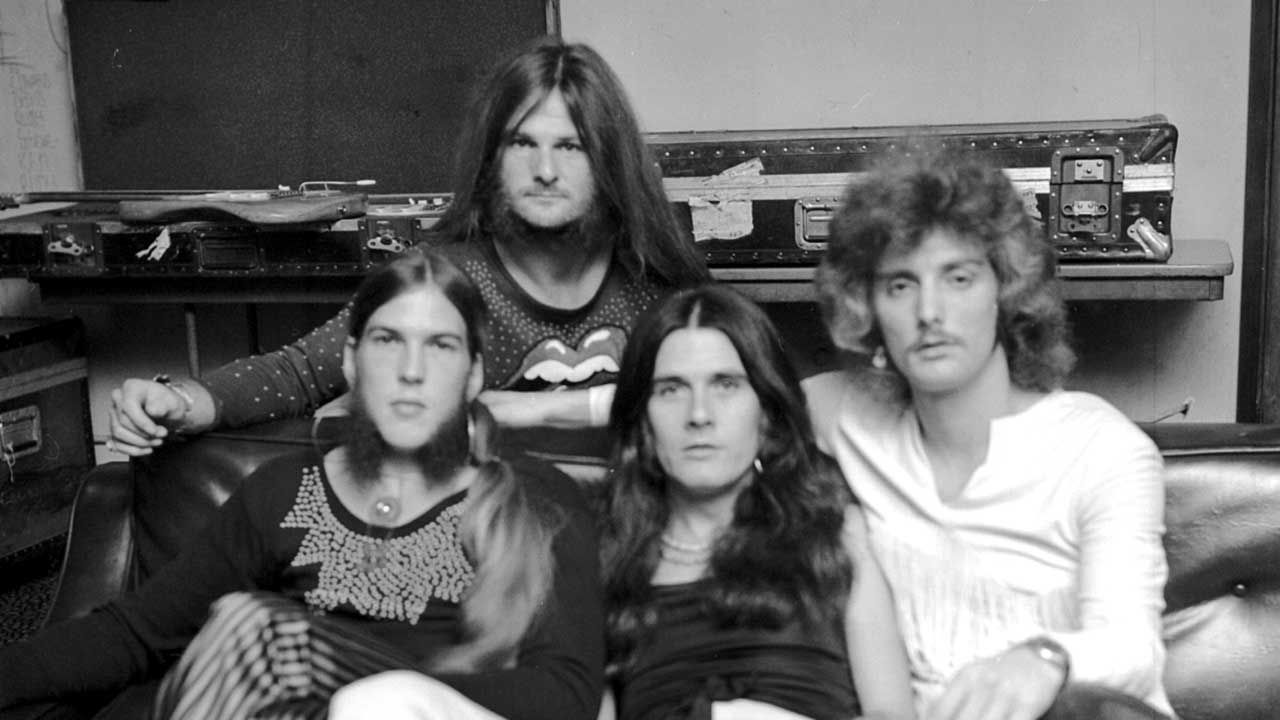
 They emerged from a Virginia university in 1973 with great acclaim, but Happy The Man never reached the heights of their UK and European counterparts, and disintegrated six years later. Behind them they left two underrated records – and the prospect of having become Peter Gabriel’s post-Genesis band.
Both of American prog band Happy The Man’s mainly-instrumental albums – their 1977 self-titled debut and 1978 follow-up Crafty Hands – were credible rivals to the abundance of great material emanating from prog’s bigger, British-born names.
“We were huge fans of Yes, Crimson, ELP, Tull and all the main British prog bands, but we also all had a love for classical music,” says guitarist Stanley Whitaker.
Article continues below
“We liked Debussy and Ravel and Stravinsky, so all of that had an influence on us. The goal for Happy The Man was that we didn’t want to sound like any of those other bands if we could help it. We wanted to have our own sound, for it to be as different and unique as we could make it, and to not really give a crap about commerciality at all. That was to our detriment!”
“Our theory was always, ‘if we love it, someone’s going to love it!’” concludes bassist Rick Kennell. “‘Someone somewhere is going to get it, right?’ We were wrong!

“Our process was just different. We didn’t really improvise. We locked everything in the same way every night, because we’d spent so much time crafting our arrangements.”
Part of the magic of Happy The Man’s early efforts stemmed from the fact that they had three distinct writing talents in the band. Alongside Whitaker’s compositions, material came from both keyboard maestro and occasional flautist Kit Watkins (later of Camel), and from keyboardist and saxophonist Frank Wyatt.
The combination of three mercurial creatives led to a sound that rarely repeated itself, while covering a huge amount of musical ground. “You know, we were blessed to have some very different writers,” Whitaker muses. “The songs would all go through the blender with the whole band, and somehow we made it all sound like the same group.”
It could have been different, of course. Happy The Man folklore offers the tantalising fact that they were being lined up to become Peter Gabriel’s backing band.
Back in 1976, after being fed tapes of the nascent proggers’ early material, the ex-Genesis frontman was considering recruiting them as footsoldiers for the launch of his solo career. Despite meeting up to see if the right chemistry was there, the Americans opted to stick with their own music.

“I think in a roundabout way, he helped us get signed to Arista,” says Whitaker. “Because Arista were like, ‘We don’t want Peter to take you guys away. We’re about ready to sign you!’”
“We told Peter, ‘Man, we’ll do your thing – but how about we open up for you live or something? Can’t we figure this out?’ Because we were all just such huge fans. But yeah, it didn’t work out. He wanted us exclusively.”
The only American bands considered prog were Kansas and Styx… we were like, ‘Nah – look over here!’
“It was like, ‘OK, are we going to work on our stuff or his stuff?’” notes Kennell. “Everybody said, ‘Our stuff! We just like it better.’ Peter’s new songs were very three, four, five chords, you know? It wasn’t anything that got our juices flowing. I suppose if it had been, it might have all gone a different way.”
Happy The Man’s hopeful early days stumbled to a halt in 1979. Crafty Hands was never given a proper release in Europe, which put an end to their dreams of touring overseas, and stymied the record’s sales.
There have been various after-the-fact releases since the split, but fortune never favoured the band, with the US mainstream’s aversion to progressive rock doing them no favours at any point.

“I think the only American bands considered prog were Kansas and Styx,” Whitaker agrees. “They did have some very sweet prog elements, but they had killer vocals, you know, to get them into more of the mainstream. But they were what was considered progressive rock in America, and we were like, ‘Nah – look over here!’”
Kennell reflects: “I don’t think it would have mattered at all if there had been more enthusiasm in the US, because right after Crafty Hands was released in 1978, it was the disco/punk era, which was ushered in very ceremoniously by labels, and just took over
“Every prog band I knew at that point decided to just stop doing anything for a while until things calmed down, and it took a few years. If Crafty Hands had been released in Europe, maybe something might have happened – but the whole prog thing just took a dive.”