 Written by
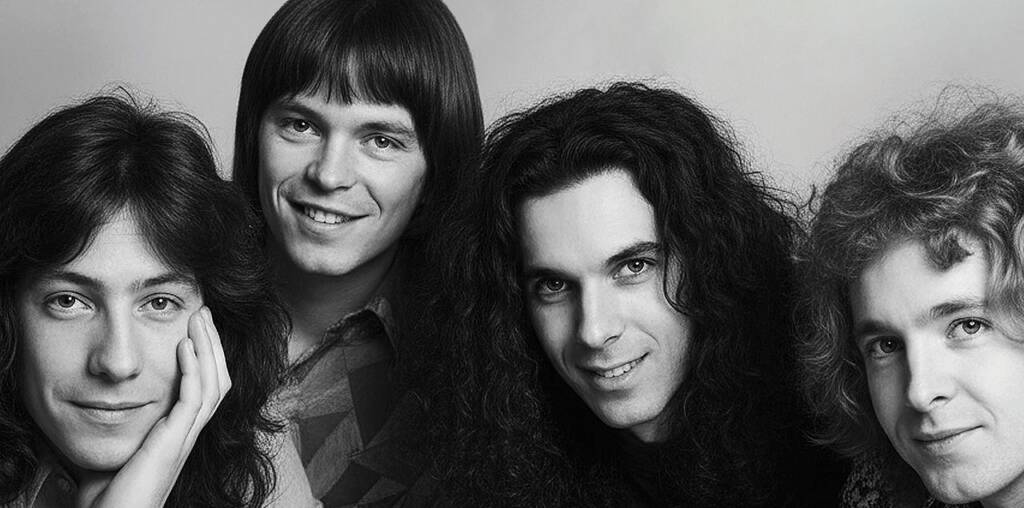
 Darryl Way’s Wolf were a short-lived but fascinating group, packed full of talent. With a recently-released box set rounding up the band’s trio of studio albums, original members Darryl Way, John Etheridge and Ian Mosley chat to Prog about auditions, studio nightmares, and showing off in the best possible taste.
As with many a fine prog player, Darryl Way’s musical journey began in the classical world. ”I started playing the violin when I was eight,” he says, “and I kind of took to it.” He studied at Darlington College of Arts and later the Royal College of Music, but left the latter establishment after a year: “I was seduced by the rock scene in London.”
Way and keyboardist Francis Monkman formed Curved Air in 1970. They toured nationally and recorded three successful albums, including Top 10 debut Air Conditioning – one of the first ever picture discs to be pressed – but cracks began to emerge following their third album, 1972’s Phantasmagoria.
Article continues below
“Francis and I began to have slight differences,” Way says. “I think the stuff he did was absolutely brilliant, but he was pushing to go really quite experimental, and I was a little bit more mainstream.”
Monkman left the band in 1972, and Way soon followed, with designs on starting a new group. “I left with the idea that. ‘If I’ve done it once, I can do it again,’” he says. Recruiting players involved “a real classic advert in Melody Maker for auditions – ‘no time wasters!’”
The first person to join was drummer Ian Mosley. “He was 17 and he was absolutely brilliant,” Way recalls. “Then I found the bass player in a covers band in a club in Piccadilly – that was Dek Messecar.” The last to audition was guitarist John Etheridge, who, Way remembers, “arrived in his RAF greatcoat with a little canvas bag slung over his shoulders. As soon as he started to play I thought, ‘Wow, how does he do that?’ He was a phenomenal guitarist. Stupendous. Still is!”
Etheridge had been working with London-based bands for some time, including Rush Release, Deep Purple offshoot Warhorse and jazz-fusion band Icarus. He can still recall the exact moment he fell in love with guitar, back in 1960: “It was watching The Shadows – Hank Marvin, Bruce Welch – playing a tune called The Savage, doing their steps, and I was absolutely transfixed.”
Etheridge taught himself to play on a small acoustic; back then, formal lessons were hard to come by. “People my age were all self-taught. We watched other people. We’d go to gigs and try to clock people, or listen to records and try to work things out. I think that’s one of the reasons we’ve all got an individual way of playing – there was no orthodox technique anyway.”
He continues: “I was getting tons of gigs because I was playing something different. People had almost had enough of the dominant mode at the time, which was Clapton style; so when I arrived back in London in 1970, I got work quite quickly.” He saw Way’s Melody Maker ad and went to an audition. “When I got home, Darryl phoned and said, ‘I like your playing, but I don’t like your image!’”
Having absorbed the techniques of jazz fusion guitarist John McLaughlin, Etheridge’s distinctive sound would form a key part of Wolf. “‘Pioneering’ sounds a little overblown,” he says. “But I was at the forefront of early jazz rock. I don’t know if Darryl had it in mind from the start, but when he heard me, he obviously thought, ‘Well, we could do this sort of semi-instrumental Mahavishnu Orchestra thing.’”
![Darryl Way's WOLF ► Toy Symphony [HQ Audio] Saturation Point 1973 - YouTube](https://halloffans.com/wp-content/uploads/2026/04/maxresdefault-5.jpg)
Etheridge formed a ready partnership with Mosley, who also straddled the worlds of jazz and rock. “John’s an amazing guitarist and a really lovely bloke,” the drummer says. His own introduction to his chosen instrument started at a young age. “When I was about three someone gave me a toy drum, and I drove everyone mad with it!”
His father, who was a classical violinist, encouraged his musical interests and took him along to sessions for films and West End shows. “I sat next to a drummer in an orchestra for a show called Funny Girl, which featured Barbra Streisand,” Mosley remembers. “I was just fascinated.”
In secondary school he joined a jazz orchestra, playing the music of Count Basie and Duke Ellington; but ultimately he wanted to be in a band. He left school at 16 and took a job in a music shop called Drum City in Shaftesbury Avenue, in the heart of London’s theatreland. Regular visitors included Tony Williams of Miles Davis’ band and Colosseum drummer Jon Hiseman. “All the drummers used to come in there and I ‘d say, ‘Show me something!’ – you know, ‘What am I doing wrong?’”
I wanted it to be virtuosic. A bit of flashy showing off, too. Whether we succeeded in that is not for me to say
Darryl Way
At 17 he got his first big break when he replaced the regular drummer in the orchestra for the hit musical Hair. “I sat next to him while he was doing a show. I’m there on the side of the stage next to him, and suddenly 12 naked women appeared onstage! Afterwards, he said, ‘Ian, do you want to do the show?’ I said, ‘Yes!’” It proved to be fun, but gruelling work, and led to his first professional band appointment in Wolf.
The fledgling group – not least thanks to Way’s reputation – soon garnered interest. “Curved Air were a big band,” says Etheridge, “so almost immediately there were record companies coming to see us.” He recalls Melody Maker journalist Chris Welch becoming an early fan. “He took a shine to me and started raving about my playing!”
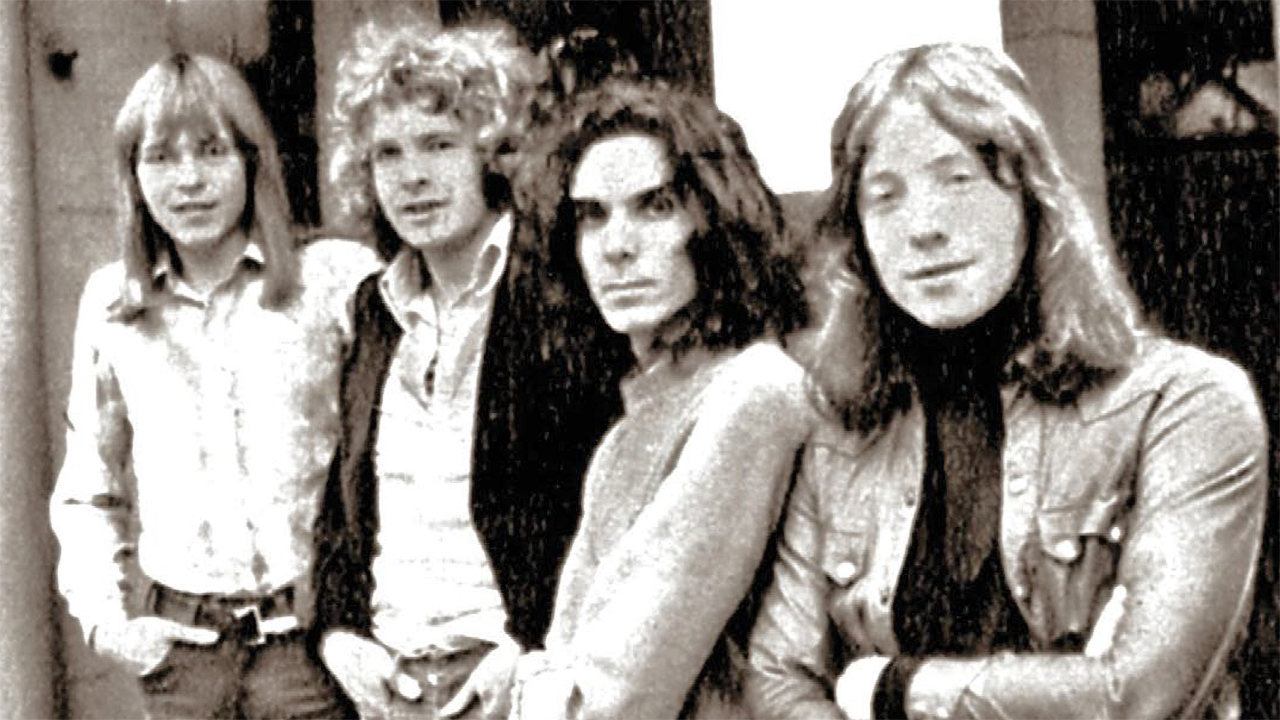
Wolf were initially managed by Clifford Davis, who also looked after Curved Air and Fleetwood Mac, until his business partner Peter Hadlow took the reins. The band signed to Decca, who’d release their albums via subsidiary label Deram. “We had this great deal with Decca,” Mosley says with a laugh. “I remember getting picked up in a Rolls Royce and thinking, ‘Well, this is good!’”
Way took chief writing duties, bringing partly worked out ideas for the band to thrash out. “‘Heavier’ is the word,” he says. “I wanted it to be virtuosic as well – that was part and parcel of the whole idea. We had a really fantastic guitarist with John, I did my best on the violin and Ian was a pretty stupendous drummer. A bit of flashy showing off, too. Whether we succeeded in that is not for me to say, but that was the intention.”
The band worked hard, releasing three albums in two years – Canis Lupus and Saturation Point in 1973, then Night Music in 1974, the latter augmented by singer John Hodkinson. All three records contain some astounding musical statements; the mix of violin against a rock background is thrilling, Mosley’s work is both powerful and nuanced, Messecar’s bass is fluid and flowing and Etheridge’s mercurial guitar is simply spellbinding.
I couldn’t get a sound I liked. I didn’t know anything about mic placement. I practically burst into tears when I heard the playback
John Etheridge
The compositions themselves veer from jazzy introspection to full-on sonic assault, often turning on the head of a pin. “It was well before click tracks or anything digital,” Mosley observes, “and all the stuff was done in a few takes. Listening to some of it now, I think it’s quite an achievement. I mean, I was about 19 or 20 at the time. I listen now and I think, ‘Bloody hell, this is a young man’s game!’ I’m proud of them! For me, it was a great break. I was earning a living playing music. Wolf was a great thing – kind of a stepping stone to my future as well.”
Canis Lupus provided Etheridge with his first studio experience, which was initially a frustrating experience. “In those days, you were always going off to a gig in the evening in a loudish place. Then you’ve got to be in the studio at 10 in the morning, in a room that has no atmosphere. You’d be in an isolation room, the drums would be in another booth, and you’d have headphones on so that your sound was right in your ear – all things completely alien.
“It was shameful for me, because I couldn’t get a sound I liked. And I didn’t know anything about mic placement. So I practically burst into tears when I heard the playback!” He’s less harsh on himself now. “In the end, as an album, it’s actually pretty good. I like Darryl’s tunes and we actually play as an ensemble.”
Of Saturation Point he says, “I was determined to get some of my best stuff down. I listen to it now and I think it’s quite naive – I kind of played like I did onstage. On Night Music I was beginning to think, ‘Ah, now it’s sounding like I wanted to sound.’ Night Music, in particular, was a really good album.”
Way also looks back on those records with pride. “I felt very blessed to be able to put my ideas down and get them out to the general public. We did a lot of touring as well; but, really, we never hit the big time. The albums sold, but not enough to achieve the level of success I was hoping for.”
Prog rock represents the time when popular music got its teeth
Darryl Way
They lasted for just three albums, but Darryl Way’s Wolf left some wonderful prog as their legacy. Mosley went on to work with Gordon Giltrap and Steve Hackett before joining Marillion in 1983, where he remains. Etheridge formed an integral part of Soft Machine, and has, across a glittering career, collaborated with Hawkwind, Stephane Grappelli and Nigel Kennedy.
Messecar can be heard on several Caravan LPs, while Way, who also recorded with Jethro Tull, would rejoin Curved Air five more times over the next 35 years, and released multiple solo albums.
“Prog rock represents the time when popular music got its teeth and its balls finally dropped,” Way says. “It suddenly found a deep and meaningful voice that was no longer trite and trivial. In short, it’s when popular music became an art form.”
The Darryl Way’s Wolf box set, Cadenza – The Complete Recordings, is on sale now.