 Written by
 When he was young, Joshua Idehen recently told the Guardian, he was just another toxic troll. He sampled the sexist and transphobic ideas he’d sourced while growing up in London and Nigeria and played them back as “Black conservative talking points” on Twitter. Being a minority can make you lonely. And loneliness is easy to confuse with being alone.
But Idehen wasn’t alone. There were artists he loved, like Dizzee Rascal and Björk, whose work modeled ways of turning isolation into introspection. There were the friends he made at clubs and afters, from whom he heard different, more capacious, ideas about how it was alright to be in the world. He grew up; made a marriage and ruined it; lost some of those friends; began writing poetry. His skills, both poetic and personal, improved and, as sometimes happens, so did his status. He performed spoken word at Glastonbury. He collaborated with jazz hotshots like the Comet Is Coming. Last year, he went viral with “Mum Does the Washing,” a witty burn-book of all those ideological frameworks—not just the few he used to espouse, but the whole party of them, from Zionism to Africanism to the manosphere and white feminism and TERFs—who fail to center and uplift the material condition of all women.
No score yet, be the first to add.
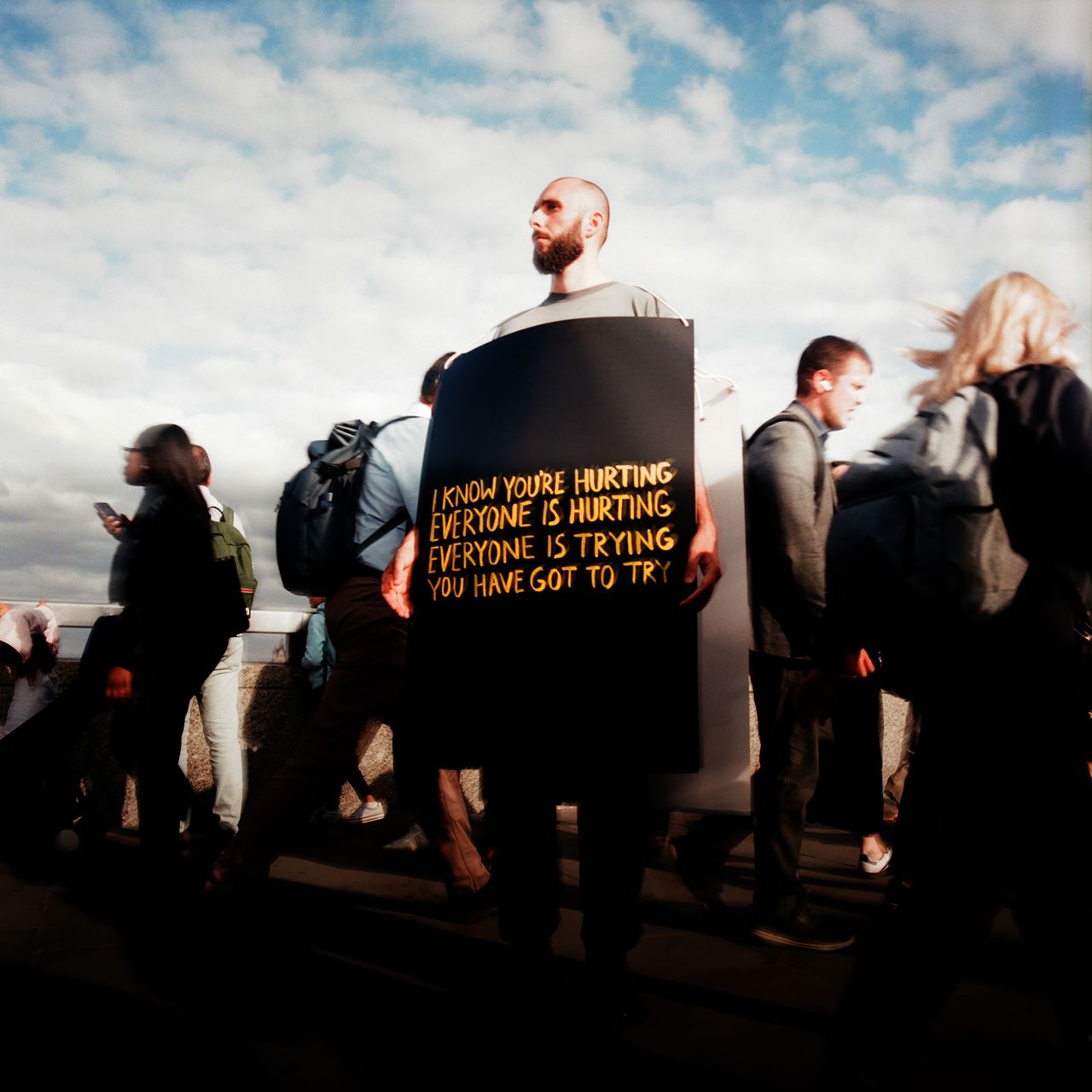
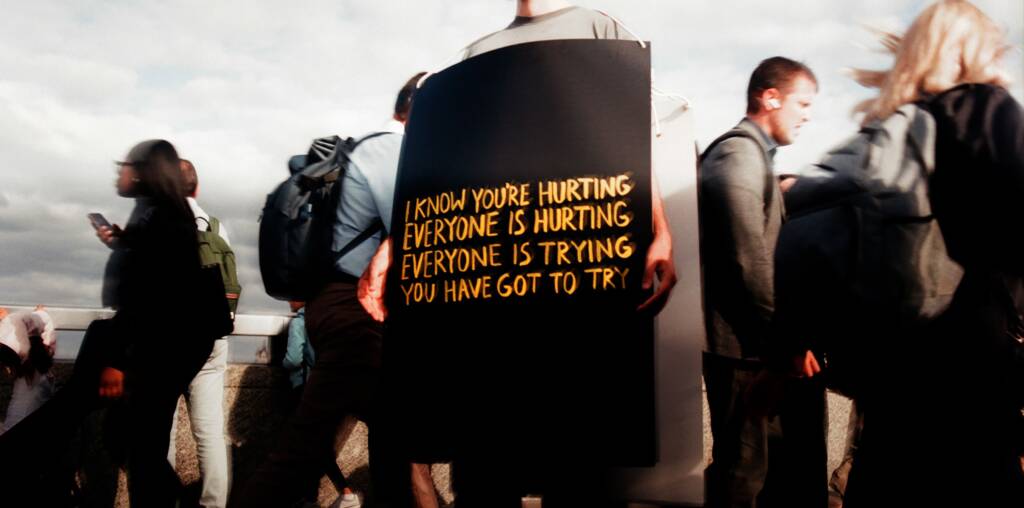
Idehen discovered, in other words, the importance of being earnest, which fuels his debut solo album as much as the beats he preaches and poeticizes over. Its mouthful of a title, I know you’re hurting, everyone is hurting, everyone is trying, you have got to try, might be hard to get through without a bit of a smirk. The album can be, too. But when it works, it’s revelatory in the way peaking in a big rolling crowd at the club can be, or in the way of a little hand on your shoulder. We’re all in this together. You and me against the world.
“Mum” forms the heart of I know, its punchlines packing more power than Idehen’s other tries at listicle tracks. The gooey confessions of male romantic insecurity in “My Love (feat. Amanda Bergman),” for instance, too often thicken into sap. “Choose Yourself” goes harder, not stopping at the self-help bromide to put yourself first but instead arguing that self-care is a set of priorities: crime, grime, and a free Palestine. This is a leftist laundry list, to be sure, but remember who’s doing the washing. And it helps that the sonics, which range from gospel and jazz to UK garage and filter house, made largely by his creative partner Ludvig Parment, are as intersectional as the politics.
It doesn’t hurt that the tracks often seize upon the transformational power of club music. Nimble bangers like “Turn It Around” and “It Always Was” prove bass can change the barometric pressure in a room or in your head, storming through whatever depression might cloud your mind until a kind of clarity dawns. “This Is the Place” makes the program explicit: first, a sample of someone says “People getting together, having a good time, enjoying themselves and getting away from the everyday problems of life.” It’s escapism, but also the discovery of somewhere to escape to. “What do you think it is,” the person asks. And another responds, “I think it’s about the rhythm. And the love.” A playful little hi hat starts ticking, like it’s about that time, and a warm melody starts to glitch, like this moment is all there is. “The rhythm, and the love,” they repeat. Music is the answer to your problems.
And men have got plenty of them. Like many artists engaged with dance music, he puts his faith in gatherings; like not enough of us, he also believes men, particularly, need to gather up the courage to take better care of each other. In a pair of the album’s tracks that comes closest to matching the riot of “Mum,” Idehen tears apart the fragile masculinity his earlier self had confused with strength. “Brother,” he intones, his voice sorrowful against the sound of a saxophone clenching its teeth, “The way we take our pain and make a church of it/Call it coping/Call it worship…Is this your masculinity or just your trauma speaking, then?” A burly jungle stepper bursts in, rough and tough and barely keeping it together. “Whatever Comes” charts the aftermath of this butch combustion, as Idehen watches a friend fall apart in front of him. In violence, in sorrow. You can hear it in the breaks, which Parment layers gingerly above throbs of analog synths. Idehen sets the scene: “Two broken men in Leicester Square,” he notes. “While you’re scattered on the pavement/I wrestle down your madness/I don’t know if I’m helping, but I’m hoping that my presence is enough.” It almost sounds like it is.
Idehen is onto something here. And listen, maybe you’ve heard it before. But maybe we all need to hear it again. On “Don’t Let It Get You Down,” he and Parment buy another round of Bob Sinclair’s “Gym Tonic.” Over an ebullient little bouncy bit of house, an aerobics instructor encourages movement as Idehen encourages Movement politics. “Don’t digest what does not nourish/Save some space for mum’s jollof,” he drills. “I don’t care how corny it sounds…good things are coming for you. But they are going to hurt.” The track assembles into a classic floor-filler. “No pain no gain,” he hoots and hollers. Transformation is an exercise, and it’s time to get in shape.