 Written by
 Most of the time, Toronto songwriter Charlotte Cornfield’s lyrics are so specifically mundane, they’re disarming. On 2016’s “Time Bomb,” she likened dating bad dudes to eating a “pre-packed sandwich,” its “expiry date on the horizon.” Her discography, which dates back to 2011, is crammed with unfrilly, relatable details that smack of being broke and twentysomething, like looking for a place to pee, or admitting her preferred coffee brand is still Chock full o’Nuts.
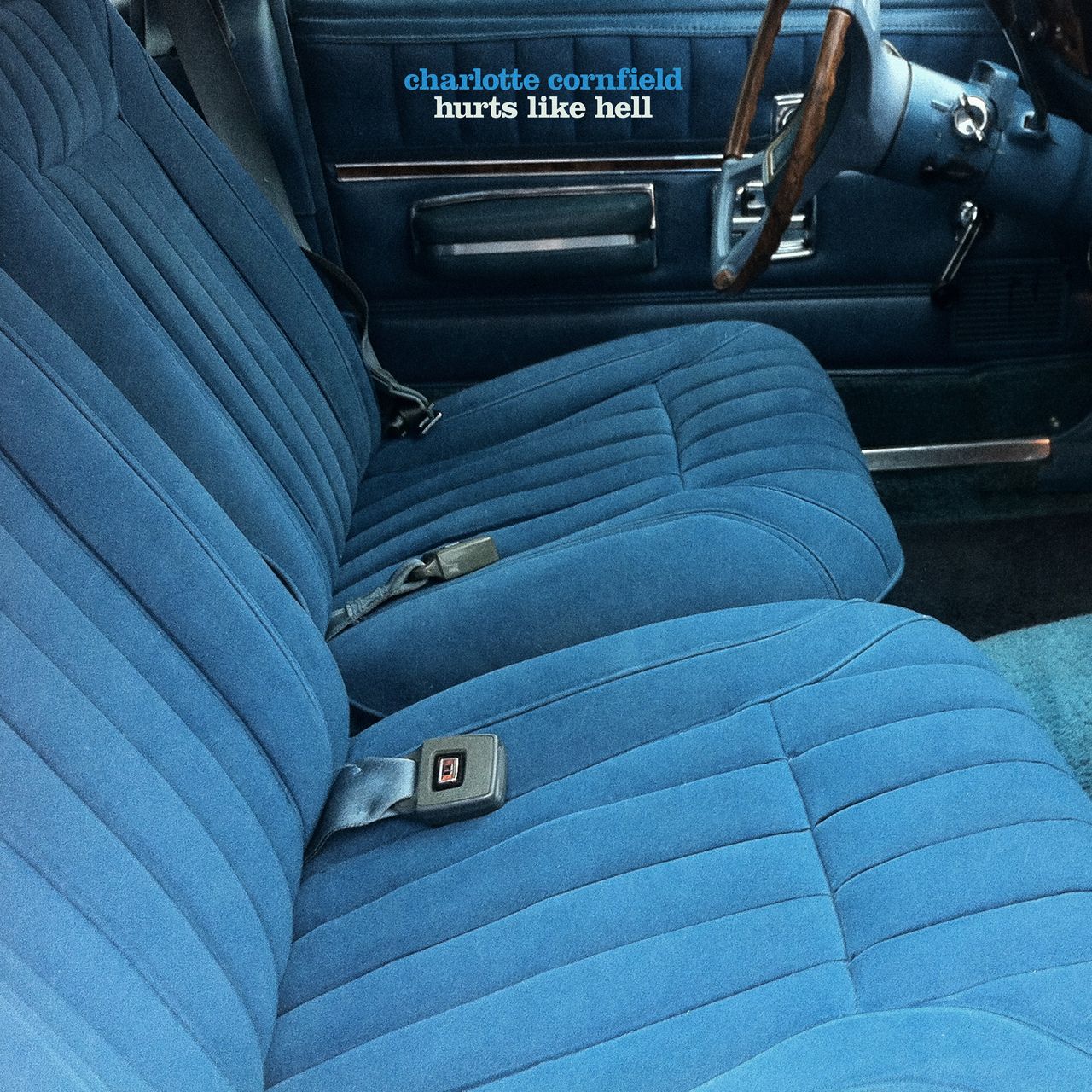
Seismic shifts have blown through Cornfield’s life since the release of her last album, 2023’s Could Have Done Anything. That same year, she gave birth to a baby girl. A few months back, she signed to Merge following a stint on lauded indie label Double Double Whammy. Her new LP, Hurts Like Hell, was helmed by Big Thief producer Philip Weinrobe, and features notable guest spots from Leslie Feist, Buck Meek, Palehound’s El Kempner, and Lake Street Dive’s Bridget Kearney. After 15 years of working solo, Cornfield credits parenthood for a more social and collaborative approach to music-making. Across 10 country-tinged tracks, Cornfield also broadens her view as a storyteller, but proves that her boot heels are still dug into terra firma.
No score yet, be the first to add.
The greatest adjustment in Cornfield’s new music is her lyrical framing. In the past, her songs were so littered with personal details that listening felt voyeuristic. On Hurts Like Hell, her sixth album, she casts a wider net, developing characters with struggles outside of her current experience. “You can practice being in really emotional and intense places without it being my own story,” she recently told Range. “The high drama of my twenties is gone. There are other stories and other sources to pull from.” Cornfield draws out those stories like a raconteur teasing information between sips of bourbon.
The protagonist of the heavy-lidded lament “Lost Leader,” for example, watches a burned-out musician holding court at a house party: a fallen idol who panders to young and impressionable female fans. “I used to buy everything you released,” Cornfield sings over sparse snare and a creaking six-string. “Now I go to hear you play tunes/And there are too many dudes in the room/I just wanna leave.” In this drowsy character study, it feels as though Cornfield is looking back on all the parties of her past with the wisdom of someone who now chooses to stay home on the couch. “Long Game” is a more wistful nod to young adulthood, with its impressionistic images of dirty floors and moldy bathrooms, friends dropping by with pizza and “throwing down about love.” Cornfield may sing in the first-person, but her scrappy rendering of youth (“nineteen at the bar”) feels like she’s winking at a self so distant it’s almost a caricature.
Hurts Like Hell is Cornfield’s twangiest album yet, thanks in large part to the pedal steel that slinks through its songs, handled like quicksilver by Adam Brisbin. These crossover country duds fit Cornfield well, especially on the title track, its undeniable chorus backed by Meek’s tinny drawl. Cornfield’s witty, stumbling rhyme schemes feel kindred with the best of country radio: “Letting loose on the front lawn/Shorts and boots on/Hose running on a low drip,” she chirps, Kempner’s electric spitting out fiery little licks.
Cornfield still manages to blur genre lines on indie-pop single “Living With It,” featuring vocals from Feist, whom Cornfield has referred to as a “dream collaborator” (the two artists met in a chatroom for touring musician mothers). Feist’s billowy register only swoops in for the first chorus, but it adds a lightness that lifts the whole song—like a wisp of foam dashed across pungent espresso. “Squiddd” is part folk rambler, part hymnal, its simple refrain—“I wanna share files with you”—sung in church falsetto by Kempner and Kearney. Closer “Bloody and Alive” is minimal, almost experimental for Cornfield, with softly hissing static and warbling guitar simmering just below her hushed alto.
“Bloody and Alive” is Cornfield’s most overt song about motherhood on Hurts Like Hell, chronicling the moments just after childbirth: “Your eyes are open wide/You’re staring into mine/I’m holding you for the first time,” Cornfield coos as piano keys plink around the perimeter. These are universal symbols of parental love, but the delicate arrangement on “Bloody and Alive” makes the milestone feel sacred and otherworldly. Hurts Like Hell has a kind of mythic separation from the daily grind that was so present in Cornfield’s earlier work. It’s the sound of someone with the luxury of distance taking a panoramic view of their past, safe from any prior storms.