
 Written by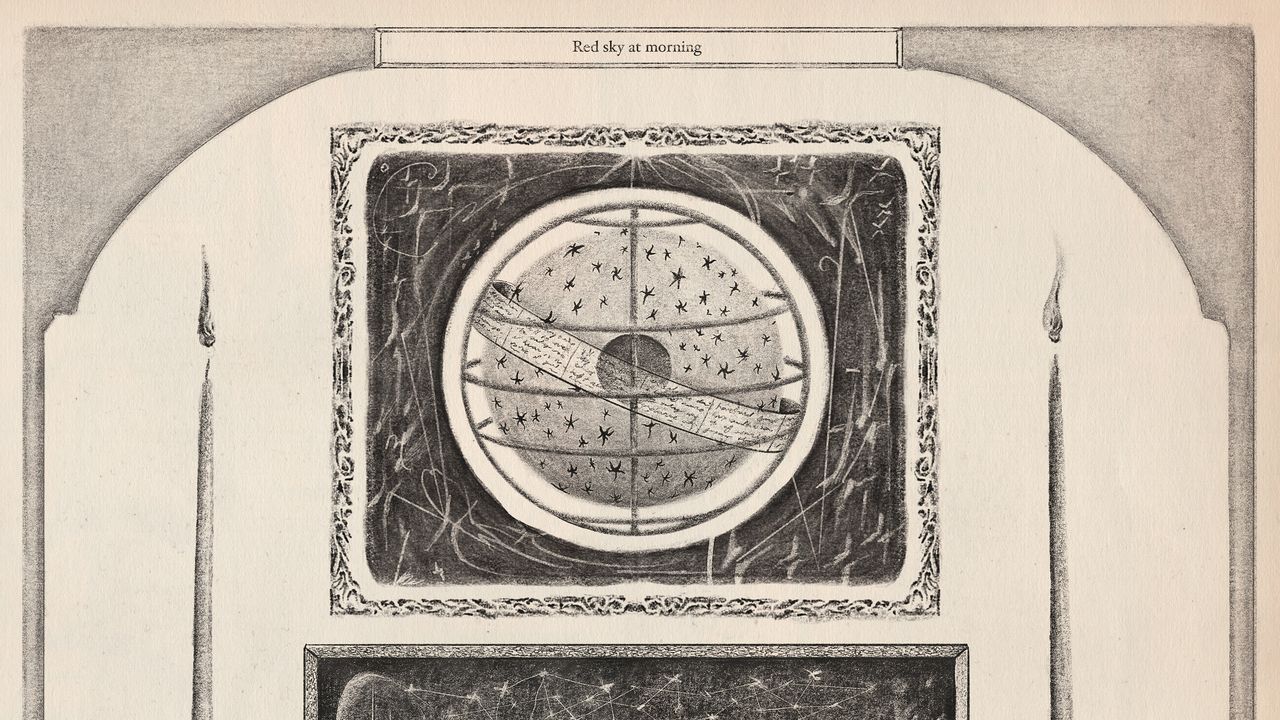
Shortly before releasing their first album, last year’s No Glory, Hannah Pruzinsky quit their job as a physician to pursue music full-time. They quickly found a following in the tight-knit New York DIY scene, playing shows with likeminded acts Florist and the Ophelias while starting GUNK, a music-focused zine with Ceci Sturman (their bandmate in Sister.). As h. pruz, Pruzinsky makes music with the quiet confidence of someone who knows they made the right decision. That was appropriate for No Glory, an album about falling in love. Its followup, Red sky at morning, captures the moment when the honeymoon phase gives way to restlessness and uncertainty, using gentle acoustic folk at the backdrop for something weirder and often outright macabre.
As early as the second track, the cracks are showing. A portrait of “domestic bliss… teetering on the edge of insanity,” “Arrival” opens with Pruzinsky marveling that they and a lover “haven’t left the house in weeks.” Sinking deeper, they struggle not to repeat old patterns: “Let the past coat my lungs/They said the tissue would rot out/But I know that my thoughts are good.” That unease hangs over the album; even though the relationship it depicts seems secure, that doesn’t mean the old fears go away. “After Always” sounds like a love song—“I sink under you/I am all of you/Sinking under you/I breathe out,” Pruzinsky sings to their partner—but Felix Walworth’s deliberately timid drum groove and Jonnie Baker’s creeping bass betray how fine the line is between deep, soothing pressure and suffocation.
The album’s best moments delve into the darkness, reaching unusually enigmatic terrain for Pruzinsky. Morning comes with a surreal, gorgeously illustrated RPG booklet following a sailor’s journey into their own psyche, which gives some context to what Pruzinsky does on songs like “Force” and “Krista.” The deceptively upbeat “Krista” almost plays like a gothic horror story, with its ominous spoken-word segments about screams that can’t be heard and ghosts that can’t be seen—though most gothic horror stories don’t have tightly wound drum fills (courtesy of Walworth) straight out of a National record. As with No Glory standout “I Keep Changing,” there’s an unexpected detour with the fuzzed-out rock of “If you cannot make it stop,” a song that sounds like it’s on the verge of disintegrating as Pruzinsky succumbs to fears about a relationship: “We walked through hail and heat/A miracle that we could see/But I keep on thinking of defeat.” It’s intriguingly jarring, hinting at a possible route for future releases.
A lot of the album deals in anxiety and dread, but even when the energy picks up, Walworth’s production keeps things warm and intimate. The interludes, featuring Helen Ballentine of Skullcrusher, slightly distract from the album’s strengths but add to the dreamy atmosphere. There’s a cozy, communal spirit to the guest features on the periphery of the album’s arrangements: On opener “Come,” Emily A. Sprague takes a mesmerizing Buchla solo and Al Carlson adds drifting saxophone. “Your Hands” has the biggest cast, featuring both Pruznisky’s bandmates in Sister and Sprague’s Florist bandmate Rick Spataro. Pruzinsky describes feeling distant from their partner in typically visceral imagery—“Sclera red, psychic pain, my head’s in the other room out of reach”—but they’re far from alone, and the lush arrangement turns an introspective song uplifting. Pruzinsky reassures their partner that whatever happens, there’s an underlying trust and respect between them: “Yes, baby, you wouldn’t lie to me/Baby, you always try with me.” It takes a sturdy foundation to embrace the uncertain.