 Written by
Share this article
Join the conversation
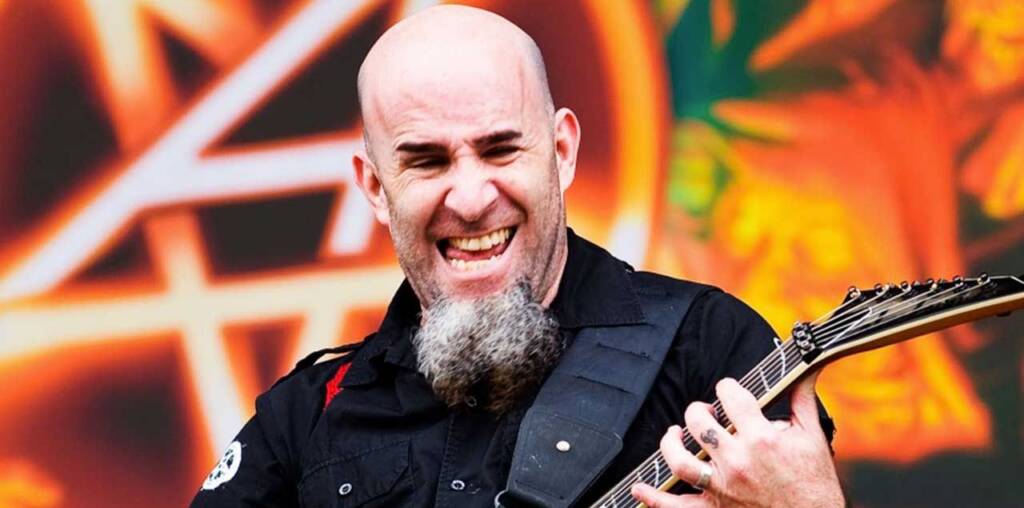
It was Pantera’s Dimebag Darrell who turned Scott Ian into a professional drinker. The Anthrax guitarist had spent the 1980s barely touching alcohol and not touching drugs at all. This made him an outlier in thrash metal circles – not for nothing did his good friends in Metallica revel in their nickname Alcoholica.
It isn’t that he abstained completely. There was the time in 1985 when he tried to match Lemmy drink for drink in fabled London watering hole the St Moritz and ended up with alcohol poisoning for three days. Then there was the time when he and Metallica guitarist Kirk Hammett got juiced on festival lager in order to approach their heroes Gene Simmons and Paul Stanley backstage at the 1987 Monsters Of Rock festival, and nearly wet themselves with excitement when the Kiss duo knew their names.
“Those were the exceptions,” Ian tells us today. “The Metallica guys would make fun of me: ‘Oh, Scott might have two tonight.’ But I just wasn’t interested. I was so focused on making things happen for the band. I started Anthrax when I was 17 and a half, and I didn’t want to waste a second with a hangover.”
Latest Videos From Louder
That all changed in the early 1990s when Anthrax began hanging out with Pantera. Dimebag Darrell was famous for his amateur mixology skills: his signature cocktail was the Black Tooth Grin, a blend of Crown Royal and Seagram’s 7 whiskeys, with just a whisper of Coca-Cola.
“Doing Black Tooth shots with Dimebag was the first time I ever drank whiskey,” says Ian. “I actually passed out on a barstool after a Pantera show. Darrell had lined up a hundred shots on the bar in advance. We walked in and literally started shooting.”
And were those shots gone by the end of the night?
“They were gone within minutes,” says Ian with a snort. “It was fucking chaos. That whole era was one of the craziest periods of my life. I went from not drinking to becoming a professional drinker.”
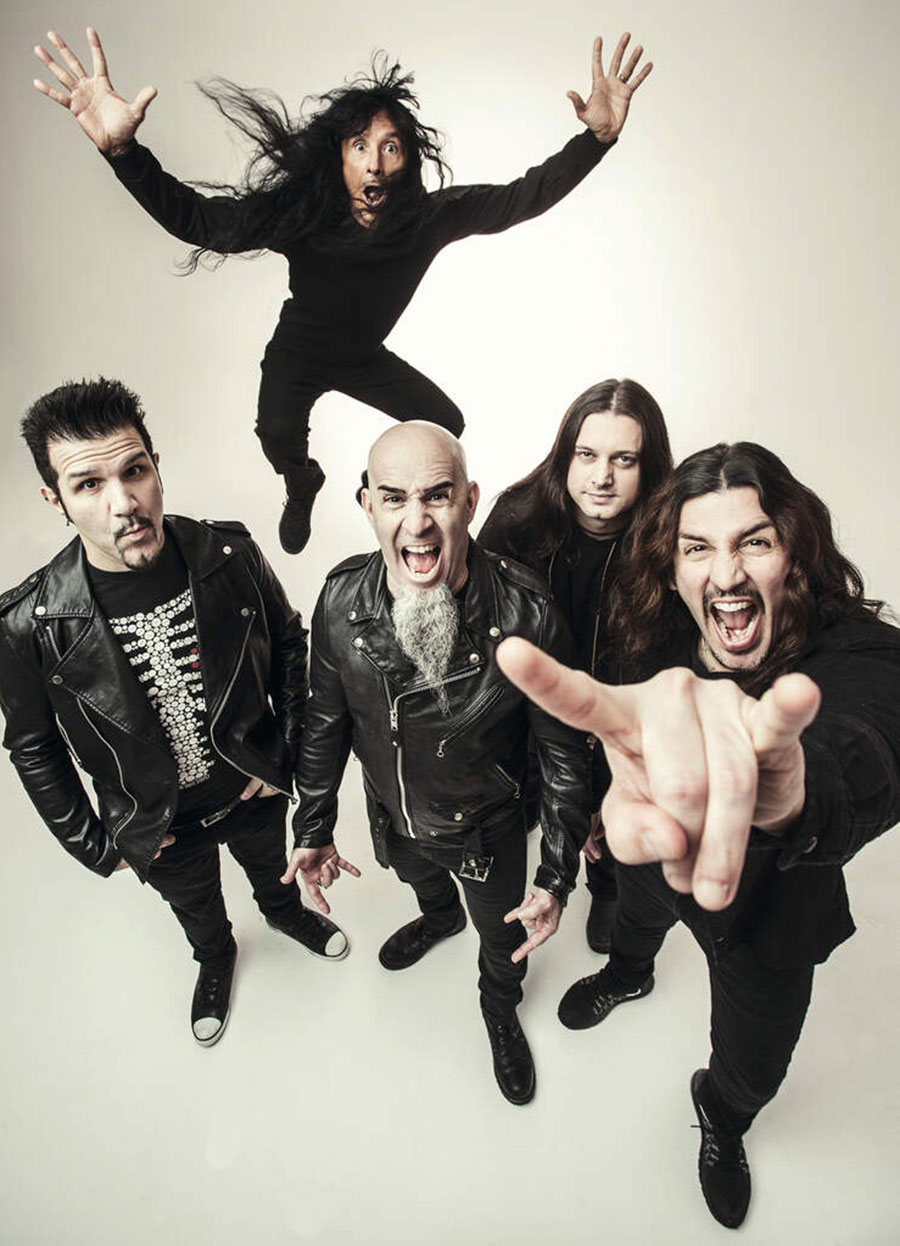
Those heady days are celebrated on NYC 93, a track from his band’s new album, Cursum Perficio. The song is a joyous throwback to a long-gone era which nods to both Dimebag and early Anthrax influences Judas Priest, as well a tribute to the city that nurtured Scott and the band he founded in Queens way back in 1981.
Yet from the outside, it was open to debate whether there would even be a new Anthrax album. Cursum Perficio arrives a full 10 years after their last album, 2016’s For All Kings – not a Guns N’ Roses number, but getting there. There was the drama of the pandemic, obviously, but also the fact that Anthrax have been battered, beaten and almost broken by the music industry in their time.
“Was there ever a chance we’d never make another album?” says Ian. “Absolutely zero.”
Of course there wasn’t. A band who legitimately helped lay the foundations for thrash metal 45 years ago have survived everything rock’n’roll has thrown at them. Like the lyrics to their 1995 song Fueled say: ‘What doesn’t kill me makes me stronger.’

Scott Ian is a contender for the most well-connected man in rock. He counts Dave Grohl, Jason Momoa and Keanu Reeves among his friends (the latter starred in the video for Anthrax’s 2003 single Safe Home). He’s also got a mutual admiration thing going on with Stephen King. “He said in an interview that when he writes, he goes into his office and cranks Anthrax so everyone leaves him the fuck alone,” says the guitarist proudly.
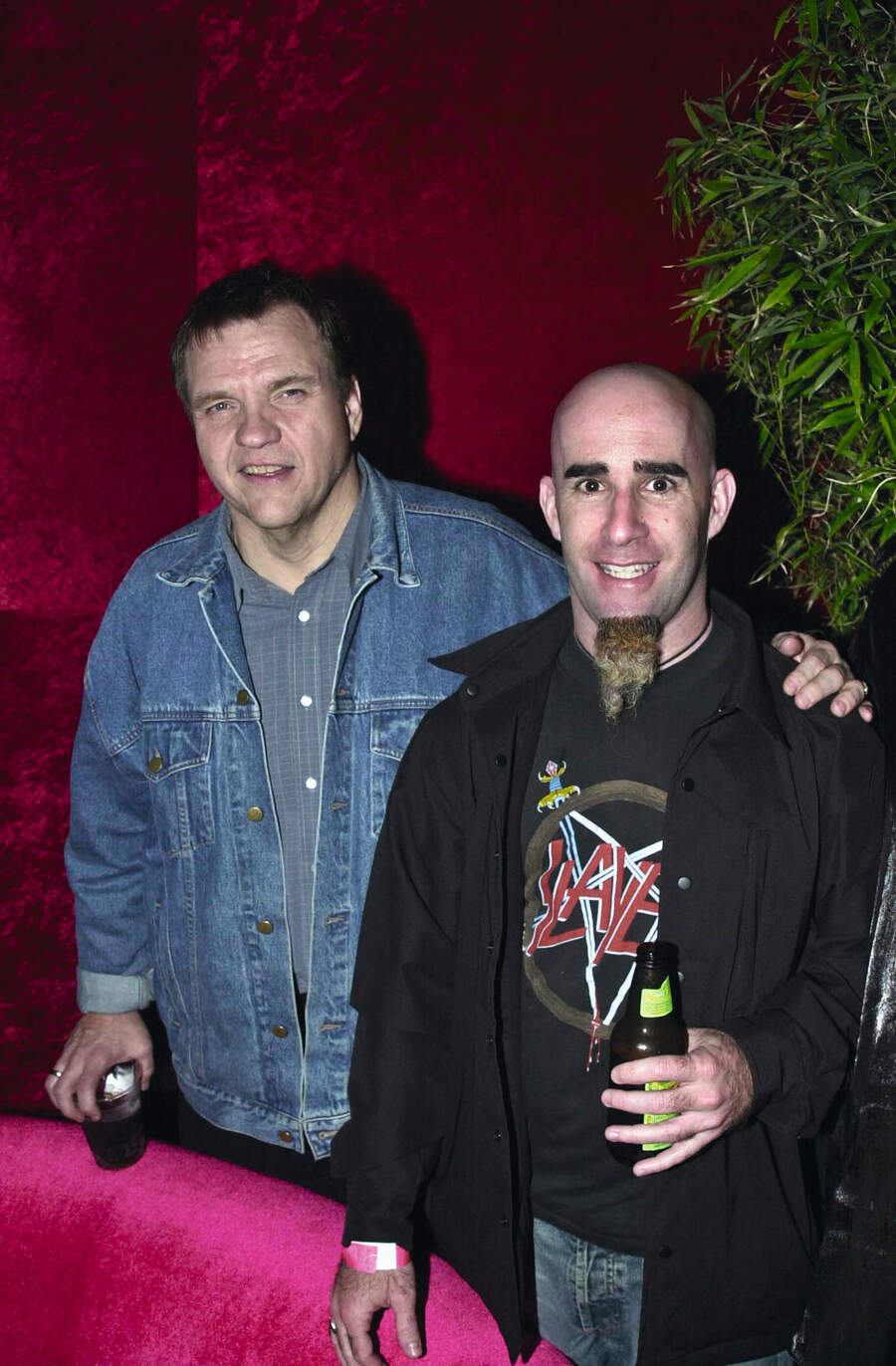
Then there’s the small matter of having had Meat Loaf as a father-in-law. Ian married the Bat Out Of Hell singer’s daughter, Pearl, in 2011. “I was fucking terrified the first time I met him,” says Ian, with good reason.
He tells a great story about a furious Meat kicking him out of the house one Christmas Eve (“Who is this guy, sitting on my fucking sofa, watching my fucking TV?!”), only to make up a few weeks later after driving the tipsy singer home after an early Steel Panther gig.
“He was kissing my face while I was trying to drive, saying, ‘You love my daughter, she’s happy, I fucking love you, man!’ We were buddies after that. He was a great guy.”
The point of all this is that the young Scott Ian Rosenfeld could never have conceived any of this happening when he was growing up in NYC in the late 60s and 70s. He was an early adopter when it came to rock music – Sabbath were his entry point as a kid, followed by Kiss, Judas Priest and eventually the NWOBHM and punk rock.
Ian formed Anthrax in 1981 with bassist Danny Lilker, another metal geek from the same neighbourhood. They played church basements and whichever bars and clubs would have them, which weren’t many. They got to know a bunch of like-minded kids from the West Coast named Metallica, with whom they shared a fast-talking dynamo of a manager in Jon Zazula, aka Jonny Z. Ian was with Metallica the morning after they gave their livewire guitarist Dave Mustaine his marching orders.
“They were staying in our rehearsal room in New York,” he says. “Cliff [Burton, late Metallica bassist] was outside smoking. He said, ‘We fired Dave, he’s on the bus home.’ Lars [Ulrich] was like, ‘Yeah, it was fucking rough.’ I couldn’t believe it.”
By the time Anthrax’s raw but pugnacious debut album, Fistful Of Metal, was released in January 1984, a scene was taking root. One of their songs would inspire this new movement’s name: Metal Thrashing Mad. Thrash metal.
Second album Spreading The Disease was released a year later, by which point original vocalist Neil Turbin had been replaced by Joey Belladonna, an honest-to-god singer who could belt out Journey songs in his sleep. That record was an 80s thrash classic, as was 1987’s Among The Living, released the year they played Monsters Of Rock.
“It pissed down that morning,” says Ian of the festival. “It was pouring on Cinderella and WASP, the first two bands. Then the sun came out for our set and Metallica’s set. And then it rained on [headliners] Bon Jovi. I always said that Mother Nature loves thrash.”
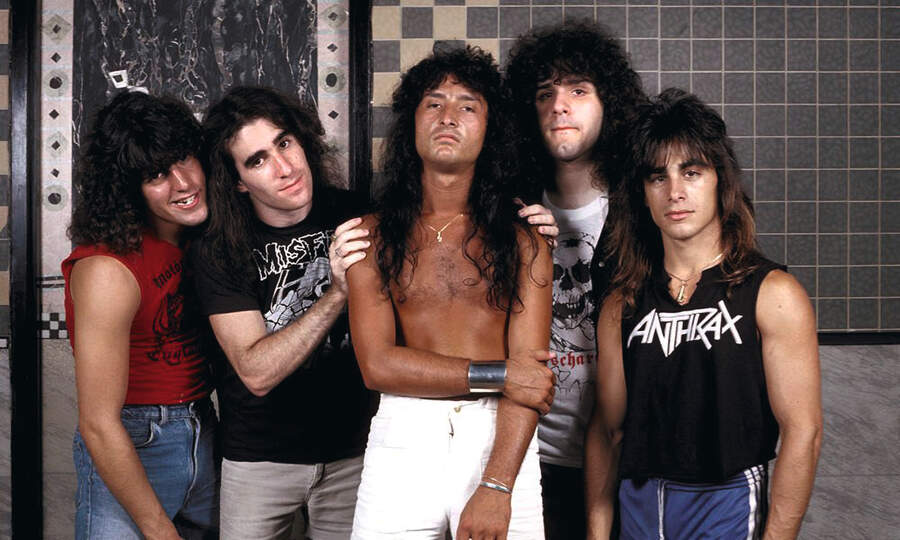
Anthrax stood out from their serious-minded thrash peers back then. They wore big Bermuda shorts and loved comics – their 1987 anthem I Am The Law was inspired by iconic 2000 AD character Judge Dredd. They had a placard-wielding mascot named the Not Man. At one point Ian even shaved the word ‘Not’ into his chest hair. They could be cartoony, but they were never a joke.
These thrash originators were pioneers in other ways too. In the mid-80s, Ian got on board with hip hop: Big Apple agitators like Run-DMC, LL Cool J and Public Enemy. “There was an aggression in it,” he says. “It made me want to bang my head the same way that Iron Maiden did.”
Anthrax were early adopters, fusing the two worlds on knockabout 1987 B-side I’m The Man (one of the first rap-metal songs) and then on milestone 1991 Public Enemy collaboration Bring The Noise (hands down one of the greatest).
For a moment, it looked like Anthrax could do no wrong. Their fifth album, 1990’s Persistence Of Time, was one of the first great post-thrash records, predating Metallica’s similarly mature ‘Black’ album by 12 months. They played the game-changing Clash Of The Titans tour alongside Slayer, Megadeth and an unknown Alice In Chains. They even appeared on a 1992 episode of US sitcom Married With Children titled ‘My Dinner With Anthrax’.
“Being an actor on a sitcom seemed like the easiest job for the best money,” Ian recalls of that cameo. “I thought, ‘I am definitely in the wrong business.’”
He’s joking, but maybe he really would have considered a career change if he’d known what the rest of the 1990s held. After a decade-long upward swing, suddenly everything started to go to shit for Anthrax.
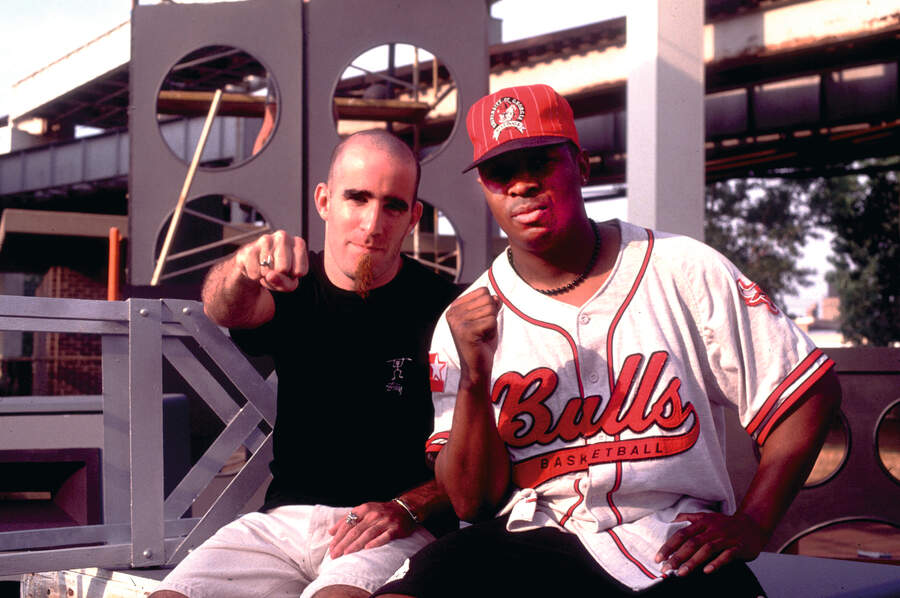
Scott Ian knew things were about to get difficult when he heard that their label boss hated his band.
This was 1993, and Anthrax’s future had looked dazzling up until that point. Joey Belladonna had been replaced by ex-Armored Saint singer John Bush, the band had signed a $10 million deal with major label Elektra for their new album, the powerhouse Sound Of White Noise, and Ian was in the midst of his ‘professional drinker’ era.
This bold new chapter started well, but things soon got sticky. The people who had signed Anthrax to Elektra were pushed out, and the new regime really didn’t like them. The label head, Sylvia Rhone, sent a message to the band: “We’re going to do the absolute minimum for you.”
Sound Of White Noise stalled at 700,000 copies when everyone had expected it to sell two million. Two years later, the follow-up, Stomp 442, barely made it to 100,000. Anthrax wriggled out of their Elektra deal with a payoff, but worse was to come. They signed with a new label, Ignition, and released another album, 1998’s Vol. 8: The Threat Is Real. A few months later, Ignition went out of business. “It was fucking brutal. We hit rock bottom,” says Ian.
It seemed like Anthrax couldn’t catch a break. In 2001, they hit the headlines following a series of actual anthrax attacks just a week after 9/11, though at least they saw the funny side. “It’s as though it’s 1937 and I’m a bandleader named Freddie Hitler,” quipped Ian at the time.
Other bands might have folded, but that wasn’t on the cards. “Nah, I’m the eternal optimist,” Ian says. “I never lost faith in us. I never walked onstage once thinking, ‘What the fuck am I doing here?’”
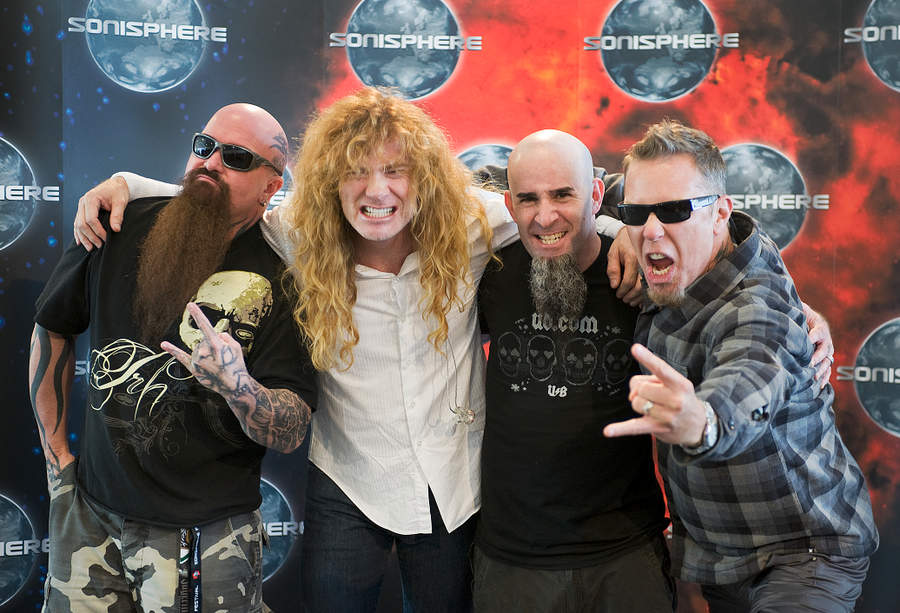
Instead, the long process of rebuilding the band began. It wasn’t easy. The excellent We’ve Come For You All in 2003 was once again widely ignored. There were a string of fumbled line-up changes. Bush left after a wad of cash was dangled in front of the band to reunite the Joey Belladonna-fronted Among The Living line-up. Then Belladonna left again, and the band recorded and then scrapped an entire album with new singer Dan Nelson (a period so mired in legal hassle that the guitarist won’t go into it today).
Things finally started to shift in 2010 with the return of Belladonna for a third go-round and a tour with the rest of thrash’s so-called Big Four: Metallica, Slayer, Megadeth and Anthrax themselves. The latter was a full circle moment – Anthrax and Metallica had first played together as kids when they were starting out. Ian knew things would be okay when the band played Yankee Stadium, the home of his beloved New York Yankees, on the tour in September 2011.
“It felt like all roads had led to this moment for decades,” he says. “We were playing our hometown to a hometown crowd; it was the day our new album, Worship Music, came out; they’d even made it Anthrax Day in the Bronx. I was so fucking nervous. Decades of angst, anxiety and stress hit me all at once. My hands were locked; I felt like I was having a panic attack.”
Randy Johnson, one of the Yankees’ all-time great pitchers, was backstage: a 6’ 10” giant of a man who knew what it was like to perform under pressure. Ian asked him for advice. “Just put your head down and go to work,” Johnson told him. “You know how to do your job.”
“I gave Pearl a kiss, walked out on stage and I burst into tears – just full-on waterfalls,” says Ian. “We were playing Caught In Mosh and I was banging my head while sobbing my eyes out for a solid minute. Once the sobbing cleared up, it was the greatest set we ever played. My feet never even touched the ground.”
It’s a stretch to say his feet haven’t touched the ground since, but the last 15 years have been as smooth as it gets for Anthrax. Cursum Perficio may only be only their third album in that period, but it’s one of their best (one track, Edge Of Perfection, is a contender for the greatest song they’ve ever written). With Metallica a vast entertainment juggernaut, Slayer on the reunion cash-grab festival circuit and Megadeth heading for the exit, Anthrax might just be the most vital of the Big Four now.
“I’d be the biggest liar in the world if I told you I knew any of this would happen when I started the band,” says Ian. “It’d have been more believable to say I’d have a flying skateboard like in Back To The Future II than this. It was a wing and a prayer. All I cared about was moving this thing forward inch by inch. And we’ve moved a lot of inches.”