 Written by
Radio and MTV ruined Pearl Jam. Sure, those outlets, indispensable for hearing music in the early ’90s, made Pearl Jam into a true rock monster with Ten. They catalyzed an ascent so rapid and consummate from 1991 to 1993 that the band could have never made 1993’s follow-up, Vs., or anything else, and they’d still be immortal radio-rock titans. “Alive,” “Even Flow,” “Jeremy,” even its B-side “Yellow Ledbetter”: Pearl Jam’s singles were so massive that the band demanded its label not release “Black,” in an attempt to stanch Pearl Jam pandemonium. It remained an album cut but almost topped the charts, anyway.
Those songs created an intractable popular image of Pearl Jam as a self-serious and overemoting bro band, led by a singer who sounded like a pirate always eating peanut butter powder and surrounded by unleavened guitars that refused to let any air in or out. They were the grousing grunge band with the video where the schoolkid kills his peers, even if he doesn’t; with the ticketing policy that meant they wouldn’t play your town, even if they were just trying to save you money; with the dreamy, macho, sensitive frontman who resented being an object of attention, even if that was the most natural reaction to the whole world suddenly watching you. Mention Pearl Jam, and this is the band most people rightly picture.
No score yet, be the first to add.
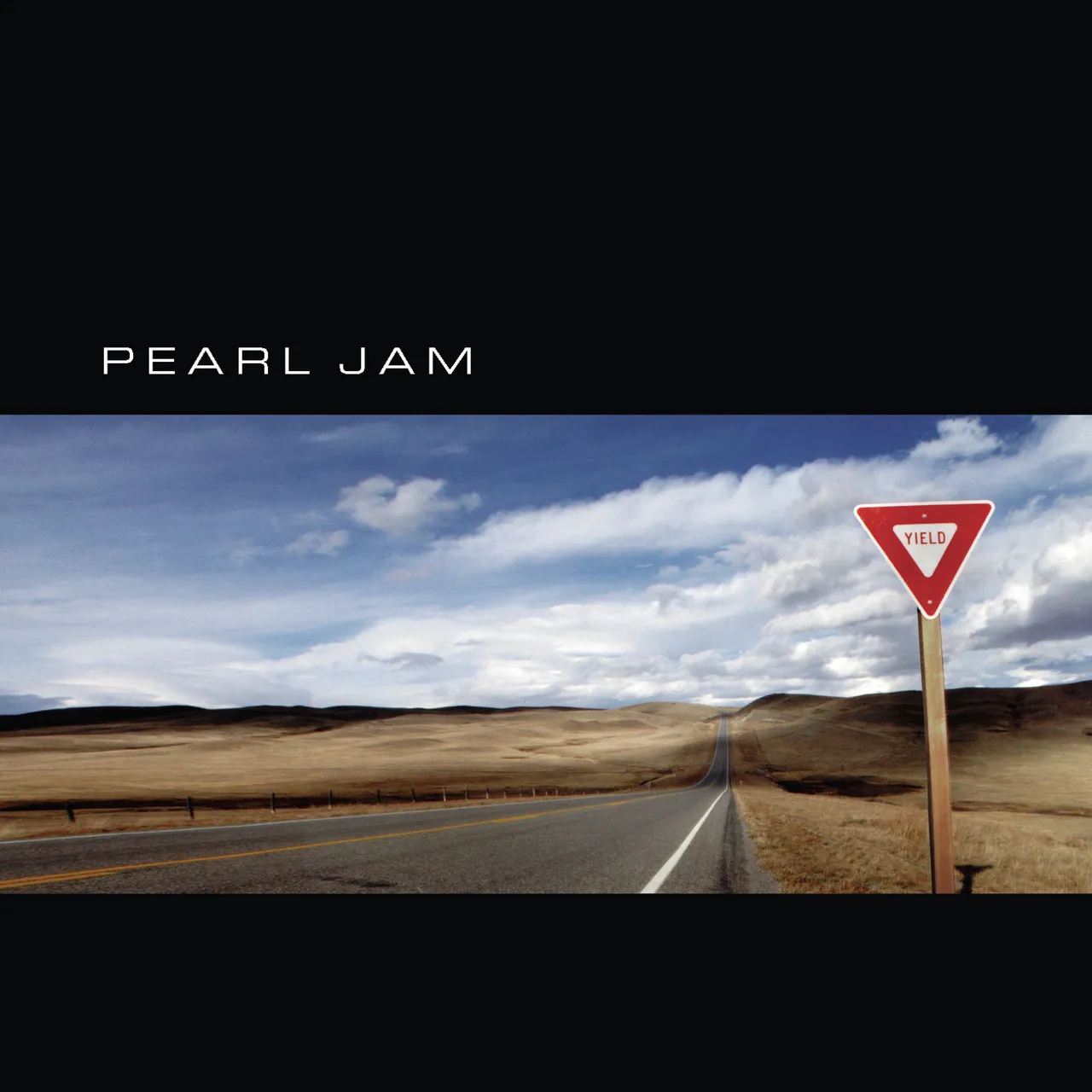
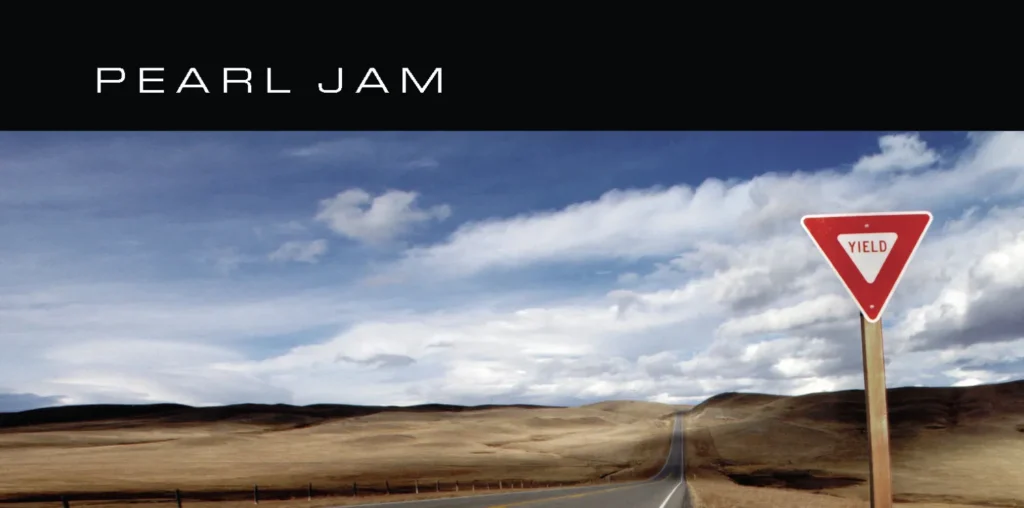
Released in February 1998, however, Yield is the work of a band humbled by tragedy, catastrophe, and suddenly slumping sales. Yield is neither the most important Pearl Jam album (that would be the frame-shifting Ten), nor the most complicated (that would be the pinballing Vitalogy). But nearly three decades on, it is the most compelling album they ever made. It is the sound of five aggrieved but idealistic men entering or nearing their mid-30s and coming to terms with the limits of their power and the complex feelings that can evoke. Pearl Jam tried to change the world, a quest that nearly split the band open. On Yield, they reckon with that reality by trying and sometimes failing to bail on the mission, by trying to be a band that simply enjoys being a band again. Yield is, at turns, embattled and mean, regretful and gentle, sad and broken—feelings Pearl Jam certainly had during those first four albums but that they never before or again captured with such candor, depth, and warmth. Yield is about giving up the fights of your life so you can go on living, then instantly wondering if you fucked up.
To understand Yield’s fascinating emotional terrain, it’s essential to know a little about Pearl Jam’s history, particularly singer Eddie Vedder’s: Raised in Illinois by his mother and an abusive stepfather he long believed was his real dad, Eddie Mueller moved with this family to Southern California just before he became a teenager. He was a crushable middle-class kid who loved acting, having been in a TV ad as a toddler before moving onto plays like Bye Bye Birdie in high school. Heartbreak and hard times at home sent him back to Illinois before he could graduate. Vedder, it seems, had a strong sense of justice. To rebuke the man he would later call “the bastard that married my mama,” he took his mother’s maiden name as his own last name, becoming Eddie Vedder.
Back in San Diego, at 20, Vedder worked late shifts at gas stations and hotels, writing songs when there was nothing else to do. He’d become a Who diehard at nine and remained more invested in their rock’n’roll excess than, say, the gyre of punk bands like Black Flag and the Minutemen just up the coast. To wit, when he finally responded to a singer-wanted ad in the San Diego Reader in 1986, his demo tape included a cover of Springsteen’s “Atlantic City.”
Vedder seemed like the instant star in Bad Radio, a group that loved Red Hot Chili Peppers-style funk and mid-’80s hard rock. The theater kid now at the front of a rock band, he was also an instant activist, pushing the group to play benefits for Amnesty International or saving the rainforest. He covered Tracy Chapman during a city council debate about affordable housing, and he often sang about racism and homelessness in Bad Radio. Alongside Beth Liebling, the girlfriend who would become his first wife, Vedder even became a homeless man’s benefactor, helping him get back to the Midwest. Vedder stared at a picture of him while recording Bad Radio vocals. “He wanted to have them play a bunch of benefits and social-activist stuff, and the band wanted to go other ways,” an old friend of Vedder’s once told Rolling Stone. “Eddie got so pissed off.”
In September 1990, less than a year after Vedder left Bad Radio, Jack Irons—the Chili Peppers alumnus whom Vedder had met while Irons was backing another adolescent hero, Joe Strummer—told some Seattle friends that he knew a kid in California who could sing in their new band. Irons passed along their tape. Vedder responded with an Oedipal three-song cycle about a son who is sexually abused by his widowed mother and becomes a serial killer awaiting execution on death row. That tape, dubbed Momma-Son, became the fabled basis of Pearl Jam, a band born with Vedder’s social consciousness at its center—empathy for the outsider, even when the truth seemed repugnant.
Vedder wasted little time using Pearl Jam as a platform for his politics and perspective. In February 1991, he debuted “Jeremy,” an empathetic apology of sorts for the bullying of a Texas teenager, Jeremy Delle, who had shot himself in front of his second-period English class a month earlier. In 1992, he pushed kids to the polls in a Rock the Vote ad full of skateboard tricks. In 1993, on Vs., he lampooned gun owners—especially Pearl Jam’s third drummer, Dave Abbruzzese, who’d just copped two himself—with the menacing “Glorified G” and harangued the privilege of White Male Americans like himself on the splenetic “W.M.A.” That’s also the moment when Pearl Jam began switching their CD cases from plastic to paper, jewel case to Ecopak. And in 1994, visiting the White House one day after Kurt Cobain’s body was found back in Seattle, Vedder asked presidential adviser George Stephanopoulos if the band might borrow some defunct military bases for concerts. That way, they could avoid venues where Ticketmaster was collecting exorbitant fees.
Maybe this sounds either outlandish or pedestrian more than three decades later, when it’s accepted wisdom that Ticketmaster and Live Nation are plundering our pockets at every chance they get, but Pearl Jam were pilloried in the battle that followed. Bassist Jeff Ament and guitarist Stone Gossard testified before Congress in June 1994, which national newspapers treated like some Mr. Smith Goes to Washington goof. In order to avoid venues they believed were taking advantage of fans, Pearl Jam barely toured the country in 1995 after releasing their third album, Vitalogy. They played places like Casper, Wyoming, and almost fell apart during an infamous set in Golden Gate Park when Neil Young had to fill in for a very sick Vedder.
When Pearl Jam finally returned to a Seattle stage in September 1996, just as they released the unwieldy No Code, Rolling Stone essentially mocked them for trying to build a solution to a problem no one else was addressing at scale. “Ironically, it was Pearl Jam’s ticketing system that provided the biggest snafu,” their review complained. “To prevent counterfeiting, Key Arena used bar-code readers to check every ticket that passed through the turnstiles. Which meant that it took hours for all 14,000 Pearl Jam fans to enter the venue.” Pearl Jam seemed like earnest blowhards and scolds, their outrage at a monopoly unintentionally hamstringing fans who just wanted to see the band they loved, to not worry about the enduring implications of unchecked capitalism. Why couldn’t they just, like, rock?
This was the moment’s prevailing mood, after all. The United States had withstood Newt Gingrich’s Contract with America and was about to elect Bill Clinton, the young rock’n’roll president, to his second term. We were, relatively speaking, only bit players in the world’s current wars. The stock market was climbing aboard an endless escalator, enjoying a dot-com bubble before we knew to call it that; the Dow Jones hit 5,000 for the first time days after Pearl Jam limped to the end of their seemingly cursed Vitalogy tour. Who cared about the Clinton administration’s failures on criminal reform, gay rights, or the social safety network, let alone an event company taking a little more off the top for tickets? There was, as the Young song Pearl Jam had already been playing for years put it, fuel to burn, roads to drive.
By the time Pearl Jam began to work on Yield in early 1997, though, Vedder didn’t have much fuel to spare himself. Fame had battered him badly. A woman who believed he fathered her two children by raping her crashed a car into a wall around his house, nearly dying in the process. Rolling Stone had ended 1996 with a massive feature that used anonymous sources to say Vedder had invented his misanthropic backstory out of whole cloth, with one record label employee calling him a “master manipulator” and another suggesting he was an autocrat inside a band that only pretended to be a democracy. Indeed, he had written the bulk of No Code himself, an exhausting saga he opted to correct by tasking his bandmates with a new challenge—bringing finished songs of their own to the next sessions, including lyrics if they had them.
The songs that Ament and Gossard supplied immediately made Pearl Jam’s rhetorical resignation clear. Gossard’s swaggering “No Way” was so frank about fatigue he referenced the way mental anguish became physical pain. It hinged on lyrics that felt like a rebuttal of Vedder’s whole deal: “I’ll stop trying to make a difference/I’m not trying to make a difference,” which Vedder delivered on tape like a chant he could keep close, a reminder to his higher self to play it safe, to get along. Guitars tighten around him like choking vines, fighting to keep him in check and in place.
Ament, meanwhile, had just read The Master and Margarita, a novel that criticized Soviet power structures using God, the Devil, and the supernatural, published decades after its author, Mikhail Bulgakov, died. In the book, Pontius Pilate becomes a complicated character, feeling guilt for Jesus’ murder and left with his dog, Banga, as his only friend. “Like Pilate,” Vedder sings in the surging chorus of what has always felt to me like a Fugazi song, “I have a dog.” This is succor for the persecuted, or at least for the person who did what they thought they had to do only to be left holding the bag. Pearl Jam acted on principle and became a punchline. At least Banga stuck around.
Ament wrote “Low Light” in the same literary afterglow, the title phrase encapsulating the contentment and calm he sensed as the band’s early-’90s rollercoaster slowed. It is an elliptical and exquisite piano-backed ballad that feels like stepping onto the porch for a smoke after an arduous day, the focus on simply inhaling and exhaling. But its soft counterparts in the Pearl Jam catalog gave someone else a voice, from the battered woman in “Better Man” to the neglected one in “Elderly Woman Behind the Counter in a Small Town.” This, though, is a song of self-preservation and self-satisfaction.
This gimme-shelter sentiment permeates nearly every bit of Yield. There’s the ascendant “In Hiding,” where Vedder sequesters himself and deals with his madness in isolation, as if he’s raw-dogging delirium tremens, until he starts to stabilize. “It’s all state of mind,” he sings like a hippie in a head shop, as if the problems he’s pinpointed somehow aren’t real. The busted jangle of “Faithfull” gives all those problems over to God, since we only believe something can be done about them, anyway. The song ends with a lullaby, Vedder vowing reciprocal devotion to whoever sticks around. “MFC” is a punchy, perfect open-road anthem about bailing on a bad situation that can’t be fixed, powered by the spring-loaded beat of Irons, Pearl Jam’s fourth drummer and the guy who initially connected Vedder to everyone else. “There’s a lot to be said for nowhere,” Vedder sings in the best moment, pausing between the words before landing on that last one like it’s the only epiphany he’s ever enjoyed. Nowhere will be better than right here.
Even the tirades acquiesce to acceptance. “Do the Evolution” sounds like one of the most caustic Pearl Jam songs ever, its hard-panned guitars squeezing your ears like a vice. Vedder’s voice is serrated and broken, a rusty bread knife raised as a last-resort weapon. But the lyrics—and the incendiary music video, with its animated scenes of the Ku Klux Klan, Nazis, and trench warfare—argue that our atrocities simply spill out of humanity’s forward motion, that we would not help ourselves even if we could. The son will mirror the father until we destroy the species. “I crawled the earth but now I’m higher/2010, watch it go to fire,” Vedder grunted in the studio in 1997, essentially calling the sweep of the next three decades as he yields to its inevitability. It’s evolution, baby.
Vedder, however, gently pushes back on this narrative with the prettiest and most poignant two-song sequence from any Pearl Jam album: “Given to Fly” and “Wishlist.” Though it arrives well before the album’s actual middle, this is Yield’s heart, where Vedder chronicles his complicated feelings about this supposed act of backing down. The album’s first single, “Given to Fly” tucks a quasi-religious saga of retreat, resurrection, and retreat into four minutes. In the first verse, above a guitar line Mike McCready swiped from Led Zeppelin, Vedder flashes through his own familiar origin story: a disenchanted surfer kid trying to keep sane. The guitars of McCready and Gossard coil, though, pushing Vedder backward and then upward. “Arms wide open with the sea as his floor/Oh, power, oh,” he sings in maybe the most heroic moment of his career, like Roger Daltrey stepping into an evangelical hotseat. “He’s flying.”
Vedder then becomes the prisoner returning to Plato’s cave, rejected when he tries “to share this key to the locks on the chain he saw everywhere.” Are these keys dismantling a flawed system? Rock’n’roll itself? It doesn’t matter. He’s persecuted and perhaps even crucified, ascending again to become a lodestar for people who need the light. Maybe this all sounds pompous—Vedder, after all, is just some rich rock star, stymied by an industry he tried to upend after it had already sanctified him. But the way the band swivels beneath him makes it all sound romantic and aspirational, as if he’s only wishing to be a savior, to be someone who can inspire anyone.
The subsequent “Wishlist”—Yield’s second and only other single—confirms this. Rolling Stone dubbed “Wishlist” a “silly love song” in 1998, consistent with its policy of getting the band wrong in the back half of the ’90s. Yes, Vedder was two years out from a very difficult divorce with Liebling, and the line “I wish I was the full moon shining off your Camaro’s hood” is indeed about her car, as he later admitted to Dave Marsh. But elsewhere, he wishes to be an exploding neutron bomb, a messenger with good news, and the cause “for 50 million hands upraised and open toward the sky.” These are all the things he never will be, because he’s tried to deliver his followers into a better reality but failed. This is the post-game recap when you think you will never win again.
It is a gorgeous song, a personal perennial favorite, but it’s a fuck-you sort of single—all verse and no chorus, a rhythm and riff that barely shift across more than three minutes except to give the slight guitar solo a little more power. During a year when the bathetic “I Don’t Want to Miss a Thing,” “I Don’t Want to Wait,” and “How’s It Going to Be” were three of the country’s biggest rock songs, “Wishlist” felt like a taunt, a line in the sand about what Pearl Jam was or was not willing to do for your love. It barely cracked the top half of Billboard’s Hot 100 and didn’t stick around for long. As Jon Pareles put it in a profile for The New York Times, part of a charm offensive meant to resuscitate the band’s corroded image, “[Pearl Jam] discovered that integrity has no fixed boundaries and that the struggle to maintain it presents endless pitfalls.”
Three months after Pearl Jam released Yield, they played a secret show in a newly opened Seattle arts space with a very late-’90s Seattle arts space name, ARO.space. The room had long been Moe’s, a sacred Seattle rock club where Pearl Jam had once jammed with Young. The set was a trial run of sorts, since it marked the debut of former Soundgarden drummer Matt Cameron following Irons’ departure just after Yield’s release. In the spirit of the experiment, they returned for the encore with a single song they’d never performed: “Last Kiss,” a gently morose soul number about a date that turned into a deadly car crash, written nearly 40 years earlier by the wild Wayne Cochrane. Legend has it that Vedder found a 7″ of the bouncy rendition by Canadian pop group Wednesday, fell for it, and brought it to the band.
They returned to it occasionally on the road that fall before dispatching a recording to Ten Club members for Christmas, a year-end gift for the end of a year Pearl Jam once doubted they’d even see. And then it went late-’90s viral, with radio stations spinning the simple, sad singalong as requests poured in. Pearl Jam yielded to popular demand, released a single, and sent all their profits “to provide food, shelter, and other basic needs to the refugees of Kosovo.” By summer’s end, it almost became Pearl Jam’s only No. 1 hit, stuck at second between J.Lo and Ricky Martin. Pearl Jam had done perhaps more promotional work than ever before to turn Yield into a hit; a three-minute novelty captured one night at soundcheck did it instead.
It is tempting to read too much into this moment, to label it the instant when Pearl Jam became soft, when the band wrestling with its generational status waved the white flag of surrender. But that’s not exactly true: Pearl Jam later went on the offensive against George W. Bush, releasing a barbed bauble called “Bu$hleaguer” in November 2002, when there was still real mainstream risk in badmouthing the president. An eagle feasted on Donald Trump’s corpse for a gig poster partially designed by Ament in 2018, while 2024’s “Wreckage” was a soft-rock send-up of the 2020 election loser, months before he won again.
So I don’t mean to suggest that Pearl Jam has become a band without issues or opinions, that they’ve simply decided that Republicans stream the old singles, too. But “Last Kiss” is where the urgency truly started to evaporate, where a bunch of guys approaching the edge of middle age started to consider the rest of their lives. Pearl Jam went through four drummers in their first seven years; the night they debuted “Last Kiss,” they found their drummer for at least the next three decades. You might call “Last Kiss” the beginning of the mature Pearl Jam.
Yield is the moment just before that happens, when they’re still wrestling with their chaotic past before embarking on an increasingly mellow future. That tension not only makes for a fascinating record but also an instructive one: Can you balance the desire for self-preservation with the compulsion to wrestle with society in hopes of making it better? Can you survive that task? Is it worth it? Grunge already had its martyrs.
Pearl Jam begins Yield with “Brain of J.,” an unhinged ripper about how we still don’t know where John F. Kennedy’s brain went after his assassination. Vedder treats it less like a conspiracy and more like a eulogy for idealism—here’s a man who died trying to change the world, only to have it change without him. Vedder accepts that he’s only so necessary, too. And near the end, on the spoken-word melee “Push Me, Pull Me,” Vedder comes to terms with his own mortality, finally admitting like a young man spotting his first few grays that he won’t be here forever. He’s got a few burial wishes, a few philosophical musings on impermanence, and a few muttered last words: “I’ve had enough, said enough, felt enough,” he says as if half-awake. “I’m fine.” At least for now, he’s checking himself out.
Is this disappointing, this shift from the generational gumption for change to an adult acceptance of the terms and conditions of modern existence? Is it disappointing to see Pearl Jam in Ticketmaster venues now, when even federal juries agree it’s part of a monopoly? My gut reaction is yes, that the band that deliberately opts to be less than it could have been has chosen the ultimate existential sellout. On the other hand, the musical landscape shifted quickly in the ’90s and Pearl Jam recognized that their reign of popularity had ended by the time they made Yield. You can only wield the power that you have, and Pearl Jam’s world-dominating might had already dissipated. Pearl Jam decided to stay together rather than let the battles they’d already lost kill them. At least they had the gall to try, when so few of their peers did. Whether we’re talking AI or Palestine or streaming, this very conundrum defines so much of the music industry right now. The answers have only grown more complicated.
That doesn’t mean there’s no shame in Pearl Jam’s decision to back down, no regret. Even as Pearl Jam’s albums have become minor events, they’ve remained a touring colossus, still very good on almost any given night. They’ve played every song on Yield, even doing it all once in sequence. They’ve now done “Given to Fly” 500 times, “Do the Evolution” almost 600. They’ve even performed its one-minute percussion oddity 55 times. Yet a band that sometimes pushes 40 songs into a single show has only played “No Way” a dozen times, less than almost any song from the first five Pearl Jam albums, excepting some truly deep Vitalogy cuts. That was the one where Vedder, channeling Gossard, vowed to stop making a difference. With their benefits and politics and general way of moving through the industry, Pearl Jam never really did that, even if their hardline positions softened. It’s one thing to tell people who once saw you as a leader that you’re no longer trying to make a difference; it is another thing entirely to remind them, every time they see you, that you tried so hard it nearly broke you.