 Written by
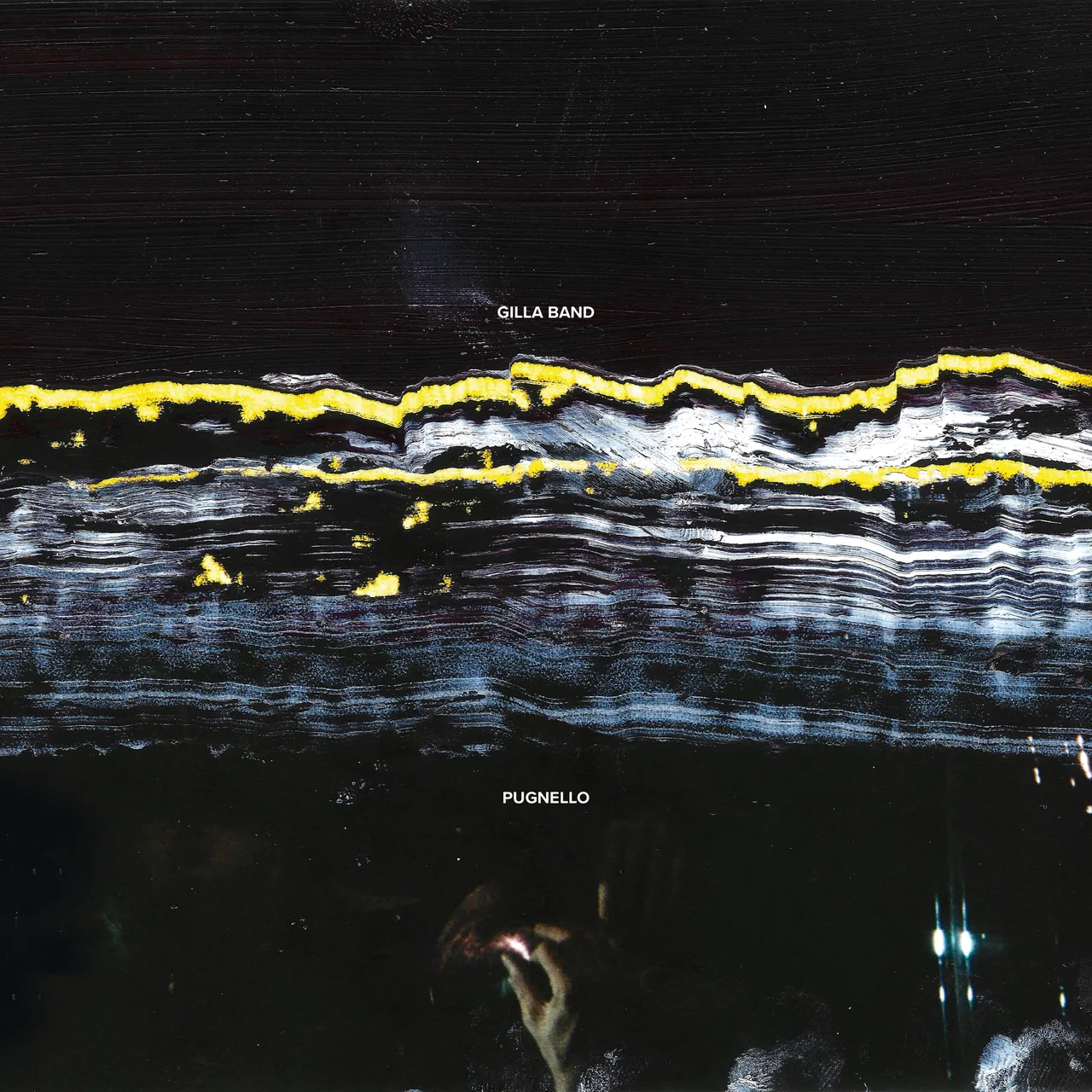
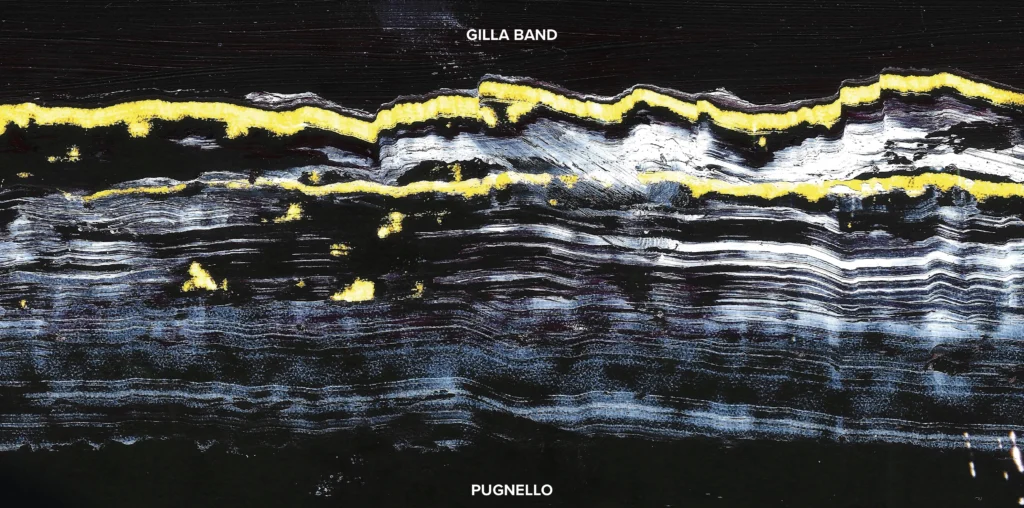
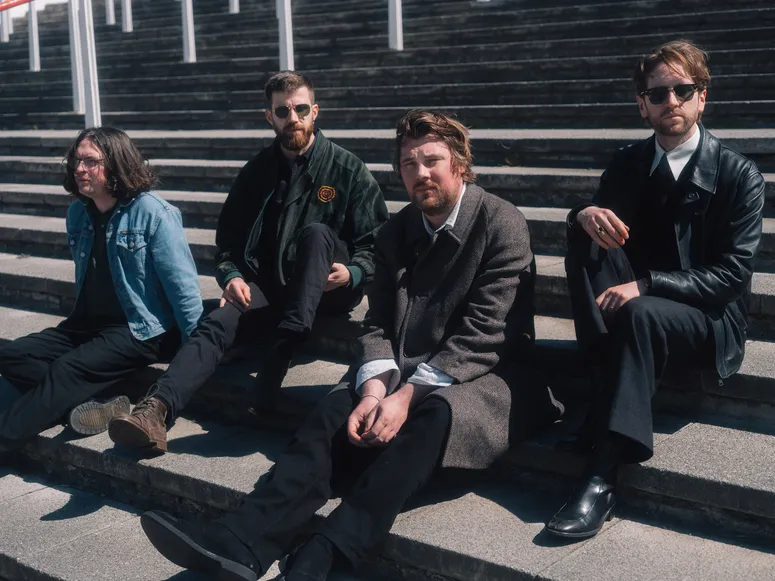
When the speakers are throbbing and rattling, spitting a filthy squeal, threatening to split open—do you bolt out of the room or step closer? If you ever attend a Gilla Band show, you will know instantly which their fans prefer. Discomfort is the baseline goal for a band that weaponizes its instruments to such earsplitting magnitudes that they rarely resemble the tried tools of rock music: guitar, bass, drums. “The trick,” bassist Daniel Fox said in a recent interview with Pitchfork, “is to be louder than everyone else.” This is a wild but typical understatement from the humble Irish quartet, which also comprises vocalist Dara Kiely, guitarist Alan Duggan Borges, and drummer Adam Faulkner. Volume—blown out to extremes or dampened before a deafening blast—in no way explains Gilla Band’s precision as songwriters, producers, or engineers. What may sound like chaos is the product of meticulous layering and sonic manipulation that smudges the lines between post-punk, noise, no wave, industrial, and techno. On their exhilarating fourth album, Pugnello, Gilla Band sharpen their implements and go in for the kill. Sure, Pugnello is loud, but it’s the nasty textures, the colliding rhythms, the gnarled vocals, the dense details that affirm Gilla Band’s mastery of dissonance. It’s their most methodical and charged album to date.
Not long after they formed in 2011, Gilla Band began experimenting with a bracing concoction of noise-punk and dance music. In 2013, they released “Why They Hide Their Bodies Under My Garage,” a cover of the post-dubstep single by English DJ Blawan. The original simmers for six minutes at a steady pace and decibel level; Gilla Band stretch it, torque it, and spike it with pedal-warped guitar that sounds more like a feat of extreme knob-wringing. Watching them perform it live is a study in tension and release, dynamics they wield like classical conductors or spring break DJs. Gilla Band withhold the drop for a torturous length of time, whipping the crowd into a frenzy of potential energy. Just before they kick up the volume and crash-land on the beat, they pull back to near silence, a single fret slide bridging the gap. It accounts for maybe one whole second, but that tiny bit of space is what sends limbs into motion.
No score yet, be the first to add.
Gilla Band very pointedly understand their effect on the human body, whether it’s a squirm, a shudder, or a thrash. On their 2022 LP, Most Normal, they achieved a pitch of feedback so subtle and irritating that one fan removed it in his own personal remix of “The Weirds,” assuming it was a mistake. Even Kiely found the noise “disgusting,” as he put it in my 2023 conversation with the group. For Gilla Band, a visceral response is always a good sign, and on Pugnello they push for maximum discord. The queasy synth melody on stomper “The Megazord” has the pathetic timbre of dying electronics. “Three Hands Clapping” culminates in a snarl of Kiely’s vocal tracks, some plainspoken, others screaming into the void. Opener “The Angelus” is a battleground for Duggan Borges’ leviathan guitar and Faulkner’s breakneck 170 bpm percussion.
Amid all this unease, Gilla Band still manage to make their own twisted strain of dance music, due in large part to Fox’s funky basslines. The down and dirty “Placeholder” is tethered to one of Fox’s fuzzed-out licks, which stands sturdy against Kiely’s earnest but inherently funny rants (“I’m blaring a dangerous amount of Coldplay”). In the outro, Fox dials down to a rubbery riff that clashes against Duggan Borges’ tinny downstrokes. The effect is utterly disorienting, like strobe lights programmed just behind the beat. Both “Giraffe” and “Alogia” bump to thick Fox basslines, belching and distorted. The former morphs into a techno heater in its final third, thanks to Faulkner’s deft tempo shift and a sudden stripping-down of the stringed instruments. But of course, this restraint only exists to make Fox and Duggan Borges’ final pile-on more potent.
As Gilla Band hone their sound, Kiely’s lyrics have become more vivid and personal. He’s spoken about his mental health in the past, namely a psychotic episode that had a major impact on the band’s debut LP, 2015’s Holding Hands With Jamie. On Pugnello, he gets more specific. Kiely points to his recent schizophrenia diagnosis, which he found difficult but clarifying to receive (he has been stable for 10 years, and he works in the mental health support field). On “Alogia,” he plainly labels himself “a schizophrenic,” and advises others to “have your midlife crisis as early as possible” before shouting an addendum: “I’ve had three of them!” While Kiely has been open about his struggles since Gilla Band’s inception, he’s never addressed them so explicitly in song. And he has never sounded so embraced by his bandmates. On previous Gilla Band records, Kiely’s shout seemed to emanate from a distant, shuttered room. On Pugnello, his voice has a warmer quality, and it is mixed in a way that feels intimately entwined with the music.
Elsewhere, Kiely persists with his relentless punning and silly witticisms: “He may be a paragraph behind but he’s Dara-graph ahead,” “poison poisson,” “Teletubby belly,” and my personal favorite: “The night owl is rat-arsed.” Ever the self-deprecating frontman, Kiely even lampoons the early stages of his own band, calling himself out for “copying the Fall and getting caught” on “Giraffe.” (Many groups are guilty of such, but only these chaps could pull off such a hilarious mea culpa.) He also can’t help but wax hysterical about snack foods. Gilla Band’s discography is cluttered with mentions of Nutella and pears and petit pois and “Fucking Butter.” On “Crisp Pop,” Pugnello’s polyrhythmic slapper that defies genre, Kiely correlates Britpop bands to potato chip flavors—Oasis: Cheese & Onion. Blur: Salt & Vinegar. Pulp? Prawn Cocktail, obviously. But these lyrics are nearly indecipherable, broken down into droning syllables. Kiely’s deadpan delivery grounds the song rhythmically, and only upon peeking at the lyric sheet will you discover his own brand of UK cultural theory. “Crisp Pop” might be the song to break Gilla Band crowds; can you even mosh to it? Its batshit beat, like mechanized palmas, bristles against slabs of distortion and pitch-tweaked vocals buried just under the surface. It’s dizzying, distressing, hostile. It’s a certified banger. And it hurts so good.