 Written by
If there’s a downside to putting your Grammy-winning band on hiatus for 11 years only to drop two critically acclaimed solo albums and win a Grammy on your own, it might be that, when you finally announce your band’s long-awaited comeback, people could be tempted to ask a blunt question: Why?
Even if you consider 2012’s Boys & Girls a Perfect 10, even if you programmed your daily alarm clock to play the opening vibraphone chimes from 2015’s Sound & Color (just me?), you could accept that Alabama Shakes was something of a chrysalis for Brittany Howard, its undisputed power engine. Her generationally soulful voice, tectonic in its capacity to cleave earth or shift subtly underfoot, hardly depended on her bandmates to be heard—mere months after Sound & Color dropped, Howard released a thrashing rock’n’roll record under the name Thunderbitch, and she produced some of the best songs of her career on her 2019 solo debut, Jaime. Hearing that the Shakes were returning was like hearing that the local scoop shop was bringing back your favorite flavor after you’d spent years sampling artisanal sorbets. The old formula was classic—would it taste as good now?
No score yet, be the first to add.
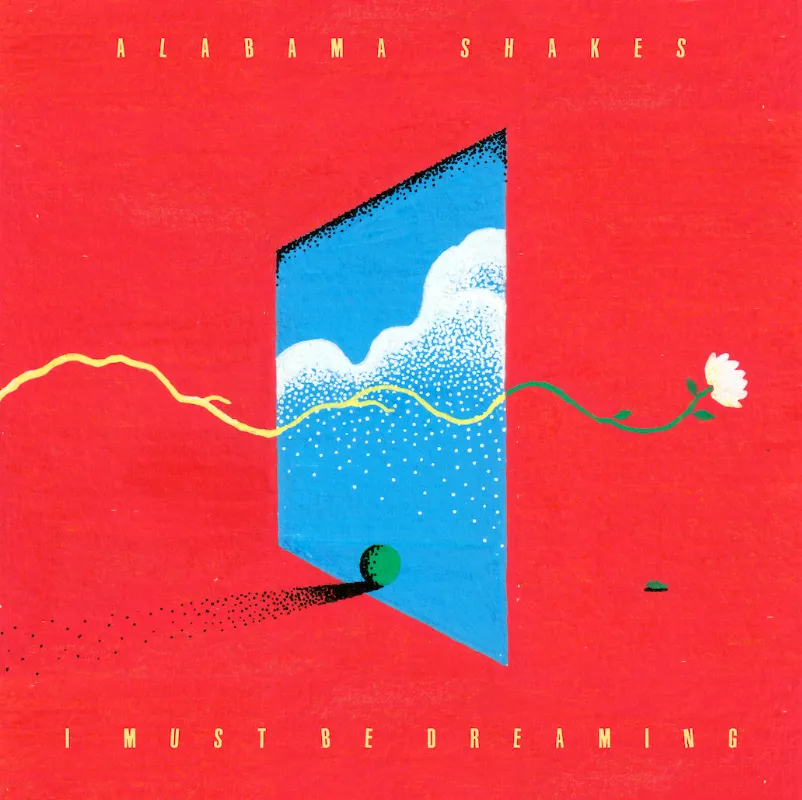
I Must Be Dreaming, the first new album from Alabama Shakes in more than a decade, revives what made the band so delectable in the 2010s: retro-soul hooks sent through lo-fi filters, blistering blues basslines, and a half-tab of psychedelia trip-sat by Howard’s unimpeachable voice, which could sing an end-user license agreement. Though much of I Must Be Dreaming reintroduces Alabama Shakes as a band who can shake off the dust and rock out to the personal and political with equal verve, it does tend to hide in the safety of its more cookie-cutter moments.
In a recent interview with Vulture, critic Craig Jenkins asked Howard why Alabama Shakes didn’t try to ride out their hot streak to the end of the 2010s. “Well, everybody wants different things in life,” Howard replied. “Some people want to be the best. Some people want the most. I don’t think that was really our target or trajectory. We’re friends. We like making music. We like playing shows. It was really kind of that simple.” Simple, in the hands of Alabama Shakes, can be winning. Everyone knows they can knock out fiery hits like “Another Life,” but longtime fans will appreciate the synergy between Howard, bassist Zac Cockrell, and guitarist Heath Fogg (drummer Steven William Johnson is no longer working with them) as evidenced on lower-stakes songs where the bandmates sound more like equals getting a groove on. Ballads like “Garden” or “Friends,” a playful garage-rock song with lyrics that feel like a sequel to “Boys & Girls,” feel like a rewarding return to this mode.
Heartache has been a recurring theme for Howard, so it’s charming to hear a positive spin on queer romance in the album’s love songs, even if some feel as soporific as they are sweet. You could snooze through “Easy,” and a spaced-out guitar shredfest doesn’t really rouse “Time”; “How Love’s Supposed to Go,” with its rattled-off verses and funky bassline, captures the ups and downs of affection with more groovy dynamism.
The biggest innovation on I Must Be Dreaming is its direct address of the political climate, and the album opens with a foreboding, militant march which refuses imperial aggression from its first lines: “If I had an army,” Howard sings, “I’d march them back home/Back to their rivers, their wildflowers, their soil.” “How many folks got shot this week?” Howard asks on “American Dream,” a festering slow-burn that feels like the road map for a more caustic and critical project. Less affecting is a song like “I Feel Hope Coming,” which sounds dangerously poised to become the Kamala 2028 campaign walkout song after doing time in the Pandora shuffle algorithm.
Songs like these reveal the fundamental identity crisis awaiting Alabama Shakes’ return. As a band that became an institution almost at birth, are they the scrappy Southern upstarts discovered by Drive-by Truckers who boast hardcore side projects, or the industry-approved titans who soundtracked Silver Linings Playbook, performed at the Obama White House, and racked up genre-spanning award nominations? Which way, Alabama Shakes? Their extended hiatus prevented them from calcifying into the industry, yet their return feels cushioned by the platform they built years ago. With a stage so well set for them, it’s hard not to feel like they could have doubled down on creative experimentation and tripled down on a sharper message.
But Alabama Shakes are artists, not senators—the missed opportunity here isn’t that they should have claimed a sturdier soapbox. It’s that Howard’s voice, an instrument of exquisite expressive power, has always been a channel for the kind of wrenching emotions many in America are processing as we watch the country flounder. Is it unfair to wish, for the sake of our own catharsis, that the heartache, anger, and frustration bursting through several of the tracks might explode on more of them? Maybe—“Waist Deep,” featuring Howard’s most moving performance on the album, offers a perspective on shouldering this burden. “We all have something we’re taking out on somebody,” she sings. “When you can’t take anymore/Where does that go?/It flows downhill to me.” It’s an aching way to describe the experience of being an artist: a vessel for pain, blessed with the double-edged power to alchemize collective hurt into beauty. One answer for why now is as good a time as any for Alabama Shakes to join forces again? Beating back this darkness isn’t quite so daunting with old friends by your side.