 Written by
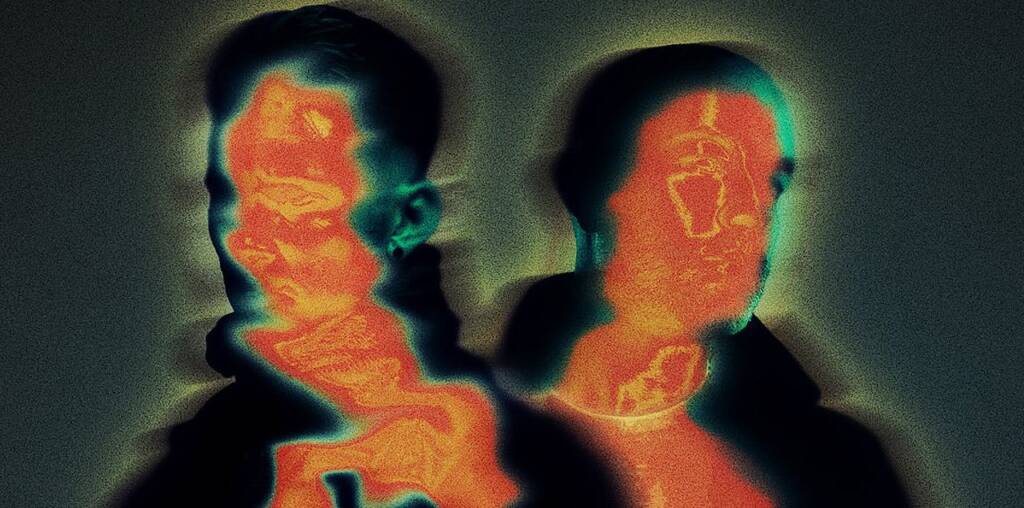
TesseracT vocalist Daniel Tompkins and Chimp Spanner’s Paul Ortiz have harnessed the healing properties of music on their latest collaboration, Prince Of Failure. The pair have combined spacious arrangements, electronic textures and powerful guitar-work with intimate vocals on their extremely personal debut album. Here, they open a window into their working process and reveal this is just the beginning for the studio-based project.
For much of their lives, TesseracT’s Daniel Tompkins and Chimp Spanner’s Paul Ortiz have wrestled with the voices in their head that often make them feel conflicted and uncertain. In their new project, Prince Of Failure, music serves as a tool for self-discovery. And this is just the beginning.
“Prince Of Failure is what happens when experiences go unnamed for years,” says Tompkins. “If you have a shadow in the back of your mind, giving it a name can be a very empowering thing, to separate yourself from it. That’s what I’m giving shape to with this project. I’m 42 years old, and I’m discovering a side of myself that has been a mystery for a long time.”
Latest Videos From Louder
The singer has reunited with Ortiz to put their mental struggles and a love for 2000s rock – which soundtracked important periods of their lives – at its tender core. A cinematic, ever-shifting sound punctuates its brutal honesty, delivering an experience full of rage and release, anger and acceptance.
Having released a synthwave album together as Zeta in 2019, Tompkins enlisted Ortiz for Ruins, a guitar-centric reworking of his 2019 solo record, Castles. Prince Of Failure was originally intended as another Tompkins solo outing with Ortiz producing. But the project changed after Tompkins was diagnosed with ADHD with autistic traits, and Ortiz became his confidant. “It’s been a poignant moment in my life – it’s made me question everything,” the singer says. “All my insecurities, I’m starting to understand, were born from this.”
Giving Prince Of Failure a name, he adds, has “allowed me to almost exorcise that part of me that was always telling me that I was doing something wrong. There’s been a lot of soul searching because I’m in an environment where relationships and being sociable are very important. But actually, growing up with this condition, having such an intense desire to be a singer and trying to force my way into this industry and build relationships, but also have that incredible awkwardness and anxiety – I can’t believe I went through with that.”
Many people living with ADHD also deal with rejection sensitivity, where just the thought of failing can create a debilitating emotional responses. Tompkins has been at war with himself: one part of him is driven to succeed in the industry, while another feels like an imposter, scared to enter in a place of potential harm.
“I want the bright lights; I want the chaos,” he admits. “But on the flipside I have these traits that tell me to step away and hide. So the album is about learning to stop fighting parts of myself. I spent years thinking I was failing at things because people found life easy, while I struggled with focus and overthought everything. I felt out of sync with people and I didn’t have the language for it.”
Ortiz hasn’t had a diagnosis, but screening results suggest he should get one. While writing their album the pair trauma-bonded, and the music is born of that. “I’ve had a lot of displacement,” Ortiz says. “I left home, came back home, went through a whole bunch of stuff with that, and you can hear that as the album transforms from warm nostalgia to something more introspective and gothic. The music has reflected our journeys. It’s very personal and sincere.”
There’s a powerful subversion of their struggles in their willingness to livestream and write in real time in front of their fans. On the surface, it shows their determination to succeed despite their challenges. Dig deeper, and it’s clear that they need those dopamine hits to quell the voices in their heads that tell them they aren’t good enough.

“I’d go on Twitch and livestream me writing an idea to the point I could send it to Dan,” says Ortiz. “Then I’d see that he’s live on Twitch, and he’s writing the vocals for it – sometimes within half an hour!” The pair often exchanged ideas in that way, evolving the songs right before their audiences.
“There are a lot of people who shy away from that because they feel like they’re going to get ripped off, or they’re giving things away too soon,” Tompkins says. “But, actually, that community is everything.”
There’s been very few times in my musical career where I’ve clicked with someone as I do with Paul
Dan Tompkins
Ortiz agrees: “Inviting people in helped keep us excited, because we were seeing their reactions and getting feedback. It’s a very new experience for me and I’ve loved it.”
There’s still a sense of mystery pertaining to the finished article, with the pair “closing the curtain” as they head into pre-production. But, as Ortiz says, “it’s an important antidote to the instant gratification of AI.” He continues: “I see a lot of charges from people – ‘Musicians are just mad because they can’t gatekeep music any more.’
“I don’t want to gatekeep anything. We’re showing people that the joy is in the process, not in jumping straight from nothing to finished product for likes and comments.”
The Prince Of Failure story avoids specific genre tropes; Ortiz says the prog lurks “in the background for a little bit of spice and complexity.” The music plays host to everything from dark, vampiric atmospheres stabbed with industrial crescendos to Holy Fawn-inspired “weird post-rock, shoegazey and black metal aesthetics” which darken its latter stages.
Daedric vocalist Kristyn Hope delivers a stunning duet on the disquieting Horizon, but ultimately the music serves a much larger, far more personal purpose. The rage, the pain, the uncertainty behind the songs is tangible; it fizzes and cries out of the speakers. “The more we worked on the album together, the more honest it became,” says Tompkins.
I was in a proper slump. It’s been the same with this: he’s saved me from feeling like I can’t do it any more. Twice
Paul Ortiz
“We were able to explore our insecurities together and get really deep with it. I think that we better understand each other now. There’s been very few times in my musical career where I’ve clicked with someone as I do with Paul. Without him, it’d be like losing an arm.”
There’s a fascinating sub-plot at play too – when TesseracT and Periphery emerged as frontrunners in the djent scene of the 2010s, Ortiz, operating under his pseudonym Chimp Spanner, was rightly regarded as one of the movement’s progenitors. Over time, his status has been eclipsed and he retreated into corporate music gigs. Tompkins provided a lifeline.
“Before we did Ruins, I hadn’t picked up a guitar and written anything for years,” Ortiz admits. “I was in a proper slump and it’s been the same with this: he’s saved me from feeling like I can’t do it any more. Twice.”
Tompkins calls their ability to confide in one another “liberating.” It’s a feeling neither wants to go without: “Prince Of Failure is something we’ve built with a long-term vision in mind,” says the singer. “We’ve already got reams of folders and old ideas; we’re evolving the project with every song.”
Don’t expect them to announce a tour, though – Prince Of Failure will remain a studio project for the foreseeable future, so they can write without limitations. “We can really push things if we’re not looking at something that has to be represented on a stage,” says Ortiz. “There’s scope for us to do things that are a lot more experimental.
“As someone who has these big pendulum swings between loving what I do and feeling like I could happily sell my guitars and never do it again, it’s really affirming to have a body of work that we’re both really proud of. That gets me excited and inspired to do more.”
Prince Of Failure is on sale now.