 Written by
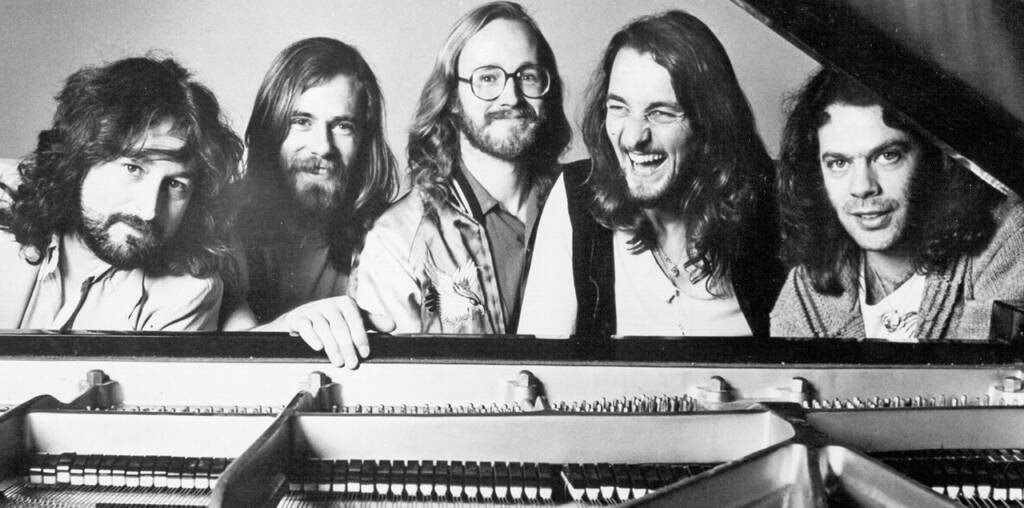
In 1974 Supertramp released breakthrough album Crime Of The Century. It was welcomed by fans and critics alike, securing them a place in the UK Top 5 – but it nearly didn’t happen. To coincide with the Blu-ray release of the accompanying live show, Prog asked ex-bandmates John Helliwell and Bob Siebenberg about the highs and lows behind the record’s creation.
Early summer, 1974: Supertramp’s classic line-up is go – but as they track future single Dreamer at Ramport Studios in Battersea, London, Roger Hodgson isn’t happy. Four years earlier the co-frontman had demoed the song at his mother’s house in Portsmouth, adding primitive cardboard-box percussion to its ace Wurlitzer piano. Now, though, Hodgson feels that whatever magic the song once had is fading.
“Roger had a bad case of demo-itis,” recalls Supertramp’s Californian drummer, Bob Siebenberg, today. “We were like, ‘Yes, the demo’s charming, but you can’t put it out. The sound quality isn’t good enough.’” He says the solution was to play to the demo, preserving its feel, but gradually replacing its constituent parts. “That’s how we cracked it.”
Latest Videos From Louder
Sure enough, Dreamer reached No.13 in the UK in March 1975, and helped give wings to 1974 breakthrough LP Crime Of The Century. But not every hiccup in the Supertramp camp was resolved so satisfactorily. Issues arising from the group’s differing backgrounds, personalities and ideals would eventually waylay their genius, with Hodgson eventually quitting to go solo.
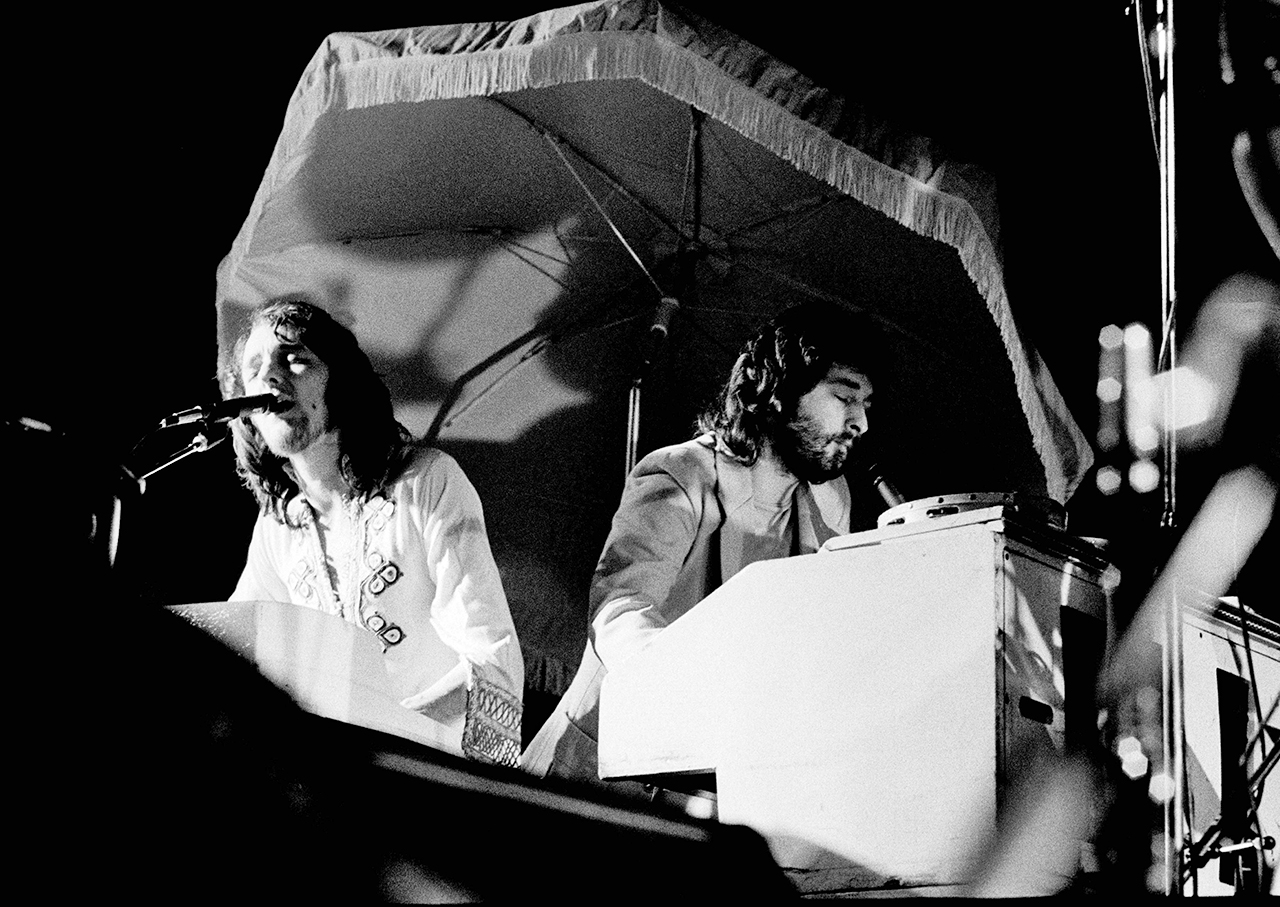
Prog’s audience with Siebenberg, along with horns and woodwinds whizz John Helliwell, arises from the Blu-ray release of Crime Of The Century: In Concert At Hammersmith Odeon 1975. Director Derek Burbidge’s superb, no-frills film is further proof, were it needed, of the classic line-up’s majesty. Like bassist Dougie Thomson, Siebenberg and Helliwell were relatively new recruits; fresh foils for Hodgson and his fellow frontman/ keyboardist Rick Davies as the pair’s songwriting skills blossomed, reaching new heights on future classics Bloody Well Right and School.
“I was last in,” recalls Helliwell. “They never officially asked me to join – I just kept going back after my initial blow with them in July ’73. I’d played with Dougie in The Alan Bown Set; he told me Rick and Roger weren’t happy because their first two albums [1970’s Supertramp and 1971’s Indelibly Stamped] hadn’t done much.
“Dougie had a good business head on him and he convinced them to try one more album. Rick and Roger knew they need a line-up change but were frightened of sacking people, apparently. They’d just break up and reform.”
Siebenberg had moved to London in April 1971and joined Bees Make Honey, part of the capital’s burgeoning pub-rock scene alongside Brinsley Schwarz and Ducks Deluxe. Rick Davies was a BMH fan, and clocked the drummer’s facility with a blues shuffle. Packing up his kit at The Kensington pub in west London one evening, Siebenberg was headhunted by Davies and Hodgson. The pair proposed “a blow” in the rehearsal-space basement of The Furniture Cave, an antique shop on Chelsea’s Kings Road.
“I was told later that they couldn’t bear to go through more formal auditions,” says Siebenberg. “I remember they were pleased I could nail the little ‘bap, bap!’ bits at the start of Bloody Well Right. They showed me that and Crime Of The Century and I was in.”
Supertramp were wondering whether to recruit a brass/woodwind player or a second guitarist. Guitar-wise, Siebenberg had a pal in mind: his future brother-in-law Scott Gorham. “We’d been best friends in Glendale [California] growing up,” the drummer says, “finishing each other’s sentences and playing in bands together. Scott was still working in a warehouse; I played him some early Supertramp demos and he really liked them. I said, ‘If you can follow me over to London…’”
But by the time Gorham arrived in 1974 the ship had sailed. Supertramp had recruited John Helliwell, whose multi-instrumentalist skills – and talent as a live MC who could compensate for Hodgson and Davies’ shyness between songs – make it impossible imagine the band’s classic era without him. Gorham joined Thin Lizzy that June. Fate, it seemed, knew best.
It was former A&M records man turned Supertramp manager Dave Margereson who suggested the new unit get it together in the country. He rented Southcombe, a spacious but primitive two-storey farmhouse near Thorncombe in Dorset for £20 a week. This canny move distanced Supertramp – plus their wives, children, pets and gifted sound engineer Russel Pope – 140 miles from record company interference.
The good vibes are flowing and the record company’s nurturing us – then Roger says he wants to pack it all in and go to India
“Dougie was down the hall with his wife and their brand-new baby,” says Siebenberg. “John and his wife Christine were upstairs; so was I. Rick and Roger had rooms downstairs. We ran all these cables through a room full of farm implements to the nook where Russel sat with our two-track and our little mixing console. All the wives got on; initially there was no tension from any quarter.”
“Everybody had brought their favourite records,” Helliwell adds. “So we were listening to The Dark Side Of The Moon, stuff by Procol Harum, Spooky Tooth and Loggins And Messina. I remember Bob wasn’t keen on the milk because it was straight from the cow. ‘Cholera juice,’ he called it! But me and Christine kept re-filling an empty bottle of pasteurised milk with it and he was none the wiser.”
New material, including Hodgson’s Hide In Your Shell, a pointedly honest song about loneliness and insecurity, was taking shape nicely; while Rudy, a song they’d played live for years that documented Davies’ own feelings of isolation and alienation, was being beautifully reshaped. “We didn’t have all the transitions between sections of different songs together yet,” Siebenberg says, “but you could feel the magic: all the potential we had following Rick and Roger’s lead. It was this peaceful, bonding time, with me and Rick taking long walks across the fields to the pub in our wellies.”
He also recalls a thunderstorm and a “too-close-for-comfort” lightning strike that blew the cottage’s telephone off the wall one night. It could have been an omen for what happened next. “The good vibes are flowing and the record company’s nurturing us – then Roger says he wants to pack it all in and go to India,” remembers the drummer. “It was like a hand grenade going off. Obviously Roger didn’t go that time, but it was a really weird vibe for a few days, rehearsing and knowing what he’d been thinking. John once said Roger was always trying to leave the band. I don’t know psychologically what that was about, but it’s true.”
Supertramp teamed up with producer Ken Scott to record Crime Of The Century at Trident studios and Ramport studios. His most recent production gigs had included David Bowie’s Aladdin Sane. He’d initially been reticent to work with Supertramp after hearing some rather disjointed demos, but once he caught a live A&M Records showcase, he realised their huge potential. Less immediately apparent, though, was the complex inter-band dynamic that lurked beneath the surface. “We were all pretty friendly together, but there were certain factions,” says Helliwell. “Roger was probably more friendly with Ken and the lighting guys and Rick was more of a loner, more self-contained. I was friendly with everyone.”
Roger was always searching for something; it was a serious business for him. But by Breakfast In America it wasn’t funny any more
Siebenberg adds: “I’d describe Rick and Roger’s relationship as one of healthy competition rather than rivalry. Roger has a posh voice and he had this privileged public schoolboy upbringing; Rick was a working-class kid from Swindon. Roger would talk about crop circles and UFOs he’d seen and Rick would say, ‘Yeah, right; pull the other one.’ They kind of filled in holes in each other’s personalities. Even back then Roger was a different kind of guy. We watched him change and move away from us down a path of spiritualism and Eastern philosophy.
“Roger was always searching for something and it was a serious business for him. We were fine with that, even if we poked fun at him initially. But by [1979’s] Breakfast In America – even before that, actually – it just wasn’t funny any more.”
After Crime Of The Century Hodgson would record four more studio albums with Supertramp. He quit the band when the tour for …Famous Last Words… wrapped in September 1983. He released his first and most successful solo album, In The Eye Of The Storm, 12 months later. However, periodic speculation about the full classic line-up reforming circulated right up until Rick Davies’ death last year at the age of 81. Both Helliwell and Siebenberg miss him greatly. “Sadly there was no funeral,” says Helliwell.
“It was crushing,” says Siebenberg. “A world without Rick in it makes me want to fall down. He used to call me ‘The king of the hi-hat.’”
The pair were already been mourning Supertramp’s former manager Dave Margereson, who’d died a couple of weeks earlier. “Dougie and myself went to his funeral,” says Helliwell. “Unfortunately Bob couldn’t come because of work commitments.”
And Roger? “Roger is out there in the ether somewhere,” Helliwell adds, widening his eyes. “I don’t know if he’ll ever come down.” What chance is there of the remaining trio working with their former bandmate? “Highly unlikely,” he says. “He’s part of a religious organisation in Florida and doesn’t communicate.
The camaraderie was so great. It’s amazing what you can achieve when nobody cares who gets the credit!
“Well, we have had some contact – Dougie, Bob and myself took Roger to court a few years ago. It was actually quite nice to see him. There was an issue with the small amount of publishing royalties he and Rick had agreed to give us, which after a period of decades had stopped. We lost the case and it was ridiculously expensive. Then we appealed and won, but we’re still waiting. These things move slowly.”
Siebenberg is still gigging around Ventura and Santa Barbara, playing drums in Sleeping Chief. John Helliwell steps out with his Super Big Tramp Band and his Dutch jazz quartet Don’t Ever Leave Me. Both retain especially fond memories of Crime Of The Century, Supertramp’s big breakthrough. “It’s the beginning of the good period and I love the enigma of it,” says Helliwell. “What was the crime of that century?”
“It set a great standard for all of our records to come,” adds Siebenberg. “The camaraderie between us was still so great. It’s amazing what you can achieve when nobody cares who gets the credit!”
The Crime Of The Century Blu-ray is on sale now.